
By David Adams @dadams7308
How decisive will 'Super Tuesday' presidential primaries be?
What to look for in 'Super Tuesday' presidential primaries

Hillary Clinton y Donald Trump
Imagen Univision
Voting is underway in a dozen states on what many experts are predicting could be a decisive “ Super Tuesday” primary polling day for candidates in the US presidential election.
With hundreds of delegates at stake nationwide it is the largest single primary voting day across the nation, from major states in the south such as Texas and Georgia, to smaller Vermont in the east.
Two New Yorkers lead the field for both the Republican and Democratic parties. Republican real estate tycoon Donald Trump has already won in three of the four early voting states, as has former First Lady Hillary Clinton. If they both have strong nights the stage could be set for the November general election, with Clinton currently leading Trump by a 52% – 44% margin - in a hypothetical match-up, according to the latest CNN/ORC poll of registered voters.
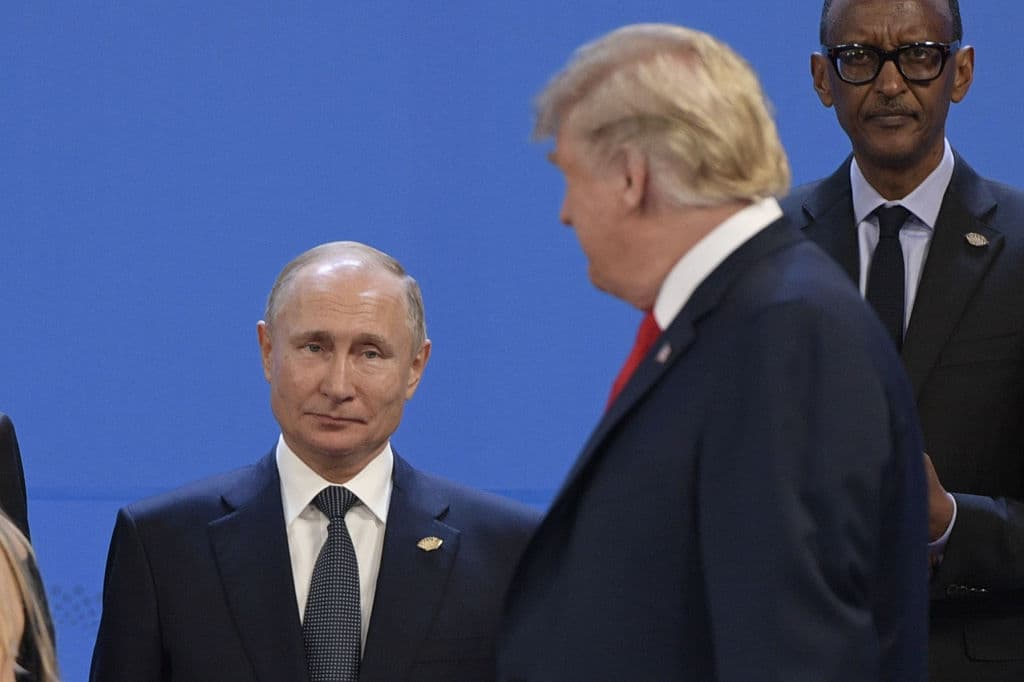


Texas Senator Ted Cruz is hoping to emerge as the only realistic Republican challenger to Trump by winning in his home state, the largest prize at stake on Tuesday with 155 party delegates. Meanwhile, Florida Senator Marco Rubio, currently the third-placed Republican, is hoping to do well enough to keep his campaign alive, before hoping to win his home state of Florida on March 15.
Polls show Trump leading in every state except Texas, but with close races possible in Virginia and Massachusetts. Observers will also be looking at voter turnout with Republicans far out-numbering Democrats at polls so far in the first four states, in what some observers say is a trend that could favor Trump if he makes it to November.
Cruz is throwing everything into Super Tuesday hoping to drive a stake into the Rubio campaign, outspending his Florida rival almost 2 to 1 on political advertising, according to NBC. While Rubio has won a slew of political endorsements lately, he has failed to pick up the key backing of his one-time mentor, former Florida governor Jeb Bush, who bowed out of the race 10 days ago.
On the Democratic Party’s side, Clinton is hoping to cement her front-runner status after convincing victories in South Carolina and Nevada last week where she polled well with African-Americans and Hispanic voters.
Vermont Senator Bernie Sanders, who has mounted a surprisingly strong grass-roots campaign with younger voters, is expected to win his home state with ease, but could be swept in the southern states with large numbers of African-American voters. He is hoping to upset Clinton in Massachusetts and Minnesota.
Voting is taking place as Republican ranks are increasingly bitterly divided over the prospect of Trump securing the nomination. His bombastic remarks about Mexican immigrants and Muslims, as well as questions over his Christian values and conservative principles, have put the party on the verge of almost open revolt.
On the eve of the polls leading Republican figures have begun to speak out saying they could not support Trump if he wins the nomination, raising the possibility of a rebellion at the party’s July convention and the emergence of a rival third candidate.
Trump also came under fire on Monday over his failure in an interview to disavow David Duke, a leader of the white supremacist Ku Klux Klan, who has endorsed the Republican candidate. Trump responded saying he misheard a question said had previously disavowed Duke on several occasions.
After declining to go after Trump earlier in the campaign, Rubio and Cruz have suddenly stepped their attacks on the front-runner, blasting him as a liar and a con-artist. Rubio's verbal assaults grew so intense he became hoarse on Monday and temporarily lost his voice.
Relacionados: