A slow sunrise, a virtuosic outburst, and a hard-won sense of freedom: that’s how conductor Vasily Petrenko describes the emotional arc of the Royal Philharmonic Orchestra’s upcoming concert on Sunday the 18 th at the Adrienne Arsht Center in Miami.
Royal Philharmonic Orchestra Brings Nielsen, Tchaikovsky, and Sibelius to Miami: A Conversation with Vasily Petrenko
The Royal Philharmonic Orchestra, led by conductor Vasily Petrenko, brings Nielsen’s Helios Overture, Tchaikovsky’s Violin Concerto with Ray Chen, and Sibelius’ Second Symphony to Miami. Petrenko shares insights into the program’s emotional journey, from darkness to light, and what audiences can expect.

Por:
Lioman Lima
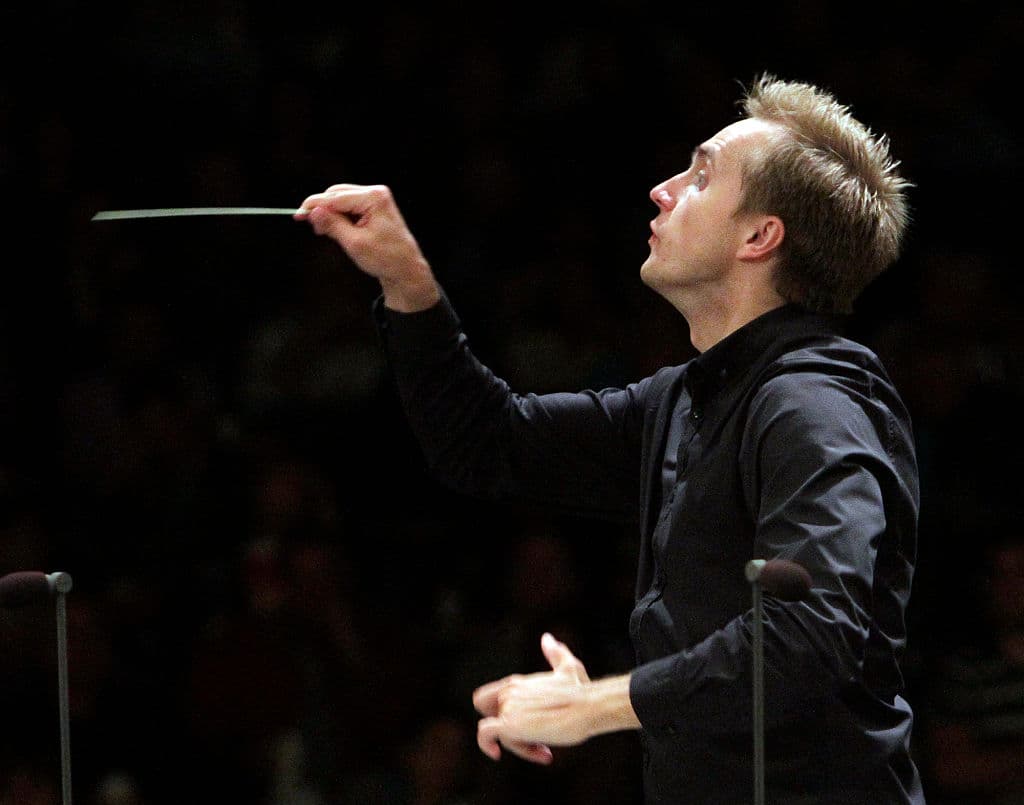
Russian conductor, Vasily Petrenko conducting the Los Angeles Philharmonic performing Dvor.k's Carnival Overture and Sibeliius' Second Symphony at the Hollywood Bowl on Jul. 26, 2011. Also on the program, Ukrainian pianist, Alexander Gavrylyuk performing Tchaikovsky's Piano Concerto @@#1. (Photo by Lawrence K. Ho/Los Angeles Times via Getty Images)
Imagen Lawrence K. Ho/Los Angeles Times via Getty Imag
This and other Florida concerts kick off a two-week tour that will take the orchestra to US cities from south to north.
Featuring Nielsen’s Helios Overture, Tchaikovsky’s Violin Concerto (with Ray Chen as a soloist), and Sibelius’ Second Symphony, the program traces a journey across Nordic landscapes and inner worlds, one that, for Petrenko, speaks as much about life and mortality as it does about national identity and sound.
For this Russian-born conductor, who has been leading the RSO since 2021, the coming concert that opens the Arsht classical series is a musical arc that moves from darkness to light, blending Nordic landscapes, Russian lyricism, and life’s deepest emotions in a single concert experience.
This is his conversation with Univision Noticias.
This program moves from Nielsen’s Helios Overture to Tchaikovsky’s Violin Concerto and ends with Sibelius’ Second Symphony. Do you see a narrative or emotional arc connecting these works, or is it more about contrast?
It's a Scandinavian theme which connects the program, so between Nielsen and Sibelius there's a lot of things in common in their musical language. And, of course, about the territory which they represent as composers.
There's also a relation between Sibelius and Tchaikovsky, especially in early Sibelius, the first and second symphonies. Both are based on a combination of German and Russian orchestration techniques, which he learned in Russia at that time, as Finland was still part of the Russian Empire, and in Germany while he was visiting Germany.
And together with those techniques there's also Finnish folklore, Finnish folk tunes, and Finnish nature. That's why Sibelius is so unique in his early symphonies and then in later symphonies as well.
There's a connection between his language and Tchaikovsky’s language. Some of the very broad melodies in the Second Symphony are close to late Tchaikovsky symphonies. And of course the Violin Concerto, which also has some sort of novelties by the time it was written, in violin technique. It also has a combination of all elements. There's a little bit of Danish madness in it, a little bit of the Nordic landscape… And even in the second movement, with its lyrical, autumnal character, you can feel the atmosphere of northern Russia or Finland. All three elements come together in a kind of synchronization.
There's also the theme of the sun, as a star. And it's the theme of the sunrise. And in a way, this is how Helios starts… with a very, very slow sunrise. It was composed six years after the famous one from Also Sprach Zarathustra, which Stanley Kubrick used in 2001: A Space Odyssey.
Basically, Helios is from sunrise to sunset. And the symphony of Sibelius, in many ways, ends with a sunrise. Sunrise of humanity, sunrise of freedom. So there is this very large arc as well in the program.
Helios is a short piece, but incredibly vivid. What should listeners pay attention to in the opening minutes that might help them “enter” Nielsen’s world?
It starts in the darkness. And I would suggest maybe even to start listening to it with closed eyes, as if you are in darkness. And then very, very gradually, the first glimpse of sun coming to the sky, to the horizon.
Then you can see gradually how the sunrise arrives, what's going on in the morning. And then the glorious daytime.

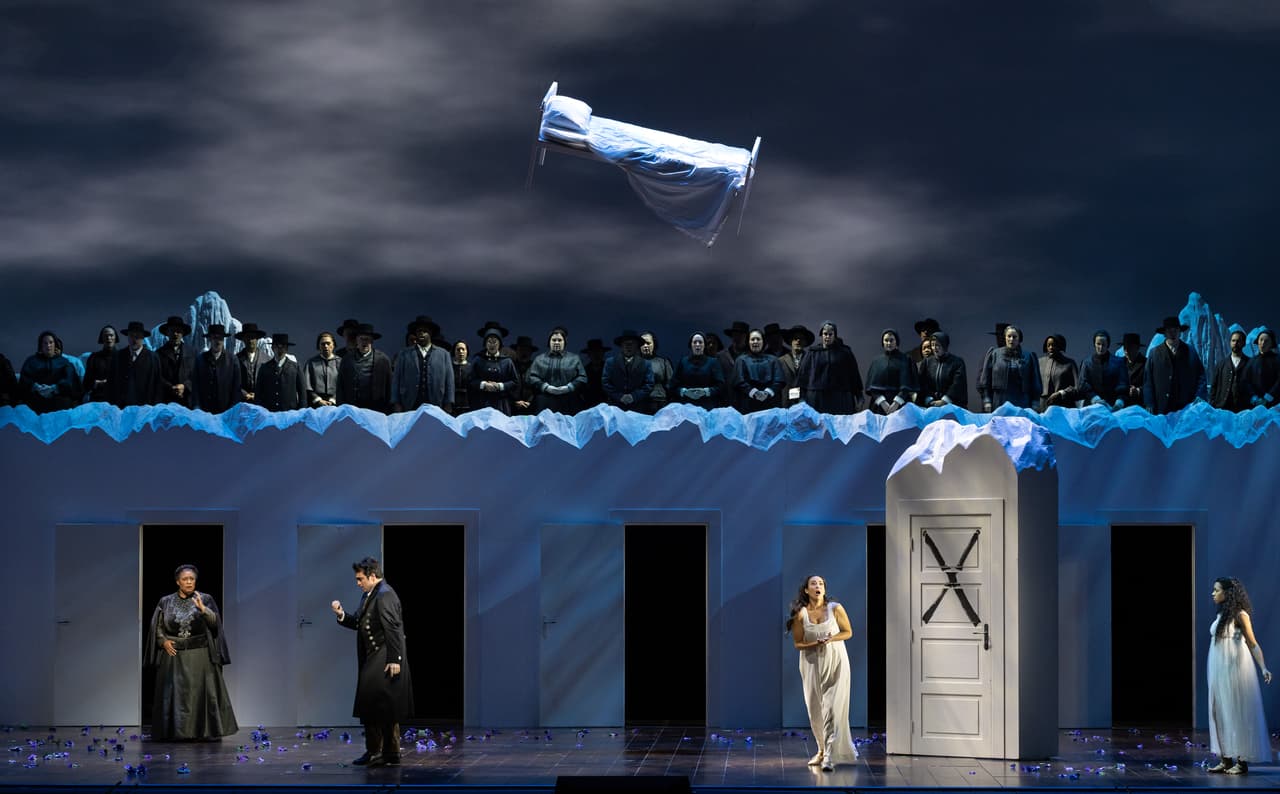
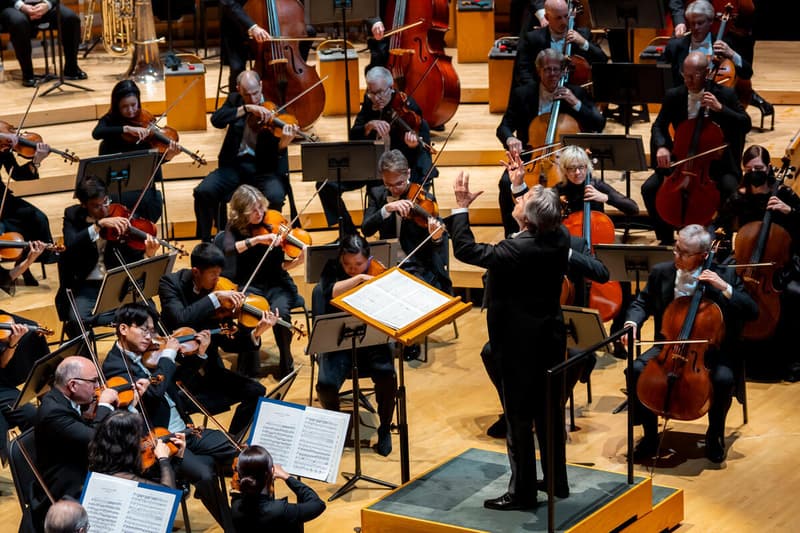




Interestingly, Nielsen has written it in Greece, so there's also a lot of Mediterranean summer in the middle of the piece, a lot of Greek color in it. He was saying that he was overlooking again the sea from the window of his hotel while his wife was hard working in the Parthenon, because she was a sculptor and was copying the sculptures from the Parthenon.
Then, in the middle of the piece, it's a bright sunshine. At the end, it's a very peaceful evening… and the piece ends almost as it starts, just different piece, but the same celli holding one note. And then it gradually fades into the darkness.
Ray Chen brings a very contemporary, almost rock-star energy to the stage. How does that personality influence the way you shape the Tchaikovsky concerto with him?
We are very good friends with Ray, we have performed many times for many years and I even participated in some of his videos.
For me, his energy, his very fresh approach to everything, reflects into the music. So I would expect Tchaikovsky Violin Concerto as the very first time you could hear it.
Sometimes when you are on tour, you repeat the piece night after night. And with him, every time it's fresh. Every time there's certain different moments, different aspects we are finding together with him and the orchestra.
Sibelius’ Second Symphony is often described as triumphant or life-affirming. Do you agree with that reading, or do you hear something more ambiguous beneath the surface?
I think it's a very long journey through a very difficult path and a very difficult road to happiness and to freedom. Freedom of the country, freedom of the spirit, freedom of humanity.
And, of course, there are elements of drama and elements of nature. In the third movement, for instance, it's almost like you're going through a blizzard… Then you are in the moment of stillness… And then again, the blizzard starts and you have to go through that.
Sibelius once began a Don Juan–inspired work during his time in Italy, a project that was never completed but whose musical ideas later found their way into the second movement of the Second Symphony.
This second movement can be heard almost as a dramatic dialogue between Don Juan, his reckoning, and death itself. It's a thought about life and death and how to live life fully, in many ways, not to be afraid of death.
And the last movement, of course, it's inevitable glory in D major, almost like inevitable freedom. It's a journey towards happiness and it's a journey towards the sunrise.
Do you approach these works differently when performing them outside Europe, say, in a city like Miami with an audience not so used to a strong classical music scene?
I think the beauty of classical music is that it's accessible to everyone, people of any skin colour, any religion, any wealth.
Everyone who will sit in the hall will listen to the music and will share the same emotions. They will be individual emotions, but they will be shared between many individuals.
I don't think there's any other phenomenon in cultural life which brings all parts of society into that emotional territory.
To me, this is one of the best tools for social cohesion. And that's probably what we're lacking around the world right now.
How would you describe the Royal Philharmonic Orchestra’s sound today, and how does it serve this particular repertoire?
The Royal Philharmonic Orchestra was always a great orchestra since the very beginning. It was famously made of the best musicians of the time. And many of the best musicians of our time are now playing in the orchestra.
To me, what is probably the most important thing in the Royal Philharmonic is its versatility.
The orchestra is able to tackle any music, any style and any composer with a very open mind and with 100% commitment.
Any music we play, from movie music to contemporary recordings, or even for video games or advertisements, is taken very seriously. We're trying to perform every piece of music at its best, in its style, as close as it's possible, and with our approach to make it better than yesterday..
If someone from the audience comes to this concert having never heard Nielsen, Sibelius, or even a live violin concerto before, what do you hope they walk away feeling?
For me, the most important thing is that the next morning they're waking up, and they think that something changed in their life for the best.
In these difficult times, music and the classical art can be a very good tool for all to ease all the tensions and the stress of life and to find and cast the real values.