The Chicago Symphony Orchestra returned to Miami on Thursday after nearly five years, marking its first performance since the pandemic disrupted everything and turned life upside down.
Fate and Fire: The Chicago Symphony Orchestra’s Miami Performance Stuns with Emotional Depth
The Chicago Symphony Orchestra, led by Riccardo Muti, returned to Miami with a stunning performance featuring works by Bellini, Schubert, and Tchaikovsky. Showcasing themes of fate and mystery, the evening highlighted Muti’s masterful direction, the orchestra’s exceptional precision, and emotional depth that captivated the audience

Por:
Lioman Lima
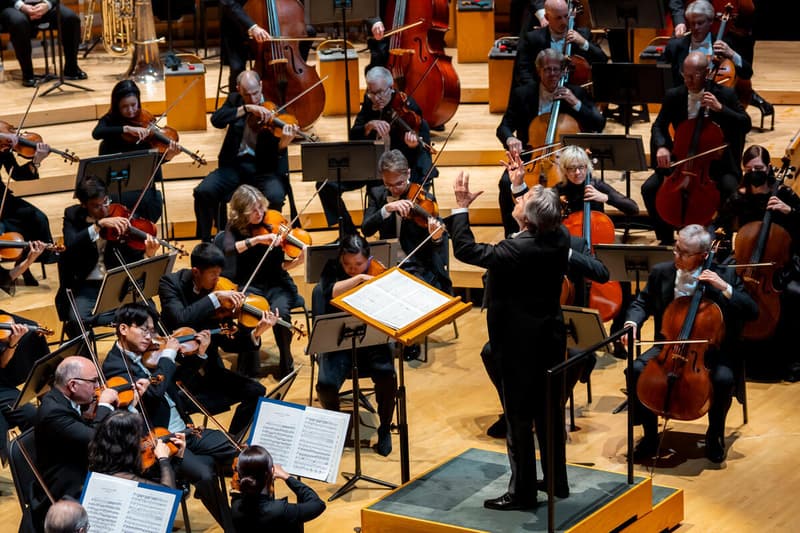
Riccardo Muti conduce el concierto de la Orquesta Sinfónica de Chicago (©Todd Rosenberg 2025)
Imagen Todd Rosenberg
They returned under the baton of Riccardo Muti, their conductor emeritus, who, at 83 years old and following heart surgeries, continues to lead with the same vitality and fervor as he did three decades ago. His characteristic leaps during climaxes and fanfares were on full display, thrilling the audience at the Knight Concert Hall in the Adrienne Arsht Center.
The program for this one-night-only performance, which has also been played in other stops during their Florida tour, featured widely popular works designed to appeal to a broad audience rather than catering exclusively to aficionados seeking surprises or rare repertoire.
The evening's unifying thread was mystery, fate, and the anticipation of the unknown. The program journeyed from the solemnity and foreboding of Bellini’s Norma Overture (from his 1831 opera), through the melancholic beauty of Schubert’s Unfinished Symphony (No. 8 in B minor, D. 759, from 1822), to the overwhelming power of Tchaikovsky’s Fourth Symphony (1877), a sublime testament to depression, pain, and the uncertainty of life’s trials.
From Bellini to Schubert
Bellini’s Norma Overture is arguably one of the most renowned in the operatic repertoire, and for good reason. In just over six minutes, it takes listeners on an emotional journey from melancholic serenity to an impassioned final climax.
On Thursday night, Muti’s ability to guide the orchestra, balancing moments of tension and calm with impeccable precision, was nothing short of remarkable. The overture demands a unique use of leitmotifs and orchestral balance, and Muti’s achieved a profound dialogue with the musicians, achieving moments of exquisite purity.
In an orchestra of this caliber, where pieces are performed with near-mechanical precision, it is rare for individual instruments to stand out. However, the woodwinds—from Stephen Williamson’s clarinet to William Welter’s oboe and Keith Buncke’s bassoon—were exceptional throughout the evening. Their brilliance is perhaps a testament to Muti’s leadership and one of his main lasting legacy with the Chicago Symphony Orchestra.
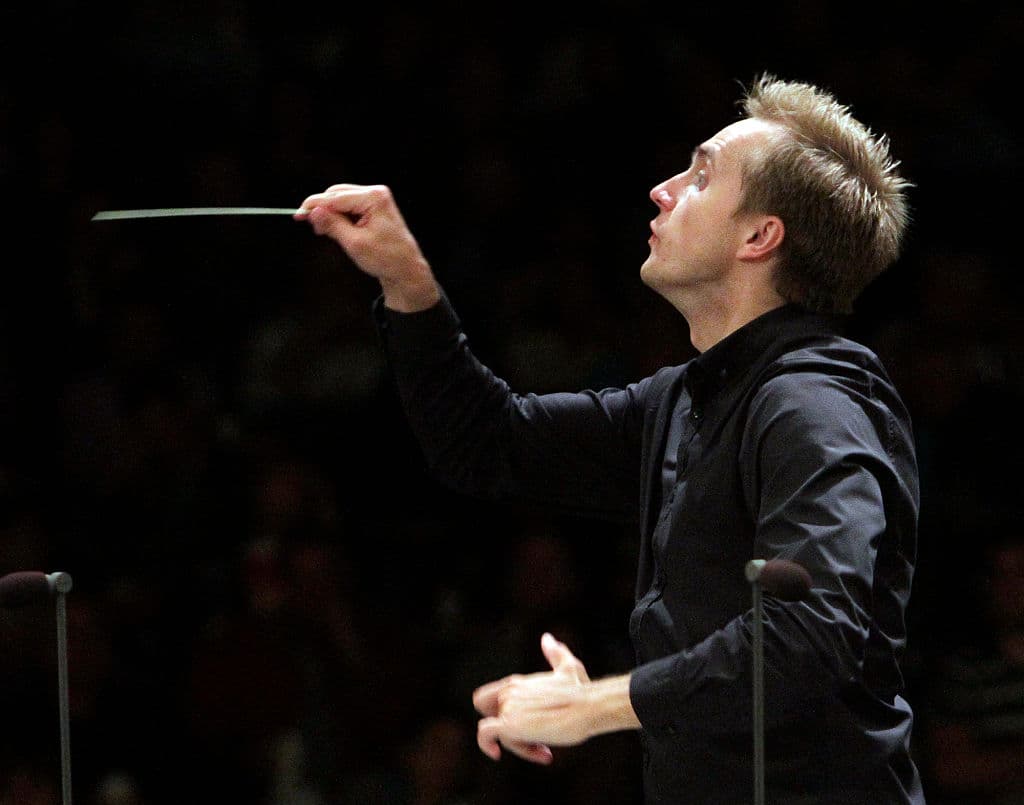

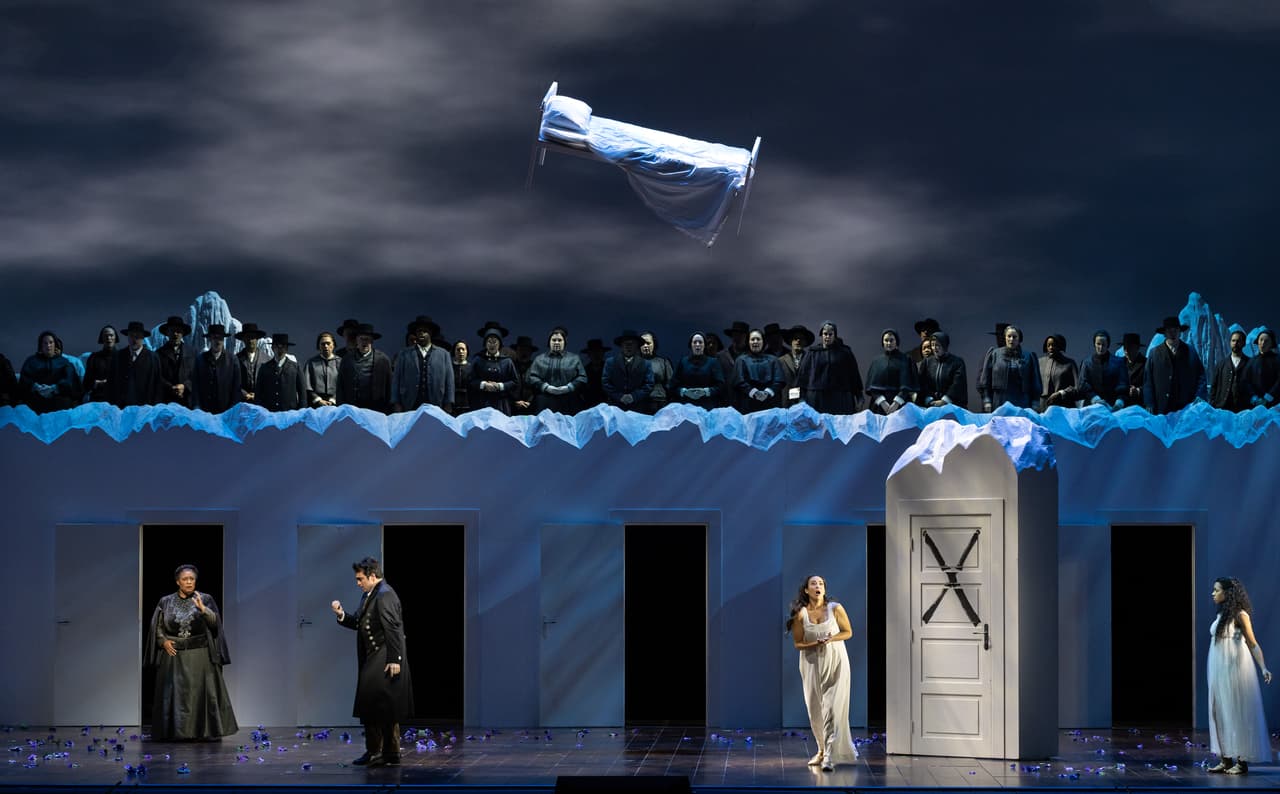




The Norma Overture’s atmosphere of uncertainty served as a fitting prelude to Schubert’s Unfinished Symphony, a work that continues to intrigue and mystify two centuries later, not only for its melancholic tone but also for the enigma surrounding its creation. Schubert never completed it, and to this day, the reasons remain unknown. The work was hidden away and only discovered years after his death.
The tone and character of this symphony differ markedly from Schubert’s earlier works. Its two movements convey a profound sadness and fear tempered by a glimmer of hope. Some speculate that the piece reflects Schubert’s struggles with his incurable syphilis, but the truth remains elusive. As many have said of this work, it is "an unfinished musical piece, but more complete than many others."
During Thursday’s performance, the Chicago Symphony Orchestra captured the mystery and serenity that permeate the symphony’s two movements. The melodic dialogue between the oboe and clarinet at the opening was particularly exquisite and Muti’s direction achieved a special balance, dispelling the tension caused by the absence of a third movement and leaving the audience with the impression that the symphony continues in silence, much like life itself.
Between Grandeur and Ferocity
The evening’s centerpiece was Tchaikovsky’s Fourth Symphony, a musical testament to one of the darkest periods in the composer’s life, marked by a failed marriage, repressed homosexuality, and an apparent suicide attempt.
With its long first movement, dense structure, and intensely passionate themes, the symphony initially received a lukewarm reception at its premiere. However, it has since become an indispensable part of the repertoire and one of the most beloved works for audiences and musicians alike.
One of the orchestra’s youngest fellows, Venezuelan violinist Jesús Linárez, performed with the ensemble during his first U.S. tour.
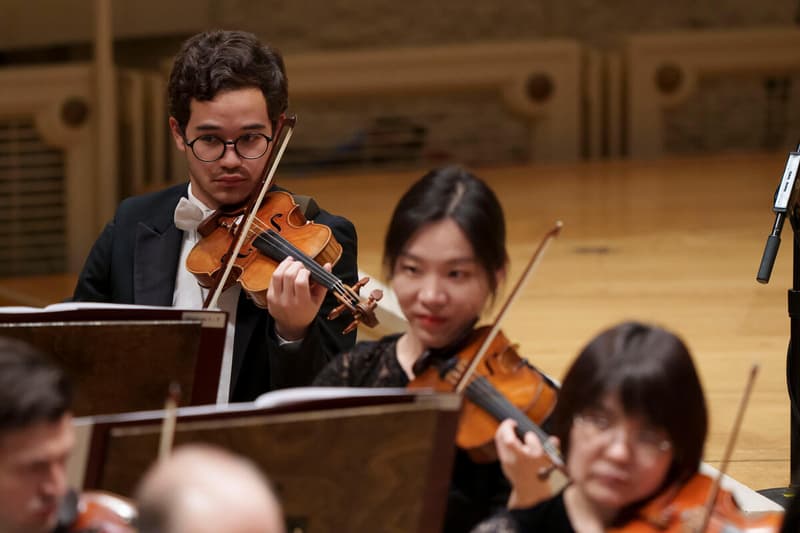
Jesús Linárez
Imagen © Todd Rosenberg Photography 20
Linárez, a recipient of one of the Chicago Symphony Orchestra’s prestigious fellowships, expressed his deep connection to the Fourth Symphony, recalling his formative years under Venezuela’s renowned “El Sistema” music education program.
“For me, Tchaikovsky’s Fourth is a reminder of my early training in Venezuela,” Linárez shared.
Linárez rose to the challenge of performing alongside some of the world’s finest violinists, led by associate concertmaster Stephanie Jeong and assistant concertmaster Yuan-Qing Yu. Their leadership ensured remarkable cohesion, particularly in the dramatic moments of the first and fourth movements.
One standout moment was Keith Buncke’s bassoon solo in the second movement, delivered with impeccable legato, phrasing, and articulation that captured the introspective and nostalgic character of the passage.
Muti’s direction underscored the notion that music, even when the same score is performed nightly, is a living, evolving experience. His ability to build tension and release in the third movement ( Allegro) was masterful, and the dramatic, ostentatious finale was executed with clarity and precision.
When the applause thundered and Muti returned for an encore ( Hungarian Dance No. 1), the Miami audience was
euphoric. Perhaps they were moved by the mysterious boundaries between music, fate, and life—themes that the evening’s program pressed into our ears and hearts.
The performance was a poignant reminder of our mortality and, our transcendence.
___________________________________________________________
The Chicago Symphony Orchestra will continue its U.S. tour this weekend with performances in:
- West Palm Beach, Raymond F. Kravis Center for the Performing Arts (January 17)
- Orlando, Dr. Phillips Center for the Performing Arts (January 18)
- New York, Carnegie Hall (January 21)
- Stillwater, Oklahoma, McKnight Center for the Performing Arts (January 23 and 24).