In the newly-released movie, Reefa, an 18-year-old graffiti artist is caught by police in the middle of spray painting a shuttered McDonald’s and ends up being shot by a Taser gun and dying of a heart attack.
Reefa: new movie about death of a Colombian-born graffiti artist rekindles debate over police responsibility
A new film tells the story of how a police Taser stun gun killed a young graffiti artist known as Reefa on Miami Beach in 2013. It also rekindles questions about police brutality in the wake of the conviction of the cop who murdered George Floyd.
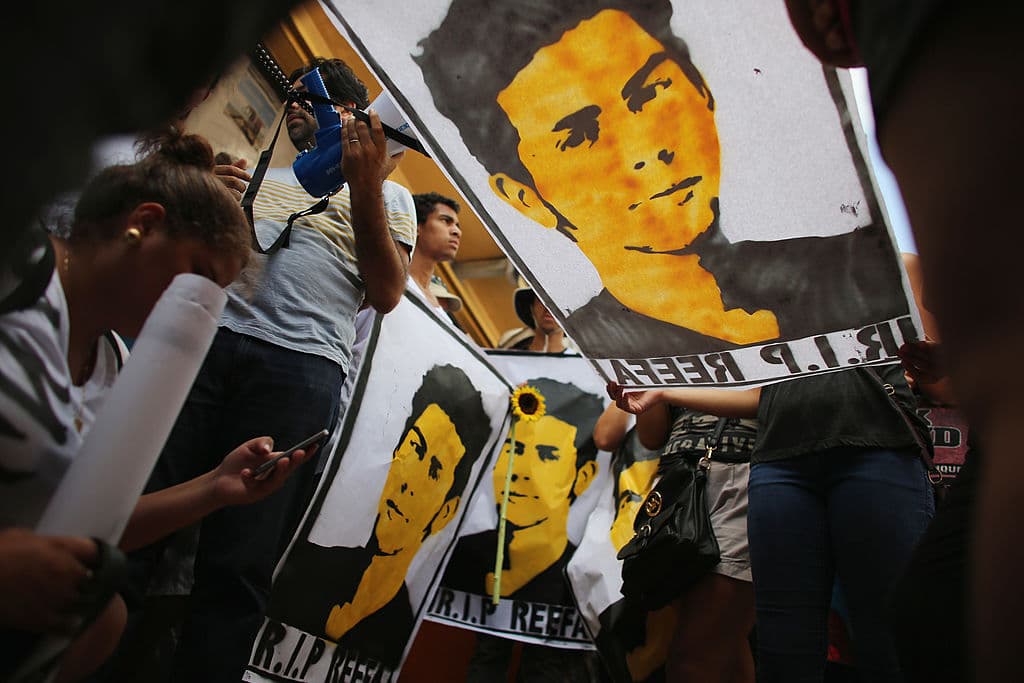
People hold posters during a vigil with a picture of 18-year-old graffiti artist Israel Hernandez, who died after being tasered by a Miami Beach police officer on August 6, 2013 in Miami Beach, Florida.
Imagen Joe Raedle/Getty Images
The true story of Reefa, the artistic name of Colombian immigrant, Israel Hernandez, shocked South Florida at the time of his death in 2013.
Despite outrage over allegations of police brutality, the case never went to court and the policeman involved continues to serve.
In the wake of the George Floyd killing, and the conviction of the policeman who murdered him, analysts are asking if the jury’s decision could mark a change in the way we look at police and the use of excessive force.
That leaves Reefa’s family wondering if things might have turned out differently in the case of their son in the new climate of greater public scrutiny of the police.
“In the case of my son, the prosecution was indolent, cowardly, even, they lacked more vigor and effort in proving the guilt of those responsible, a policy that was reflected in the [Floyd] case that just ended with a verdict of responsibility,” said Israel Hernandez, Reefa's father.
"We stand in solidarity with that family and it is as a beacon of hope at the end of the tunnel in the face of these police abuses that seem to give a license to impose death sentences with impunity," he added.
One of the family’s lawyers says things haven’t changed so much in Miami Beach where Reefa died.
“Unfortunately, the legal landscape has not changed. All the barriers that the family and the community faced are still there,” said Jose Javier Rodriguez, a civil rights lawyer and former Florida State Senator.

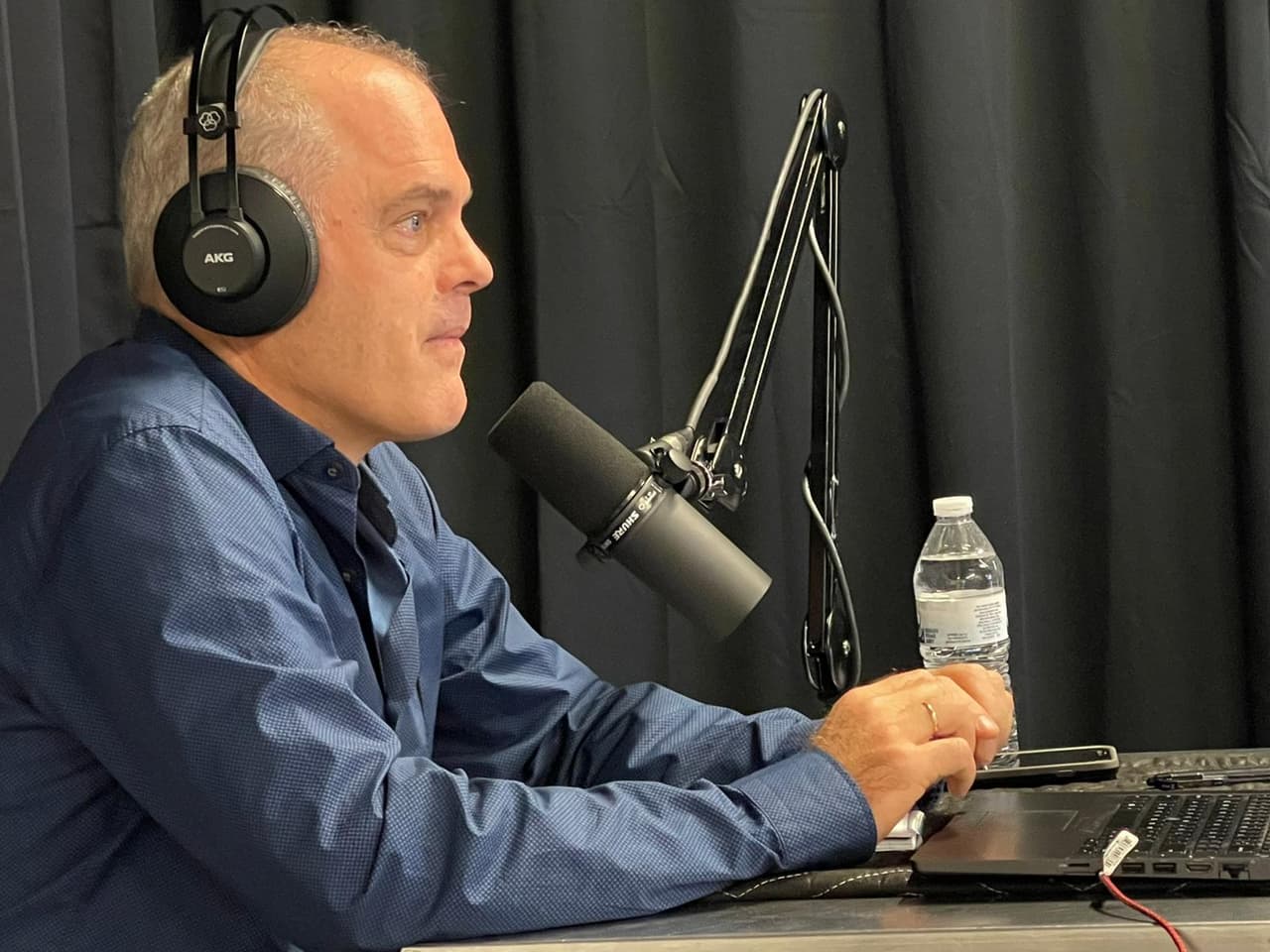
Written and directed by Jessica Kavana Dornbusch and starring actor Tyler Dean Flores, the film 'Reefa' follows the real-life story of Colombian immigrant and artist Israel Hernández, killed with a Taser gun by a Miami Beach police officer in August 2013.
Imagen David Adams / Univision
August 6, 2013
The night he was killed, police spotted Hernandez spraying graffiti on an abandoned building and an officer shot him with the Taser during a foot chase. He died an hour later at the hospital.
The circumstances of Reefa’s death also highlighted some of the recent changes, including the role of cellphone videos and police body cameras in criminal investigations. In Reefa’s case, security camera videos in nearby buildings showed part of the chase but not the crucial moment of his death. None of the bystanders filmed it either.
“Israel encountered the officers in the middle of the night. There was nobody there to film it,” said Rodriguez. While he was tasered in the chest in front of a bank building, “none of the security footage captured what happened,” he added.
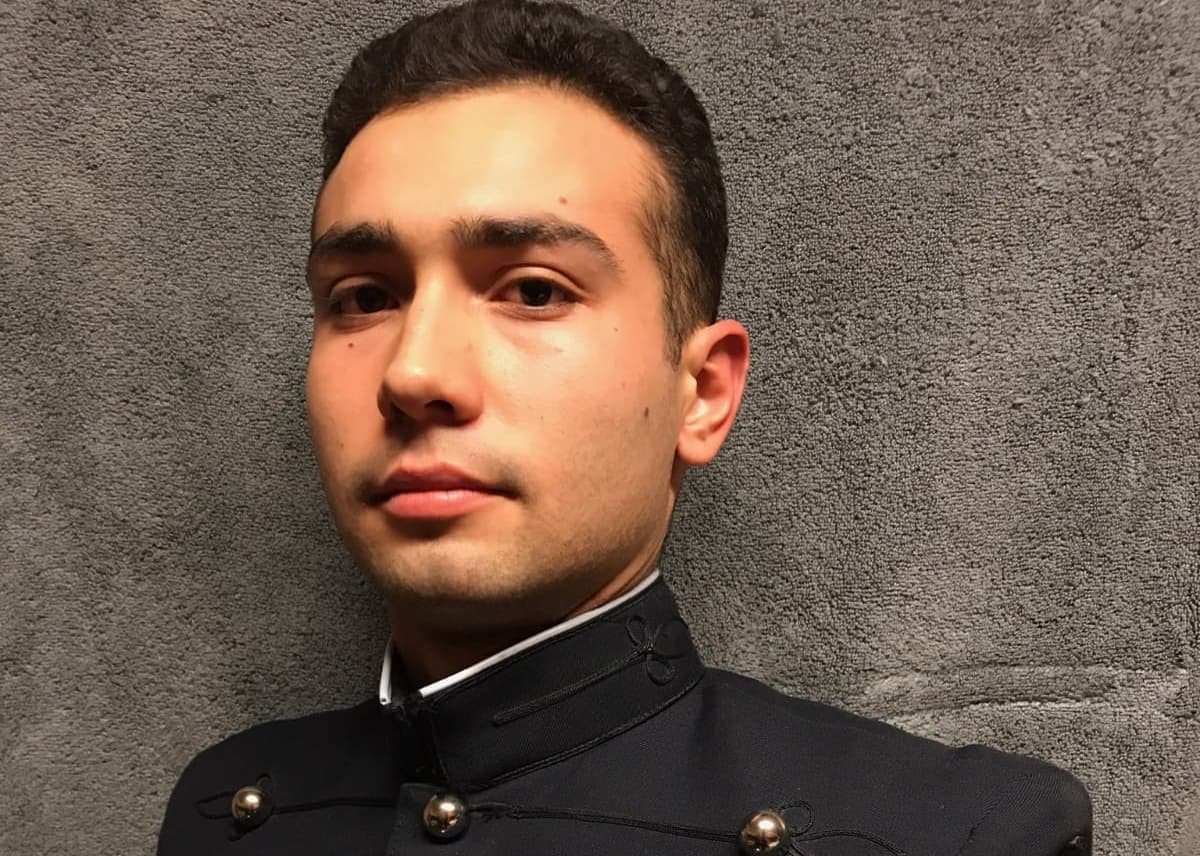
Israel 'Reefa' Hernandez
Imagen Courtesy of the Hernandez family.
Rodriguez said the family’s team of lawyers was able to retrace how the incident unfolded by obtaining video footage from surrounding buildings, contradicting the official police version of events. “At least one officer was chasing with gun drawn,” he said, noting that officers knew that Reefa was an unarmed teenager who represented no immediate physical threat.
“It’s crazy to think, in any city, that officers would behave like that with no consequence,” said Rodriguez.
Secrecy
In that sense, he believes things haven’t changed much, at least in Miami Beach, regarding police conduct. “The secrecy and lack of transparency is what stands out most,” he said, highlighting the obstacles the family faced from the police and the Miami Dade County State Attorney’s office.



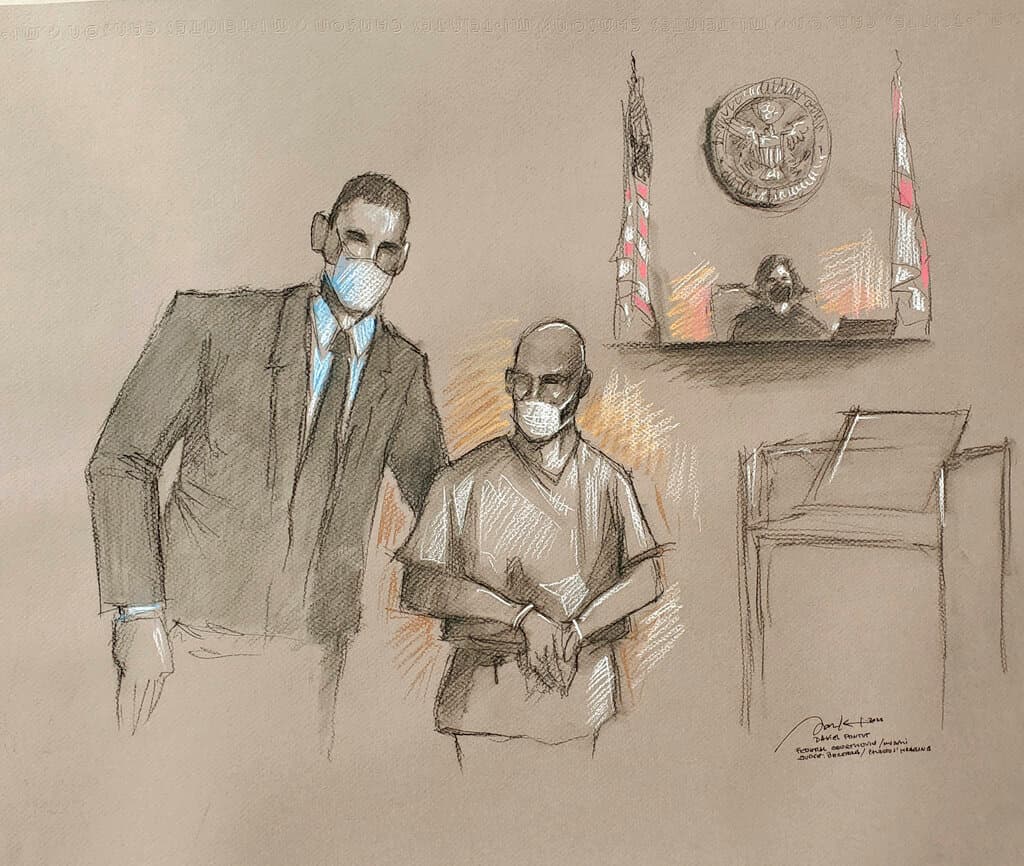
While tasers are promoted as a less lethal option for police, critics have also highlighted Reefa’s death to show that is not always the case. In fact, numerous deaths have occurred after victims were tasered, which have been described as an instrument of torture if misused.
“They are over-used and there is a lot of evidence of people being severely injured,” said Rodriguez.
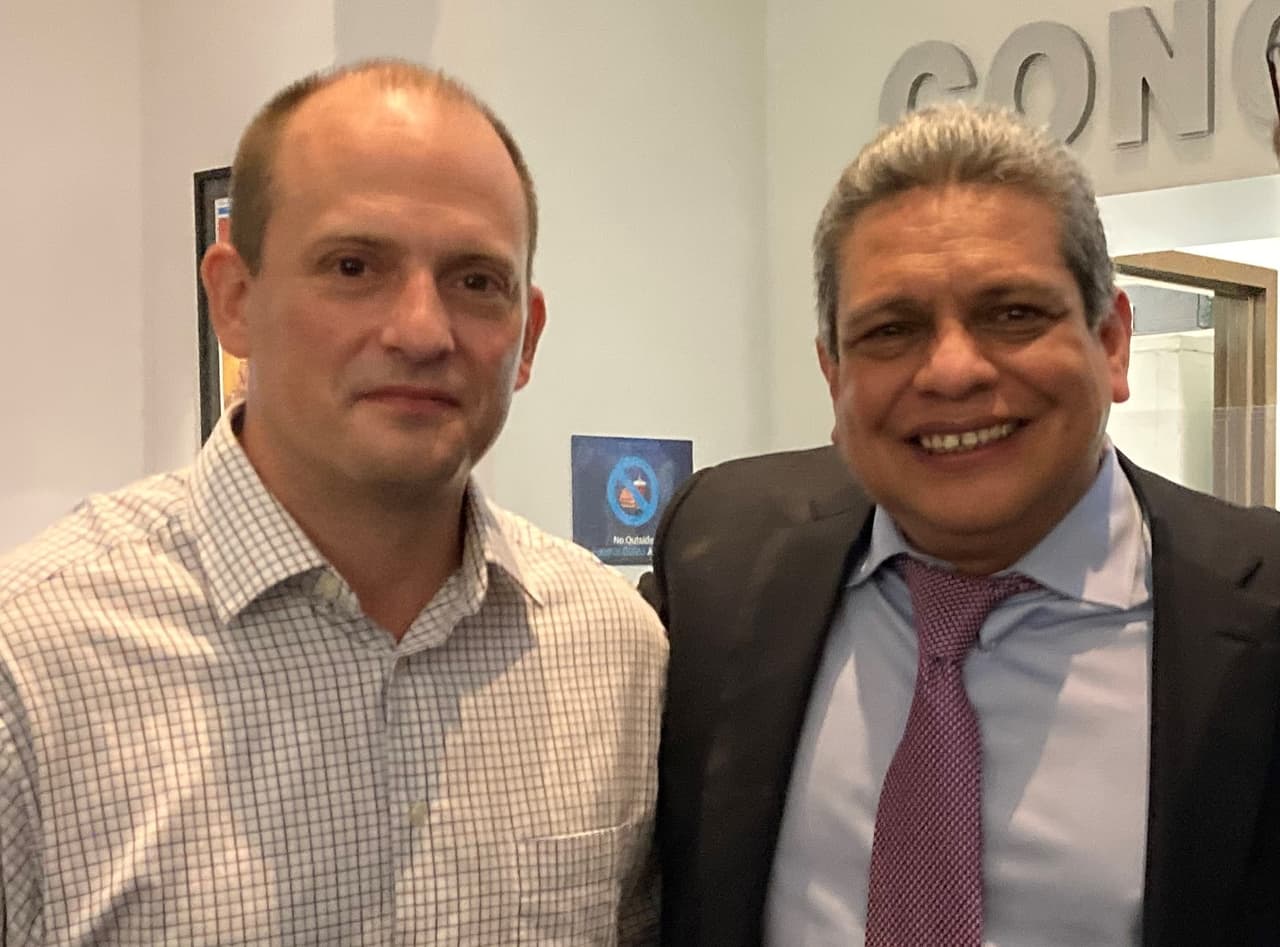
Civil rights attorney José Javier Rodríguez and Israel Hernández at the premiere of the film Reefa at the Tower Theater in Miami, on April 17, 2021.
Imagen Univision
Heart attack
In 2017, Reuters documented 1,005 incidents in the United States in which people died after police stunned them with Tasers, typically in incidents that also involved other force, from chokeholds to beatings. But in almost all cases the Taser was never directly blamed for causing the death. The Arizona makers of the electronic weapon, Axon Enterprise, say the overwhelming majority of people who died after being stunned were killed by underlying health conditions, drug use or other police force.
It took seven months for the medical examiner’s office to conclude the cause of death in Reefa’s case: “ sudden cardiac death” due to the Taser. It was the first time that a medical examiner directly attributed a Taser causing a fatal heart attack.
His family and friends suspect the fatal Taser shot was fired at point blank range by the officer, Jorge Mercado, as punishment for his running from police.
Witnesses say they saw police catch Reefa and throw him against a wall. They next thing they saw was his crumpled body on the ground.
“There were so many aspects of this that we were able to bring to light to show the recklessness of the officers,” said Rodriguez.
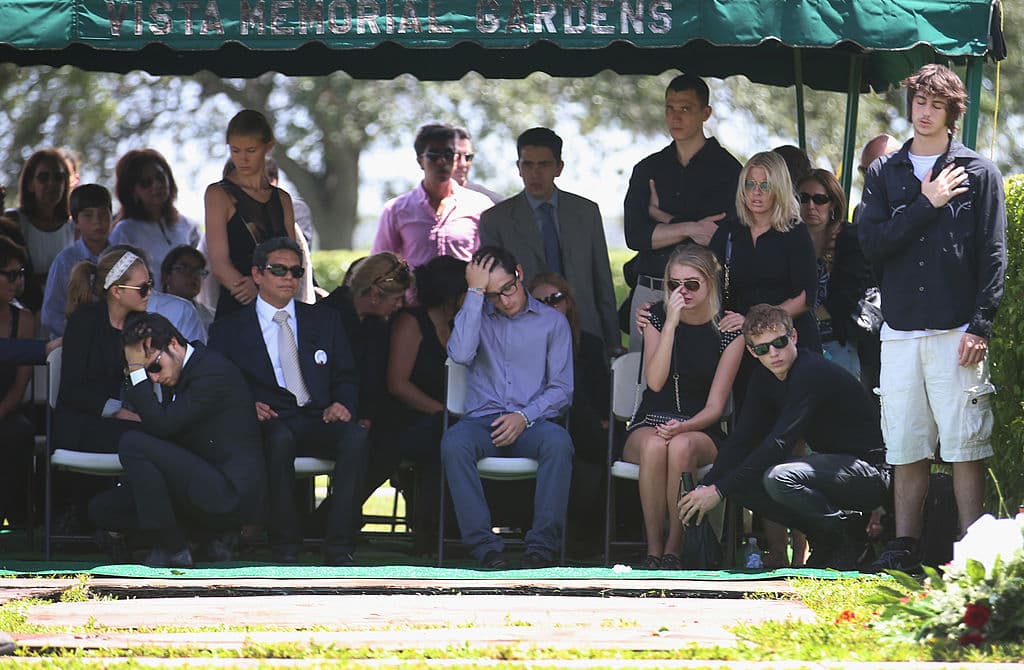
Family and friends sit near the burial plot after the internment of 18-year-old graffiti artist Israel Hernandez-Llach at the Vista Memorial Gardens & Funeral Home on Aug 14, 2013, a week after he died when he was Tasered by a Miami Beach police officer.
Imagen Joe Raedle/Getty Images
Political asylum
The director of Reefa, Jessica Kavana Dornbusch said Reefa’s decision to run was what inspired her to make the film. The Hernandez family were immigrants who fled violence in northern Colombia and were awaiting political asylum, which was granted a few days after Reefa’s death.
An aspiring artist who was hoping to go to art school in New York, he won notice for his graffiti, including a distinctive flower in his memory that can still be seen on traffic signs and buildings around Miami.
He was also aware of people being roughed up by arresting officers on Miami Beach, and his close-knit family say he knew their immigration status could hang in the balance.
“When I heard why they left Colombia it made the irony that much more profound,” said Kavana Dornbusch, who is from a Uruguayan family and is married to a Venezuelan. “The thought of what they had gone through to find safety in this country and then be killed by those sworn to protect and defend, that was really my main motivation for telling the story,” she added.
Being immigrants also weakened their chances in the legal battle with police and the State Attorney’s office, she believes. “When you are American and you are here you feel that you have a right to argue and speak up, that where you are here as a guest. They were never going to be granted the same rights as an American family,” she said.
The prominent Miami film maker, Billy Corben, is so perturbed by the way the Reefa investigation was handled he is also making a documentary to be released in 2022, focusing on alleged corruption in the Miami Beach police department and the State Attorney Kathy Fernandez Rundle.
“Israel was in custody, on the ground, if not surrendering, then neutralized, by a cop twice his size,” he said, suggesting that his death was “an extra-judicial killing.”
He described his interviews with the Hernandez family as “the most powerful interviews I have ever done.”
Officer Mercado’s record also contained issues, including a failed drug test, and several internal affairs reports, including an investigation into alleged overtime fraud, and beating up an Iraqi war veteran. He was exonerated each time.
“This man should not have been on the streets and run into Israel to begin with,” said Corben.
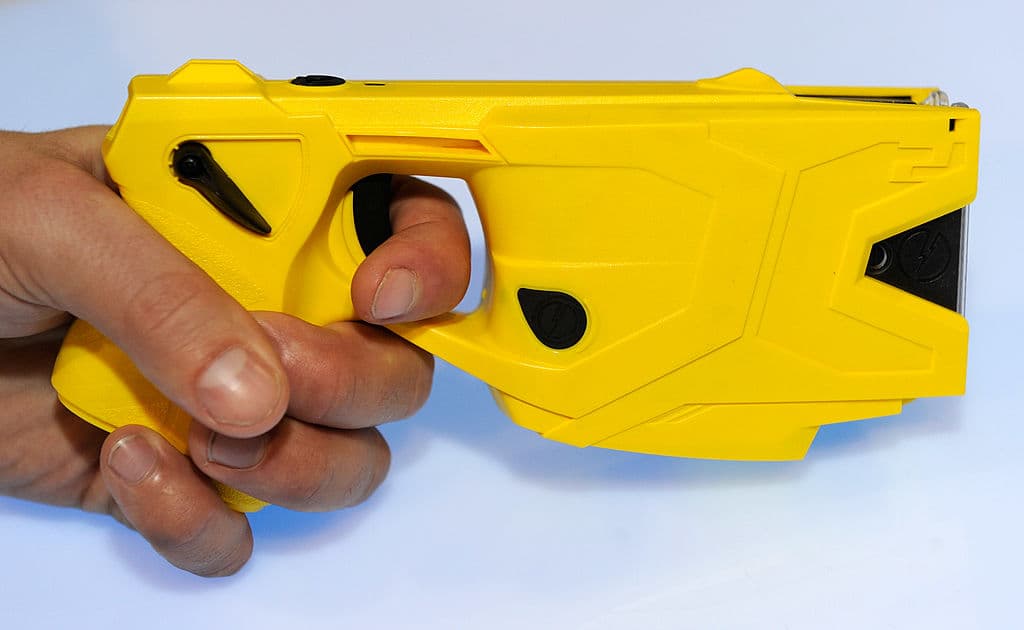
Taser International's X2 two-shot Taser for law enforcement offers dual lasers to assist aiming and can fire two shots up to 25 feet.
Imagen Ethan Miller/Getty Images
No charges
In 28 years, Rundle's office has not charged a single police officer for an on-duty shooting death. After an almost two-year investigation in Reefa’s case, prosecutors in 2015 declined to pursue criminal charges against Mercado, ruling that his death was an accident.
"Officer Mercado would have been justified in the use of 'any' force," according to the 38-page report by the Office of the State Attorney for the 11th Judicial District.
The State Attorney explained that since a Taser is considered non-lethal, the officer could not have expected the shot he fired would kill Hernandez.
In a separate statement, Fernandez Rundle noted that a medical examiner had also determined the death was accidental, leaving "little legal room to pursue any possible criminal charges." She added: "Our extensive investigation determined that the sad tragedy of this situation is that no one involved intended or anticipated any serious injury occurring to this young man."
The Hernandez eventually filed a lawsuit against the Miami Beach Police Department, claiming police violated his civil rights.
The family eventually sued Taser and the City of Miami Beach a private settlement was reached.
New Taser policy
There was one positive change to come out of the tragedy.
In 2015, the Miami Beach Police Department ordered changes to its Taser policy and issued new devices that issue smaller charges of electricity and include an extra safety feature; a double-laser sight to help officer avoid aiming at the chest area.
"The recommended points of aim are the rear torso below the neck area; and, front torso lower center of mass (below the chest or heart area)," according to the new policy.
Officers can also no longer use the weapon unless someone is being threatened.
Relacionados: