In the battle to get out the vote, Republicans and Democrats, as well as other independent groups, are intensifying their efforts to attract and educate Hispanic voters in one of the most important – and polarized - elections in recent history.
Voter registration: Catching up with covid
The pandemic hit voter registration efforts hard, but now the political parties and other independent groups are trying to catch up using digital technology, though Republicans say they are having more success by returning to a traditional in-person ground game. (Leer en español)
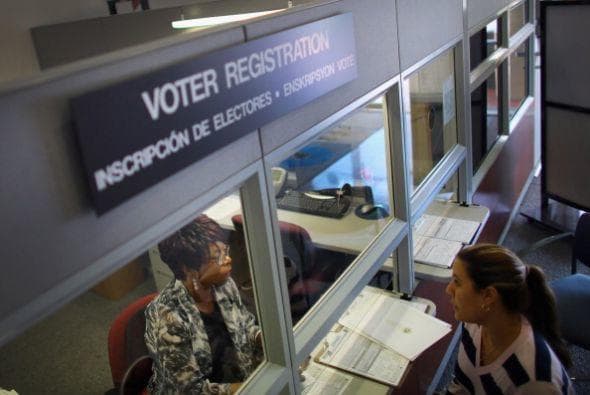
Voters registration for the 2020 election ends in October in most states.
Imagen Joe Raedle / Getty Images
Registration is still open in most states so it’s still too early to tell who has the advantage, but data appears to show numbers well down from previous years due to the covid-19 pandemic, though it has begun to pick up.
While Democrats appear to have a slight advantage in new voter registrations in some of states, the Republican Party is closing the registration gap in Florida, a key swing state.
Voter registration data is a key indicator of how the political parties are likely to perform on election day, although more and more citizens are opting these days to register without any party affiliation making it harder to predict. Registration deadlines vary and are open in most states for another couple of weeks, until October 5 in Texas and Florida, October 9 in North Carolina, October 19 in Pennsylvania and up to election day, November 3 in California.
Notas Relacionadas
32 million Hispanics
The stakes are huge and the pool of new voters is full of young Hispanics.
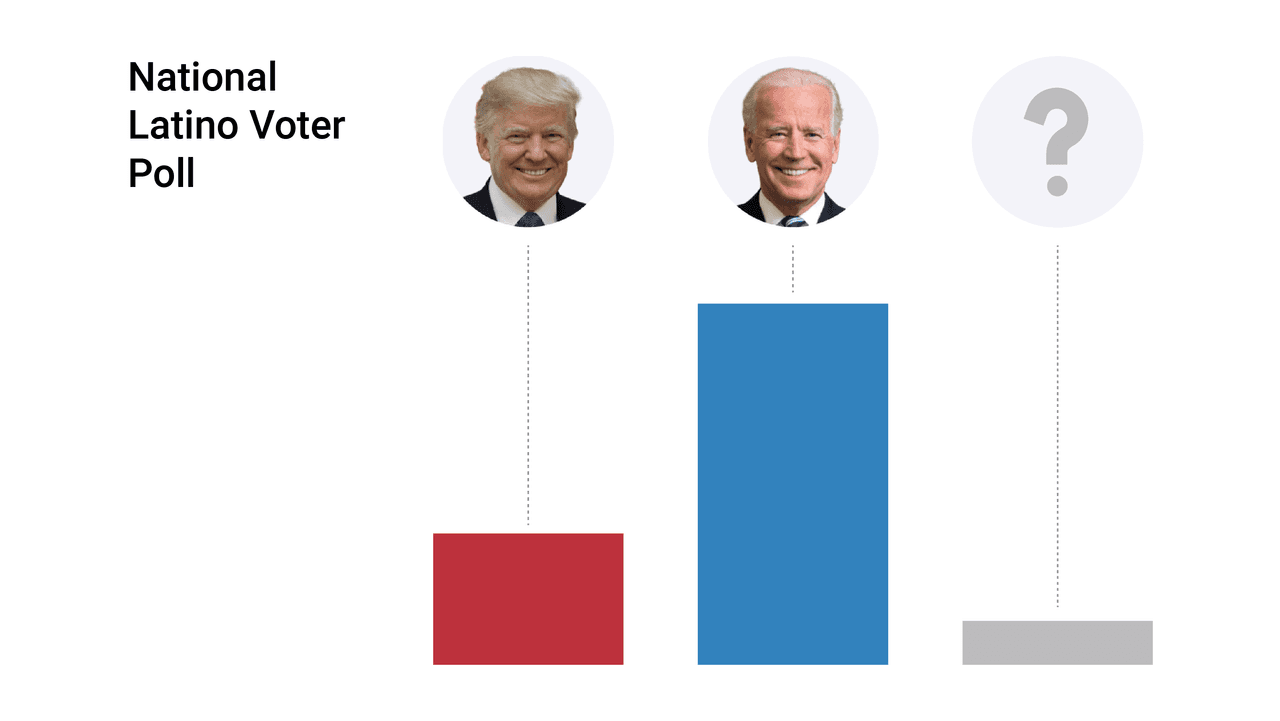
This year, Latinos are the largest nonwhite group of eligible voters this election, at 32 million. However, the National Association of Elected and Appointed Officials has projected that fewer than half, about 14.6 million, will vote in this year's election, which will be held during the coronavirus pandemic.
A new poll by the Pew Research Center published on Wednesday found that the share of eligible Hispanic voters continues to increase in every state, while white, non-Hispanic, eligible voters declined between 2000 and 2018
These gains by Hispanics are particularly large in the Southwestern U.S., in states like Nevada, Arizona, California and Texas, as well as Florida.
Video Will there be Generation Z impact on the upcoming 2020 election?
Both parties are making a last-minute push. The Republican Party on Tuesday launched an expanded version of its Vote.GOP online hub, including a new Spanish version, where voters can register to vote, check their voter status, update their address, find their polling location, and request an absentee ballot.

The Republican Party's voter registration website.
Imagen Screen grab from website
The Democrats have their own almost identical online portal version, also with a Spanish version, IWillVote.com (Voyavotar.com). Both sites, Republican and Democrat include streamlined technology that gives voters customized options based on the current stage of voting in their state.
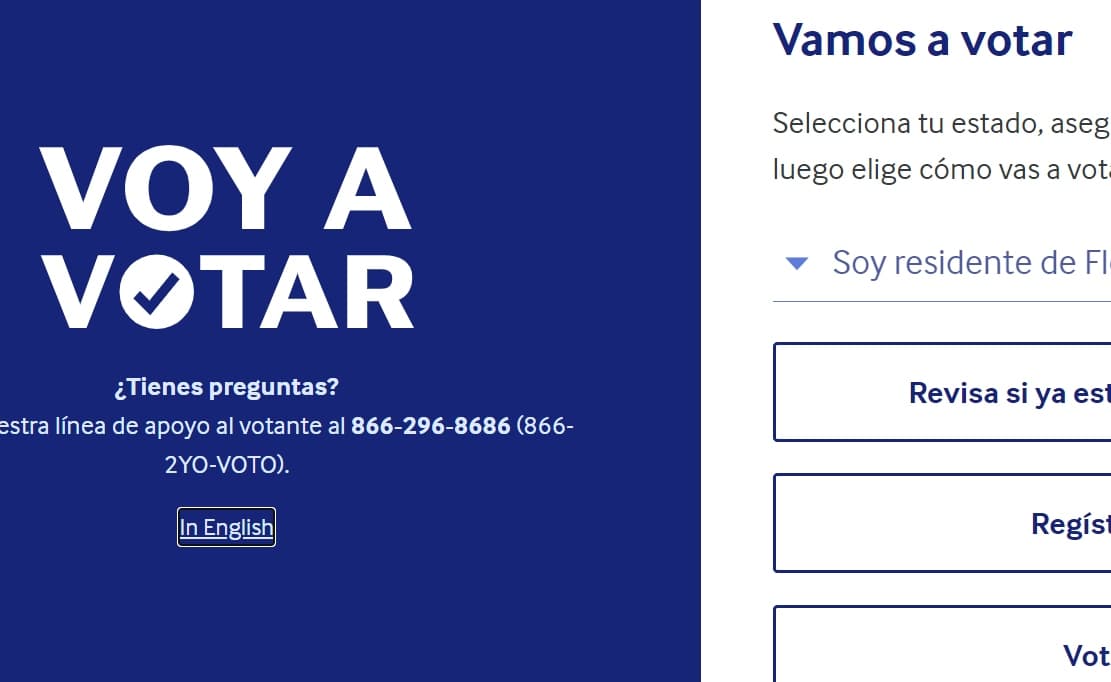
The Democrat's voter registration website.
Imagen Screen grab from website.
"Pulling out all the weapons"
So far, the Republican Party says 700,000 voters have registered to vote or checked their voter registration on the website. Additionally, through volunteer voter registrations in the field, the party say it has added over 140,000 new voters, including 20,000 Republicans over just the last three weeks. By comparison, it says it registered only 46,000 voters in 2016.
The party also held 89 Latino engagement events last week alone in eight battleground states; Texas, Florida, California, Pennsylvania, Arizona, Colorado, Nevada, and New Mexico. It has another 74 similar events in those states this week. Since January 2020, multiple states have been phone banking exclusively in Spanish.
It has also held more than 900 Latinos for Trump events since 2019 in 17 States as well as Washington DC. " We are pulling out all the weapons,” said Yali Nuñez, director of Hispanic media for the Republican Party. “I’m seeing so much enthusiasm from Hispanics. We want to make it easier for them to vote,” she added.
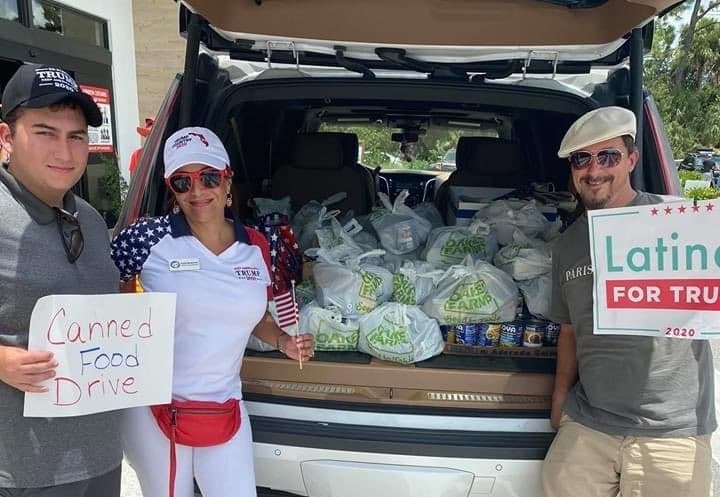
A Republican canned food drive in South Florida.
Imagen GOP handout

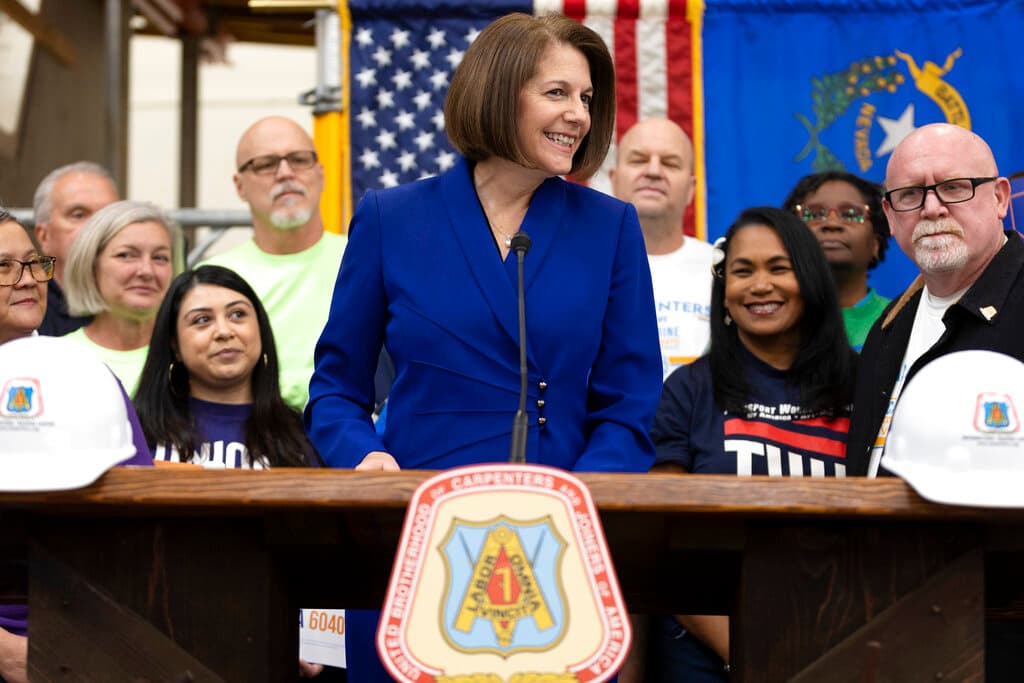

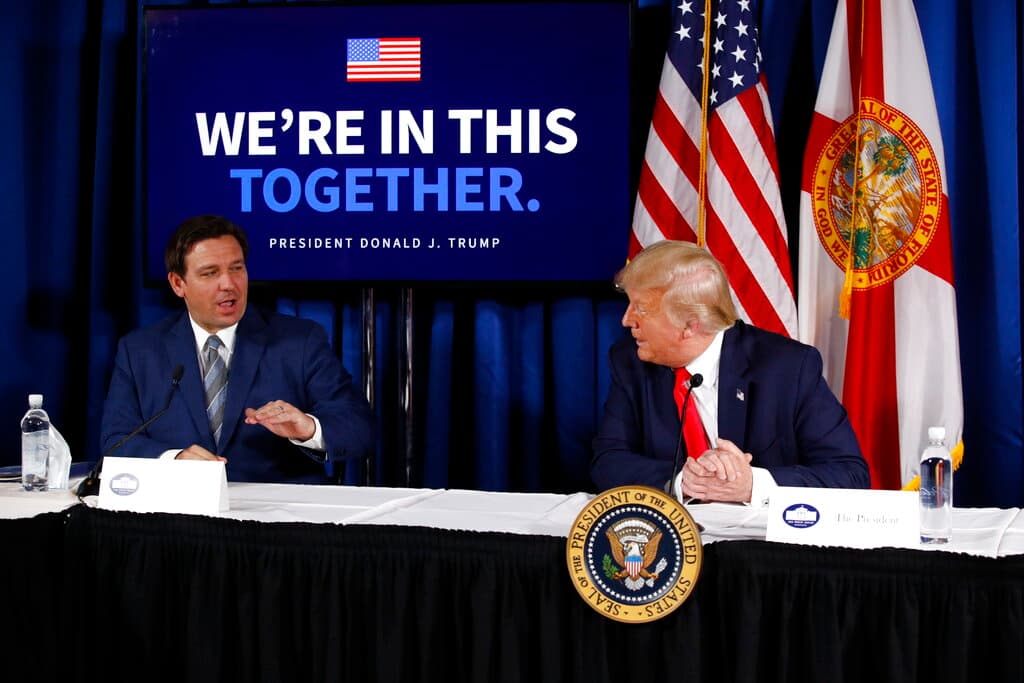

Democrats are equally passionate. The party says it has hired its largest ever Hispanic staff in Florida, while also increasing its Spanish-language footprint in digital, as well as massive spending on Spanish language TV and radio ads as well as holding mini campaign rallies in places like Las Vegas to distributing literature.
Last week, Democrats launched a ‘Voy a Votar’ virtual bus tour targeting Hispanic voters using a 'text bank’ – a Spanish peer-to-peer texting program for the Hispanic community.
“The Democratic party has been invested since Day One, way before coronavirus,” said Jorge Neri, senior political advisor to the Joe Biden campaign. Despite being unable to deploy volunteers on the streets, he said digital messaging was effective.
“The connections we are having are longer, more meaningful, less rushed. Out contact rates are higher. People are at home more and they want to have that connection now,” he added.
LATINOS FOR BIDEN HORSE PARADE!!! pic.twitter.com/SR5EgPZh8W
— Adrian Eng-Gastelum (@AdrianEngGast) September 26, 2020
Other private groups are also resorting to online tools focused on the Hispanic community, such as WhatsApp, the private messaging service, which has partnered with Vote.org, the largest nonpartisan voter registration organization in the country, to create the WhatsApp x Vote.org voting resource.
Facebook is also launching what it calls “the largest voting information effort in US history,” starting with the new Voting Information Center, where you can find the latest resources about voting in the 2020 election. The company says its goal is to help register 4 million voters.
Lack of outreach
Some Latino activists say they are still waiting to see the results. “Campaign outreach to Latinos tends to be anemic,” said Clarissa Martinez de Castro, deputy vice president of UnidosUS. “The Republicans tend to ignore Latinos and they tend to be taken for granted by Democrats,” she added.
However, about 40 percent of young, Democrat or Democrat leaning Latino voters in battleground states say they have not been contacted by the Biden campaign or the Democratic party, according to a recent Civiqs poll.
The poll found that 55% had not heard from the Trump campaign.
As of early August, 64% of Latino voters said they have not yet been contacted by the Democratic or Republican campaigns, according to a poll by Latino Decisions for Somos and UnidosUS. Only 24% said they had heard from a Democrat and 14% from the Republican side.
“It’s this late in the game and we don’t see a radical departure from what we have seen in previous elections. That’s almost political malpractice,” said Martinez de Castro.
Notas Relacionadas
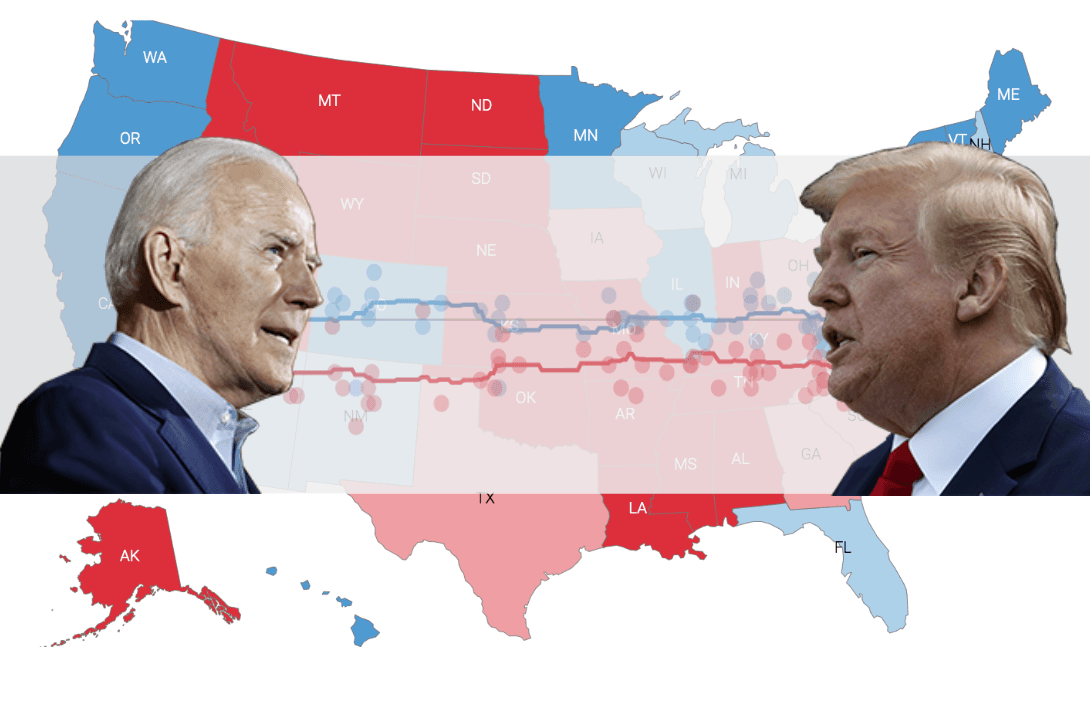
In some states Republicans have braved coronavirus restrictions to mount traditional in person ‘get out the vote’ efforts, and president Trump is holding some reduced-size rallies.
“Republicans have been knocking on doors despite the coronavirus restrictions and Democrats have a lot of catching up to do,” said Sonja Diaz, director the Latino Policy & Politics Initiative at the University of California. “Where there is safe personal engagement it’s proven to be the most effective form of persuasion,” she added.
Covid obstacles
To be sure, the covid-19 pandemic bears much of the blame. Between March and June, states experienced a remarkable decline in their new voter registration numbers due to the pandemic which made it impossible for get out the vote efforts to do their job in person. This trend is especially notable when compared with new voter registration numbers from the months leading up to the last presidential election in 2016, according to David Becker, director of the nonpartisan Center for Election Innovation and Research.
The Brennan Center for Justice at NYU Law this week published new statistics for 21 states, revealing an average decline of 38% in a majority of the states like Arizona, Colorado, Florida and North Carolina.
Only four states reported higher registration growth rates this year than in 2016.
But it may not be too late to catch up. In general, the four-year cycle voter registration activity, usually shows a big jump in September and October of a presidential election year.
“The pandemic has definitely affected voter registration according to our research,” said Becker. “When we looked at the data in about a dozen states, including big ones like California and Texas and Florida, we found a 50% reduction in new voter registration activity between March and June, compared to April of 2016,” he said.
“There’s been a rebound to some extent in the summer, but we haven’t made up all the deficit due to the pandemic,” he added. In fact, July registrations were slightly up on 2016.
Indeed, this week Texas announced it broke voter registration records, adding more than 1.5 million voters since the last presidential election. There’s no way to know right now whether the new voters are Republicans or Democrats, however, in primary voting in March and July, Democrats outpaced Republicans by a wide margin.
And other states show similar trends to varying degrees, according to TargetSmart, a Democratic political data company.
Florida
Florida has added 2.4 million new voters since Election Day 2016. But Republicans have closed a historic gap with Democrats in the state, reducing the lead from 327,000 voters in 2016 to just 183,500 voters, according to the state's Division of Elections website. That's just 1.3 percentage points different from the state's 14 million voters - roughly 5.2 million Democrats and 5 million Republicans, with 3.6 million nonpartisan.
“The effective grassroot operation we have in place is bearing fruits and it has Democrat activists in Florida worried about the Biden campaign’s refusal to knock on doors,“ said Nuñez, the Republican spokesperson.
Pennsylvania, Arizona and N Carolina
Since Election Day 2016, Pennsylvania has added 922,000 new voters to the rolls, with Democrats holding an edge of 132,000 over Republicans in new registrations, according to the TargetSmart data.
That 132,000-registration edge could be significant as Trump won the state by less than 45,000 votes in 2016.
In Arizona, more than a million new voters have registered since 2016, and there, things have been a bit closer. Democrats hold only an 11,000-person edge in new registrations. In addition, there have been 355,000 unaffiliated new registrants.
And North Carolina has added 1.3 million more voters to its rolls since 2016. Democrats had an edge of more than 56,000 in new registrations, while 583,000 others registered as unaffiliated.
Becker said some states could get a big boost this year from the Electronic Registration Information Center (ERIC) which is sending out 17 million letters to citizens who are eligible but have not registered, as part of a nationwide effort to increase access to voter registration while improving the accuracy of voter rolls.
ERIC, which was launched in 2012 with only seven states, but has grown to 30 states, with the addition of Texas and Florida this year. In Texas alone some 3.5 million citizens will be getting the registration letters, and another 2.2 million in Florida.
“It’s really historic,” said Becker. “We expect to see a lot of activity on the [election] websites in those states in the next few weeks. The more that we can keep accurate voter lists the better people will understand they can trust their elections,” he said.
Video Today Americans celebrate National Voter Registration Day
Relacionados: