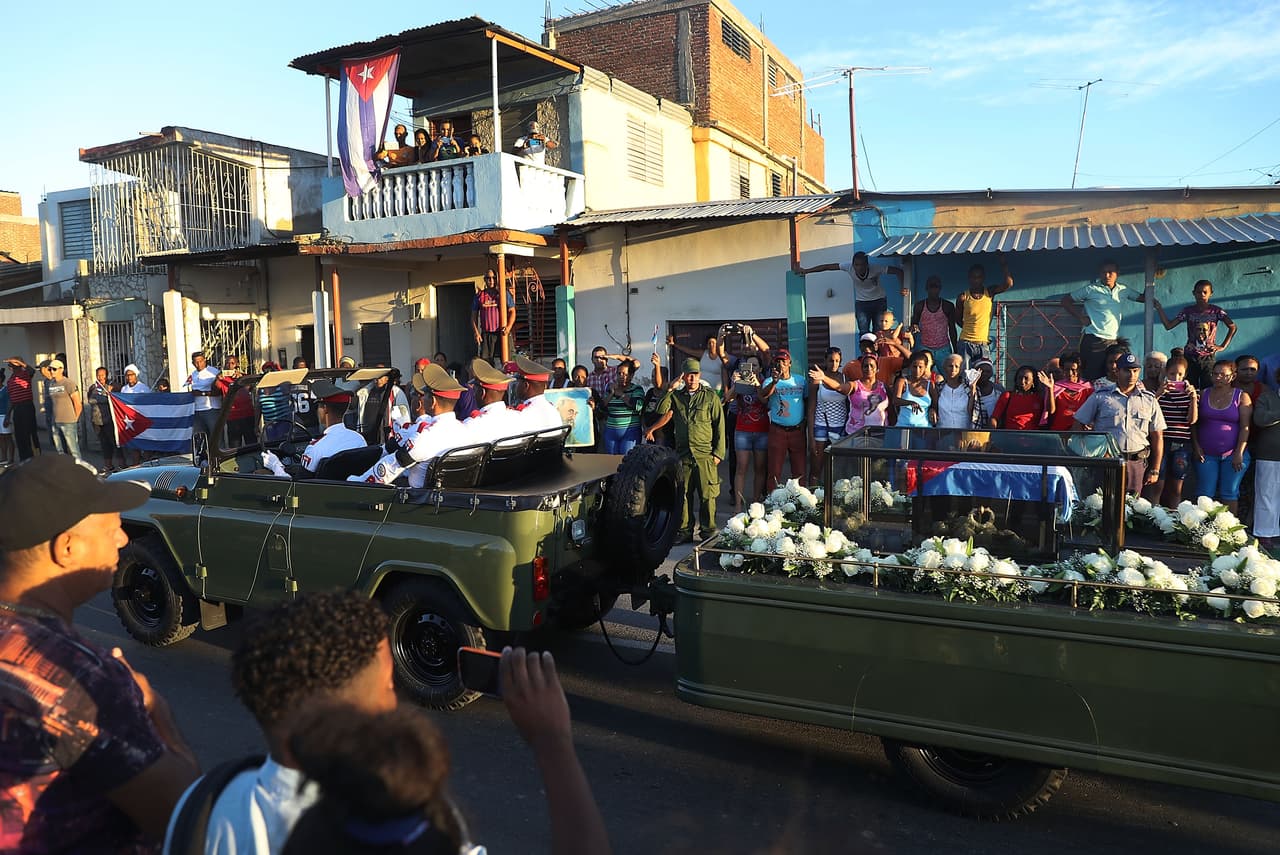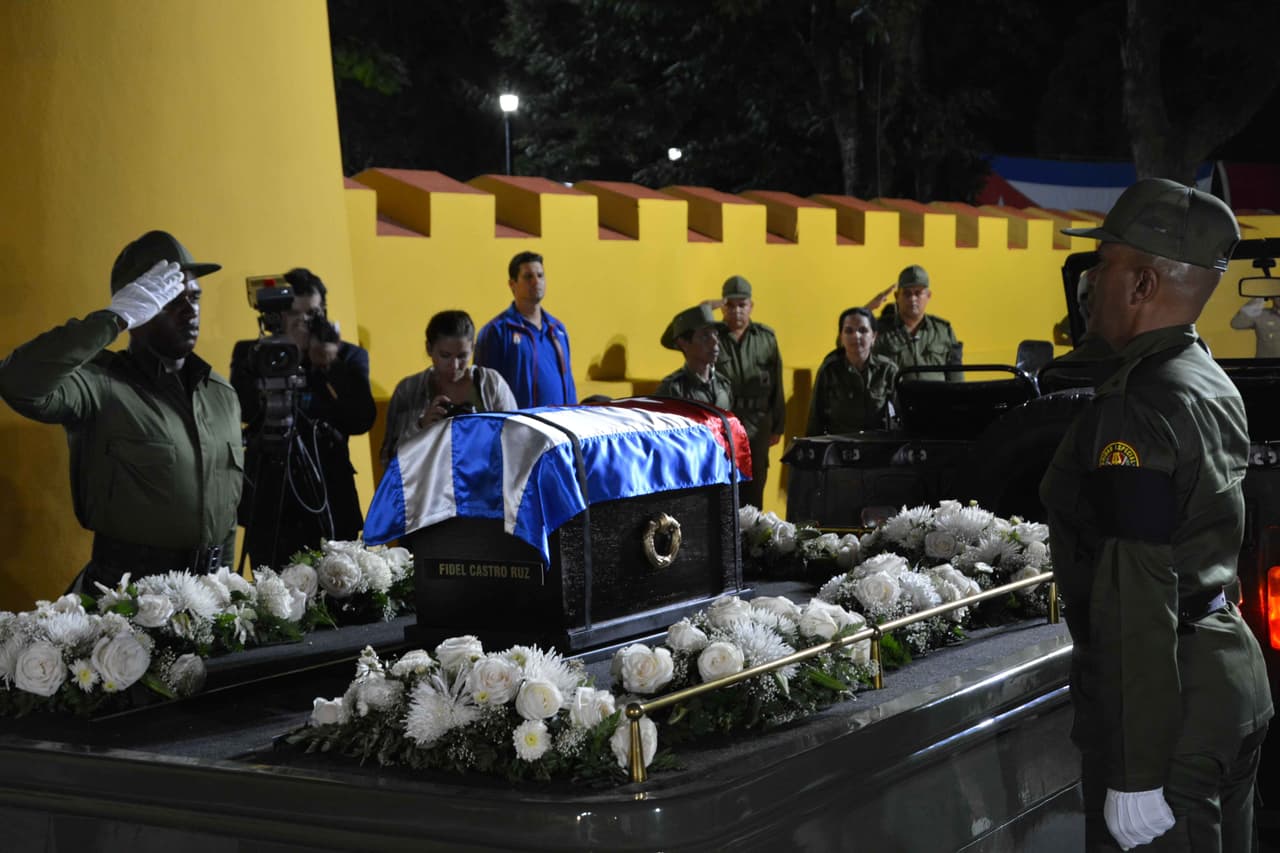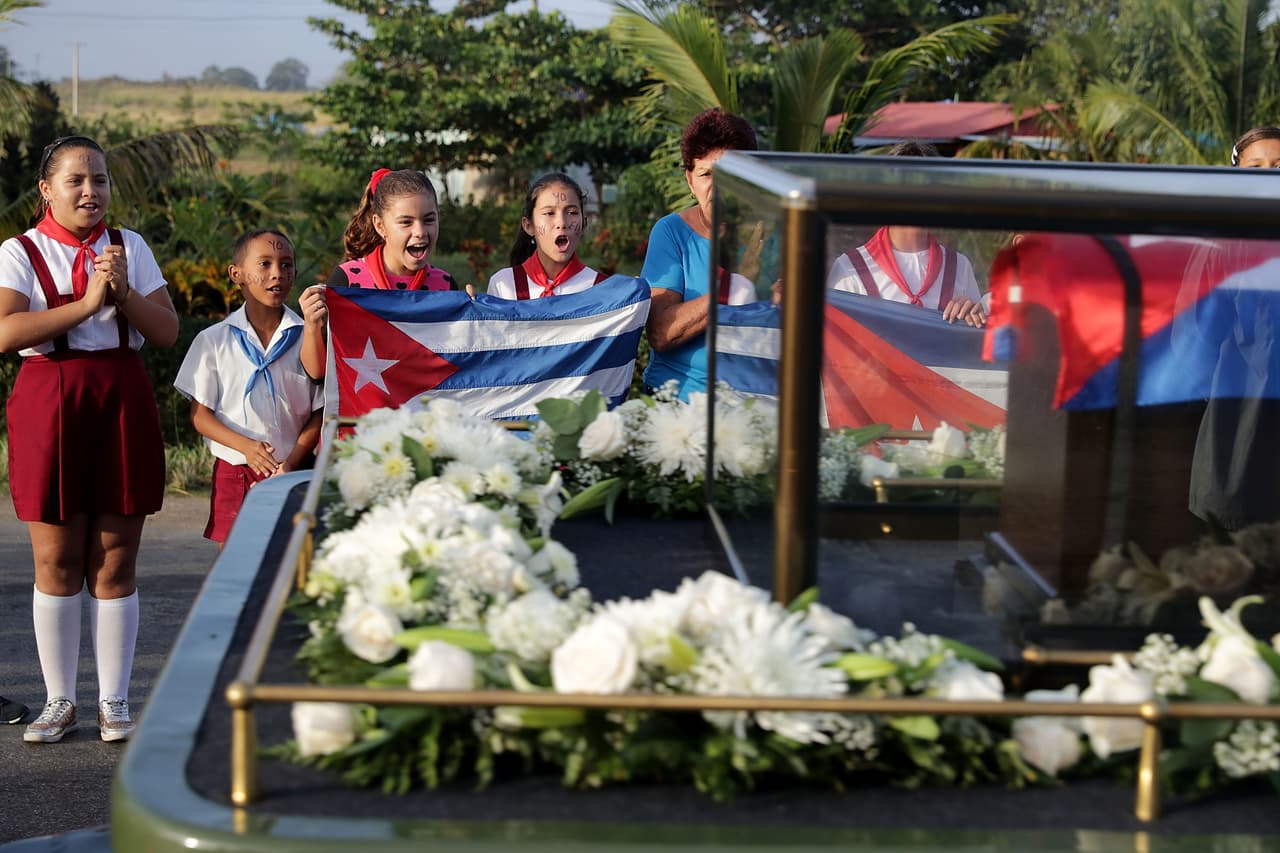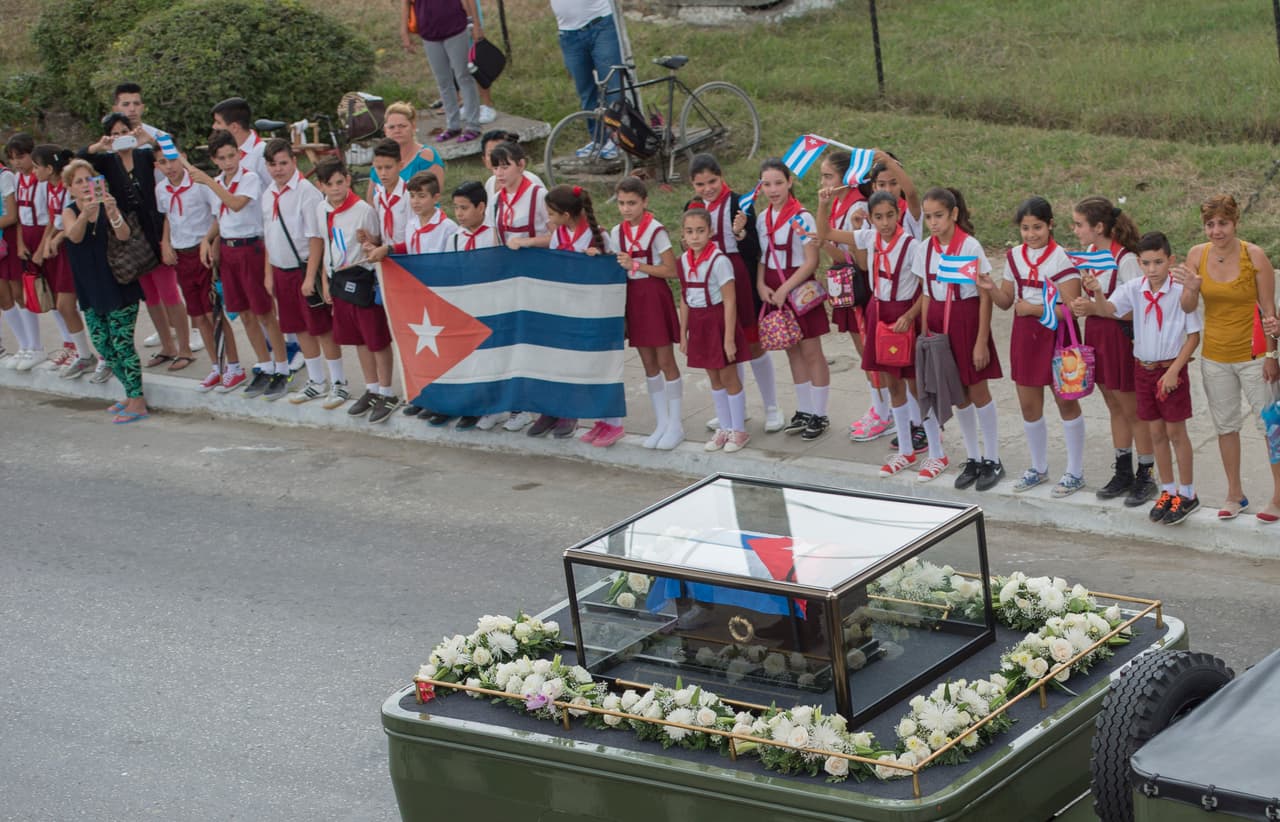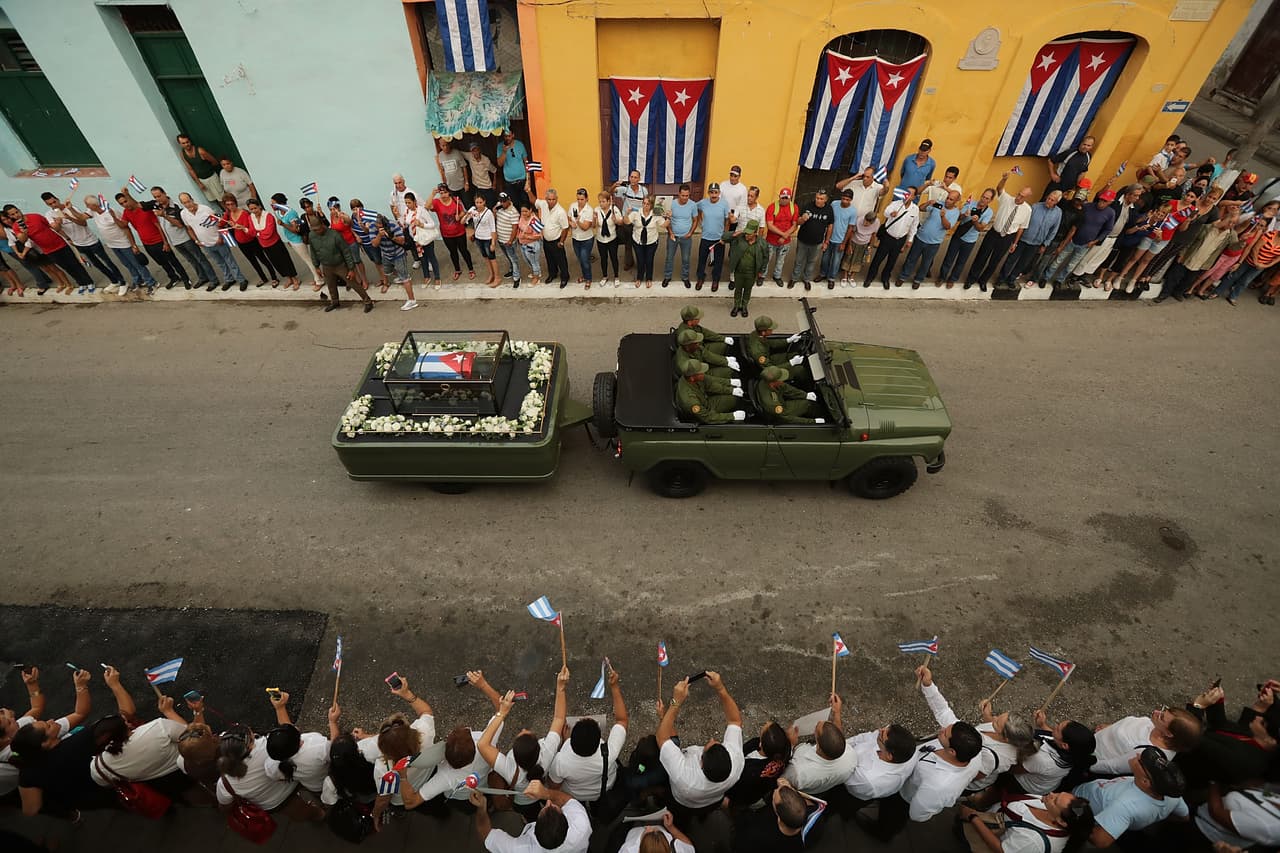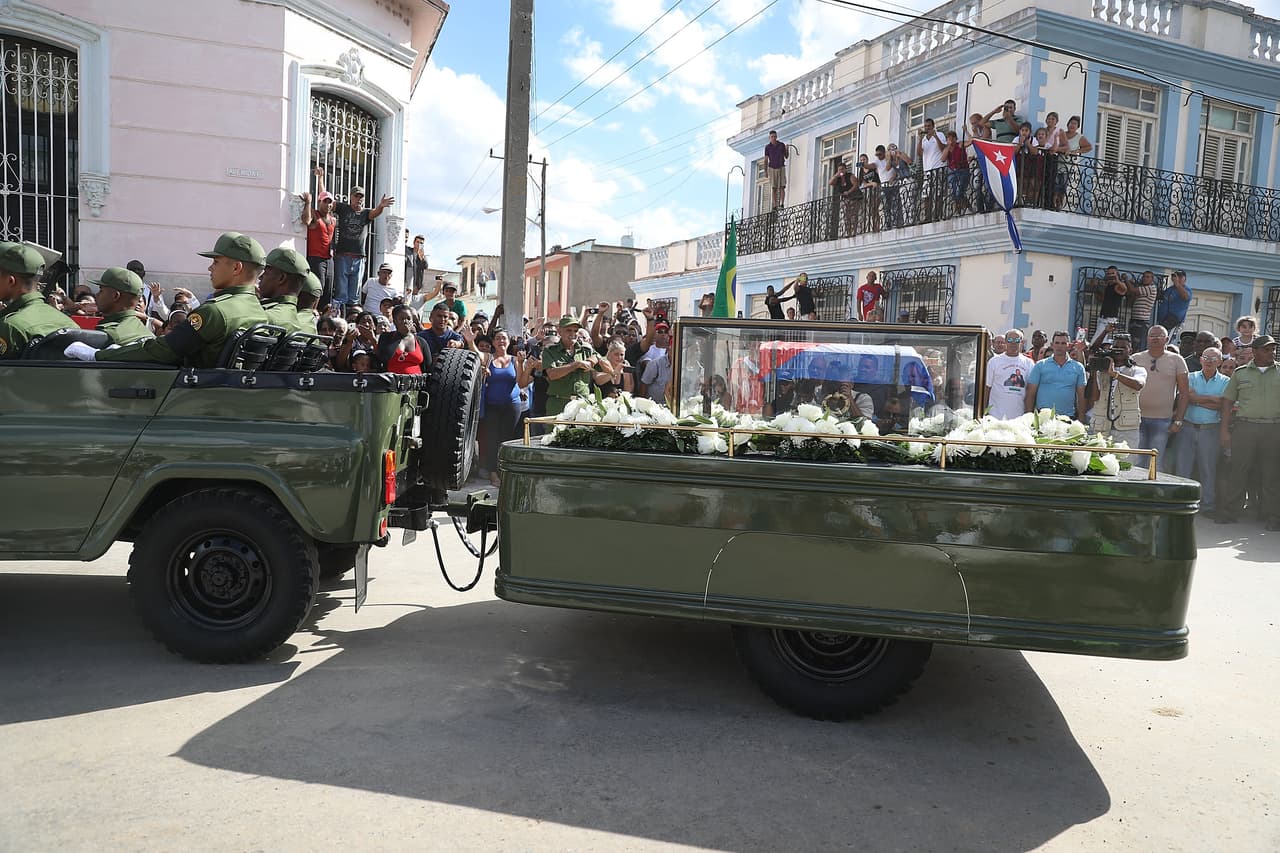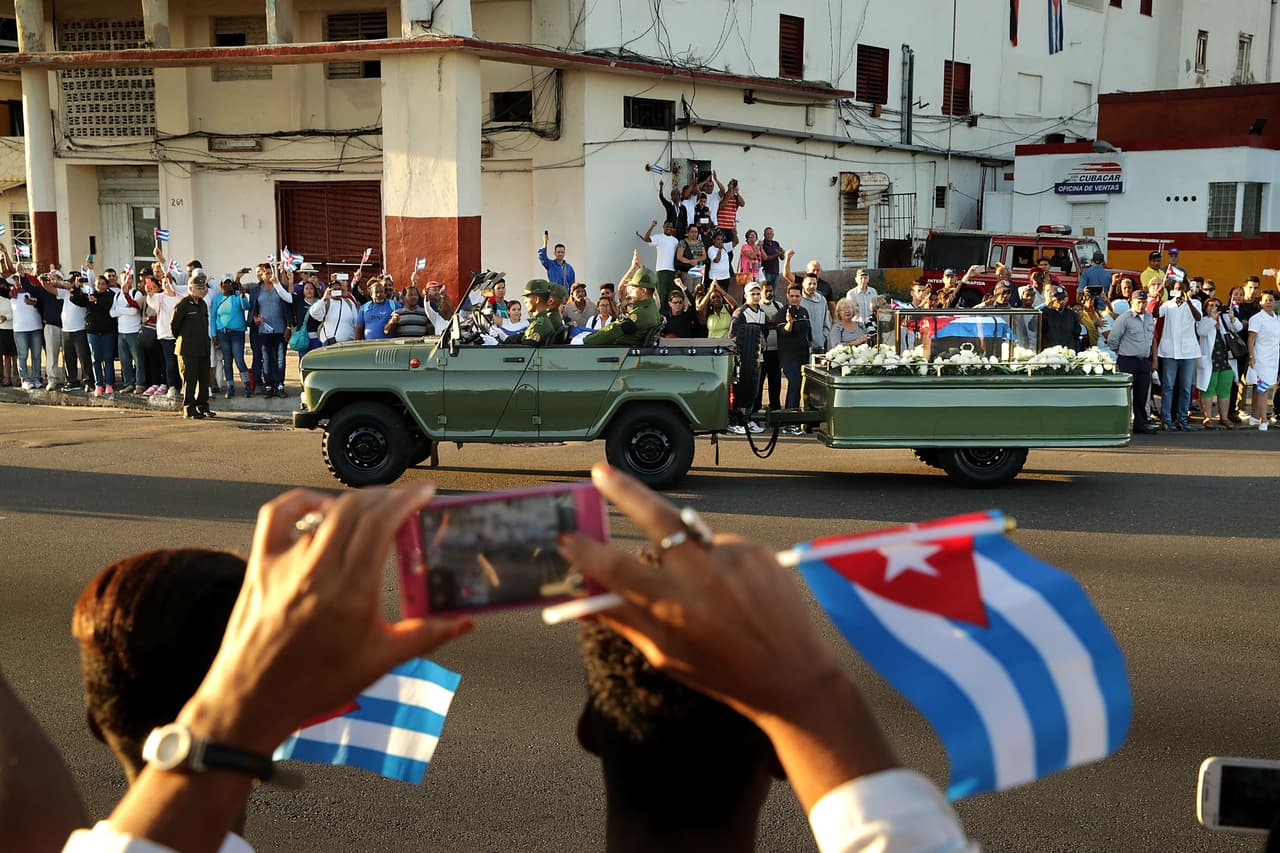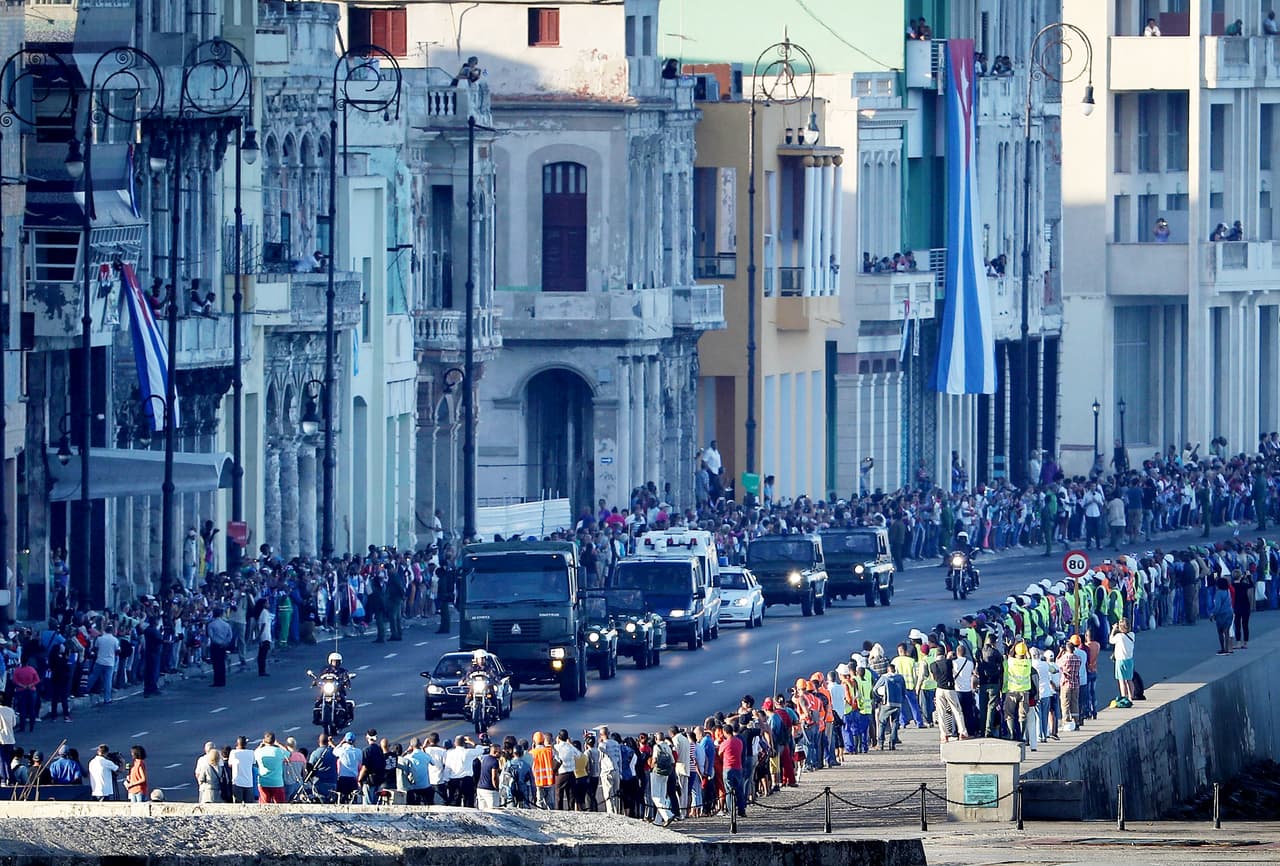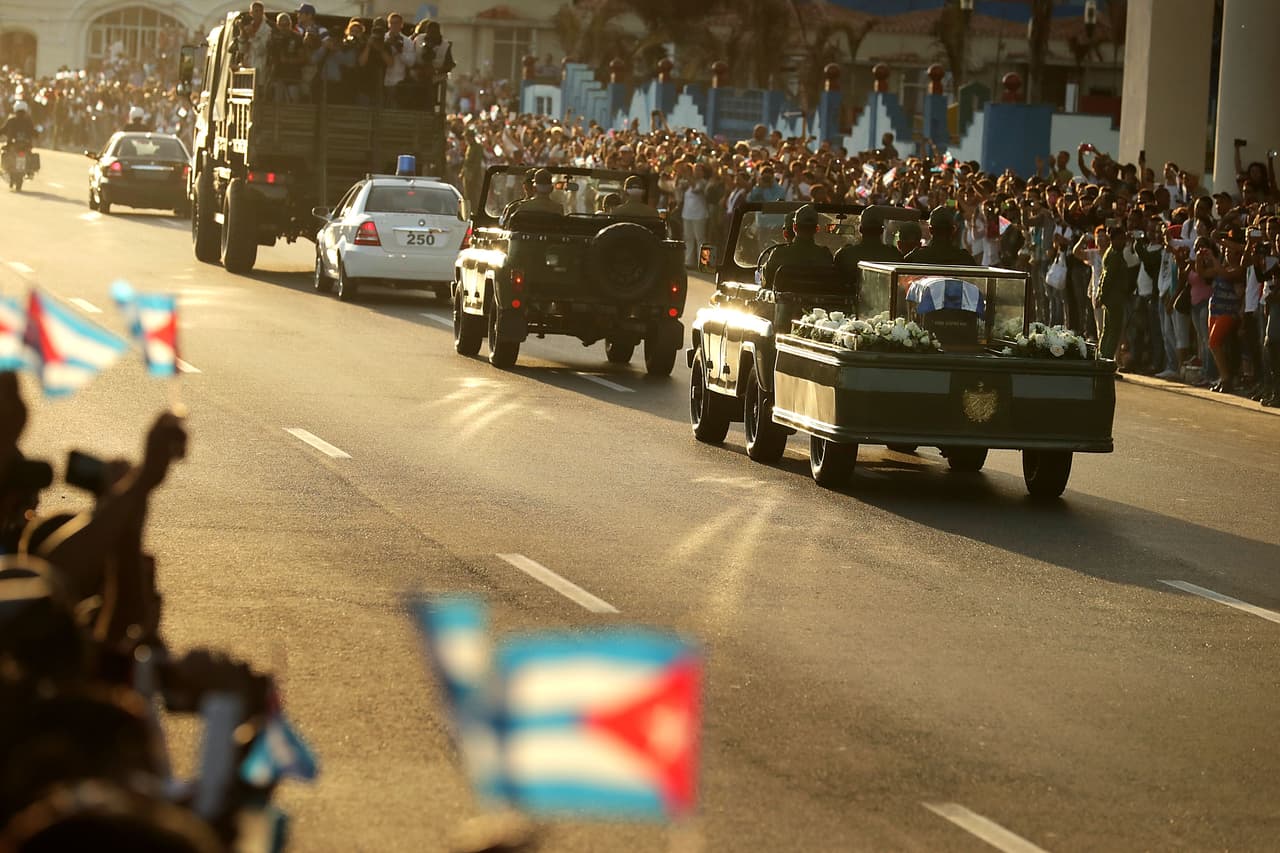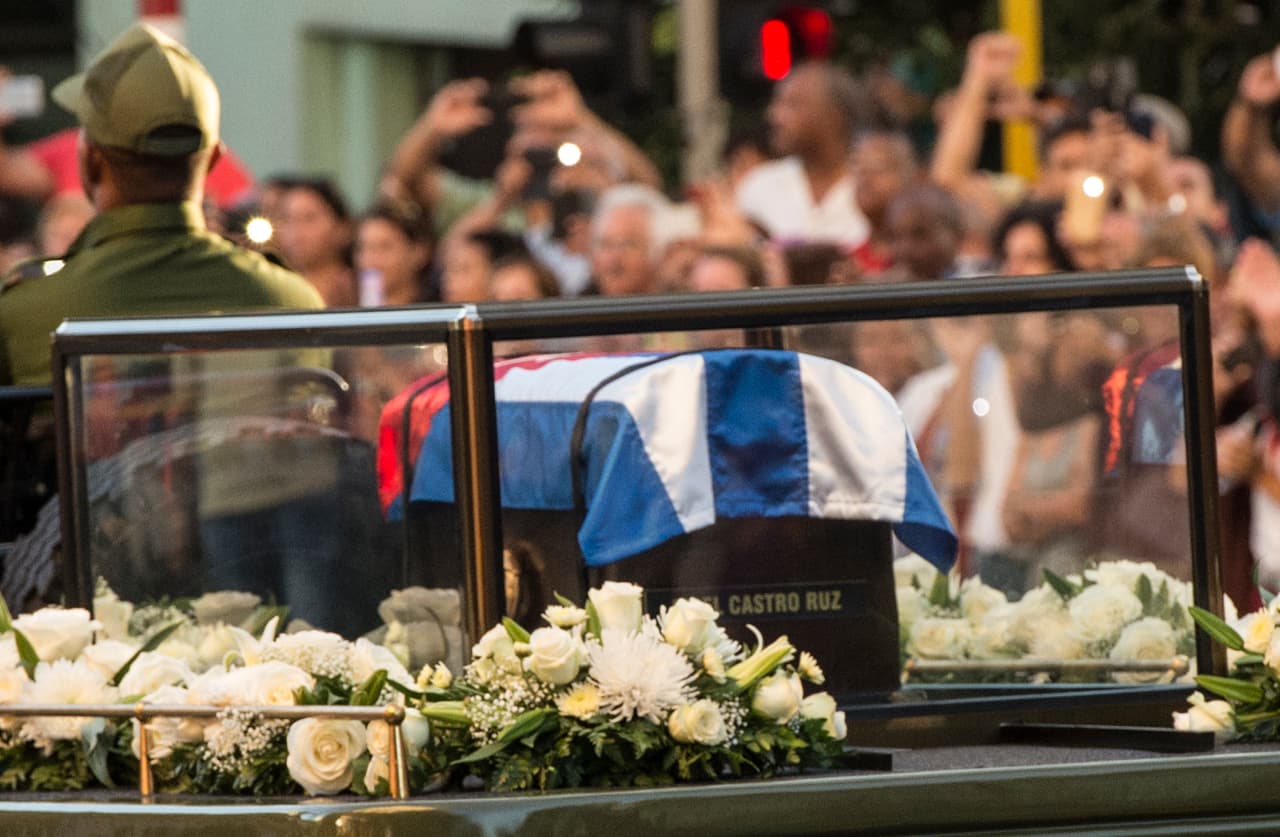
SANTIAGO, Cuba - The ashes of Cuba's legendary communist leader, Fidel Castro, were interred in the eastern city of Santiago early Sunday in a "solemn and private" ceremony attended by family and close associates, state media reported.
A final farewell: Castro's ashes buried in Cuba
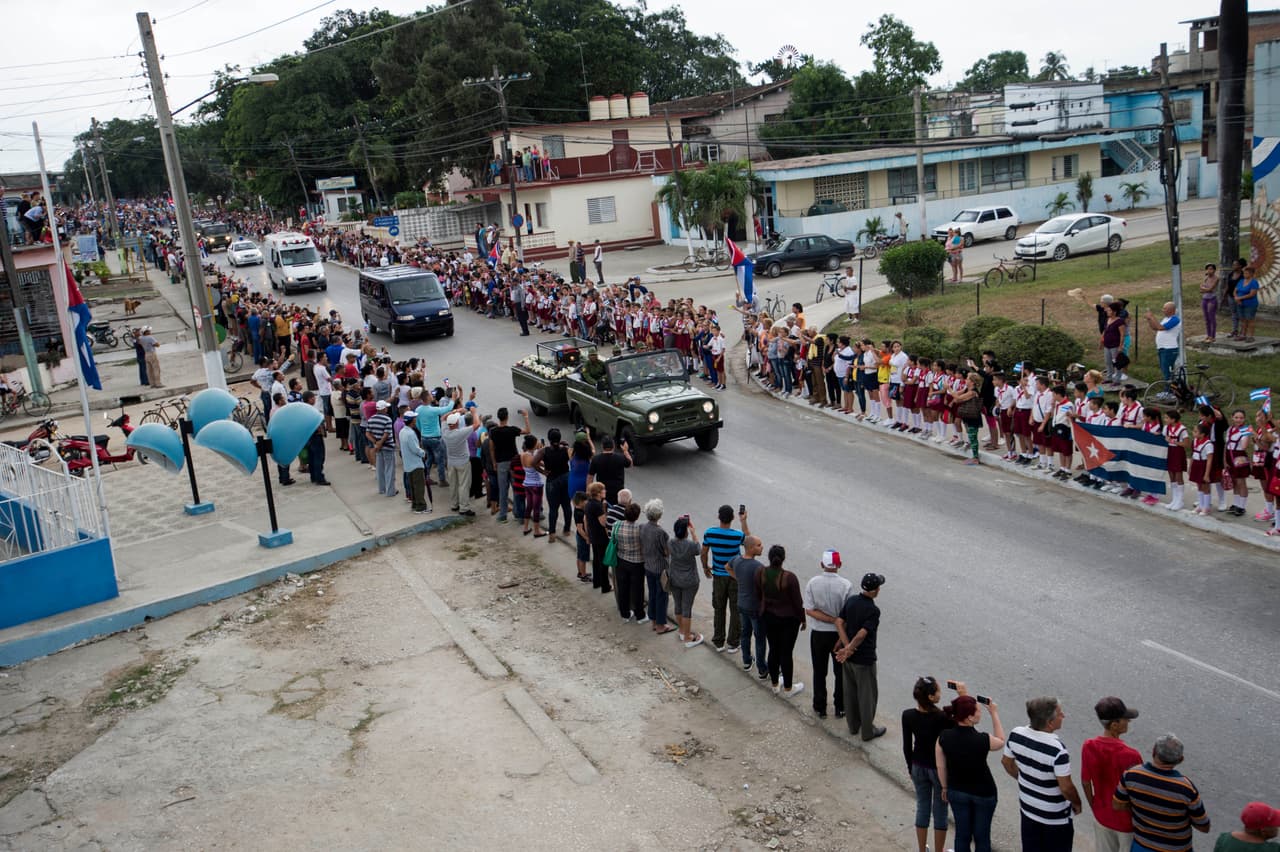
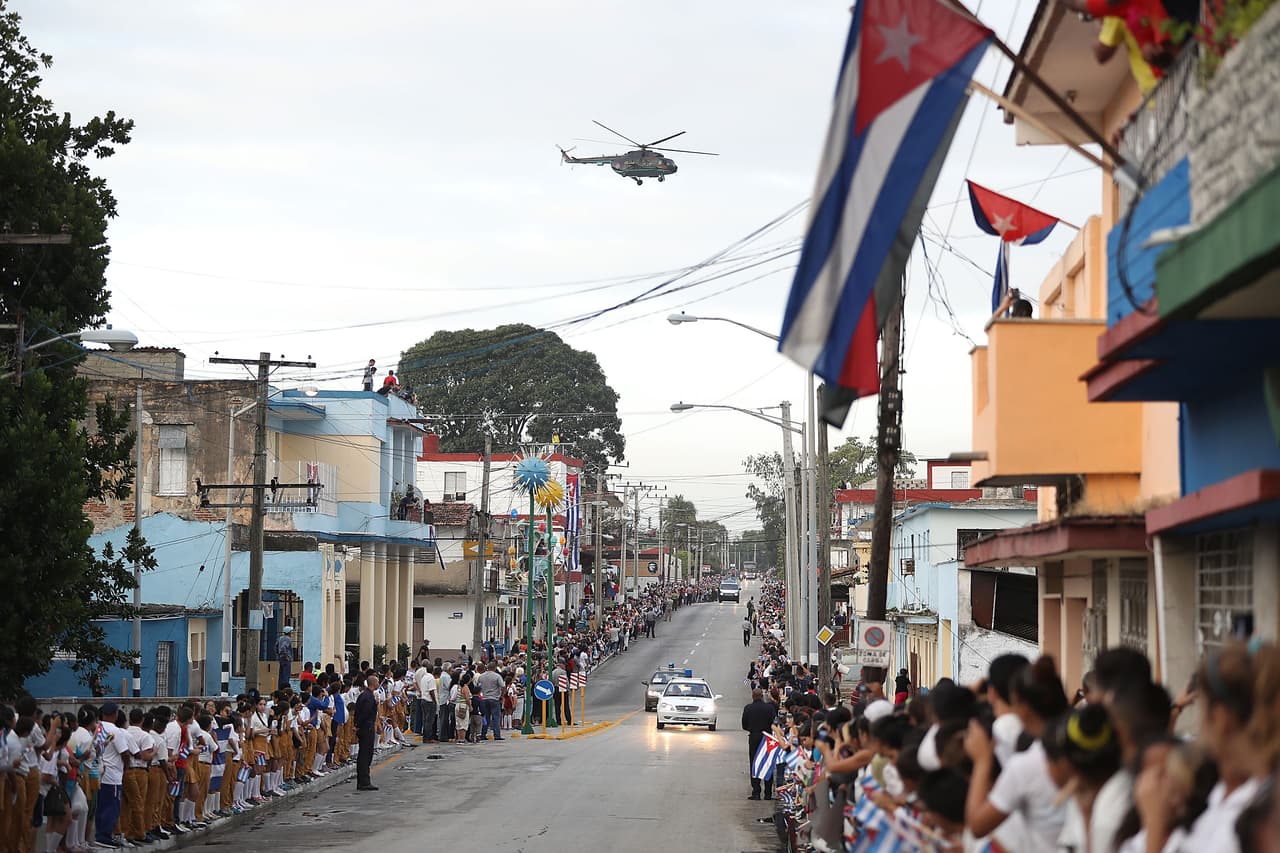
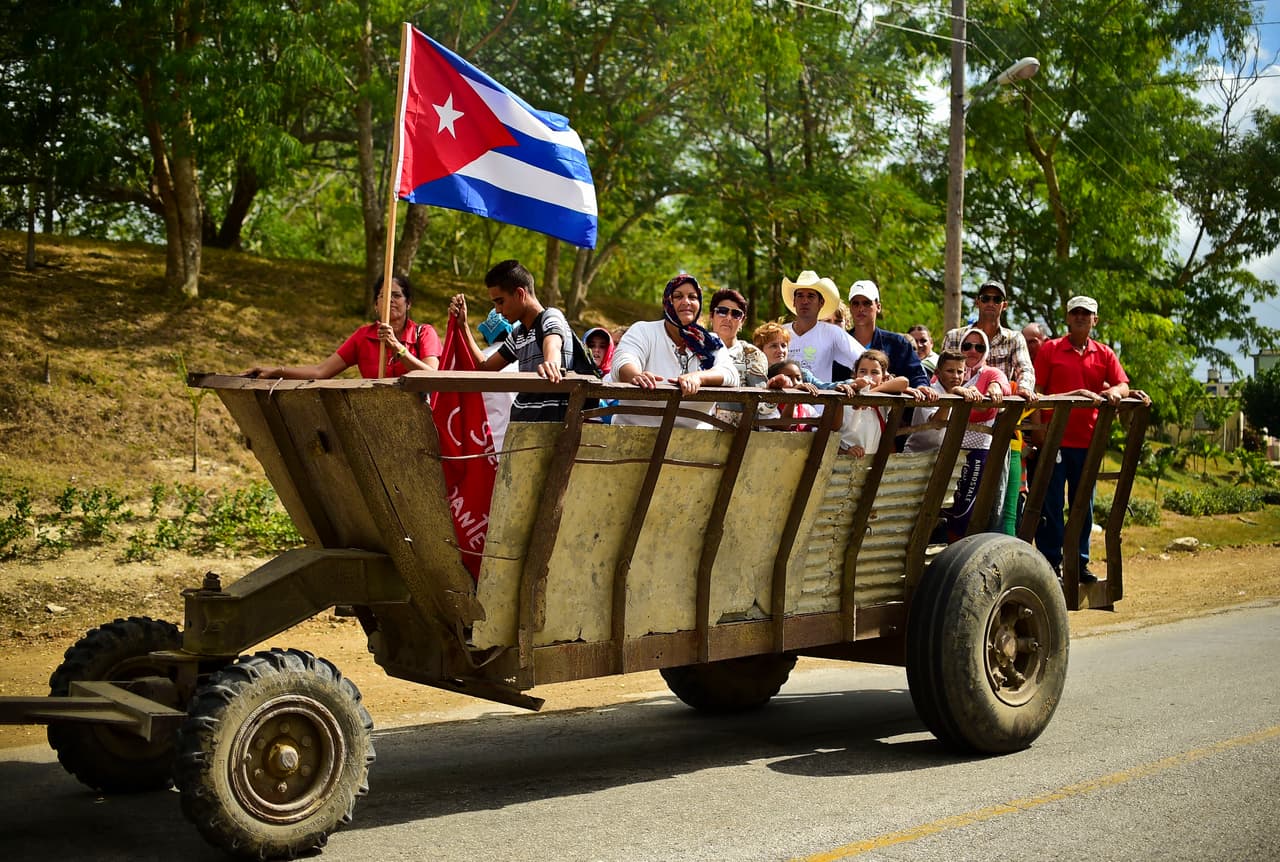
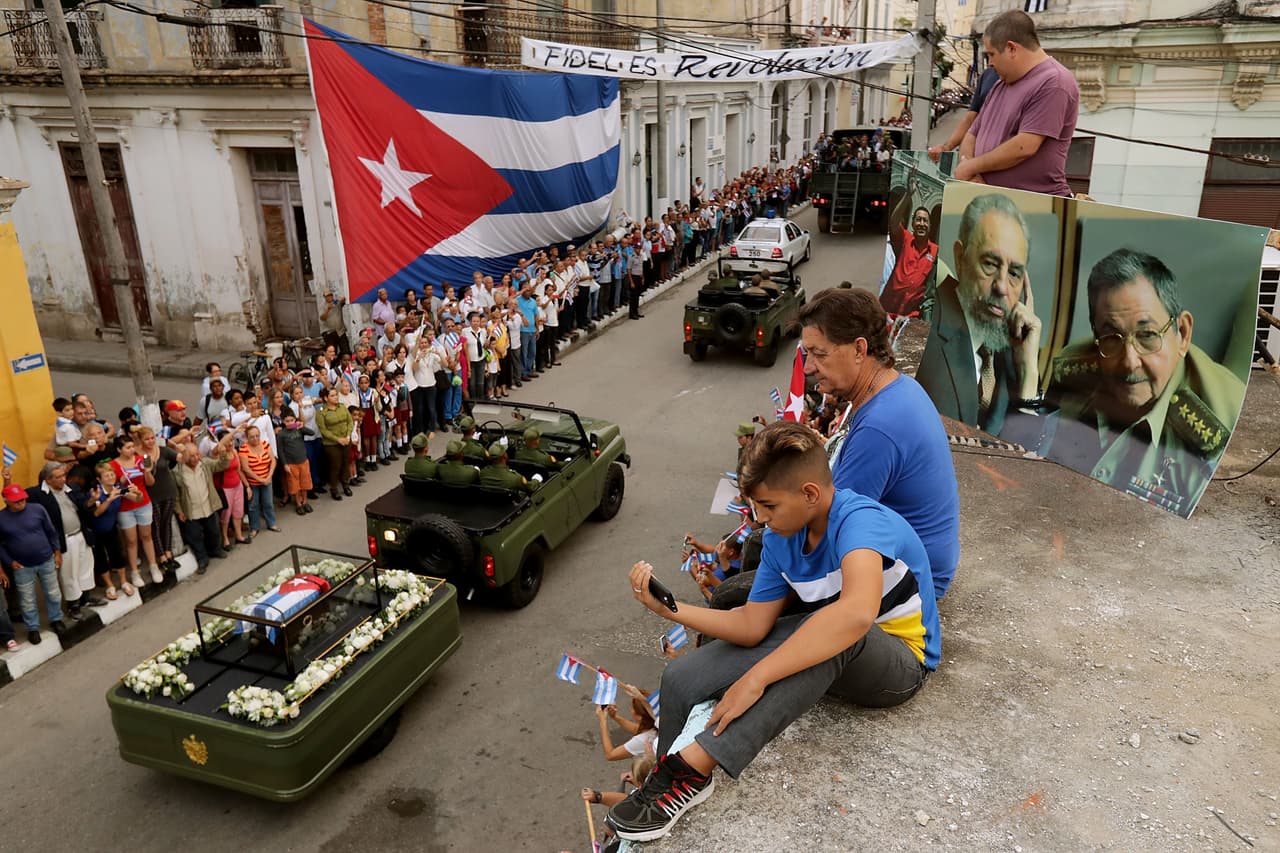
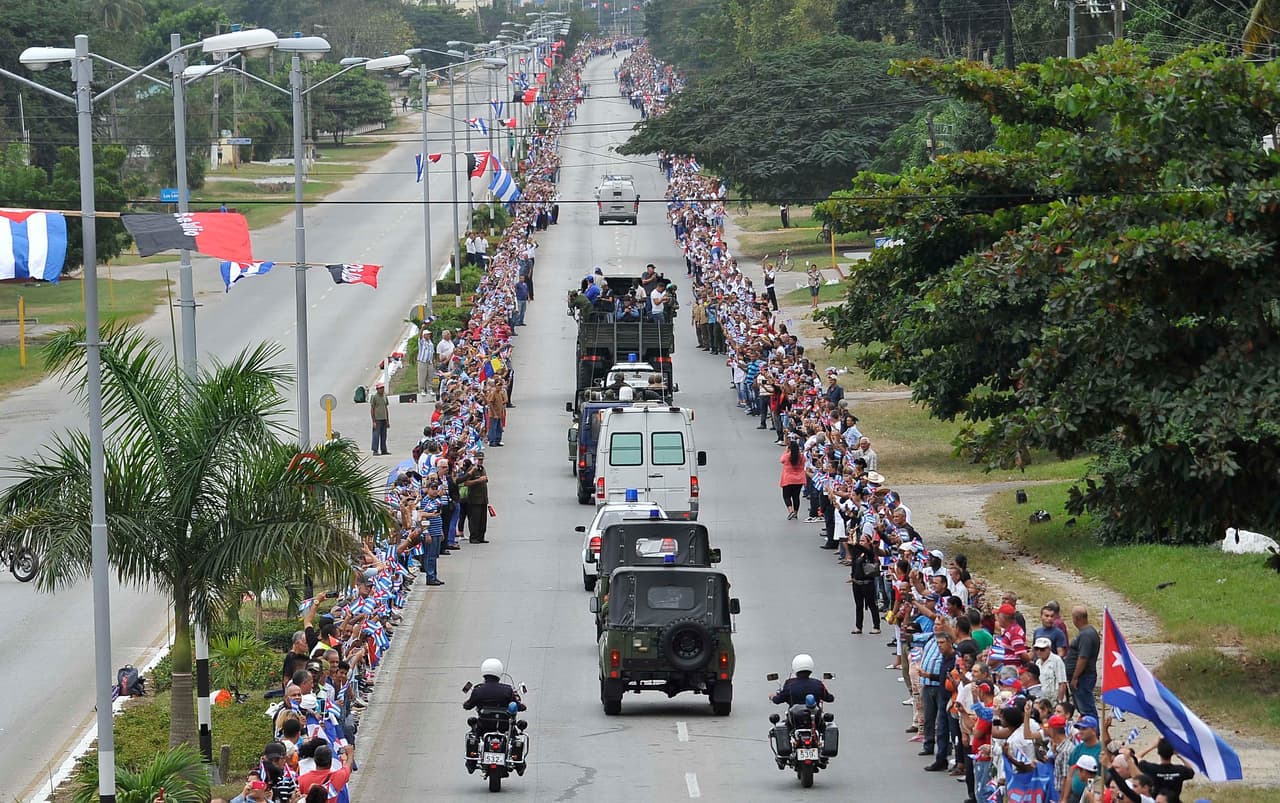
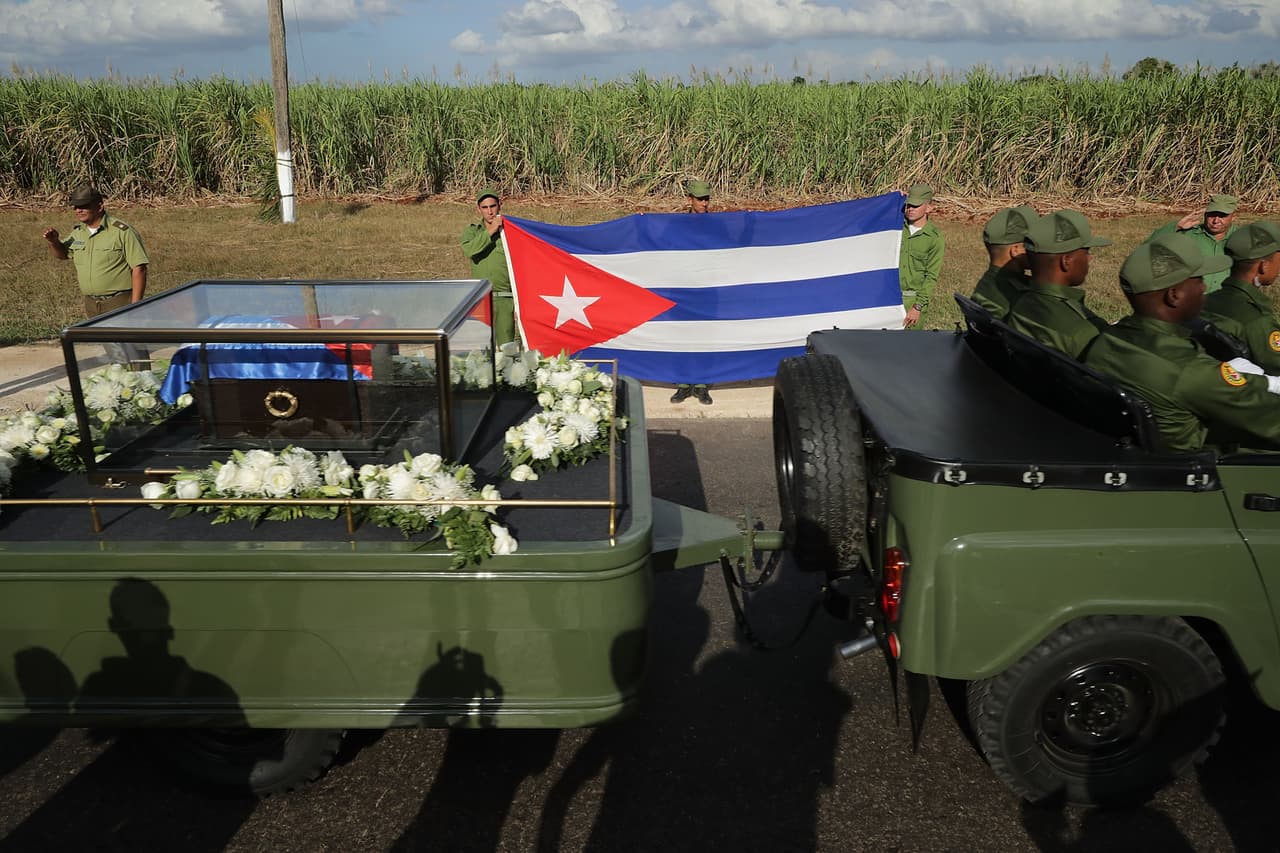
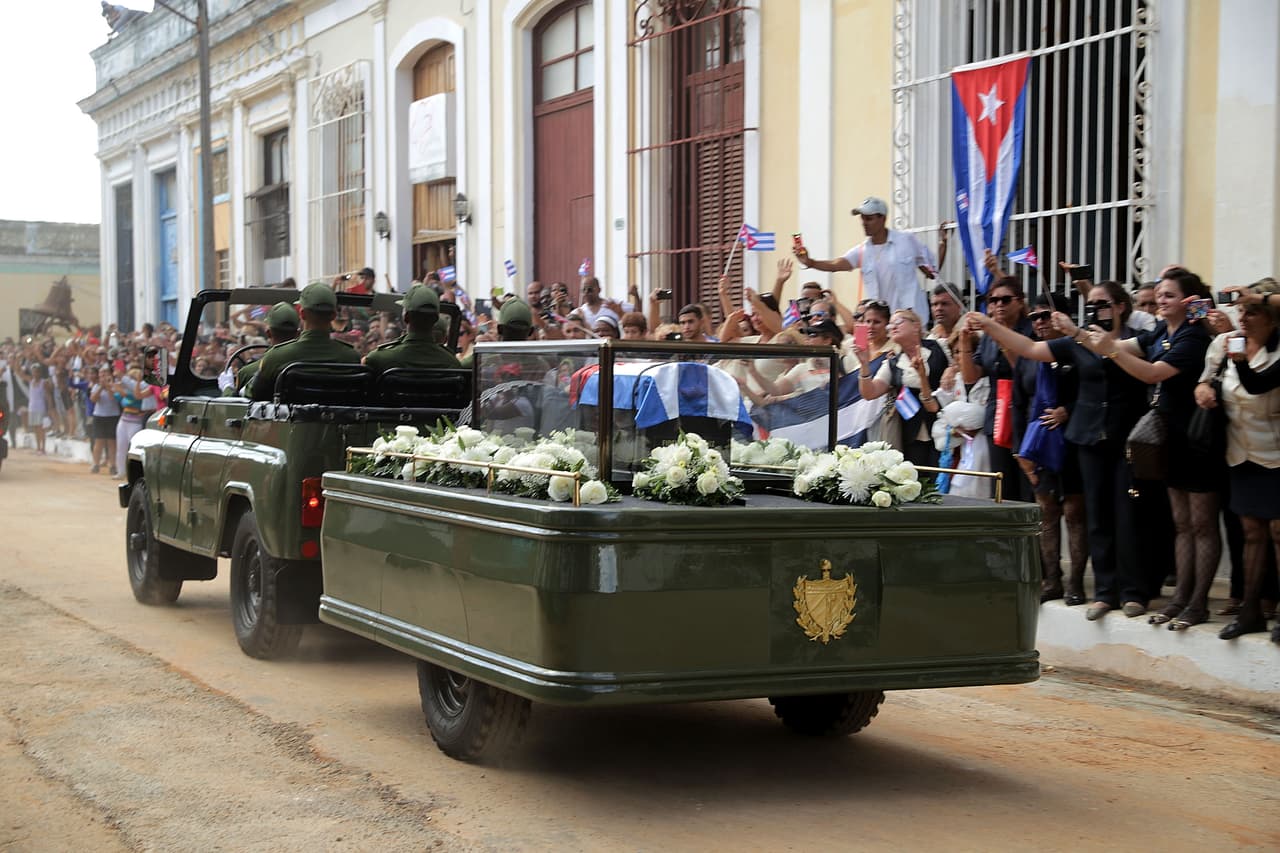
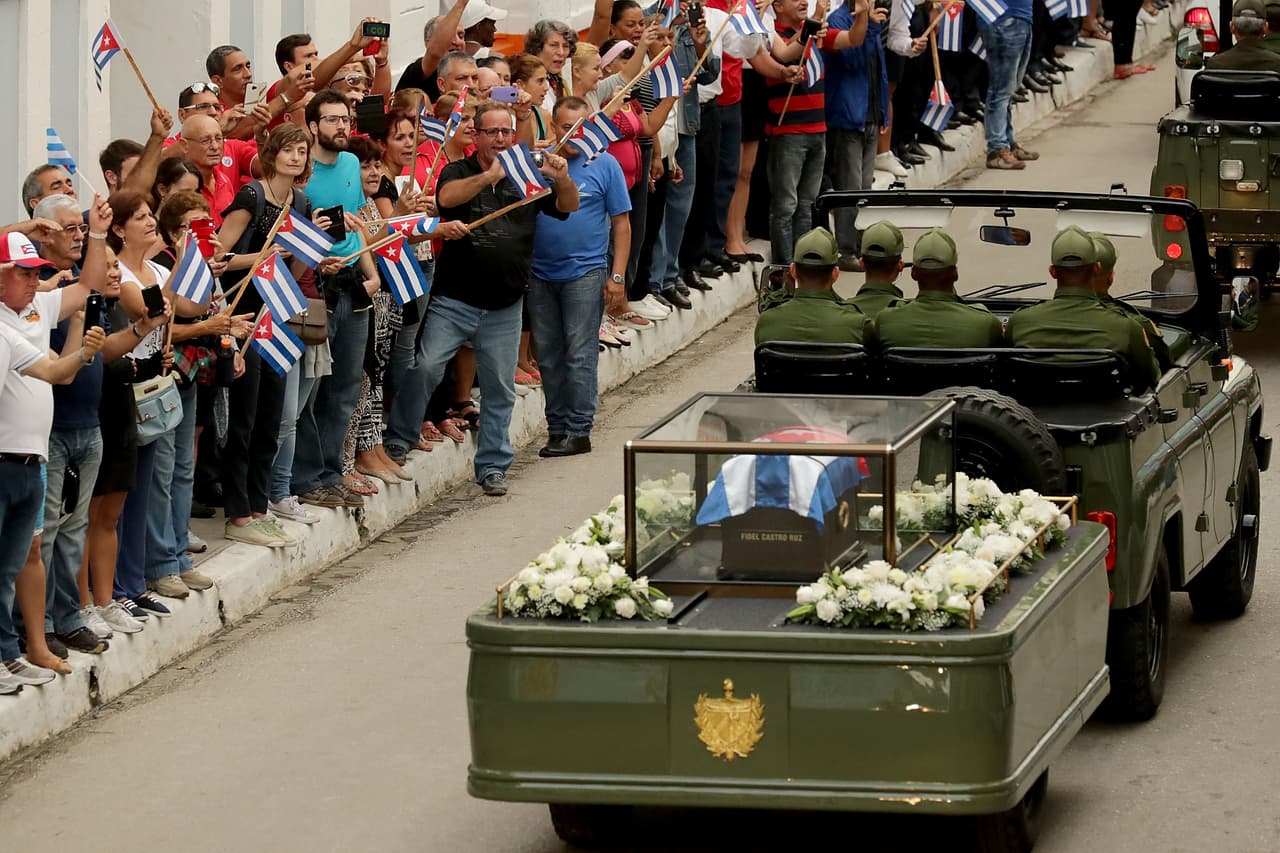
'El Comandante' was buried in a large rock tomb in a private ceremony after his ashes completed a 600-mile cortege from Havana at the end of nine days of national mourning.
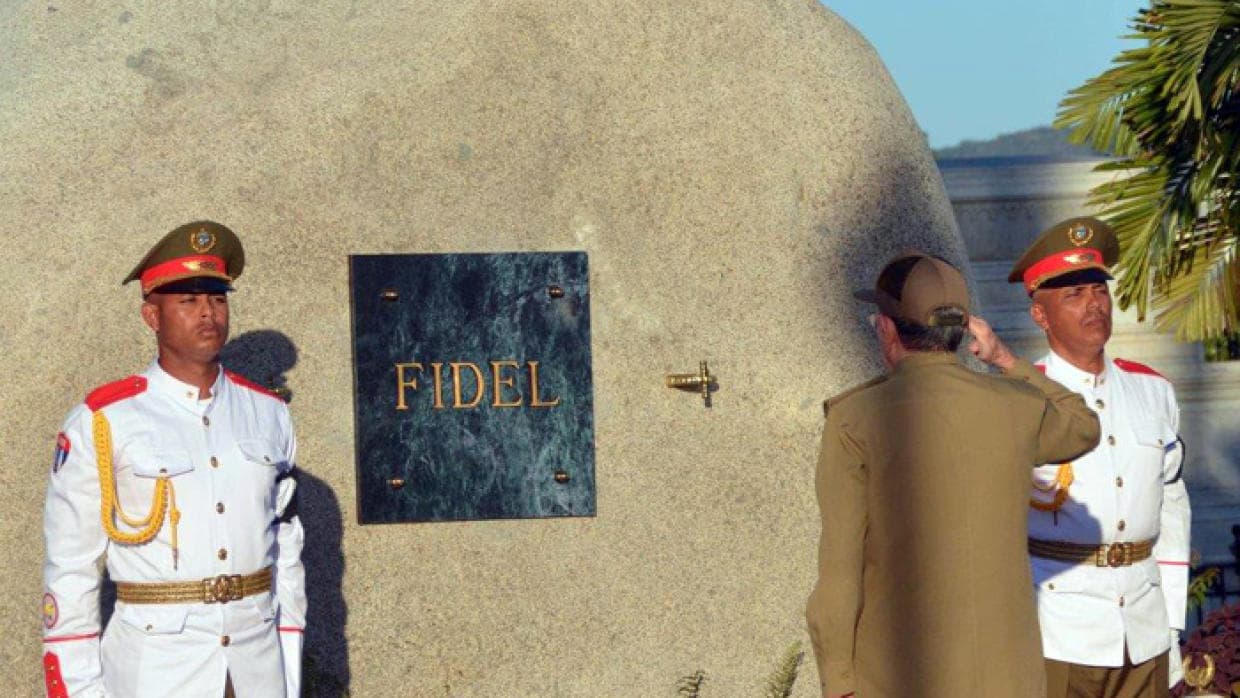
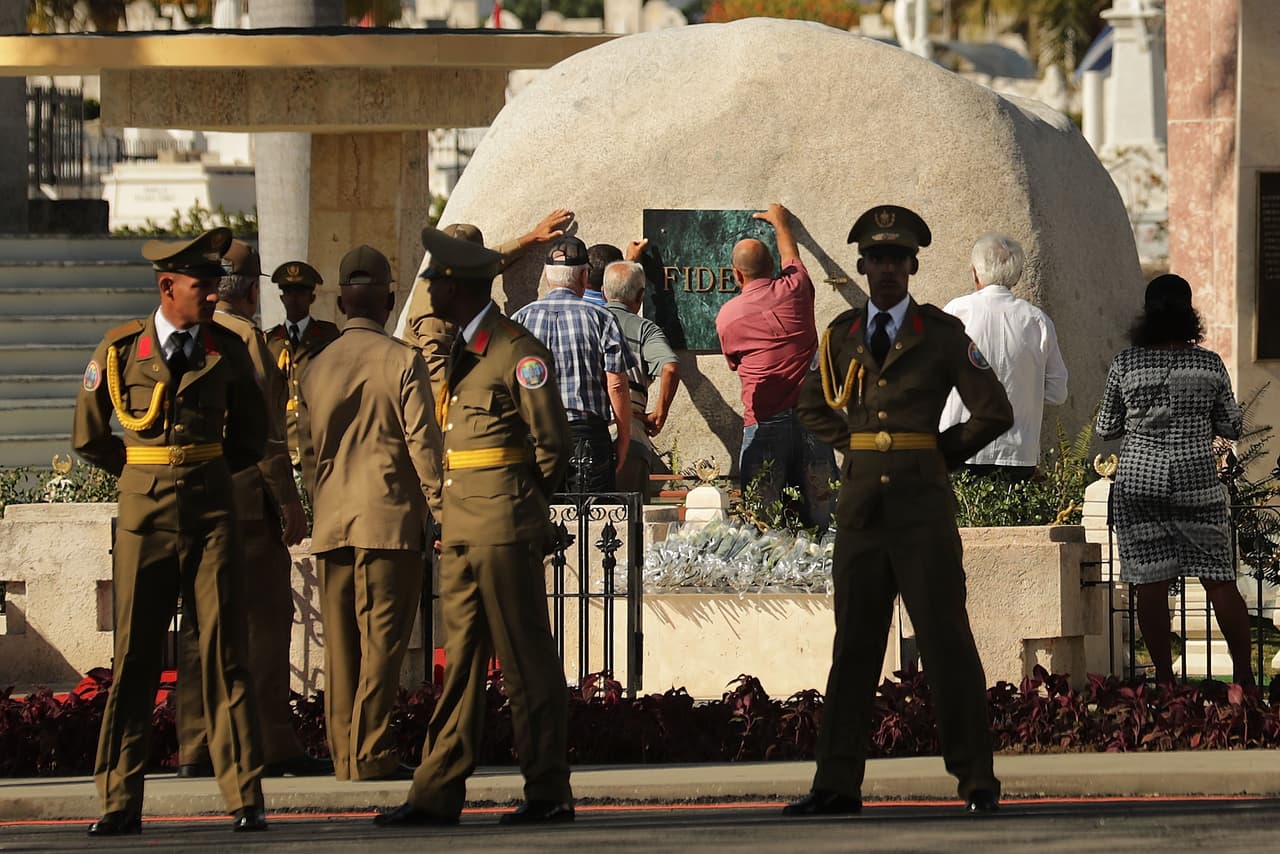
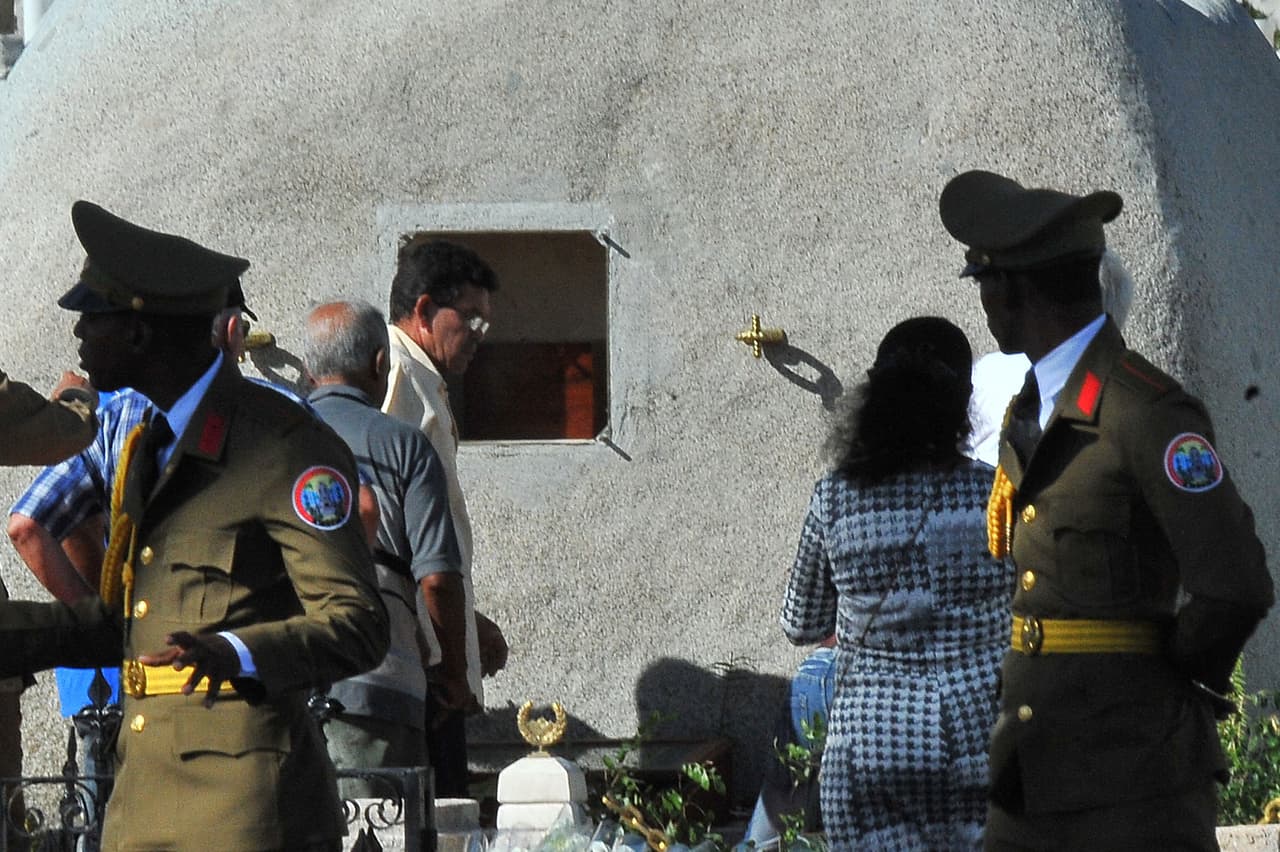
Raul Castro salutes the tomb of his older brother Fidel Castro shortly after his ashes were interred in the Santa Ifigenia cemetery in Santiago. Castro's tomb is close by the tomb of Cuban independence leader José Martí.
Imagen Agencia Cubana de Noticias
At the other end of the island in the capital, Havana, a 21-gun salute could be heard across the city.
Castro was laid to rest in a large, boulder-shaped 10-foot tall rock tomb next to the mausoleum of 19th century Cuban patriot José Martí, who fought for Cuban independence from Spain.
Raul Castro placed a wooden box containing the ashes into a niche in the polished granite rock, before it was sealed by a large plaque engraved with the single word "Fidel." Castro then gave a salute before two honor guards dressed in white uniforms.
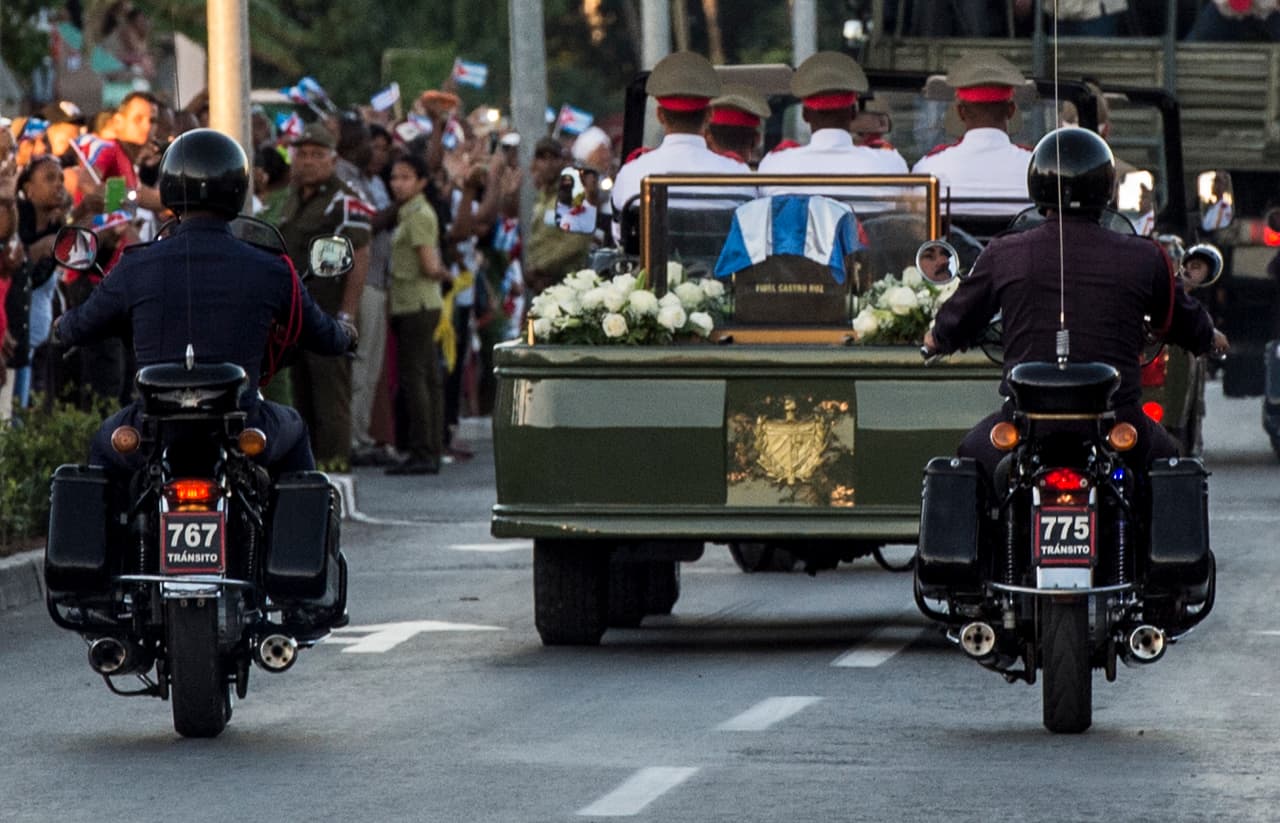
Castro died on Nov. 25 aged 90, setting off nine days of official mourning, including a four-day military-escorted funeral cortege as his ashes were driven the 600-mile journey from Havana. The cortege retraced the route of Castro's bearded rebels after the overthrowing the U.S.-backed dictator Fulgencio Batista in 1959.
Santiago, known as the "heroic city," is considered the cradle of the Cuban Revolution after the Castro brothers launched their rebel cause in 1953 by mounting a failed assault on the city's Moncada barracks.
The man known to most Cubans as "El Comandante" - or simply "Fidel" - came to power in 1959 and ruled for 49 years before stepping down a decade ago due to illness.
"I am Fidel"
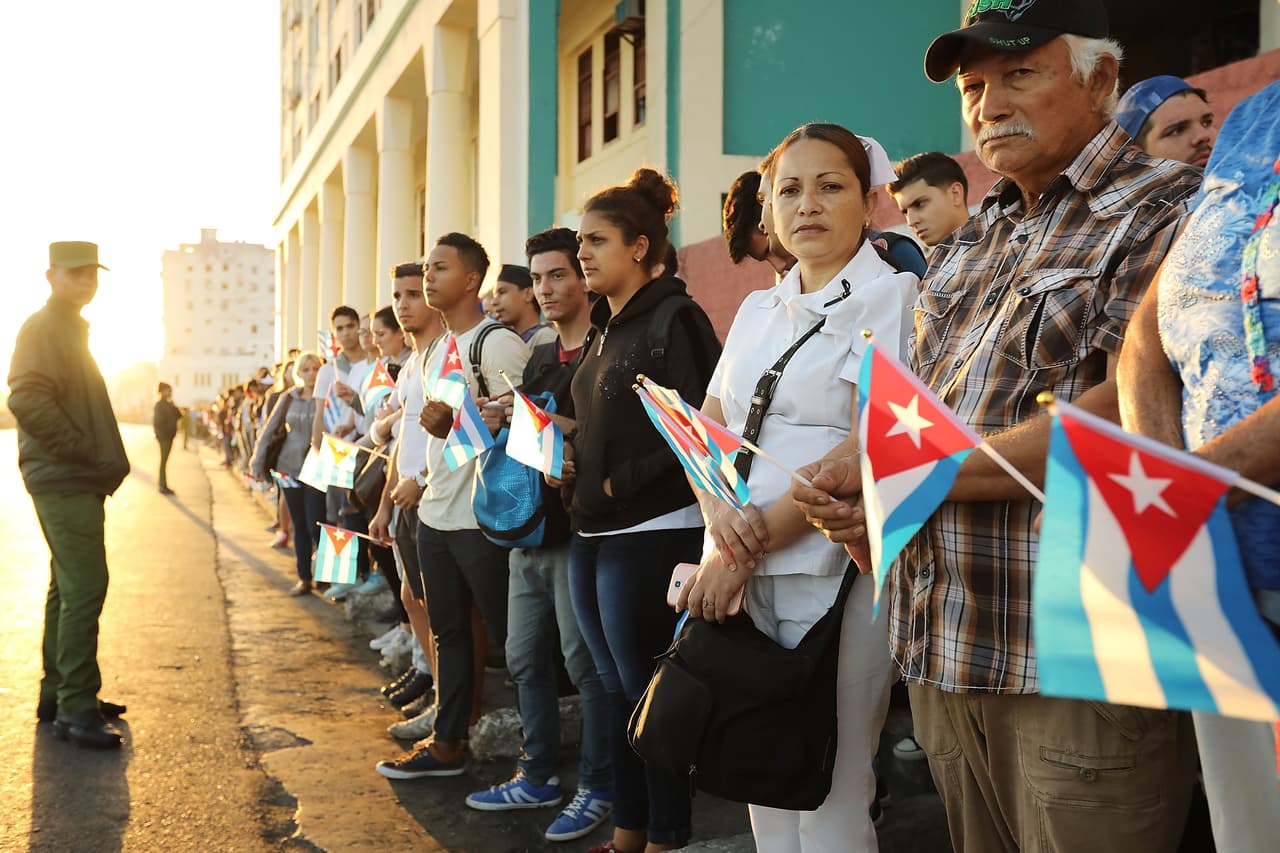
Cubans are deeply divided over Castro's legacy, with many hailing the social benefits of the revolution, such as advances in education and health, while others denounce a history of ideological rigidity, economic hardship and loss of human rights under his rule.
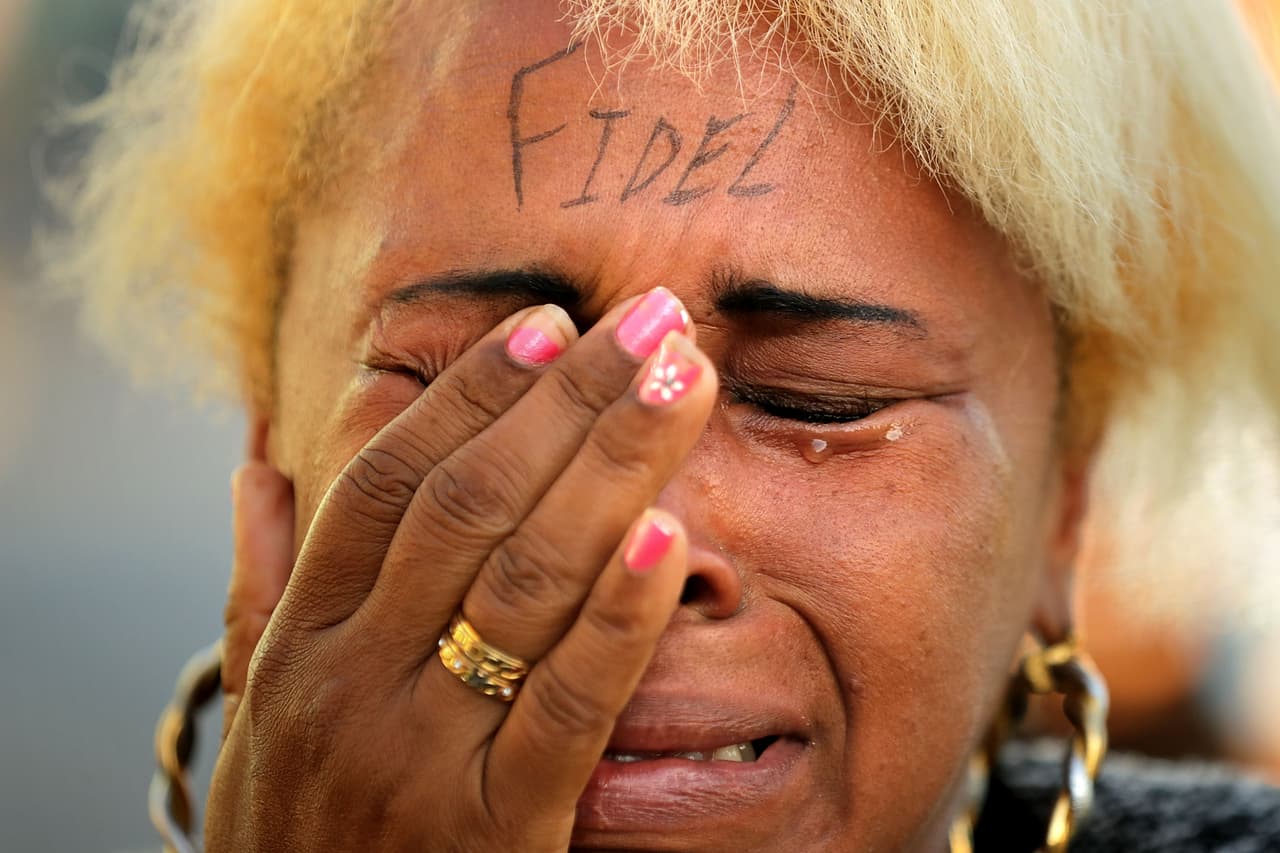
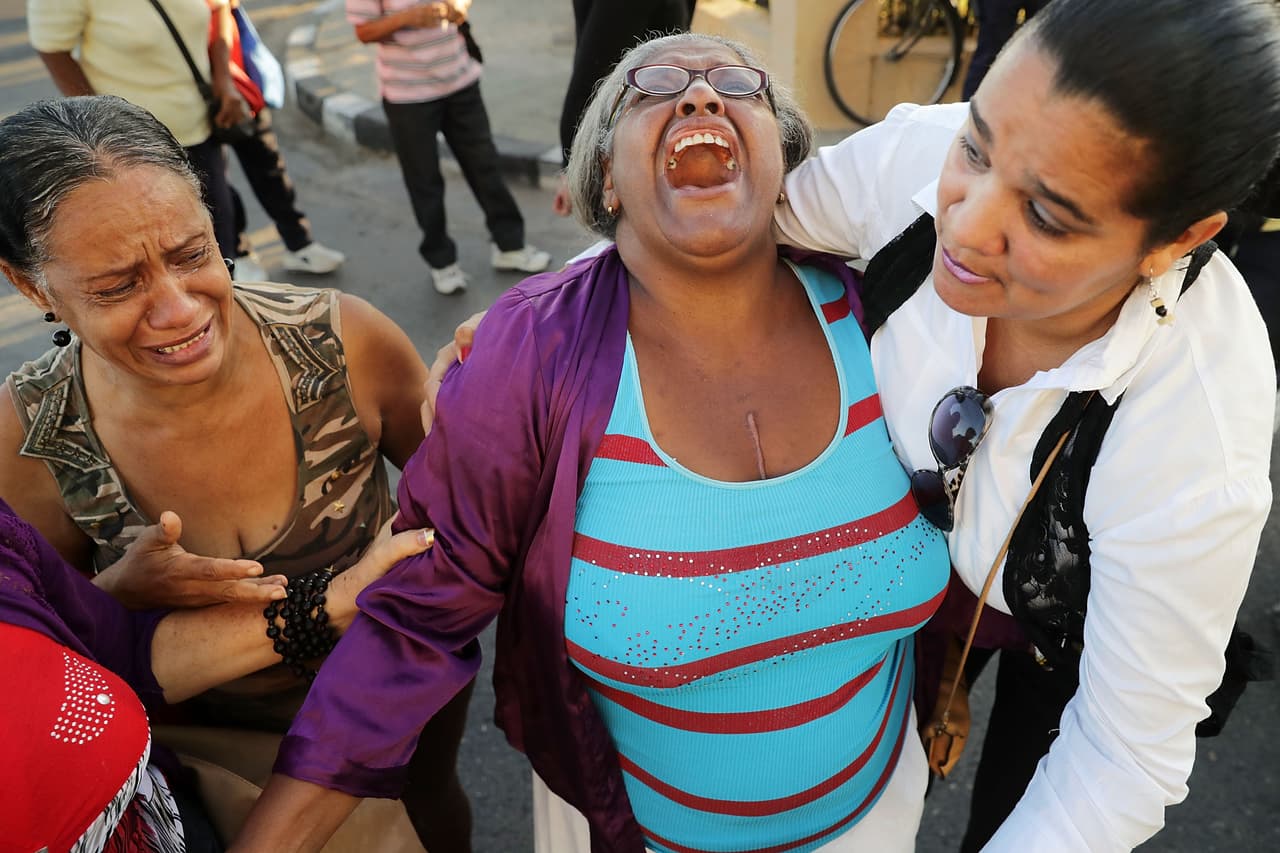
Sonia Villegas, 83, sat in Santiago's main plaza all night to pay respect to her dead revolutionary hero whom she says she met in the Sierra Maestra mountains during the revolution. She carried a sign displayed by many Cubans this week, declaring “I am Fidel.”
She cried, tears running down wrinkled cheeks. “My father joined the rebellion with (Fidel) in the mountains and I used to carry messages for them down to the rebels below,” she recalled.


Villegas spoke of Fidel as if he were a God, raising her two arms and looking to the skies, or clutching her sign every time his name was mentioned. “That man eclipsed everyone who listened to him, there was no way he couldn’t convince you of something when he standing in front of you,” Villegas said.
On the other hand, her daughter Yudaimis, 24, stayed home doing domestic chores. “Life goes on and that’s what my mother doesn’t understand. I can’t spend the entire night in the plaza without sleeping when I have to go to work on Monday,” she said, adding that she worked in one of Santiago’s best private restaurants.
She spoke with indifference about Fidel Castro, showing no emotion over his death. “He died really in 2006 when he left power. In a way the last 10 years helped Cuba to get used to his absence,” she said.
“It’s a different country today from 2006. I get the sadness, I understand how people feel, but a country can’t come to a halt for the death of one man. You have to go on,” she said.
Castro's funeral arrangements were laden with symbolism and mysticism. The nine-day mourning period was interpreted by some Cubans as a tip of the hat to Castro's Catholic upbringing, honoring the ancient tradition of the 'novena' - daily prayers seeking God's help in a special moment of need.
Castro later rejected the church and turned Cuba into an atheist state, before rebuilding his bridges with the Vatican.
Nine days of mourning
The nine days also happen to coincide with an important date in the Afro-Cuban religious calendar, as December 4th is the day of ' Santa Barbara' in Cuba, a syncretic deity in the Santeria faith associated with fire, lightning, thunder, and war, as well as the patron of drumming and dancing.
Notas Relacionadas
His brother, President Raul Castro, vowed at a large rally in Santiago on Saturday night to defend the socialist legacy of his brother, but without immortalizing him with statues or naming public places after him, according to Fidel Castro's personal wishes.
"The leader of the revolution rejected any manifestation of a cult of personality," Castro said, adding that a law was being drawn up to prohibit any grandiose physical idolatory.
Building socialism
Without mentioning the uncertain future of Cuba's relations with the United States, and president-elect Donald Trump, Raul Castro stressed that Cuba would continue its revolutionary course. "Yes, we will overcome any obstacle, turmoil or threat in the building of socialism in Cuba," the 85-year-old Castro told a packed plaza in a 30-minute address.
“Whoever tries to take over Cuba, will collect the dust of its soil flooded with blood if he doesn’t die first,” he added, quoting a famous Cuban independence leader.
The crowd erupted in chants of " Raúl, amigo, el pueblo esta contigo (Raúl, friend, the country is with you).
Despite extreme economic hardship, Castro's socialist government survived decades of U.S. government hostility and sabotage, including plots to assassinate the communist leader, allying itself first with the Soviet Union, and later with the backing of Venezuela's oil-rich government.
Wearing a military uniform Raul Castro was accompanied by Venezuelan president, Nicolas Maduro, and the former presidents of Brazil, Luiz Inacio Lula da Silva and Dilma Rousseff. There were no U.S. officials in attendance.
Raul Castro's hailed his brother's remarkable perseverance. "In the unipolar world, the one of transnationals that arose after the fall of the socialist bloc, the permanent lesson of Fidel is that, yes, it can done, man is capable of overcoming the most difficult conditions," he told the crowd.
“This is Fidel,” Castro went on, “…who summons us with his example and actions to show that we could, we can and we shall overcome any obstacle, threat or turmoil in our firm commitment to build socialism in Cuba or, what is the same, guarantee the independence and sovereignty of the homeland.”
Castro added; “few in the world bet on our ability to resist." Instead, the Cuban Revolution was living proof “that one could proclaim the socialist character of the revolution within 90 miles of the empire … that one can resist, survive and develop without renouncing the principles and achievements of socialism."
Additional reporting by David Adams in Miami
Notas Relacionadas
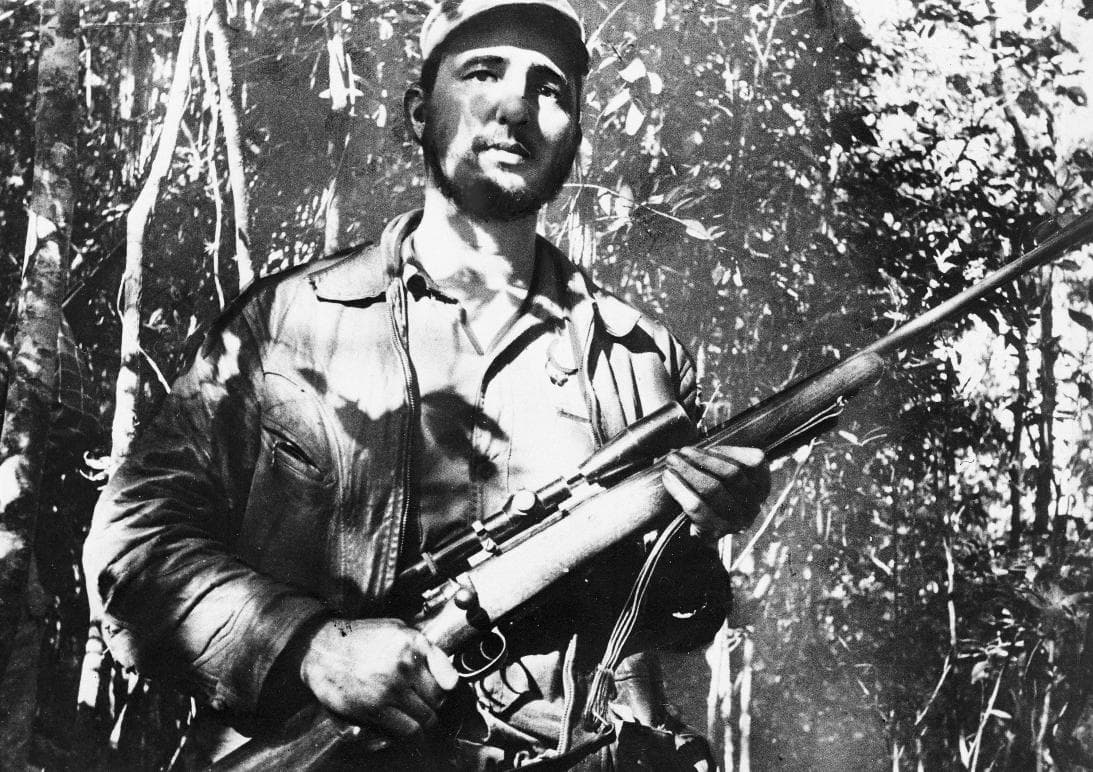
After Fidel Castro's death, what comes next in U.S.-Cuba relations?
Univision News
6 min
Notas Relacionadas
Former Cuban leader Fidel Castro dies aged 90
N+ Univision
17 min