
As Belgium wakes from the nightmarish attacks that killed 35 people and injured more than 300 in Brussels, world leaders and national security experts have focused their attention on how ISIS was able to execute such a deadly strike in the city that hosts the headquarters of NATO and the European Union. At the heart of these policy discussions has been how national security intelligence institutions have performed in Belgium and what they could have done to prevent or thwart the bombings.
The Bombings in Brussels: A Sign of ISIS’s Strength or Weakness?
‘ISIS’s motivation to strike in Europe should not be taken as signs of strength but those of desperation.’

Ibrahim El Bakraoui (center) and two accomplices
Imagen Getty Images
Nevertheless, with a recent suicide bombing in Istanbul on March 19 th and the attacks in Paris last November, Belgium is not the only country in Europe to have fallen victim to ISIS. The resulting devastating loss of civilian lives have ignited fears, flamed by sensational media coverage, that Europe will have to continue living with the threat of terrorism.
While European leaders have focused on what went wrong with counter-terrorism activities in Belgium and the fear of terrorist attacks looms large, one question remains unanswered: Do the recent attacks across Europe point to ISIS’s emergence as a global threat or are they a sign of its growing weakness?
“Al decir esta noche mis últimas palabras en el noticiero, me quedé pensando en todo lo que me queda por delante. Después de todo, los periodistas nunca se retiran. Estamos condenados toda la vida a perseguir noticias, a perseguir lo nuevo”.

“El reto de la serie era, en el mejor de los casos, complementar al libro y dar una visión, entre millones, de cómo era la vida en Macondo. Y lo logra. Agradezco las narraciones tomadas íntegramente del libro y las magníficas actuaciones marcadas por las páginas más que por las improvisaciones”.

“En la cabeza de Trump todo conspira para demostrar su poder. Ganó la elección y el voto popular, se desvanecen los juicios en su contra, y legalmente se siente protegido para hacer lo que se le pegue la gana. Se siente en el tope. Es en este contexto que Trump amenazó con la imposición de aranceles contra México, Canadá y China”.

“Duele pero hay que decirlo: en México nadie sabe cómo detener la violencia. Si lo supieran, ya lo hubieran intentado. Lo que hemos visto desde la época de Felipe Calderón, cuando se declaró la guerra contra los narcos, son distintos experimentos -todos fallidos- para enfrentar la violencia”.

“Causarán un daño irreparable a miles de familias y a la economía estadounidense. No se trata de expulsar a los indocumentados sino de integrarlos a este país. Sería mucho más barato y efectivo. Pero Trump y sus asesores solo se oyen a sí mismos”.
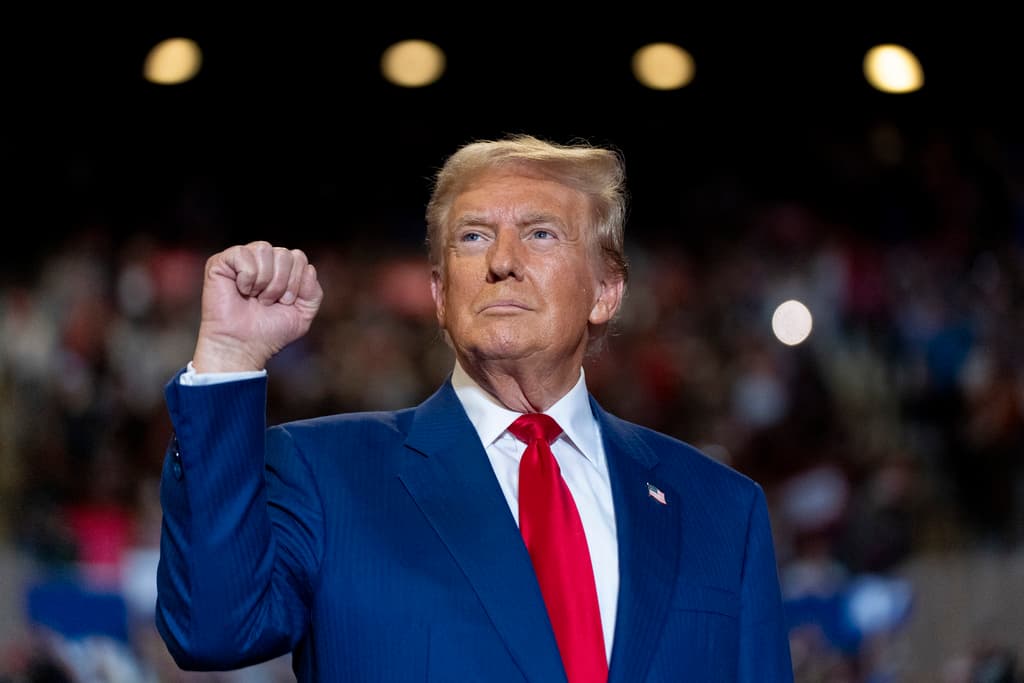
“Hay mucho que negociar antes que Trump tome posesión el 20 de enero. Pero el peligro de deportaciones masivas, aranceles y hasta de operaciones militares en su territorio ha puesto en alerta a la nueva presidenta de México. Sheinbaum y Trump ya hablaron y se dijeron esas cosas huecas que se dicen los presidentes por teléfono”.

“La realidad es que cada vez hay más votantes latinos. Este año hay 36.2 millones de hispanos elegibles para votar, casi cuatro millones más que en 2020, según el centro Pew. Y aunque no todos van a salir a votar, los que lo hagan serán suficientes para definir quién será el próximo presidente o presidenta de Estados Unidos”.

“Gane quien gane la elección en Estados Unidos, las cosas van a empeorar para los recién llegados. Los inmigrantes son el enemigo perfecto en esta campaña electoral. Son muy vulnerables, lo dejaron todo en su país de origen y no se pueden defender de los ataques injustificados de los políticos que solo quieren ganar votos”.
"En este caso, nos toca apuntar y corregir todas las mentiras que Trump ha dicho -y que sigue diciendo- sobre los inmigrantes, sobre la insurrección del 6 de enero del 2021 y sobre todos los esfuerzos ilegítimos por negar los resultados de las elecciones del 2020. Las democracias mueren, primero, desde dentro".
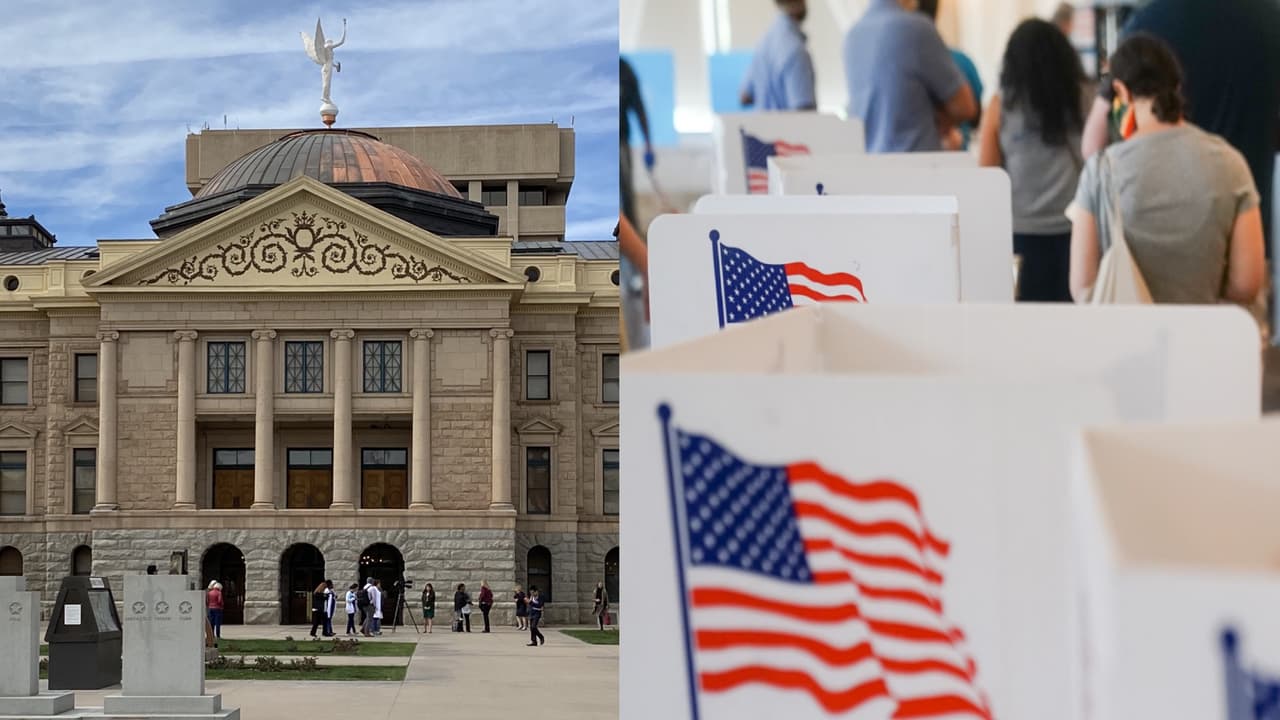
"A los 14 años, vi a mi familia y a mi comunidad y me dije: hay un futuro mejor para nosotros; podemos progresar y las cosas pueden mejorar. Todo lo que hago y lo que soy tiene sus raíces en mi comunidad latina, y me llena de humildad poder llegar a representar a nuestra comunidad en el Senado. Es un deber que asumiré con orgullo y mucho honor." Read this content in english.
A superficial glance at the events in Europe reveals a frightening pattern. Belgium, France, and Turkey have all been targeted by ISIS. Coupled with attacks in Yemen, Bangladesh, Egypt, Lebanon, Iraq, Syria, and Indonesia, the ability of ISIS to orchestrate attacks across the globe is a danger that should not be underestimated. The stories of horror of those who have survived such traumatic events, combined with the tragic loss of precious lives are reminders that the intentions of the group are to generate fear, panic, and desperation. The ability of ISIS to quickly execute such deadly attacks in these different locations and raise the threat levels of countries with advanced militaries like France, Belgium, and Turkey, point to the group’s organizational, communication, and strategic capacities.
While the suffering caused by ISIS should not be dismissed, it must be put in proportion. People living in the United States or Europe have a negligible probability of being killed in a terrorist attack. In fact, on the day of the Paris attacks although around 130 people were killed, more than three times as many died from cancer the same day. It is also rather absurd to imagine ISIS conquering or destabilizing nuclear powers like France or the U.S. Why then is ISIS carrying out attacks where such victories are impossible?
The answer is simple: ISIS is growing weaker and more desperate. An attack in Brussels or Paris is not really about ‘destroying Western society’ but rather about signaling to potential recruits, adversaries, and its current members that the group is still a potent force able to take on adversaries in the region as well as global powers. In reality, however, ISIS has lost significant ground in Syria and Iraq, with estimates that ISIS lost around 40% of its territory in Iraq and around 20% in Syria. These territorial losses mirror the group’s reduced ability to carry out suicide bombings in those countries. Robert Pape, a political scientist at the University of Chicago, recently noted that: “… ISIS is now desperate, and is shifting its pattern of behavior. In October, ISIS launched only eight suicide attacks in Iraq and Syria, when they normally do 30 to 35 per month, and that’s the same month that they shifted to suicide attacks in Ankara, Turkey, on October 10.”
In light of these developments and patterns of behavior by the organization, Max Abrahms, another leading expert on terrorist groups similarly suggests that: “ There is no question Islamic State is getting weaker, especially in its stronghold of Syria and Iraq…. As Islamic State becomes weaker as an organization, it naturally has stronger incentive to decentralize to places where opposition is less stiff. So, I predict that as Islamic State continues to take a pounding in Syria and Iraq, we will paradoxically see attacks become more geographically dispersed, which can give the false appearance of enhanced organizational capability.”
By their very nature, terrorist attacks induce social panic and fear. The intention of groups like ISIS is to galvanize such sentiments in order to inflate their power and encourage irrational reactions from frustrated and panicked societies and their governments. Difficult as it must be in such sensitive times, experts, communities, and politicians across the globe must rationally assess the intentions, capacities, and limitations of groups like ISIS. Looking at the evidence and dynamics on the ground, while ISIS continues to aim to be depicted as a global threat, its growing desperation to harness this reputation indicates a different reality—a group with weakened abilities. That news, however, should not be misinterpreted as a prediction of fewer attacks in Europe, but rather, the group’s increasing intention to carry out more.
ISIS’s motivation to strike in Europe should not be taken as signs of strength but those of desperation. In turn, governments and their publics must identify the intentions and incentives behind the attacks, put the threat of ISIS in proportion, and be aware of the group’s limitations.
Disclaimer: We selected this Op-Ed to be published in our opinion section as a contribution to public debate. The views and opinions expressed in this column are those of its author(s) and/or the organization(s) they represent and do not reflect the views or the editorial line of Univision Noticias.
Relacionados: