
At the same time as one of the largest U.S. private security contractors, Triple Canopy, was seeking to expand its lucrative government-related business in Iraq, the company created an offshore business structure using the firm at the center of the Panama Papers document leak, according to investigative reporters at Univision's sister company Fusion.
Panama Papers: Major U.S. security contractor went offshore too
Triple Canopy, one of U.S.’s biggest wartime military contractors, caught up in Panama Papers
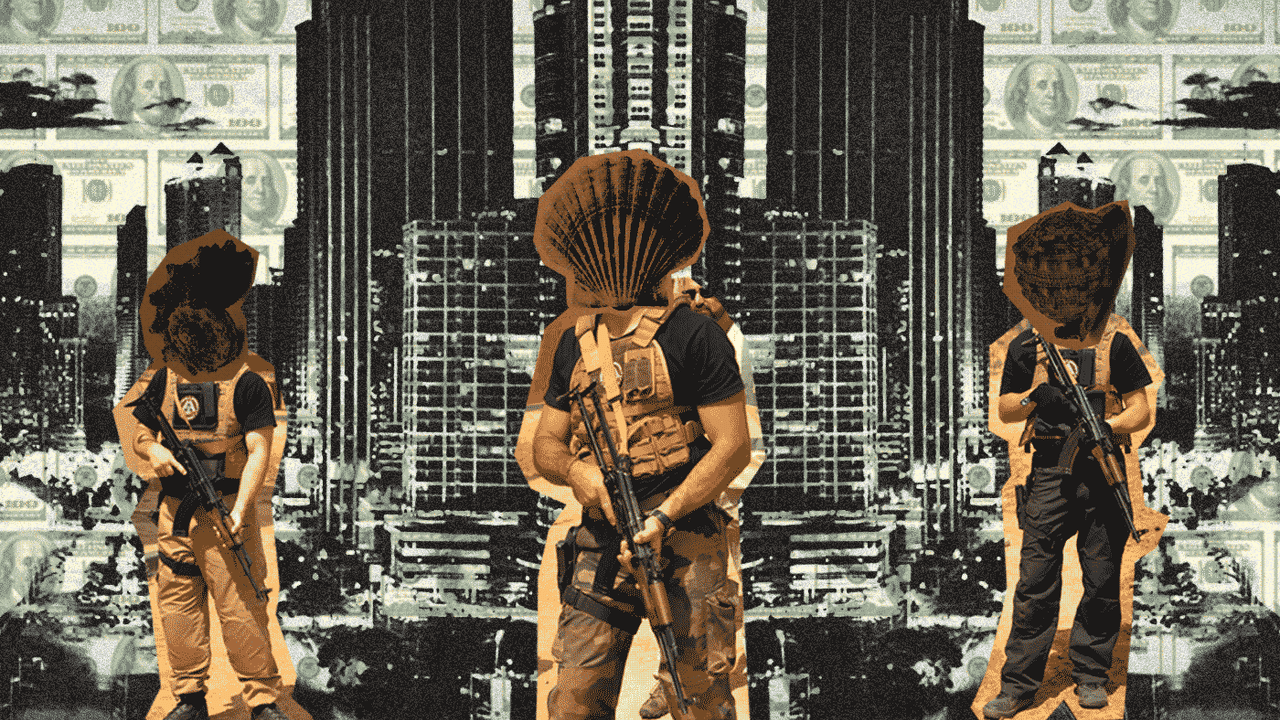
Panama Papers include one of U.S.’s biggest wartime military contractors
Imagen Fusion
Triple Canopy set up the new structure in 2010 through an offshore shell company, Trifecta International Holdings Inc., that gave Triple Canopy the potential to sidestep U.S. oversight and accountability in the often murky and controversial world of security contractors.
Triple Canopy used its offshore company registered British Virgin Islands through the Panamanian law firm Mossack Fonseca, to acquire Edinburgh International, a Dubai-based military contractor, documents in the Panama Papers reveal. Shortly afterwards, the State Department awarded Triple Canopy a contract worth nearly a billion dollars to protect U.S. diplomats traveling in Iraq.
Read full story "Panama Papers include one of U.S.’s biggest wartime military contractors."


The leaked files from Mossack Fonseca were obtained by Süddeutsche Zeitung, and shared with Fusion, Univision and more than 100 other media partners by the International Consortium of Investigative Journalists.
Triple Canopy has come under public scrutiny for allegedly firing on Iraqi civilians, misleading family members about the death of a security worker in Iraq, buying weapons on the black market, and mismanaging contracts.
Gary Moore, former general counsel for Triple Canopy and current chief legal officer for its parent company, Constellis Group, told Fusion that it annually discloses the existence of its offshore subsidiaries to the Pentagon and IRS, and that their business is routine.
Yet serious security and propriety questions arise when a military contractor, performing sensitive security tasks for U.S. government officials in a war zone, has concealable offshore holdings, Charles Tiefer, a contracting expert at the University of Baltimore law school, told Fusion. Tiefer was a member of the Commission on Wartime Contracting, set up by Congress to oversee the U.S. growing war-zone private sector.
Simply knowing that such offshores exist isn’t enough information for the U.S. to provide oversight of a company’s activities. “There’s no defense-auditing sunshine on a British Virgin Island company,” Tiefer told Fusion. “All that the U.S. knows is that there’s [a company] out there.”
Relacionados: