“You can’t deport a U.S. citizen,” said a friend recently. My friend is correct on the law.
Why Latino citizens are worrying more about deportation
U.S. citizens’ growing fears reflect heightened national attention to deportation policy and practice since the 2016 U.S. presidential election. Deportation touches U.S. citizens through deportable family members and loved ones.

Por:
Asad L. Asad
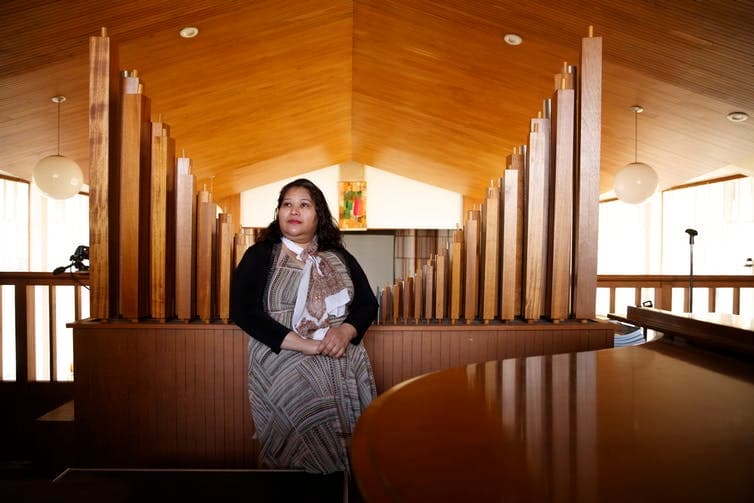
Rosa Gutierrez Lopez from El Salvador has been living in sanctuary in a church for a year due to a deportation order.
Imagen AP Photo/Jacquelyn Martin
But that doesn’t stop millions of U.S. citizens from fearing deportation anyway.
In a study published on April 6, I found Latino U.S. citizens’ deportation fears to be on the rise. Whereas 41% worried about deportation in 2007, 48% did in 2018. This amounts to about 13.6 million Latino U.S. citizens fearing deportation.
My research, and that of several other scholars, outlines several reasons why Latino U.S. citizens might increasingly fear a form of punishment thought to be reserved for people who lack citizenship.
Deportation fears
The Pew Research Center regularly surveys Latino adults who are U.S. citizens and noncitizens. Six times between 2007 and 2018, they asked different survey participants the same question: “Regardless of your own legal status, how much, if at all, do you worry that you, a family member, or a close friend could be deported? Would you say that you worry a lot, some, not much, or not at all?”
My analysis of these people’s answers reveals a surprising pattern. Latino noncitizens, encompassing undocumented and documented immigrants vulnerable to deportation, report a high, but stable, level of fear.
But U.S. citizens, including naturalized immigrants and those born in the country who are ostensibly immune to deportation, report increasing fears.
These changes don’t reflect increasing deportation rates nationwide, which are lower now than they were for much of the Obama administration. Instead, U.S. citizens’ growing fears reflect heightened national attention to deportation policy and practice since the 2016 U.S. presidential election.
Deportable family members
Deportation touches U.S. citizens through deportable family members and loved ones. An analysis I received from the University of Southern California’s Center for the Study of Immigrant Integration reveals to what extent.

As my mom worked and parented, all in one breath, she instilled in us the values that I carry with me today: “por la familia, todo.” Lee este contenido en español.
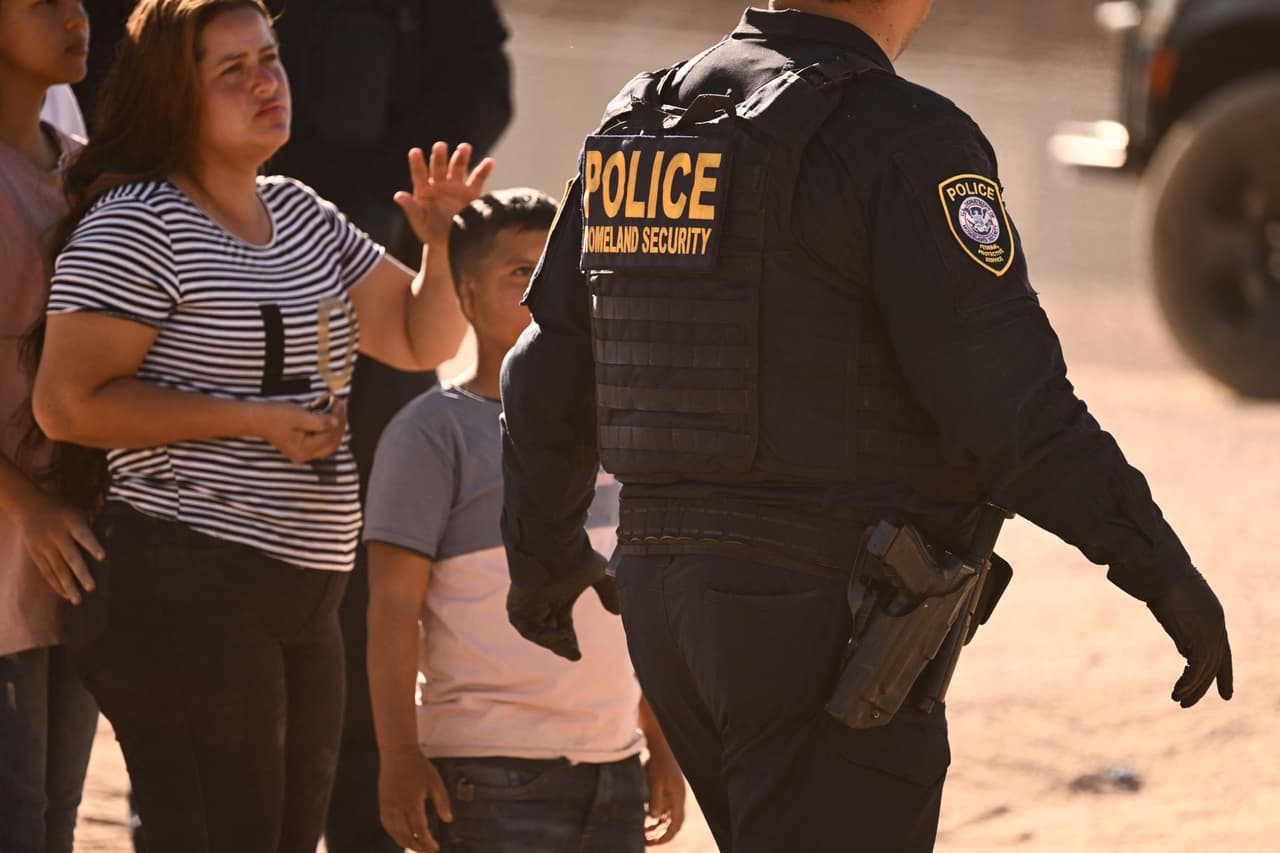
"What a sad reflection that the Republican Party has moved from Abraham Lincoln, who said immigration was a ‘source of national wealth and strength’ and Ronald Reagan, who called for his ‘city on the hill’ to be ‘open to anyone with the will and the heart to get here,’ to Donald Trump, who says immigrants are ‘poisoning the blood of our country".
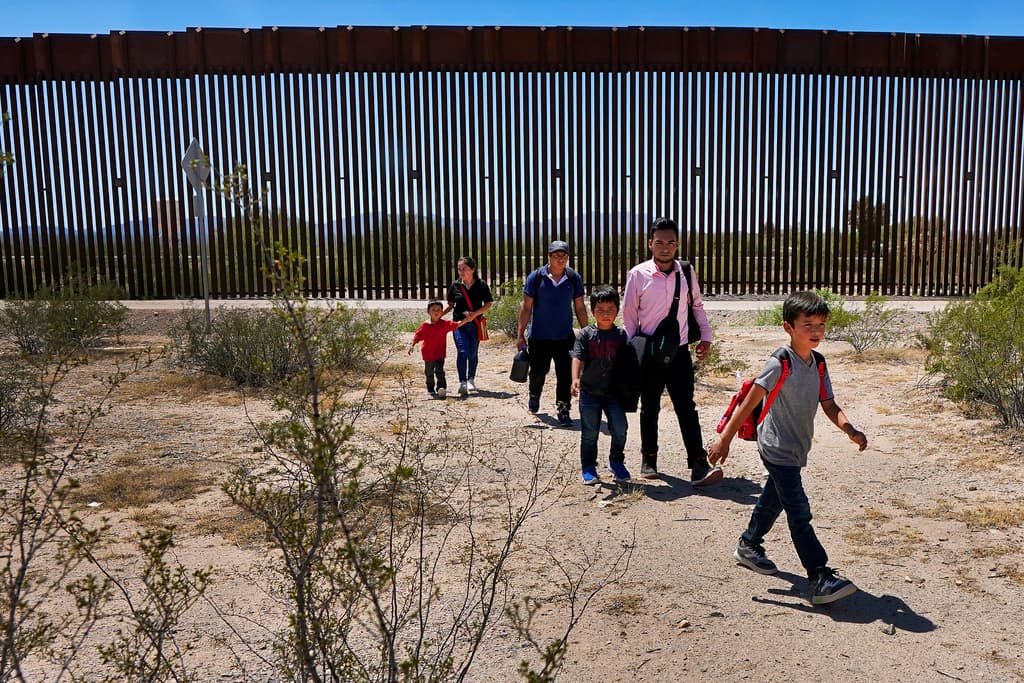
"Our current immigration laws include so many hurdles that can keep families in limbo, and even being married to a U.S. citizen isn’t always enough to allow someone to get a green card".

"For those of us whose livelihoods depend on it, President Biden’s actions to protect and preserve DACA show a striking contrast with those of Trump and MAGA Republicans. Trump has a record of trying to end DACA and will try again if he wins another term".

"While immigrants by now are accustomed to being the tip of the spear in the GOP’s arsenal of attacks, let's be clear-eyed that the threat now is beyond harming immigrant communities or calling attention to the border. This is about using this issue as a tool to further Trump’s political ambitions, even if that means suppressing the right to vote, undermining our election results, or stoking more political violence".

"This month comes at a special moment in our nation’s history. For the first time, we have more Latinos serving in Congress than ever before. In the Senate, the Democratic Majority has confirmed a historic number of Latino judicial nominees and recently confirmed the first Latina to serve on the Federal Reserve in the Board’s 109-year history".
"This is the clean energy boom unleashed by President Biden: good-paying jobs in a fast-growing industry and lower bills for working families — all while addressing the climate crisis affecting our lives".

Putting presidents, former presidents and coup plotters on trial is an honorable and necessary practice to maintain a healthy democracy. Failure to put on trial presidents or former presidents who broke the law or committed crimes has had devastating consequences in Latin America.
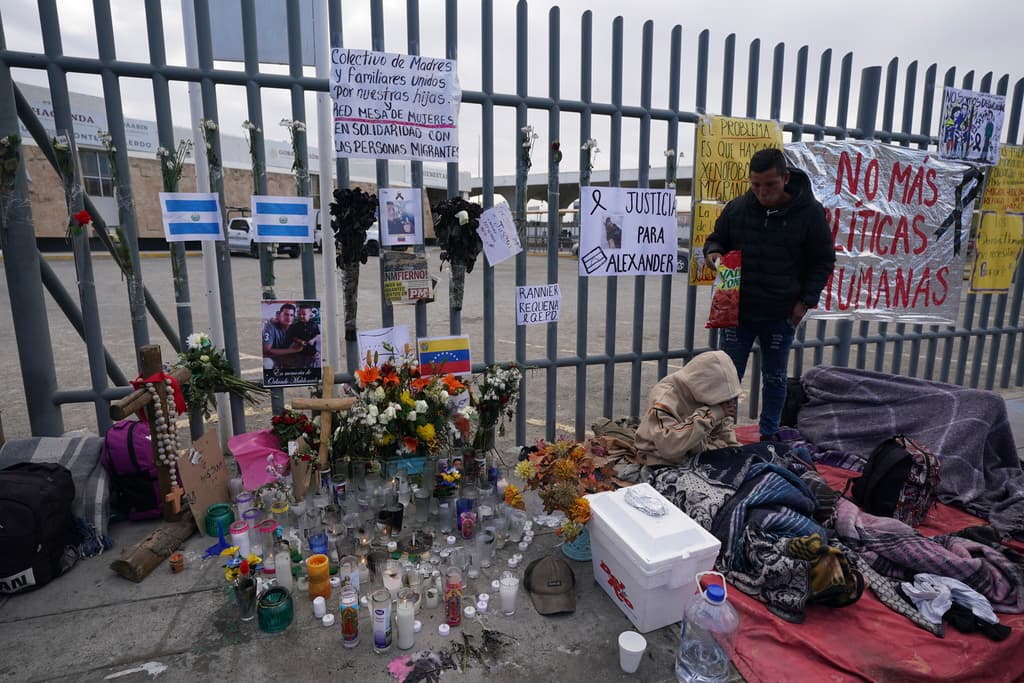
Mexico's migrant policy bears responsibility for the deaths of 39 migrants in the fire at a detention center in Ciudad Juarez. They were in the custody of the Mexican government, in a federal facility.

Almost 9 million U.S. citizens, most of them children, have at least one undocumented family member. Four out of five of these U.S. citizens are Latino.
But this count captures only a fraction of U.S. citizens with deportable relatives. Millions more have household members with provisional statuses like a visa or green card. Some 20.5 million U.S. citizens – or one of every 13 U.S. citizens – have a relative who is deportable. Sixty percent of these U.S. citizens are Latino.
These Americans are not immune to the effects of the laws and policies targeting their families and communities. When U.S. citizens fear for their loved ones’ safety, they are less likely to go to school, to get routine medical care and to call the police in an emergency.
Mistaken as deportable
Immigration law does not mention race, but the way it is enforced has racially unequal consequences.
A disproportionate share of Latino U.S. citizens have deportable relatives. Latin American noncitizens represent more than 90% of all deportations, even though they account for 57% of all noncitizens.
When laws primarily affect a single racial group, federal immigration officials and everyday people can mistakenly recognize U.S. citizens as deportable. For example, the federal government deported about 200,000 U.S. citizens of Mexican descent during the Great Depression, under the assumption they were undocumented.
This mistaken recognition is happening today too. Between 2007 and 2015, more than 1,500 U.S. citizens – many Latino – were unlawfully detained for their suspected deportability. In a 2018 study, researchers found that white Americans most suspected Salvadoran and Mexican immigrants of being undocumented – and least suspected Italians and Canadians. Media reports continue to depict cases of Latino U.S. citizens unlawfully detained for suspected immigration violations.
U.S. citizens are not deportable by law. But they still worry about being misrecognized as deportable, given the racially unequal enforcement of contemporary immigration laws and policies.

Mounting obstacles to citizenship
Growing uncertainty about just how much citizenship shields against deportation also contributes to U.S. citizens’ fears. Two recent events help illustrate this point.
The first is the Trump administration’s “public charge” rule, recently allowed to move forward by the Supreme Court. Noncitizens have long been ineligible to receive public assistance for themselves. The new rule penalizes noncitizens who receive public assistance to temporarily support their eligible U.S.-citizen children. The penalty is that noncitizens cannot get a green card, a precondition for citizenship.
Although the rule affects fewer than 1% of noncitizens, the uncertainty it has created is already detaching fearful families, most of whom are low-income with origins in Latin America, from the social safety net. About one in seven adults in immigrant families – and one in five adults in poor immigrant families – reported in a recent Urban Institute survey that they or a family member avoided the social safety net for this reason.
Intensifying denaturalization efforts are also heightening fears. Denaturalization is the stripping of an immigrant’s acquired citizenship. Historically, it was reserved for immigrants who committed war crimes; today, it is increasingly used as a tool for federal immigration enforcement.
One study counts 421 denaturalization cases filed against U.S. citizens between 2013 and 2018. This number of cases is small when compared to the population of 20 million naturalized U.S. citizens. But ongoing efforts that date back to the Obama administration risk adding to the number of denaturalization cases. The Justice Department recently created an official section within its immigration office to facilitate this process, due to “the growing number of referrals anticipated from law enforcement agencies.”
Few naturalized citizens will ultimately lose their citizenship. But these publicized denaturalization efforts will exacerbate fears that the rights and privileges of U.S. citizenship are tenuous for immigrants in the country.
In response to my friend’s reminder that U.S. citizens are not deportable by law, I say this: You’re right. But the law as it’s written doesn’t always match how it’s enforced.
[Get the best of The Conversation, every weekend. Sign up for our weekly newsletter.]

Asad L. Asad, Assistant Professor of Sociology, Stanford University
This article is republished from The Conversation under a Creative Commons license. Read the original article.
Relacionados: