For much of the history of US-Central American relations, this country has aligned with the interests of various military regimes and the oligarchic agro-exporter class.
The US approach to El Salvador’s authoritarianism must be bold
Washington is preparing a response encompassing pressure from government and financial institutions to support for independent civil society groups with the goal of deterring Bukele’s growing authoritarianism. A clear and consistent message must accompany these actions. (Leer en español)

Por:
Ricardo Valencia
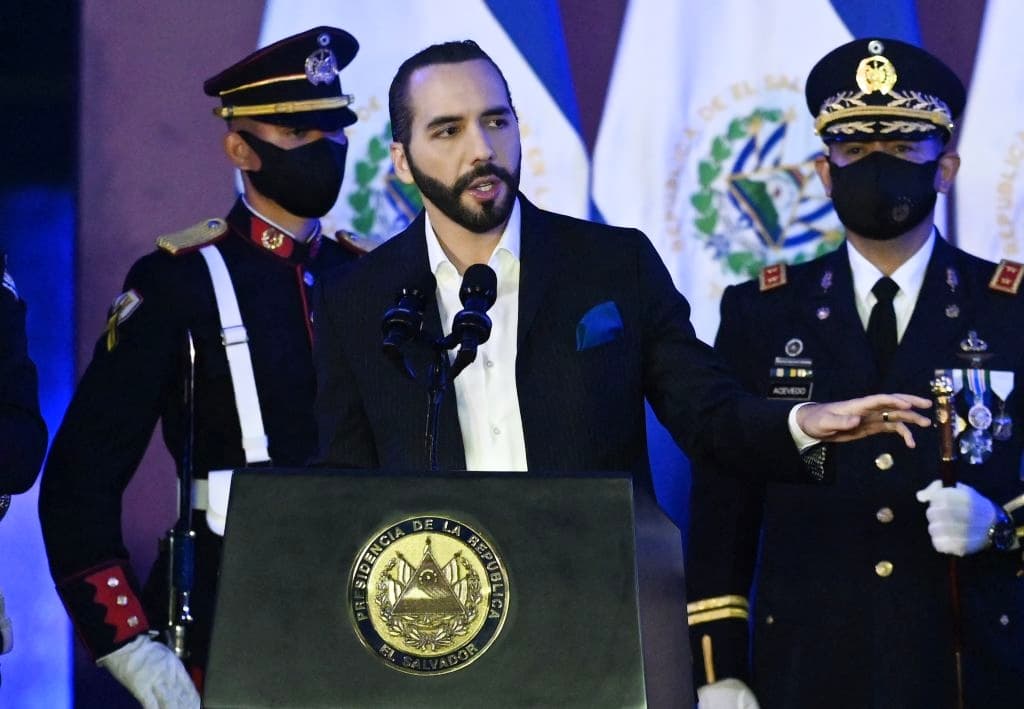
El presidente de El Salvador Nayib Bukele pronuncia un discurso el 7 de mayo de 2021.
Imagen Marvin Recinos / AFP / Getty
At different times, some administrations, such as Kennedy and Carter, sought to use different rhetoric about human rights and social justice to undercut support for socialist principles.
President Biden and Vice President Harris are currently navigating a new predicament, between seeking partner governments in the region to control the flow of migrants from the Northern Triangle, and to defend human rights against these same, increasingly authoritarian governments. This is a fundamental change in comparison to the purely transactional approach of former President Trump, for whom authoritarianism was no barrier.
Nothing better illustrates this dilemma than the legislative coup which El Salvador’s President Nayib Bukele carried out. On May 1, the day his party’s new supermajority in the Legislative Assembly took their seats, Bukele’s allies removed five justices of the Supreme Court, followed by the attorney general. Bukele’s legislature has since approved a new law which blocks investigation into the misuse of funds by the Health Ministry during the pandemic.
Bukele has also started to dismantle the Institute of Public Access to Information, a FOIA-like body which guarantees public access to official documents. His new attorney general has promised to reevaluate an agreement with the Organization of American States which established an anti-corruption investigative body which had been investigating the Bukele administration.
As my mom worked and parented, all in one breath, she instilled in us the values that I carry with me today: “por la familia, todo.” Lee este contenido en español.
"What a sad reflection that the Republican Party has moved from Abraham Lincoln, who said immigration was a ‘source of national wealth and strength’ and Ronald Reagan, who called for his ‘city on the hill’ to be ‘open to anyone with the will and the heart to get here,’ to Donald Trump, who says immigrants are ‘poisoning the blood of our country".
"Our current immigration laws include so many hurdles that can keep families in limbo, and even being married to a U.S. citizen isn’t always enough to allow someone to get a green card".

"For those of us whose livelihoods depend on it, President Biden’s actions to protect and preserve DACA show a striking contrast with those of Trump and MAGA Republicans. Trump has a record of trying to end DACA and will try again if he wins another term".
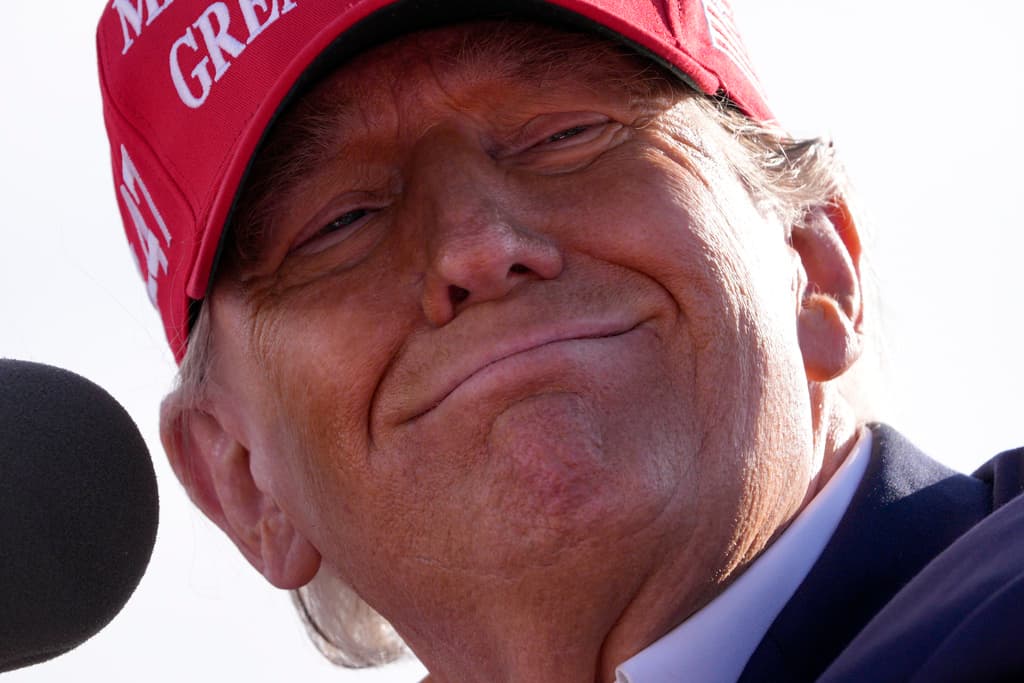
"While immigrants by now are accustomed to being the tip of the spear in the GOP’s arsenal of attacks, let's be clear-eyed that the threat now is beyond harming immigrant communities or calling attention to the border. This is about using this issue as a tool to further Trump’s political ambitions, even if that means suppressing the right to vote, undermining our election results, or stoking more political violence".
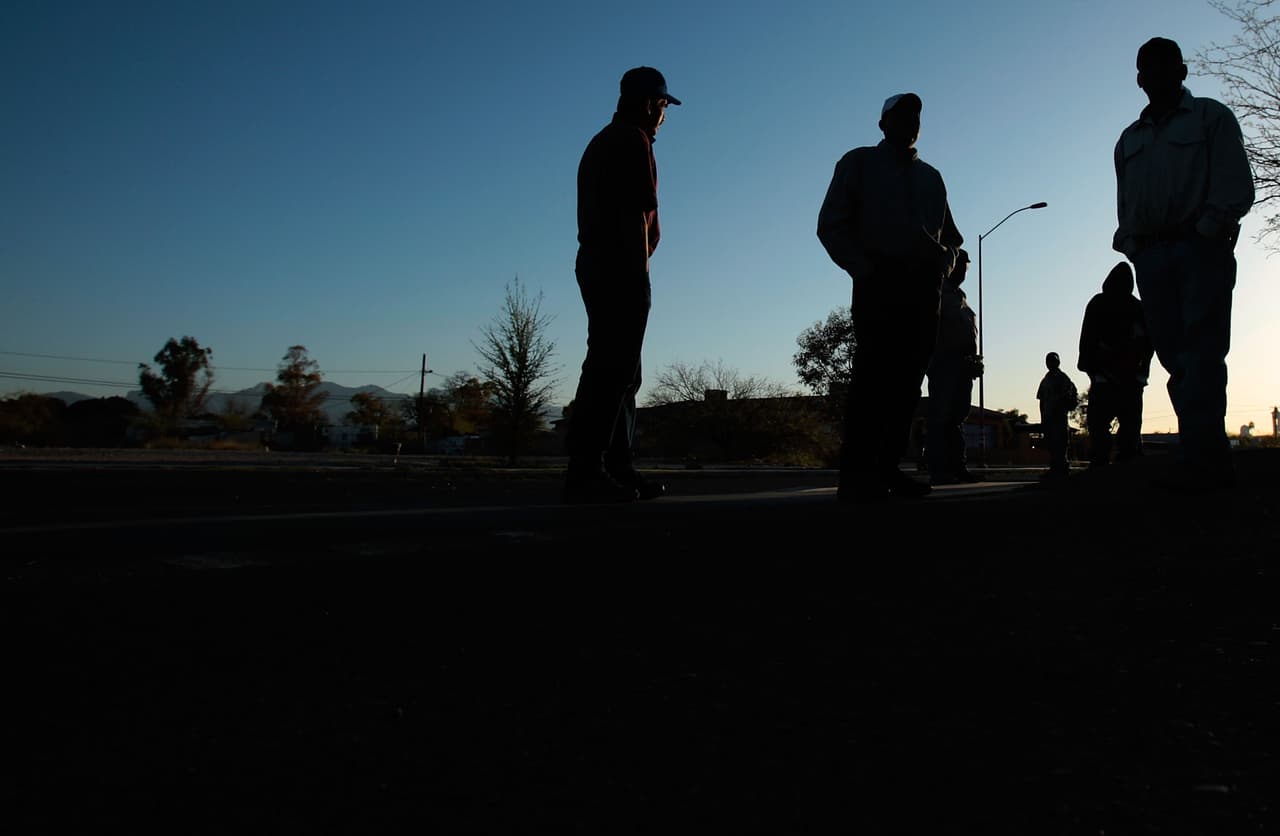
"This month comes at a special moment in our nation’s history. For the first time, we have more Latinos serving in Congress than ever before. In the Senate, the Democratic Majority has confirmed a historic number of Latino judicial nominees and recently confirmed the first Latina to serve on the Federal Reserve in the Board’s 109-year history".
"This is the clean energy boom unleashed by President Biden: good-paying jobs in a fast-growing industry and lower bills for working families — all while addressing the climate crisis affecting our lives".
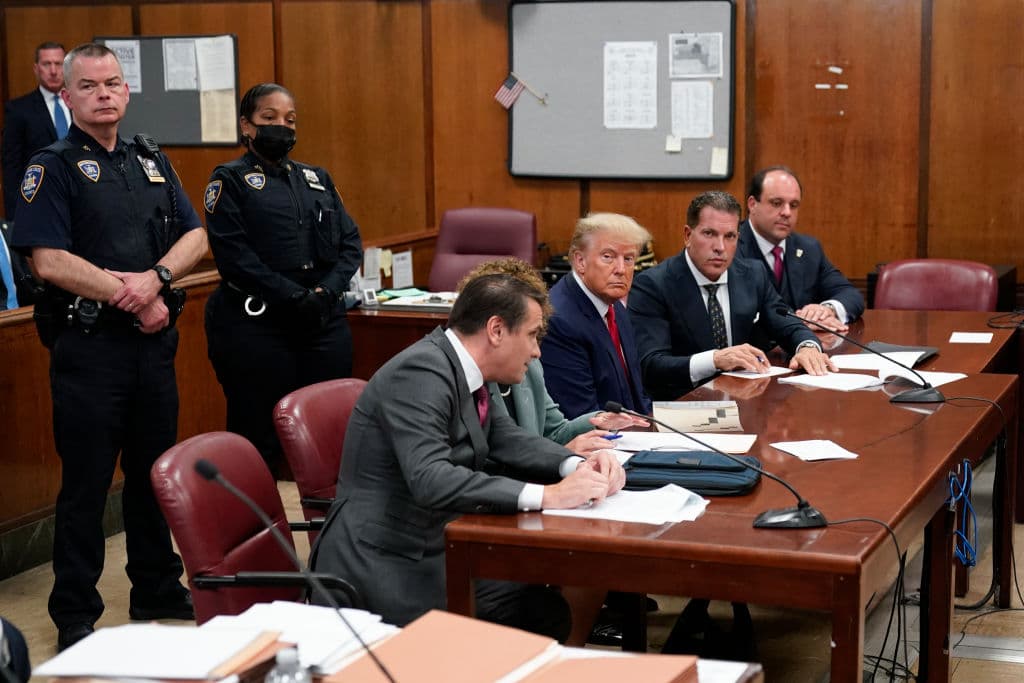
Putting presidents, former presidents and coup plotters on trial is an honorable and necessary practice to maintain a healthy democracy. Failure to put on trial presidents or former presidents who broke the law or committed crimes has had devastating consequences in Latin America.
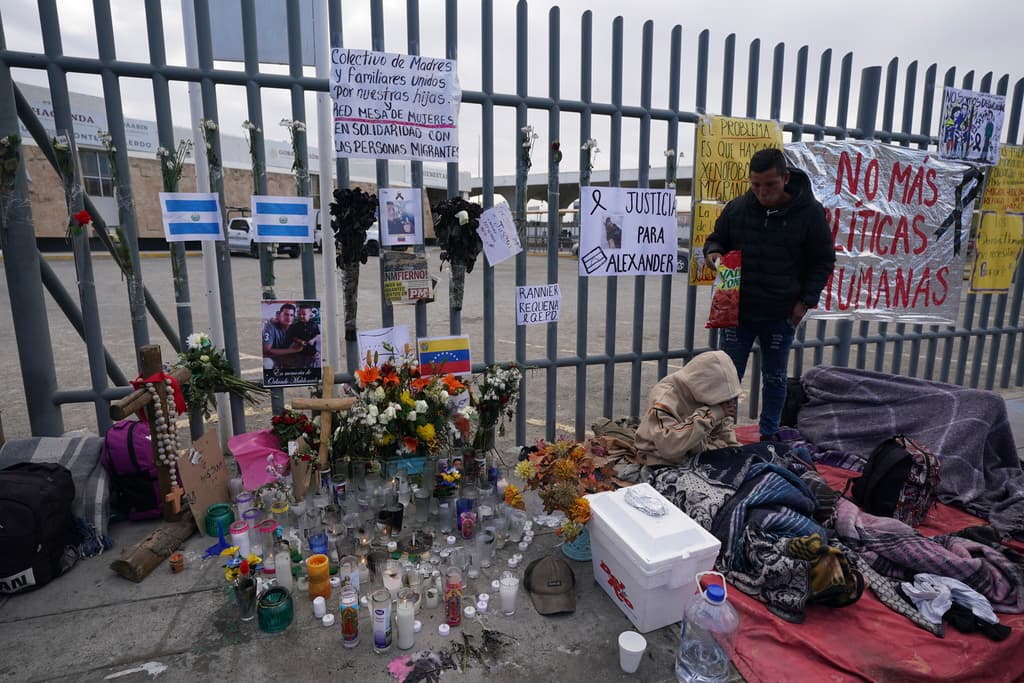
Mexico's migrant policy bears responsibility for the deaths of 39 migrants in the fire at a detention center in Ciudad Juarez. They were in the custody of the Mexican government, in a federal facility.
Washington has responded forcefully, and the condemnation has been bipartisan. Harris has promised a response coordinated with civil society actors and international community. Several Republican members of Congress, among them Senator Marco Rubio, signed a letter condemning the undermining of judicial independence. Democratic leaders in the Senate and House of Representatives have put forth various responses, such as conditioning international loans to El Salvador from multilateral institutions such as the IMF, World Bank, and Inter-American Development Bank, where Washington holds considerable sway. Members of Congress have also called for revoking the visas of those actors involved in the legislative coup.
If the US wishes to protect the rule of law, freedom of the press and the survival of civil society, it should first ask what is the desired resolution of any pressure tactic. Is it to reinstall the sacked justices and former attorney general? Or does it only wish to slow El Salvador’s trajectory, now well under way, toward an authoritarian one party state? The US response has been forceful in tone, but vague in its proposals. A “wait and see” approach reflects the understanding that for Bukele, the takeover of the judicial branch is not an end to itself, but a means to an end as yet unknown.
What is known is that Washington is preparing a response encompassing pressure from government and financial institutions to support for independent civil society groups with the goal of deterring Bukele’s growing authoritarianism. A clear and consistent message must accompany these actions.
El Salvador’s president is egomaniacal, intolerant of dissent, and surrounded by yes-men, and thus is ill disposed to negotiation unless he has no other option. And when he has no other option, he uses the police, military, fiscal and regulatory bodies, and an army of social media trolls – coordinated by officials within his government – to harass his critics and their relatives. Even US members of Congress have been subjected to these attacks by Bukele’s trolls which have led some in Congress to suggest that Bukele could present a national security threat to the US.
Bukele believes he can act with impunity. The US knows that Bukele does not only wish to control all of the organs of government in El Salvador, but to eliminate all dissent and news media which contradict him. This can be seen in the attacks, via financial audits and regulatory agencies on the independent news site El Faro, and business owners who have been critical of the president. As with Maduro, Putin, Erdogan and other strongman leaders, Bukele’s strategy is to pressure and co-opt traditional elites, and bring in corrupt figures from past administrations, and thus create a new political-economic elite loyal to, and dependent on the new government.
Washington has a duty to right its dubious history with El Salvador, to check Bukele and preserve the country’s hard won democracy. So far, despite US influence with multilateral institutions, cultural influence in El Salvador - where nearly everyone has relatives living in the US - efficient and powerful bureaucratic levers, and a bipartisan consensus, there is not yet a clear endgame. If Bukele continues along his path, the US could be in a lose-lose situation: lose in foreign relations with El Salvador, which is rumored to be negotiating bilateral deals with China and Russia – and lose in domestic politics from a future migration wave triggered by authoritarian repression.
Experience in the region shows that cautious reactions against authoritarian governments only emboldens them. We can see in the cases of Honduras and Nicaragua examples of how this can play out. Hondurans are still paying the price of the unconstitutional election of current President Juan Orlando Hernandez, who is currently at the center of a criminal drug trafficking case in the US. In Nicaragua, President Daniel Ortega now controls the entire state apparatus and has consolidated complete and unrivaled power.
If Washington is unclear and timid in its approach, El Salvador could follow the same autocratic path. Bukele’s next steps could be constitutional reforms for unlimited reelection, a law that prevents Salvadoran civil society organization from receiving foreign aid, or rule through a family dynasty that he is building. The result would be pushback from social movements, which would be met with state repression by the Bukele government against civil society, the press, businesses, and their families. The president’s authoritarian ambitions are not going to change today or in a year, the only thing that will change are his reactions to pushback. Washington should take note of this.
(Dr. Ricardo Valencia is an assistant professor at California State University, Fullerton. Dr. Michael Paarlberg is an assistant professor at Virginia Commonwealth University.)
Relacionados: