
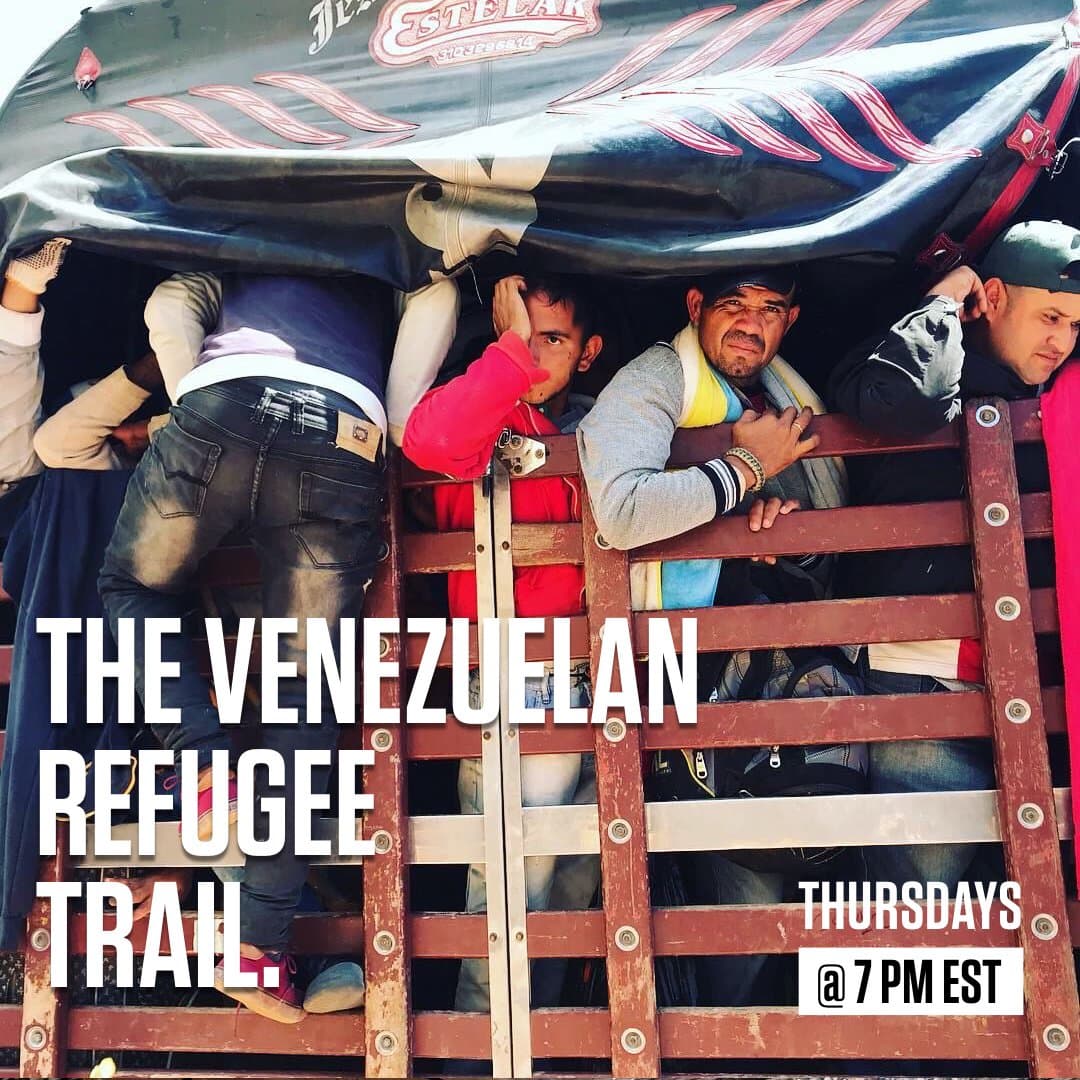
PAMPLONA, Colombia— The mountain road from Cúcuta to Bucaramanga is knotted with Venezuelan refugees. Men, women, and children, hunched under backpacks and towing rollaboard luggage, trudge uphill for days under the heatless sun of the Colombian Andes.
It’s a long, downhill journey for Venezuela’s reverse refugees
What makes someone decide to return to a failed state with two million percent hyperinflation, empty store shelves, flickering lights, a broken health system, and rampant crime. Why would you go back to a place that you escaped from, especially knowing the situation has only gotten worse since you left?
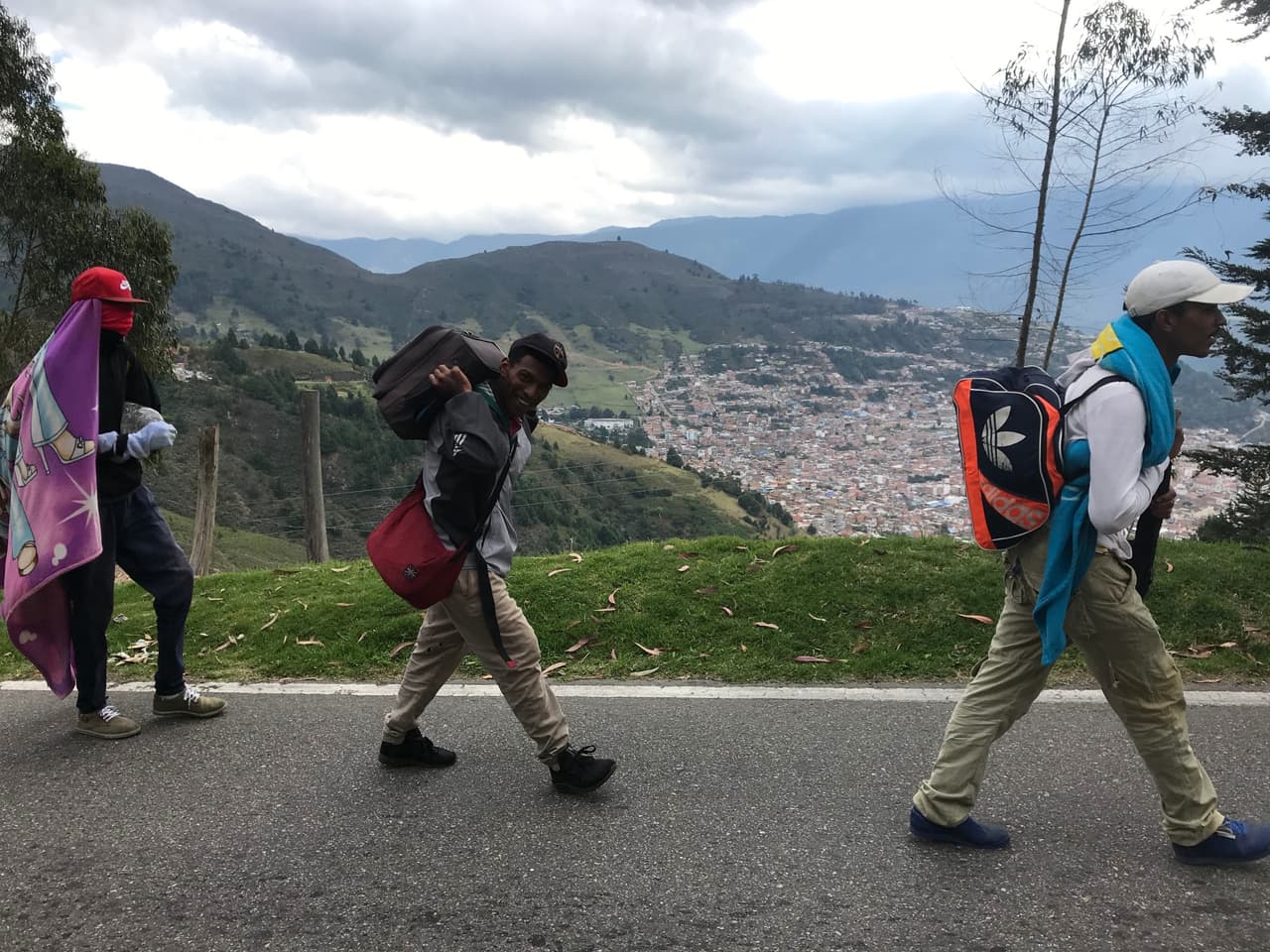
Venezuelans walking the refugee trail in the Colombian Andes.
Imagen Tim Rogers/Univision
On any given day, the Venezuelan refugee trail carries more foot traffic than vehicles. It’s an endless parade commemorating the failure of the Bolivarian Revolution.
More than 3 million people have fled Venezuela in recent years, and the number is expected to jump to 5.4 million by the end of this year, according to the UN Refugee Agency. To put the refugee crisis in perspective for a U.S. audience fretting about the “national emergency” on their southern border, that’s like two or three Central American caravans’ worth of Venezuelan refugees crossing the border every day.
But once in awhile you meet someone heading in the opposite direction; an errant Venezuelan pushing against the crowd, heading back down the mountainside towards the wreckage they left behind.
I was interested to meet some of these retreating refugees during a recent reporting trip to the Venezuelan border. I wanted to know what would make someone decide to return to a failed state with a 2 million percent hyperinflation, empty store shelves, flickering lights, a broken health system, rampant crime, political unrest, and hunger. Why would you go back to a place that you escaped from, especially knowing the situation has only gotten worse since you left?
The conundrum of knowing when to return is one I spend a lot of time chewing on. For me, it’s personal. My Nicaraguan in-laws had to flee their country last year after the Sandinistas accused them of being traitors, coup mongers, and assassins. I had to leave Nicaragua, too, after the dictator’s family falsely accused me of of being a CIA agent spearheading a U.S. coup attempt.

Exhausted and cold, Venezuelan refugees hike the Colombian Andes.
Imagen Tim Rogers/Univision
Now my exiled in-laws and I spend our days monitoring the news in Nicaragua, wondering when it’ll be safe to return. It could be a while. Dictators are hard things to get rid of. Hierba mala nunca muere, as they say. The political fanaticism dictators cultivate is hard to dial back. The longer a dictator is allowed to violently polarize a country, the harder it becomes to imagine a future of peaceful coexistence. The more broken a country gets, the harder it becomes to put the pieces back together afterwards.
My family’s situation isn’t unique. There are some 80,000- plus Nicaraguan refugees in similar circumstances. Actually, many of them are in much tougher predicaments— they have nowhere to stay, no money saved, no idea where their next meal is coming from. Some Nicaraguans have grown so desperate in exile they decided to return home before it was safe, and were subsequently captured or killed by Ortega’s national guard. Others had to go into hiding to avoid the prying eyes of neighborhood spies and Sandinista paramilitaries. One reverse refugee recently grew so desperate in hiding that he committed suicide.
So all of that is a long way of saying that I was interested to talk to Venezuelans returning home against the outbound refugee flow. I wanted to see where their heads were at.
As my mom worked and parented, all in one breath, she instilled in us the values that I carry with me today: “por la familia, todo.” Lee este contenido en español.
"What a sad reflection that the Republican Party has moved from Abraham Lincoln, who said immigration was a ‘source of national wealth and strength’ and Ronald Reagan, who called for his ‘city on the hill’ to be ‘open to anyone with the will and the heart to get here,’ to Donald Trump, who says immigrants are ‘poisoning the blood of our country".
"Our current immigration laws include so many hurdles that can keep families in limbo, and even being married to a U.S. citizen isn’t always enough to allow someone to get a green card".

"For those of us whose livelihoods depend on it, President Biden’s actions to protect and preserve DACA show a striking contrast with those of Trump and MAGA Republicans. Trump has a record of trying to end DACA and will try again if he wins another term".

"While immigrants by now are accustomed to being the tip of the spear in the GOP’s arsenal of attacks, let's be clear-eyed that the threat now is beyond harming immigrant communities or calling attention to the border. This is about using this issue as a tool to further Trump’s political ambitions, even if that means suppressing the right to vote, undermining our election results, or stoking more political violence".
"This month comes at a special moment in our nation’s history. For the first time, we have more Latinos serving in Congress than ever before. In the Senate, the Democratic Majority has confirmed a historic number of Latino judicial nominees and recently confirmed the first Latina to serve on the Federal Reserve in the Board’s 109-year history".
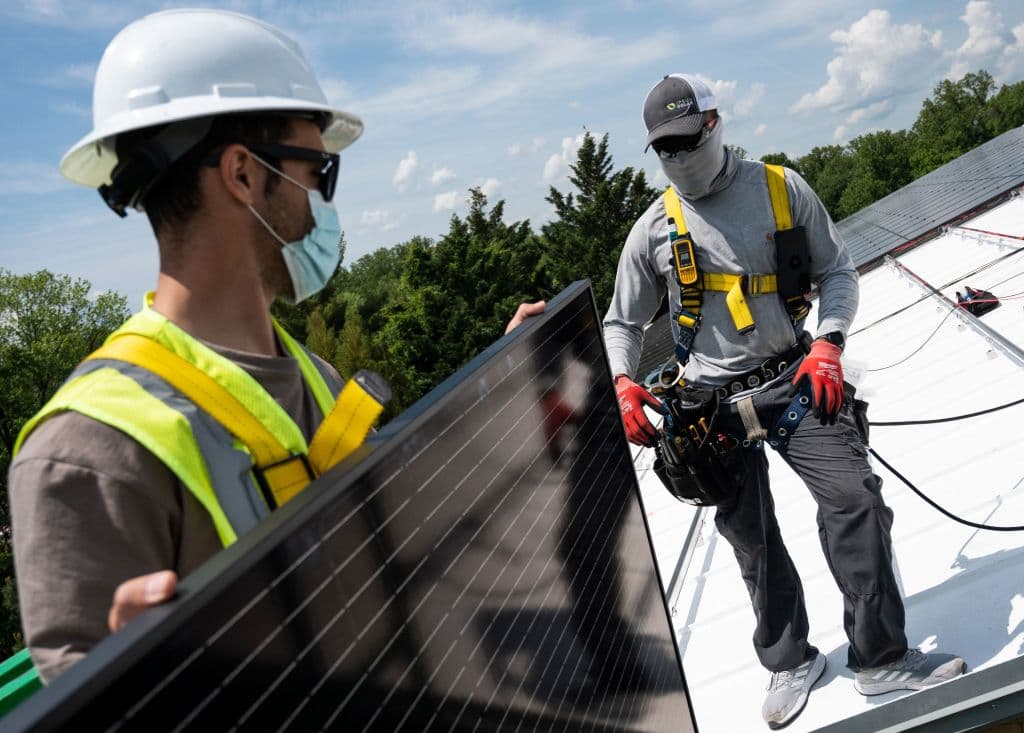
"This is the clean energy boom unleashed by President Biden: good-paying jobs in a fast-growing industry and lower bills for working families — all while addressing the climate crisis affecting our lives".
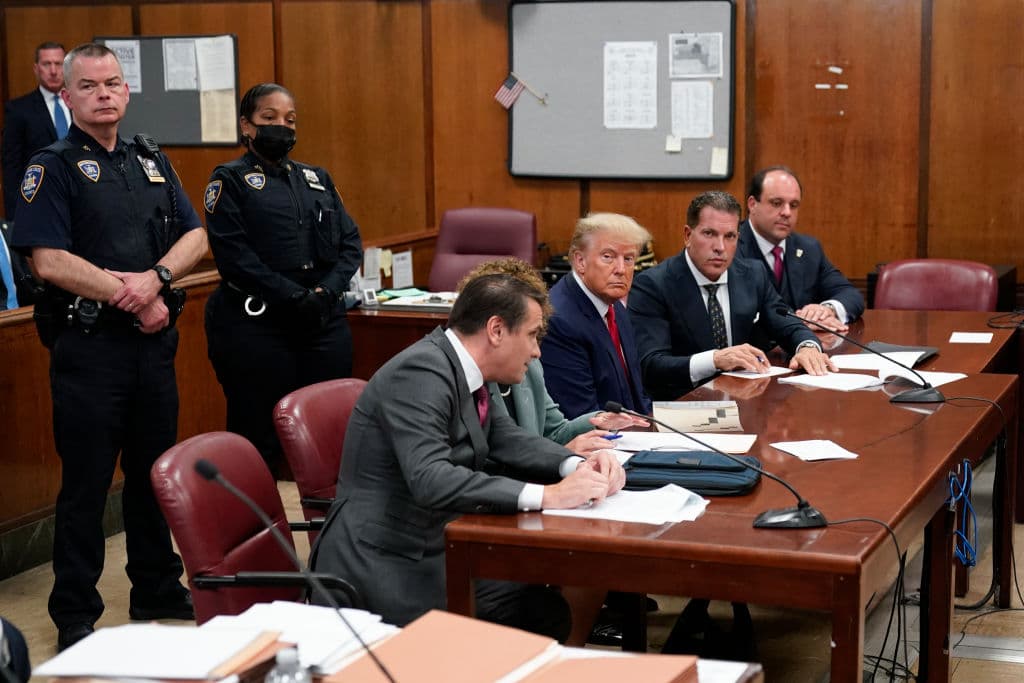
Putting presidents, former presidents and coup plotters on trial is an honorable and necessary practice to maintain a healthy democracy. Failure to put on trial presidents or former presidents who broke the law or committed crimes has had devastating consequences in Latin America.
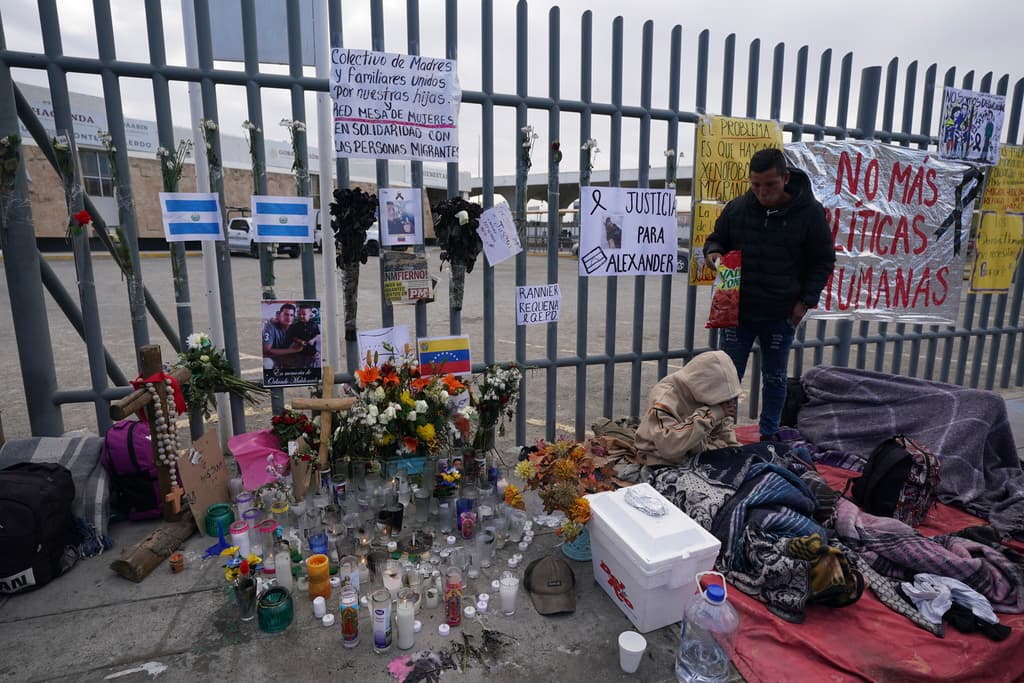
Mexico's migrant policy bears responsibility for the deaths of 39 migrants in the fire at a detention center in Ciudad Juarez. They were in the custody of the Mexican government, in a federal facility.
I met the first homeward bound Venezuelan exile inside a crowded evangelical-run shelter called “Yo Soy Jesus,” which is essentially a refugee base camp for people who are about to hike across the Colombian Andes. The man was holding court when we entered the shelter, speaking in a voice that was a little too loud for the small indoor space. He spoke with the authority of a climber returning from the summit, delivering his speech like a sermon to a weary-eyed crowd of exhausted travelers who listened without interrupting.
“It’s hard,” he told his fellow countrymen. “There’s nothing for us over there.”
Notas Relacionadas
He said he was returning from Ecuador, where he worked odd jobs for several months in an impossible attempt to scratch together enough money to send some home to his wife and kids. He had been homeless, suffered exploitative working conditions, and couldn’t earn enough to help those he loved back home. The separation from his family was killing him.
“I’m going back home. It wasn’t fair. I kept thinking about my wife with nothing to eat in Venezuela. At least now we can suffer together.”
From there, we had to drive about another 60 miles into the mountains, past a steady flow of uphill-plodding Venezuelans, to find another group of returning refugees. Hector Monasterios, his wife Ileana, and their 3-year-old daughter by the same name, were resting on a guard rail overlooking an enchanting panoramic view that nobody was in the mind to admire.
Hector was dressed a like a Florida retiree: track suit jacket, black socks pulled up to his shins, and flip-flops. He had a face of undetermined age that changed like an optical illusion to appear 10 years younger when holding his daughter. Hector told me his family had been walking for 15 days from Bogotá, slowed by his daughter’s short gait, his wife’s hypertension, and more luggage than two adults can easily handle on a mountain highway.
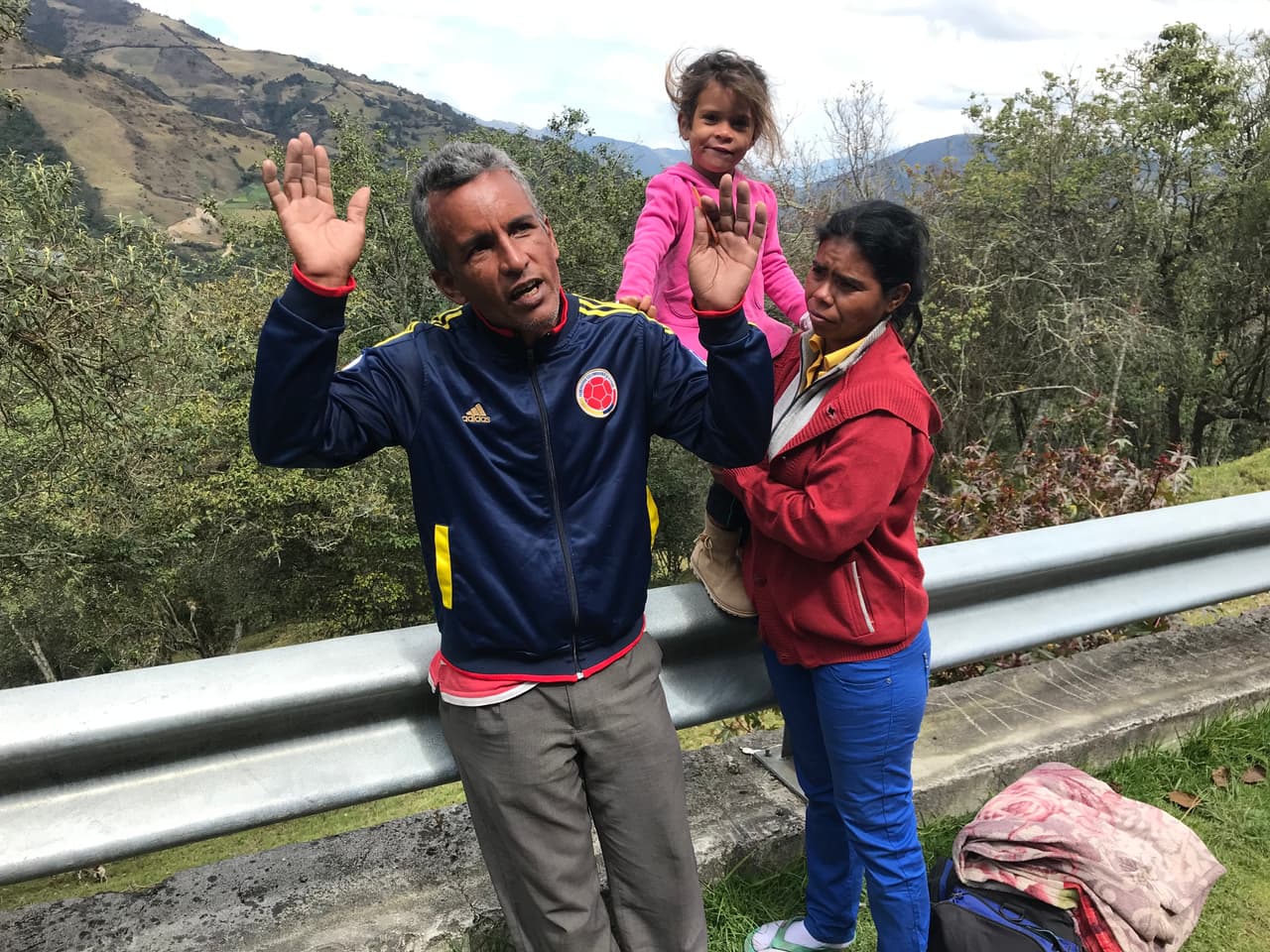
Hector Monasterios and his family of return refugees.
Imagen Tim Rogers/Univision
I inquired about his leisure footwear, and he said his feet were too blistered to fit inside his new sneakers, which were packed inside one of the many plastic bags he had tied across the stroller like saddlebags on a camel. But as we talked, I got the impression that Hector was really trying to save his shoes for Venezuela, rather than blow them out on the long walk home.
“I didn’t even own a pair of shoes when I left Venezuela,” he told me. “It’s almost impossible to buy shoes on a minimum wage there. A pair of shoes would basically cost me six months of salary, and not even for a very good pair of shoes.”
Hector brought up the subject of shoes several times. It seemed to represent the state of deprivation of life in Venezuela. He said most of the stuff he was carrying with him — much of which looked nonessential— was an effort to provide some happy childhood moments for his daughter.
“This was a gift somebody gave her for Christmas in Bogota,” Hector said, patting the plastic pink handlebars of a secondhand big wheel tied carefully inside a garbage bag. “This is something I could never afford to buy for her in Venezuela, working for minimum wage. Because it’s just way too expensive for someone earning minimum wage. Way too expensive.”
He nodded at a topless Barbie doll knock-off that was peeking out from another bag on the back of the stroller. “A lot of what we’ve got here are things for her. Things that are very difficult to buy there. Almost impossible. Including shoes, which my daughter never had in Venezuela.”
The decision to return home wasn’t easy, Hector told me. They had spent two months in Bogotá, living on the streets and surviving mostly on Colombian charity. He said he spent most of his days trying to find work — painting fences, recycling garbage, cleaning yards — but he couldn’t find a real job because, like many Venezuelans, he doesn’t have a passport.
“My goal was to find work, to buy new shoes and clothes for my daughter, and to eat. But we couldn’t really do any of that Bogotá, because of the high cost of living.”
Hector said his plan is to leave their daughter with extended family in Venezuela, then return to Colombia alone to look for work again. I asked what advice he has for all the other Venezuelans he was passing on his way home.
“I hope God watches over you. You have all the right in the world to try emigrating, because things are not easy in Venezuela. I understand the need— the lack of food, the lack of medicine, and a hundred other things. But it’s not easy in Colombia, either. And someday we all have to return home to our own land, because we can’t just leave our country in the hands of a few people who are forcing us to leave.”
With that we said our goodbyes. Hector and his family still had at least a week of walking before they got home. Fittingly, it was all downhill to Venezuela.
Relacionados: