Mexico City is a dust bowl, a polluted megalopolis where breathing is hard and newly washed clothes hung out to dry turn stiff by evening. Even before the COVID-19 pandemic began clobbering this capital city, residents regularly wore face masks during the frequent air quality emergencies there.
Mexico City buried its rivers to prevent disease and unwittingly created a dry, polluted city where COVID-19 now thrives
Surrounded by mountains, the city is in a bowl that traps whatever floats in the air, notorious for its smog and for the terrible health consequences pollution brings, including asthma and heart disease. The coronavirus outbreak, together with overcrowding and other poverty-related factors – creates the conditions for Covid-19 to severely sicken and kill more people.

Por:
Elena Delavega

Smog blankets the sky in Mexico City. Both lower schools and universities were closed for a third straight day for the pollution alert triggered by smoke from ongoing brush fires combined with the lack of rain. (May 17, 2019.)
Imagen Marco Ugarte/AP
Now Mexico City’s bad air pollution – which contributes to high rates of respiratory and cardiovascular diseases – is making the metropolitan area’s 21 million people more vulnerable to the coronavirus.
Mexico City wasn’t always an ecological and health disaster. As the center of the Aztec empire, it was verdant and diverse. As late as the early 20th century, 45 rivers ran through the Mexican capital.
The decision to bury and pave over its rivers, creating today’s arid metropolis, was a 20th-century plan meant to protect residents from disease – specifically, cholera, malaria and other waterborne illnesses brought on by frequent flooding.
Origins of Mexico City
I’m a scholar who studies poverty with a focus on urban areas, and Mexico City is my gray, concrete hometown. The relationship between its geography, history and health outcomes are relevant today, as the city struggles with its latest disease outbreak.
Mexico City was founded by the people now called Aztecs – but who called themselves Tenochcas – in 1325. The Aztecs built their city on a rock in Lake Texcoco, mostly because the more prime locations along the shore were already taken.
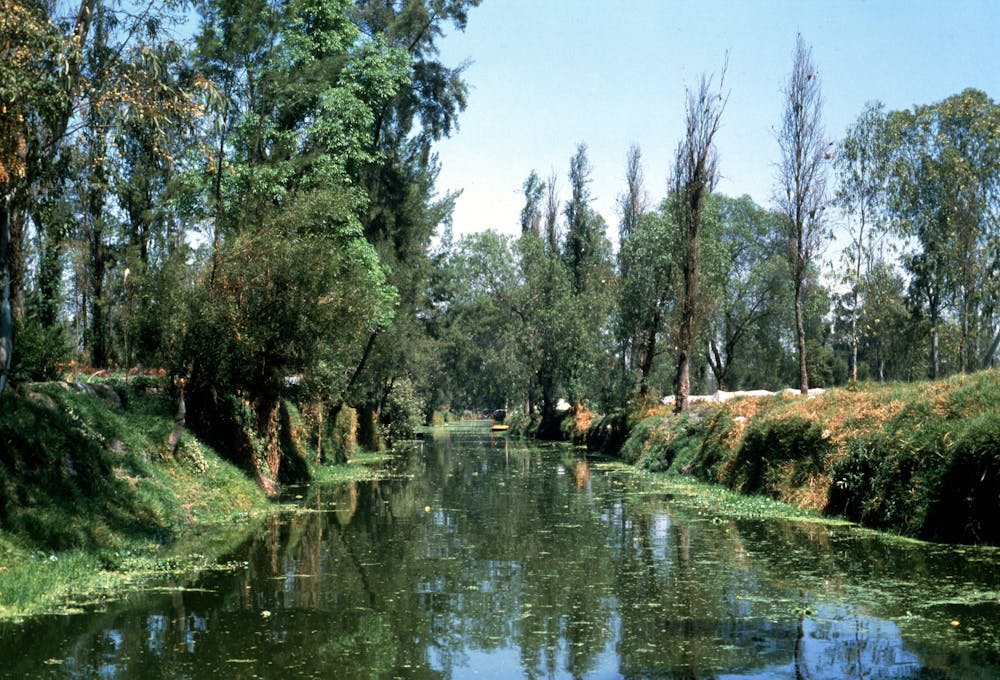
By 1427 the powerful Aztecs had defeated their lakeshore neighbors and built a shining capital that spanned the lake. The city, called Tenochtitlan, was built amid water by the development of “chinampas” – small plots of lake filled in with debris, pottery and soil to create solid land, with channels flowing around them.
[Deep knowledge, daily. Sign up for The Conversation’s newsletter.]
The foremost chronicler of Spain’s colonization of Mexico, Bernal Díaz del Castillo, described Tenochtitlan as crisscrossed by engineering marvels like causeways and removable bridges, and full of “splendid” palaces. Diaz del Castillo reports that the city market was larger and better regulated than those of Constantinople and Rome. As in the Roman empire, aqueducts supplied the city with fresh water.
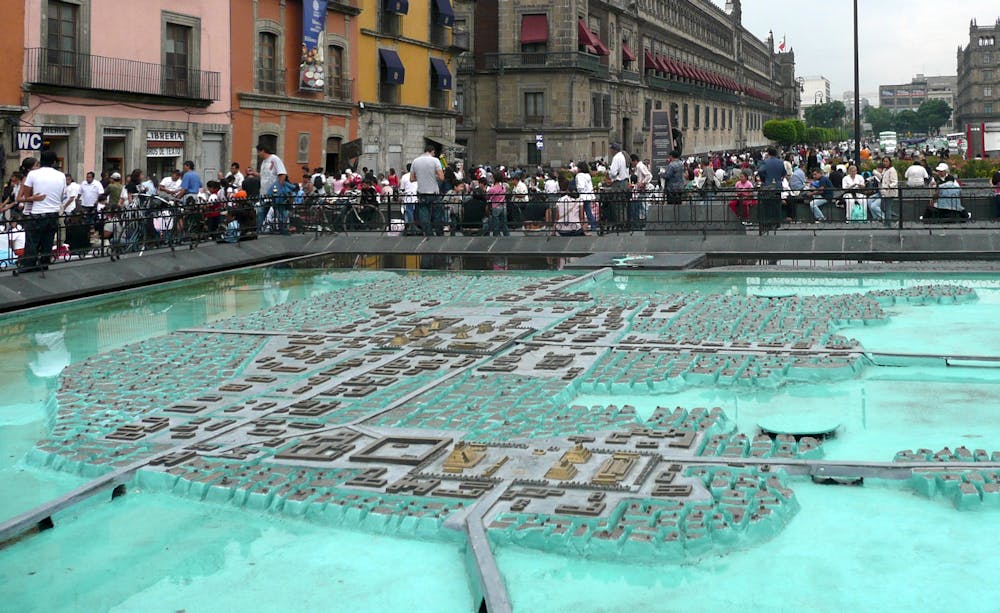
Tenochtitlan looked like Venice – gorgeous – and had the same health problems, including contaminated water, mosquitoes and unpleasant smells. But the Aztecs managed the city well and prevented flooding. Their dikes and waterways permitted a great diversity of plants and animals to flourish, and the chinampa agricultural system – in which land was replenished with soil dredged from the lake bottom – was one of the most productive the world has ever known.

As my mom worked and parented, all in one breath, she instilled in us the values that I carry with me today: “por la familia, todo.” Lee este contenido en español.
"What a sad reflection that the Republican Party has moved from Abraham Lincoln, who said immigration was a ‘source of national wealth and strength’ and Ronald Reagan, who called for his ‘city on the hill’ to be ‘open to anyone with the will and the heart to get here,’ to Donald Trump, who says immigrants are ‘poisoning the blood of our country".
"Our current immigration laws include so many hurdles that can keep families in limbo, and even being married to a U.S. citizen isn’t always enough to allow someone to get a green card".

"For those of us whose livelihoods depend on it, President Biden’s actions to protect and preserve DACA show a striking contrast with those of Trump and MAGA Republicans. Trump has a record of trying to end DACA and will try again if he wins another term".

"While immigrants by now are accustomed to being the tip of the spear in the GOP’s arsenal of attacks, let's be clear-eyed that the threat now is beyond harming immigrant communities or calling attention to the border. This is about using this issue as a tool to further Trump’s political ambitions, even if that means suppressing the right to vote, undermining our election results, or stoking more political violence".
"This month comes at a special moment in our nation’s history. For the first time, we have more Latinos serving in Congress than ever before. In the Senate, the Democratic Majority has confirmed a historic number of Latino judicial nominees and recently confirmed the first Latina to serve on the Federal Reserve in the Board’s 109-year history".
"This is the clean energy boom unleashed by President Biden: good-paying jobs in a fast-growing industry and lower bills for working families — all while addressing the climate crisis affecting our lives".

Putting presidents, former presidents and coup plotters on trial is an honorable and necessary practice to maintain a healthy democracy. Failure to put on trial presidents or former presidents who broke the law or committed crimes has had devastating consequences in Latin America.
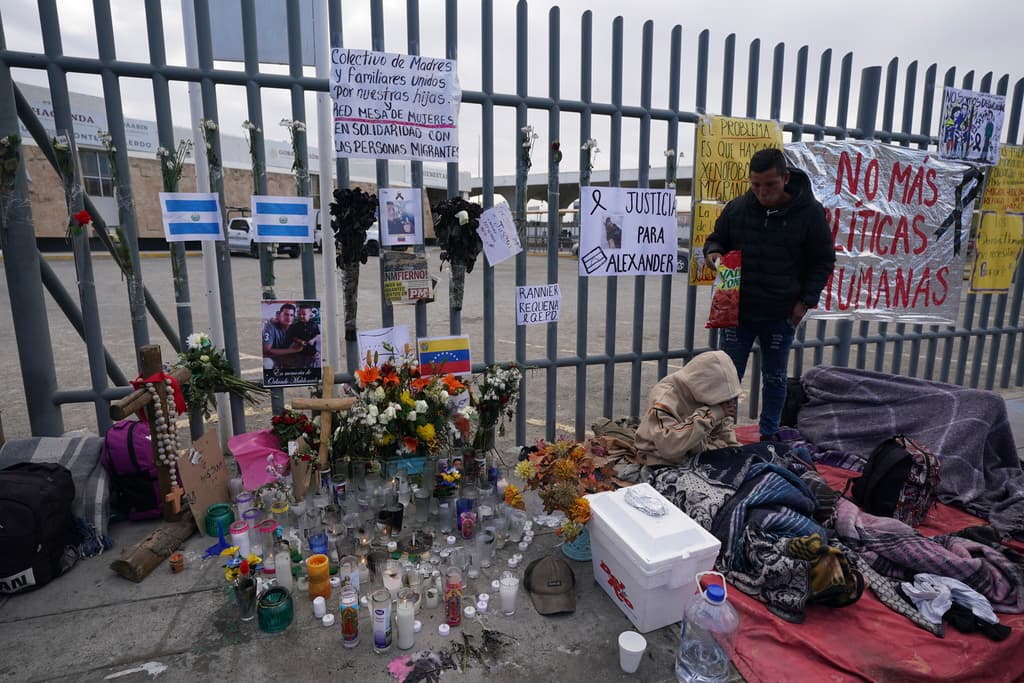
Mexico's migrant policy bears responsibility for the deaths of 39 migrants in the fire at a detention center in Ciudad Juarez. They were in the custody of the Mexican government, in a federal facility.
Spanish incompetence
That good urban management ended with the Spanish conquest in 1521. Tenochtitlan was destroyed, its palaces and causeways turned to rubble at the bottom of the lake.
The Spaniards did not understand the watery ecology of the area, nor did they understand or respect Aztec engineering. To rebuild their capital, they drained the lake.
This strategy led to both drought and an inadequate water supply for most of the year. Rainy season, however, brought tremendous floods. In 1629, the worst flood in Mexico City’s recorded history is said to have lasted five years and killed more than 30,000 people due to drowning and disease. Churches reportedly held rooftop masses.
Rainy season turned parts of the city turned into cesspools, spawning waterborne diseases like cholera and malaria, as well as meningitis. Gastrointestinal illnesses festered, too, because residents used Mexico City’s rivers for dumping garbage and sewage. Human and animal bodies floated in the stagnant waters, emitting a terrible stench.
Mexico goes deep
Mexico gained independence from Spain in 1810. To deal once and for all with its flooding problems, city leaders decided in the 1890s to channel rain, flood waters and sewage away from the city via a 30-mile desagüe, or drainage channel.
Around this time, the population of the capital began to explode. Mexico City had 350,000 residents in 1900 and 3 million in 1950. By the 1930s, its novel sanitation system was already insufficient. Plus, residents were still using Mexico City’s many rivers for washing clothes, as garbage pits and as sewers.
In 1938, the architect Carlos Contreras proposed enclosing three polluted rivers – the Piedad, the Consulado and the Verónica – and turning them into one giant viaduct to prevent flooding, disease and death. Political conditions did not allow this idea to move forward at the time, but the idea of putting Mexico City’s filthy waterways into enormous pipes and burying them stuck.
Over the following decades, rivers began to be put underground. Between 1947 and 1952 most of Mexico City’s 45 rivers were channeled into giant tubes, buried and paved over. Today, these rivers are visible only in the names of the streets that run over them: Rio Mixcoac Avenue, Rio Churubusco Avenue and others.
Smog bowl
This system gave mid-century Mexico City enough sewer capacity, roads and buildings to serve its population. The foul smell and unsanitary conditions also diminished, because people couldn’t dump garbage into covered waterways.
But without its rivers, Mexico City dried up and grew dusty. And because of its geography – located on a plateau, surrounded by mountains – the dust was unable to escape. Mexico City is in a bowl that traps whatever floats in the air.
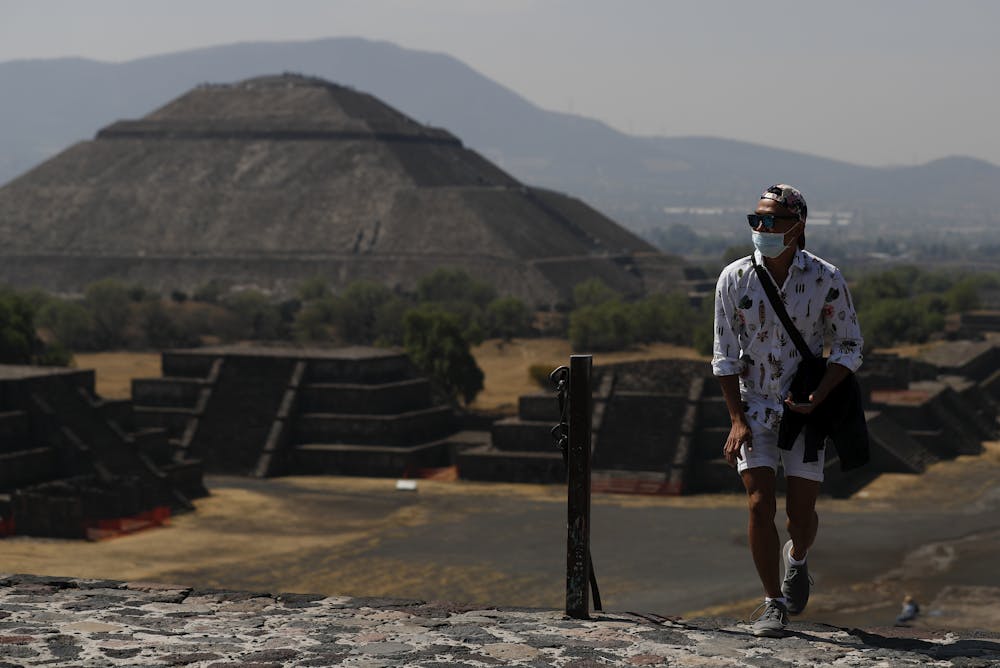
Starting in the 1980s, the number of cars grew into the millions, trapping pollution too. Today, Mexico City is notorious for its smog and for the terrible health consequences pollution brings, including asthma and heart disease.
The coronavirus outbreak wasn’t caused by polluted air. But the city’s bad air quality – together with overcrowding and other poverty-related factors – creates the conditions for COVID-19 to severely sicken and kill more people.
In trying to eliminate waterborne illness, the Mexican capital ended up helping an airborne virus find more hosts. It’s an irony of history the Aztecs would surely mourn.
Editor’s note: A photo caption incorrectly dating Teotihuacan to the Aztec people has been corrected.

Elena Delavega, Associate Professor of Social Work, University of Memphis
This article is republished from The Conversation under a Creative Commons license. Read the original article.
Relacionados: