There is a rage brewing in Latin America.
Latin Americans Are Furious
Latin America has never gotten over its attraction to authoritarianism and still has its fair share of dictators. But the time for staying quiet is over.
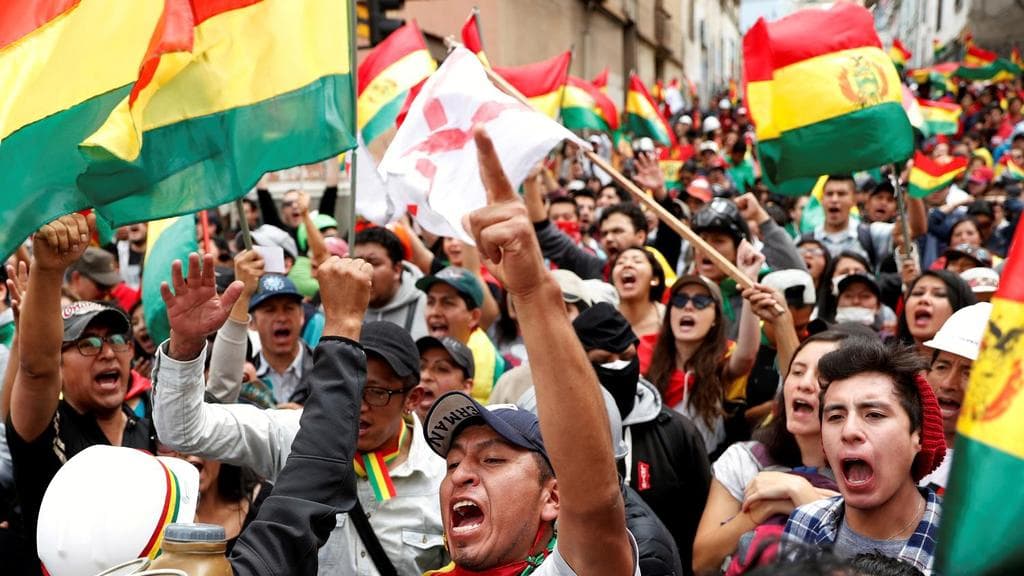
A protest against Evo Morales in La Paz, Bolivia, November 9 2019.
Imagen Carlos Garcia Rawlins/Reuters
Aware that they don’t live in real democracies, the people of Venezuela, Nicaragua and Bolivia are taking to the streets. In Chile, Ecuador and Haiti, citizens are angry about social inequality and the lack of economic opportunity.
Meanwhile, Argentina’s government is turning back to the Peronist-Kirchnerian left, and Mexico’s drug-related violence continues to spiral out of control. Other countries in the region aren’t faring much better.
Within this chaotic atmosphere in Latin America, there are three major aspects at play: Inequality, protests and social media, and authoritarian leanings.
Inequality
Latin America is still the most unequal region in the world; a huge gap continues to separate the wealthy and the poor. The sad lesson here is that while democracy is certainly necessary, it isn’t enough. From colonial times through today, Latin American economies have been set up for the benefit of the few. After decades of authoritarianism, many nations had hoped that, in addition to voting rights, economic welfare would be a reality for all. It was not to be.
I recently heard a young Chilean protester say this: “The poor people of Chile took to the streets because they can’t take it anymore. Because they want water. Because the government took away the rivers. Because they have us young people selling our lives on the streets to pay miserable fees. The people of Chile are finally awake, and they won’t fall asleep ever again.”
The president, Sebastián Piñera, has expressed his regrets. “I’m aware that we showed a complete lack of vision, and so I apologize to my fellow citizens,” he said in a nationally televised broadcast. But before he apologized he sent the military into the streets, resulting in several deaths, and established a curfew, the first declared in Chile since the end of Augusto Pinochet’s dictatorship.
As my mom worked and parented, all in one breath, she instilled in us the values that I carry with me today: “por la familia, todo.” Lee este contenido en español.
"What a sad reflection that the Republican Party has moved from Abraham Lincoln, who said immigration was a ‘source of national wealth and strength’ and Ronald Reagan, who called for his ‘city on the hill’ to be ‘open to anyone with the will and the heart to get here,’ to Donald Trump, who says immigrants are ‘poisoning the blood of our country".
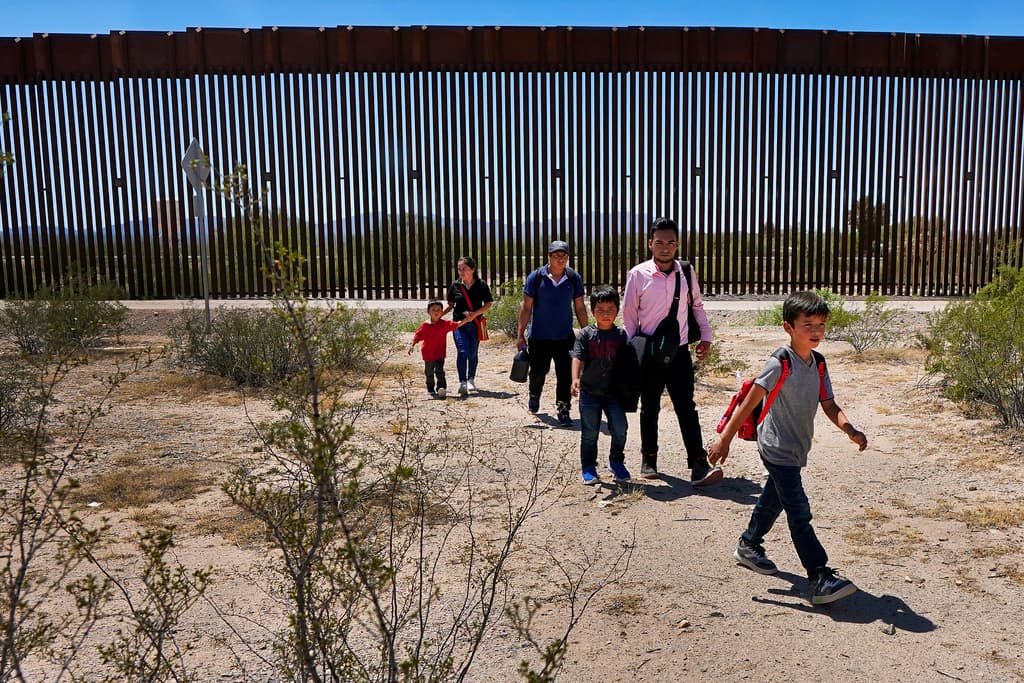
"Our current immigration laws include so many hurdles that can keep families in limbo, and even being married to a U.S. citizen isn’t always enough to allow someone to get a green card".

"For those of us whose livelihoods depend on it, President Biden’s actions to protect and preserve DACA show a striking contrast with those of Trump and MAGA Republicans. Trump has a record of trying to end DACA and will try again if he wins another term".
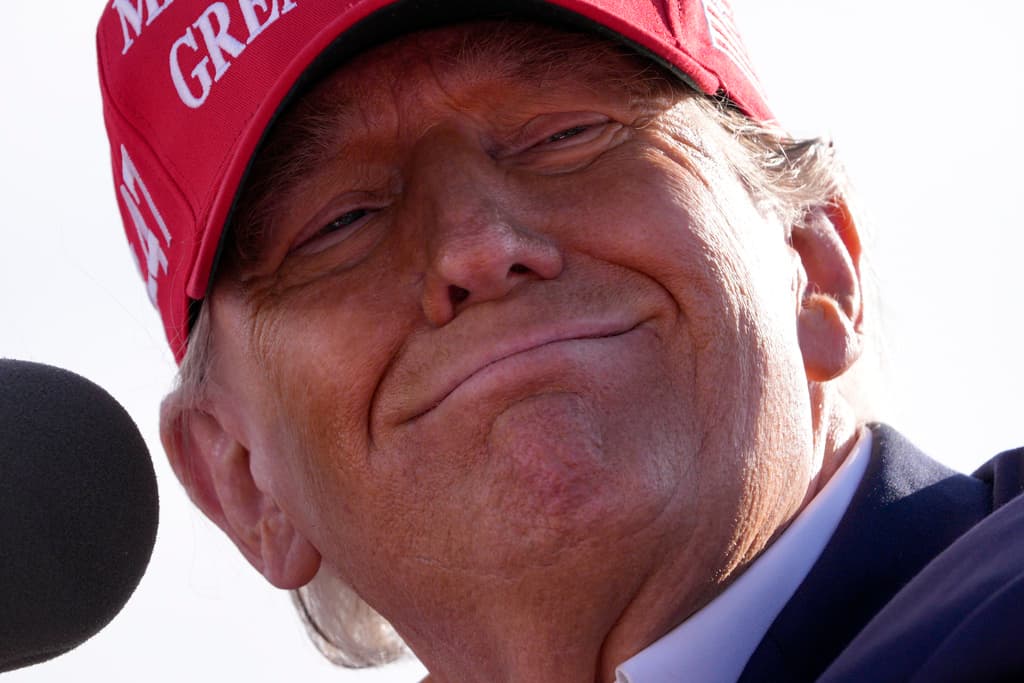
"While immigrants by now are accustomed to being the tip of the spear in the GOP’s arsenal of attacks, let's be clear-eyed that the threat now is beyond harming immigrant communities or calling attention to the border. This is about using this issue as a tool to further Trump’s political ambitions, even if that means suppressing the right to vote, undermining our election results, or stoking more political violence".
"This month comes at a special moment in our nation’s history. For the first time, we have more Latinos serving in Congress than ever before. In the Senate, the Democratic Majority has confirmed a historic number of Latino judicial nominees and recently confirmed the first Latina to serve on the Federal Reserve in the Board’s 109-year history".
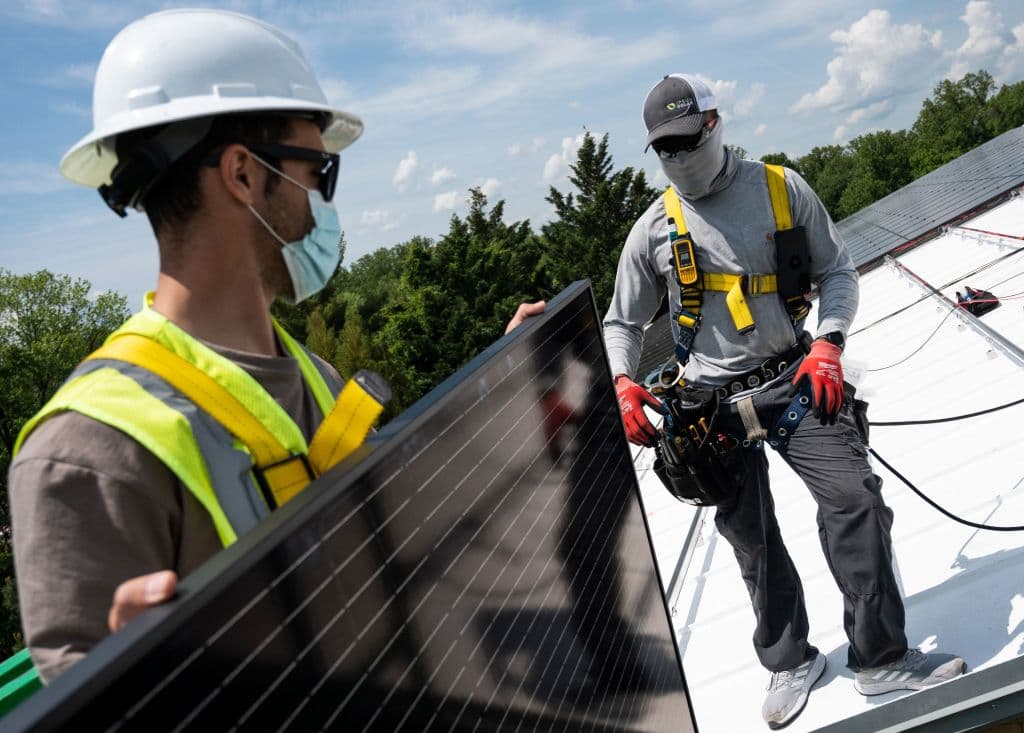
"This is the clean energy boom unleashed by President Biden: good-paying jobs in a fast-growing industry and lower bills for working families — all while addressing the climate crisis affecting our lives".
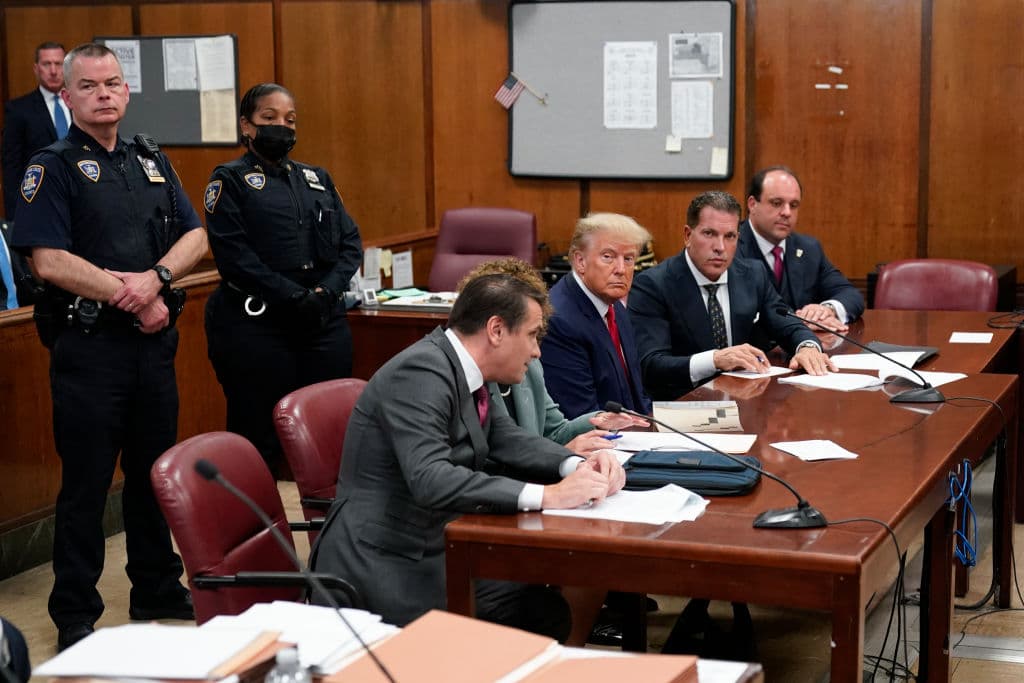
Putting presidents, former presidents and coup plotters on trial is an honorable and necessary practice to maintain a healthy democracy. Failure to put on trial presidents or former presidents who broke the law or committed crimes has had devastating consequences in Latin America.
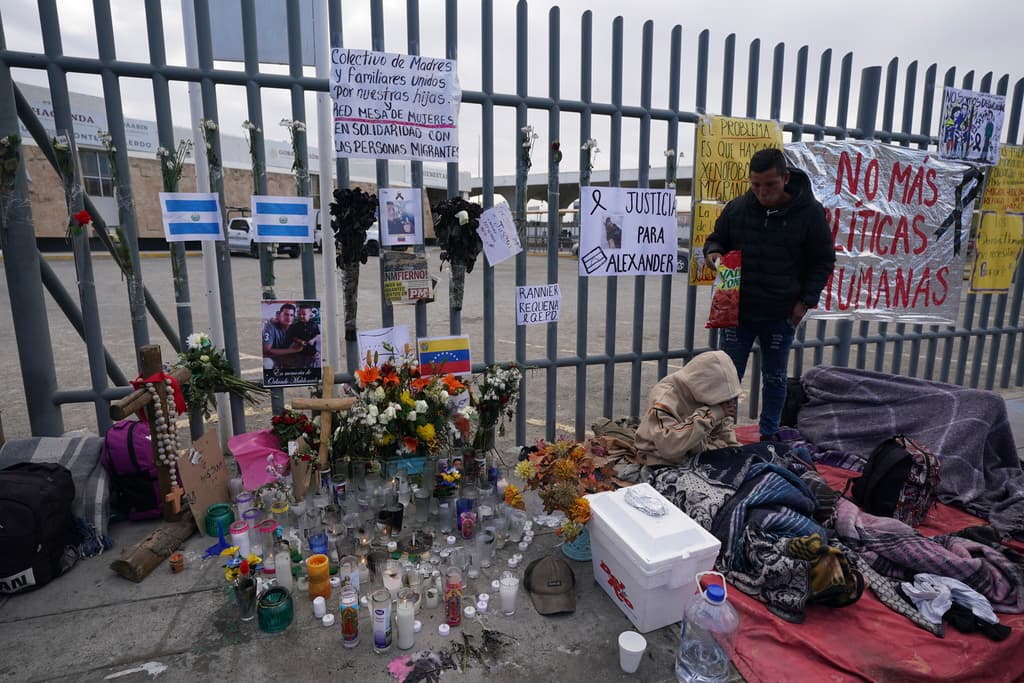
Mexico's migrant policy bears responsibility for the deaths of 39 migrants in the fire at a detention center in Ciudad Juarez. They were in the custody of the Mexican government, in a federal facility.
When someone apologizes after the tanks have been sent in and people have died, it doesn’t seem particularly sincere. “Sending the military to restore order is a high-risk and sensitive decision,” José Miguel Vivanco, the director of Human Rights Watch for the Americas, told me in an interview. Mr. Vivanco pointed to Argentina, Chile and other countries where the military class has been associated with brutal dictatorships.
Something similar happened recently in Ecuador, where protests against the economic policies that President Lenín Moreno had put in place — after he had agreed to a controversial loan from the International Monetary Fund — were violently repressed. The United Nations received allegations of human rights abuses by the government’s security forces, and Ecuador’s ombudsman’s office reported that as many as 10 people had been killed and over 1,000 injured.
“Bloody repression?” asked José Valencia, Ecuador’s minister of foreign affairs, when I interviewed him. “No, because the police didn’t cause those deaths; those were accidents during the protests. The police, as far as we know, behaved appropriately and proportionally, given the situation.”
It’s hard to believe that all those deaths were accidental. Who gave the order to attack the protesters? Who fired the tear gas? And what about those in uniform who assaulted demonstrators with their truncheons? People who are simply complaining about the deplorable economic conditions in which they live don’t deserve such treatment.
Protests and Social Media
Nicolás Maduro, the Venezuelan dictator, has tried to take credit for the demonstrations occurring in other South American countries. “We are following the São Paulo Forum plan” he said recently, referring to a purported joint action agreed to by the group of left-wing Latin American parties and organizations.
There is no evidence of any such coordinated action. But even if there were, it wouldn’t explain the one million people on the streets of Santiago, the Chilean capital, or the huge demonstrations in Haiti.
Those demonstrations were possible only because democracy has created new spaces for protest, which in the past was not allowed, whether in Pinochet’s Chile or in Argentina, during the junta, or elsewhere.
But today demonstrators aren’t afraid. Social media and mobile technology have made it easy to organize effective protests, allowing young people to overcome government censorship and control. Official communications are balanced by millions of videos, photographs and texts on Twitter, Instagram and Facebook.
And once legitimacy and credibility are lost on social media, no government can rule.
Authoritarian Leanings
Latin America has never gotten over its attraction to authoritarianism. Ever since Simón Bolívar, who had become dictator of Peru, toyed with the idea of becoming president for life of the short-lived state of Gran Colombia, others have followed.
Today, Latin America has its fair share of dictators. Both Mr. Maduro in Venezuela and the husband-and-wife duo of Daniel Ortega and Rosario Murillo in Nicaragua have rigged elections and committed human rights violations in order to hold on to power. Cuba has shown us how 60 years of repression can be normalized: Miguel Díaz-Canel was recently handpicked to succeed the dictator Raúl Castro, Fidel’s brother.
In Bolivia, President Evo Morales resigned on Sunday after widespread protests over an October election that many saw as rigged, marking a dramatic end to a nearly 14-year reign. In a 2016 referendum, the Bolivian people rejected a measure that would have allowed Mr. Morales to run for a fourth term. He ran in October anyway, but the protests didn’t stop.
The time for staying quiet is over. Latin Americans are no longer keeping their dissatisfaction to themselves. What’s new about this recent wave of protests is that official censorship is out, while new digital technologies for sharing popular grievances and coming together in protest are in. Unfortunately, Latin American governments have always responded in the same way: with repression.
But this tactic is no longer working. The protests in Ecuador may reignite at the slightest provocation. The honeymoon enjoyed by Mexico’s new president, Andrés Manuel López Obrador, may soon end if drug-related killings continue. The dictators in Venezuela, Nicaragua and Cuba can’t even seem to control their message.
First they lose the media, then they lose the streets. This discomfort and anger are an omen. Come what may, nothing will remain the same.
Relacionados: