
(The following was excerpted from The National Interest’s November/December 2016 print magazine. Reprinted by permission.)
America's very own Mexican standoff
Washington can more effectively pursue its economic and security interests by befriending, rather than antagonizing, the country sharing its two-thousand-mile southern border.
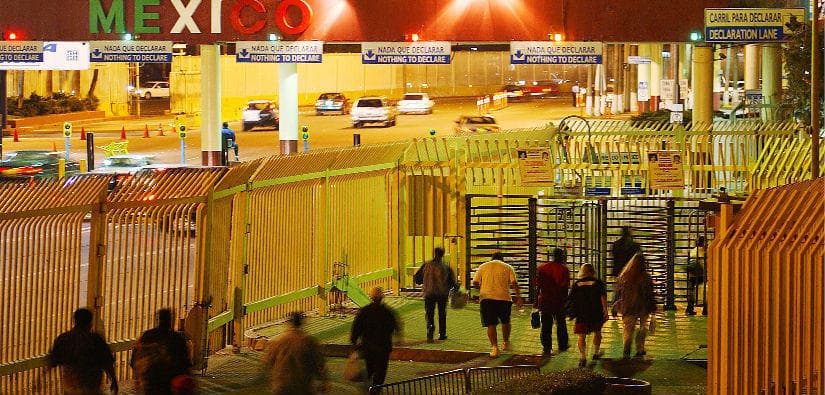
The border crossing at Tijuana
Imagen Getty Images
Contrary to conventional wisdom, Mexico is not a cesspool of low-cost labor; it is increasingly an innovation-driven economy to which investors look due to its labor productivity, not exploitability.
As a result, North America has become a true twenty-first-century economic space, just in time to compete more effectively with China, India and other economic rivals.
Consider as well that in 1994, when NAFTA went into force, there was barely an Internet, much less Facebook or Twitter; e-mail was relatively new. Nobody except futurists and technology prophets had a clue how radically and rapidly electronic communications would fundamentally alter businesses around the world.
Technology has made possible incredible advances in manufacturing, energy, financial services, medical products, agriculture and virtually every other economic sector in the past two decades. The auto sector, arguably the original driver of North American economic integration, has now advanced so far that cars are literally driving themselves. Entire industries that were not even contemplated by NAFTA are now a significant part of all three economies.

Despite a near universal desire for an end to Venezuela’s manmade disaster, sending in U.S forces to take out the Maduro regime would be counter-productive. It should be categorically rejected by interim president Juan Guaidó, not to mention the Trump administration.
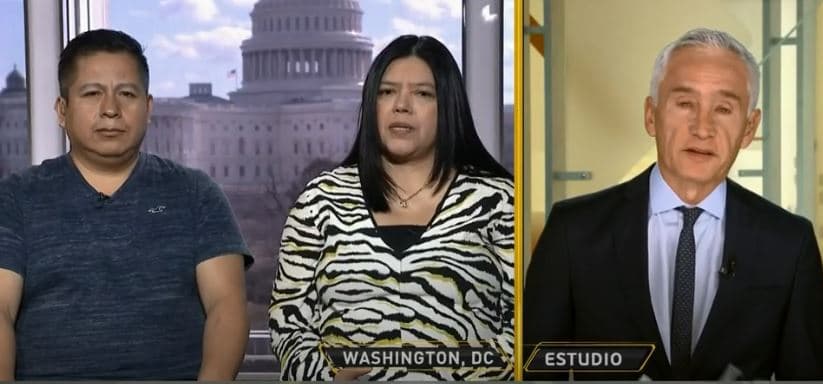
The firing of undocumented workers at Trump's golf clubs just shows how the practice of employing immigrants without legal work papers is much more common than we might imagine. Such is life in the United States.
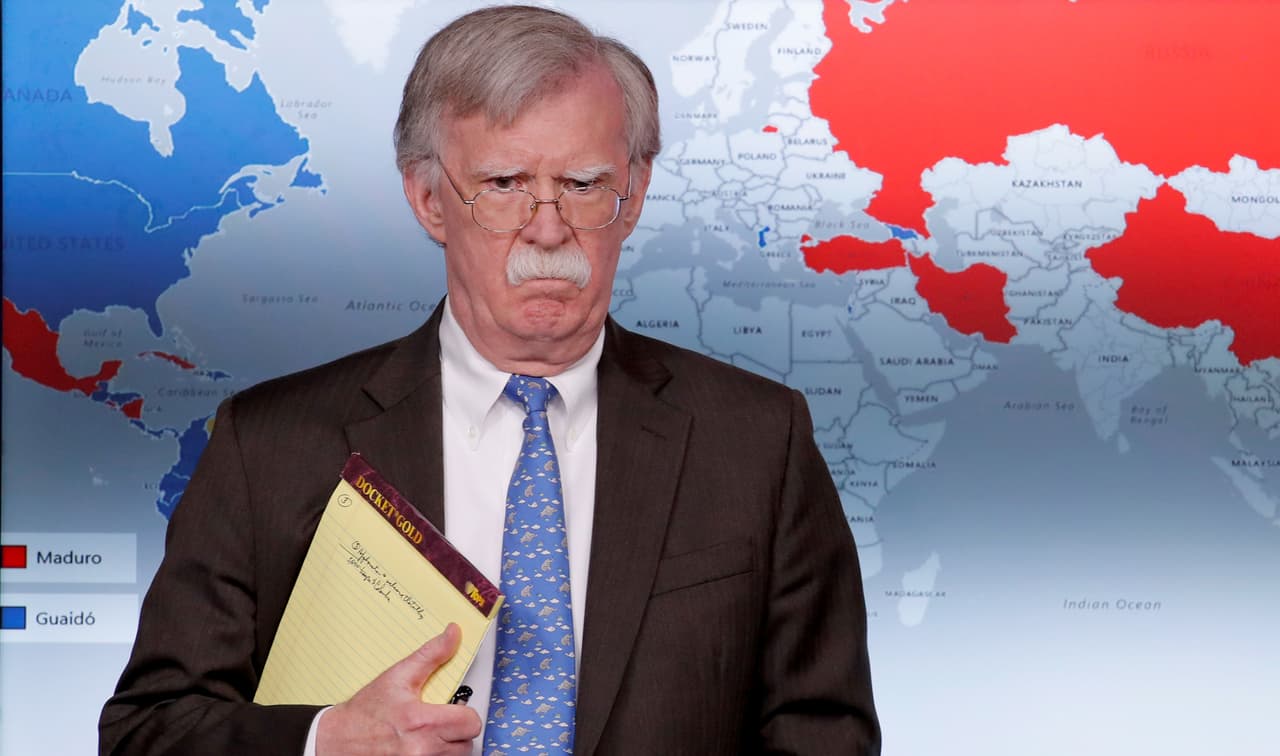
The Trump administration should be wary of fueling fake news predictions about an imminent American invasion which unrealistically raises expectations about Maduro's removal.

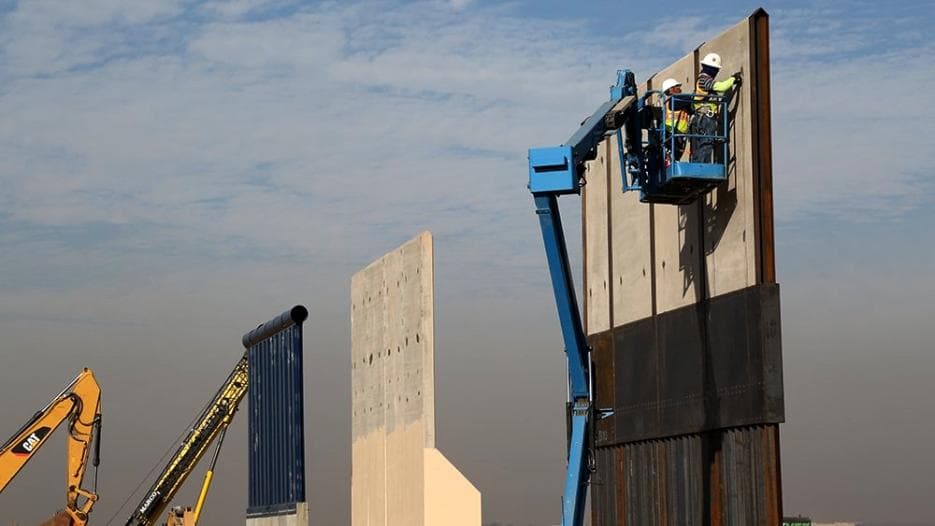
At some point we will have to accept the fact that the border between Mexico and the United States is nothing more than an invention.

The United States has had a major role in the evolving drama of the fight for democracy in Venezuela and Nicaragua. And so far, it’s been surprisingly coordinated, a veritable model of multilateralism.

Has the Maduro regime reached breaking point? It remains hard to say, but tomorrow is another - more hopeful - day for the restoration of democracy in the South American nation.
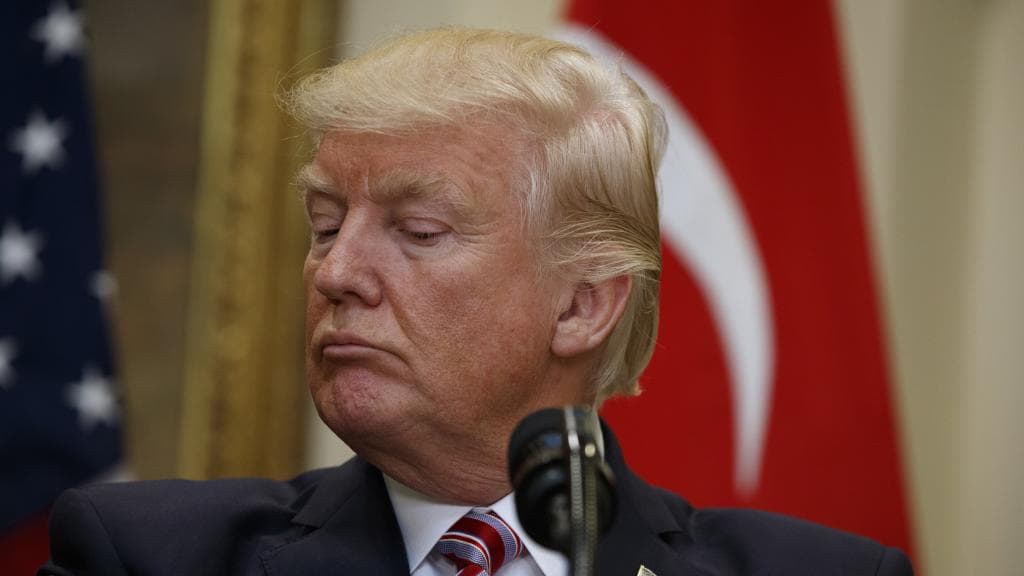
It’s impossible to get into Trump’s head but what comes out of his mouth are racist remarks. But, saddest of all are the millions who tolerate his views, cheer him on and emulate his behavior.

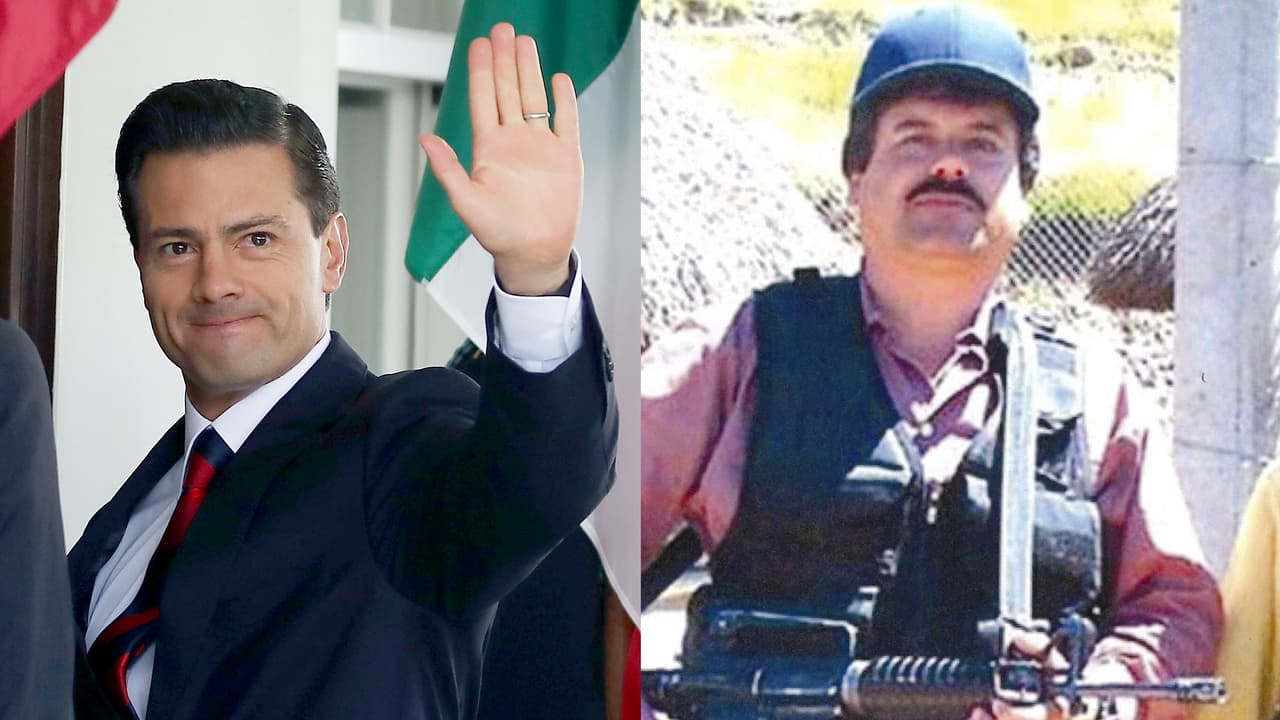
The time is well past due for the U.S. government to conduct a thorough review of leaders and their senior colleagues before they leave office to determine if they merit visas.
Rather than building walls, promoting economic growth and competitiveness requires that borders work better. Since September 2001, U.S. borders with Mexico and Canada have “thickened” and commercial activities have understandably taken a back seat to security. The result has been a lack of attention to commercial needs at the borders—specifically in cross-border infrastructure, but in other areas as well—that has created unnecessary bottlenecks for commercial traffic and eroded the compelling economic advantages of geographic proximity. Infrastructure has generally languished although steps are now being taken to alleviate the worst pressures.
But the fact remains that North America’s twenty-first-century economies are framed by a twentieth-century trade framework (NAFTA), utilizing nineteenth-century infrastructure. As economies grow and trade increases, this picture will continue to deteriorate absent further concrete steps.
The strategic opportunity for the United States, therefore, is to capitalize on the increasingly unified North American economic space and dynamism, while assisting Mexico where possible to advance along its reform agenda, including on corruption and the rule of law. Rather than seeking to limit U.S. engagement with Mexico and Canada, the moment is ripe to think bigger and bolder about North America and regional competitiveness, counteracting the powerful voices that are working to place obstacles in the path of deeper engagement. The three leaders of North America have sought to do exactly that in meeting periodically for North American Leaders Summits (NALS), a process that should continue on an annual basis under the next U.S. president.
The ground has shifted on the North American agenda. Market conditions have taken some of the buzz away from Mexico’s energy reforms, while U.S. denial of the Keystone XL Pipeline permit request was seen as a slight directed at the previous Canadian government. Meanwhile, the presidential campaign has overwhelmed the entire U.S. political process, and the leading candidates from both major parties have sought to distance themselves from further trade expansion initiatives, including the Trans-Pacific Partnership, which is perhaps the most realistic way to update the North American economic framework.
Traditionally, the NALS tend to focus on the nuts and bolts of the trilateral relationship: trusted traveler programs, rail transportation plans, reducing costs at the border. But the luxury of playing small ball no longer exists. The game has changed, and the three leaders of North America should stand together in a full-throated defense of North America, strengthening the case for cooperation and expressing a compelling regional vision, at each future opportunity.
At bottom, North America is a critical pillar of U.S. economic and national security. By definition, a robust, mature relationship between the United States and Mexico has to be part of that equation. Leadership to promote such a message is required, not just from politicians and elected officials, but also from everyone in the business community that has a stake in a healthy U.S. economy. The pattern has generally been to remain silent in the face of repeated, inaccurate or misleading attacks on U.S.-Mexico trade and investment relations, border affairs, and the importance of Mexico to U.S. economic and national security.
Why put a fist into a hornets’ nest? But such an approach has longer-term consequences. Whereas national leaders, including business executives, routinely spoke out in favor of deepening relations prior to the passage of NAFTA, since then a virtual free-fire zone has opened for critics, protectionists and nativists who seek to undermine bilateral relations.
It is time to promote a more accurate picture: Mexico is contributing to U.S. economic strength, and vice versa; migrants who make the dangerous trek north are generally not looking for welfare, but for a job that Americans will not fill, and the U.S. economy would grind to a halt without them; Mexico is a true partner in addressing terrorism and security concerns. And the insatiable U.S. demand for drugs and limitless supply of weapons from the United States is making matters dramatically worse.
The next Mexican presidential elections will be held in 2018. The current president is unable by law to run for another term; his successor will be elected after his or her counterpart in the United States has been in office for a year and a half. To the extent the U.S. president is someone who stigmatizes Mexico and its people (whether in or outside the United States), pursues a bilateral agenda of rhetorical and physical division, and calls for the abrogation of NAFTA and isolation from America’s closest economic and security partners, Mexican presidential candidates will be forced to react in kind—for the dignity of their nation and their own political survival. As antibodies to the ongoing U.S. discourse continue to multiply in Mexico, equally strident political voices with a countervailing message will likely emerge south of the border in a quest for Los Pinos, the Mexican White House.
Having failed to learn the lessons of the past, the United States and Mexico would then stand ready to repeat it. This wholly avoidable outcome would be to the lasting detriment of both nations and to the consternation of a generation of policymakers, businesspeople and community leaders on both sides of the border who have worked to move beyond historical patterns and to chart a more productive, pragmatic and mutually advantageous future together. For both nations, a major strategic setback. This is not a drill. The stakes for the United States and Mexico really are that high.
Relacionados: