U.S. embassy orders families home as Nicaraguans march against Ortega
Hours before a massive march brought the capital. Managua, to a standstill, U.S. diplomats were ordered to send their families out of the country in the latest sign that the Ortega government is losing control.
The U.S. embassy has ordered the departure of family members of its diplomatic staff as Nicaragua’s political crisis entered its sixth day with no sign of resolution or dialogue to end bloody street protests that have cost as many as 27 lives.
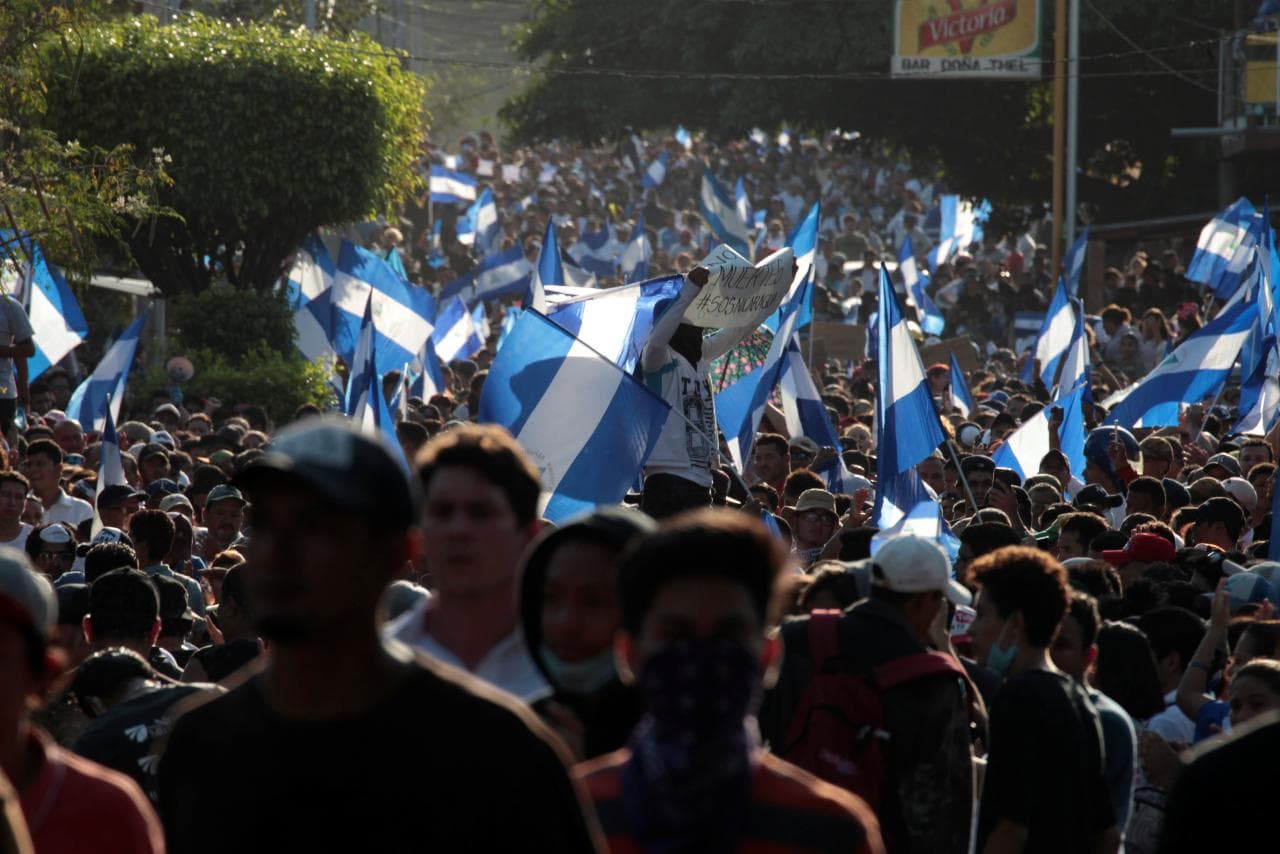
Tens of thousands of Nicaraguans marched peacefully on Monday afternoon in the strongest showing of unity by protesters, many calling for President Daniel Ortega's resignation. While there were no clashes between protesters and police during the march, Ortega’s government was looking daily weaker and more isolated.
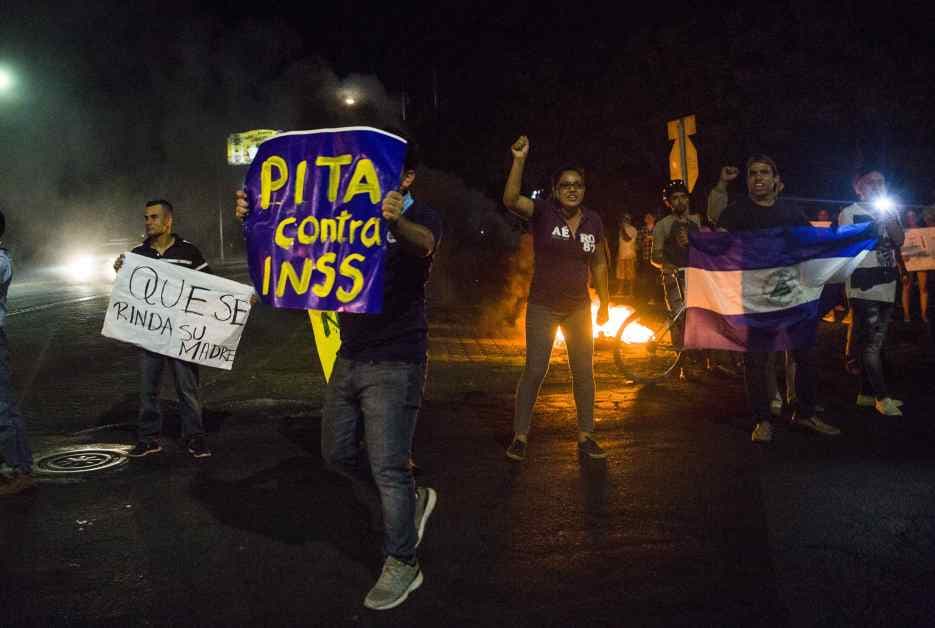
The student-led protests, which began over a social security tax hike, have since morphed into a national movement against excessive use of deadly force by police, and what many see as Ortega’s dictatorial rule, nepotism and corruption.
Schools remain suspended “until further notice” throughout the country, and foreign leaders, including Pope Francis have called for dialogue.
In the latest sign of a loss of confidence, the U.S. embassy “ordered all eligible family members of U.S. government employees to depart Nicaragua until the security situation improves.”
The announcement on Monday, emailed to U.S. citizens in Nicaragua, warned of “large-scale civil unrest includes violent and non-violent demonstrations, rioting, and looting throughout Nicaragua.”
Notas Relacionadas

A look inside defiant Nicaraguan students' stronghold


It added that grocery supplies may be running out and access to the capital’s international airport was “is sporadic and complex.”
The embassy has been closed since last Thursday and opened briefly on Monday for two hours in the morning to handle emergencies. “I was there to renew a passport for one of my children and they were announced on a loudspeaker that everyone had 15 minutes to leave,” one Nicaraguan-American man told Univision. “The consul signed the documents and then got in a car and drove off, like in the movies,” he added.
"The decision to move to ordered departure for embassy dependents in Managua is quite serious and not a decision taken lightly,” said former U.S. ambassador John Feeley, who was the second most senior diplomat at the State Department for Latin America.
“It basically means that the State Department is gravely concerned the Sandinista government cannot provide for law and order in the streets, protect diplomatic personnel, and it doesn't appear likely to regain it anytime soon," he added in a phone interview.
"No going back"
Feeley, who resigned as ambassador to Panama in January over President Donald Trump’s moral leadership, said the crisis had reached a point that Ortega’s control on power was being seriously questioned for the first time.
"There’s no going back. The Ortega regime as it existed has ended. As a result of this spontaneous and uncoordinated outpouring of citizen rage against President Ortega and his wife, my sense is that their highly personalized and fetishly centralized system of autocratic governance will finally begin to change,” he said.
"The Nicaraguan street is doing what sham elections and a hijacked democracy couldn't - opening space for their voices to be heard," he added.
Ortega, 72, has been in power since 2007 and won a third consecutive term in office in November 2016 with 72% of the vote, though opposition leaders declared the election a "farce." Critics accuse him - his wife Vice President Rosario Murillo - of usurping control of every branch of government, as well as the media, in a ruthless bid to stay in power.
Despite widespread poverty and a history of revolution and civil war, Nicaragua has been relatively stable in recent years, avoiding the gang violence or political turmoil that has affected nearby Honduras, El Salvador and Guatemala.
Tax hike was last straw
The current crisis began earlier this month, experts say, when a massive forest fire broke out in the Indio Maíz Biological Reserve, considered one of the best preserved natural reserves in southern Nicaragua. Government critics suspect the fire, which swept through 12,000 acres, was the result of illegal logging, and blamed a lack of government controls.
When the government announced the fire had quickly been extinguished it, few believed it. That set the stage for a dramatic outburst of protest last week after the government announced a surprise social security tax hike to bail out the country's failing social security system.
Notas Relacionadas
5 things to know about the protests in Nicaragua
On Sunday, Ortega backtracked from the social security reform package and offered to open a dialogue with the business sector and the Catholic Church, while accusing the students of being criminals.
But church leaders have so far refused to meet Ortega until the government free students taken prisoners and lift media restrictions.