
(Editor’s note: President Donald Trump gave his first address to a joint session of Congress on Feb. 28. The speech featured policy ideas that appealed to Republicans, and others that sounded more Democratic. We asked scholars to react to the substance of the speech and evaluate its tone for hints of bipartisanship.) 
Trump suggests ‘merit-based’ immigration policy in address to Congress
That would favor the best and the brightest, but severely restrict low-skilled immigration, hurting companies in the agricultural or manufacturing sectors.
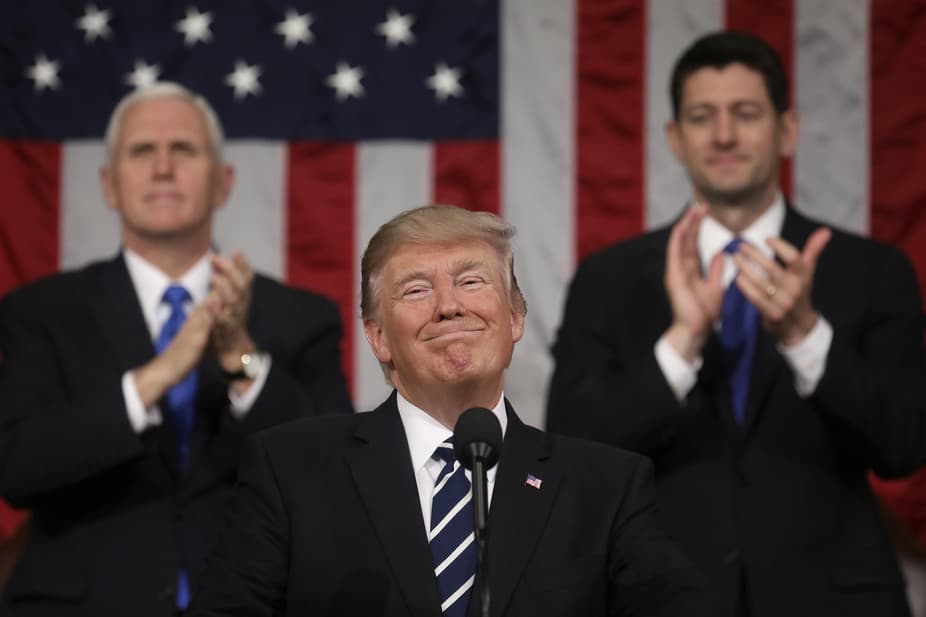
Trump addresses a joint session of Congress on Feb. 28, 2017, as VP Mike Pence and House Speaker Paul Ryan applaud.
Imagen Jim Lo Scalzo/Pool Image via AP
President Trump called for a “merit-based system” for immigration, which would represent a major change in U.S. immigration policy.
This could, for example, boost innovation. But, at the same time, it would require significant adjustments by U.S. companies, while raising the costs of services in many parts of the U.S. Importantly, it is unlikely that this policy would “save countless dollars, raise workers’ wages and help working families,” as President Trump claimed.

Despite a near universal desire for an end to Venezuela’s manmade disaster, sending in U.S forces to take out the Maduro regime would be counter-productive. It should be categorically rejected by interim president Juan Guaidó, not to mention the Trump administration.

The firing of undocumented workers at Trump's golf clubs just shows how the practice of employing immigrants without legal work papers is much more common than we might imagine. Such is life in the United States.
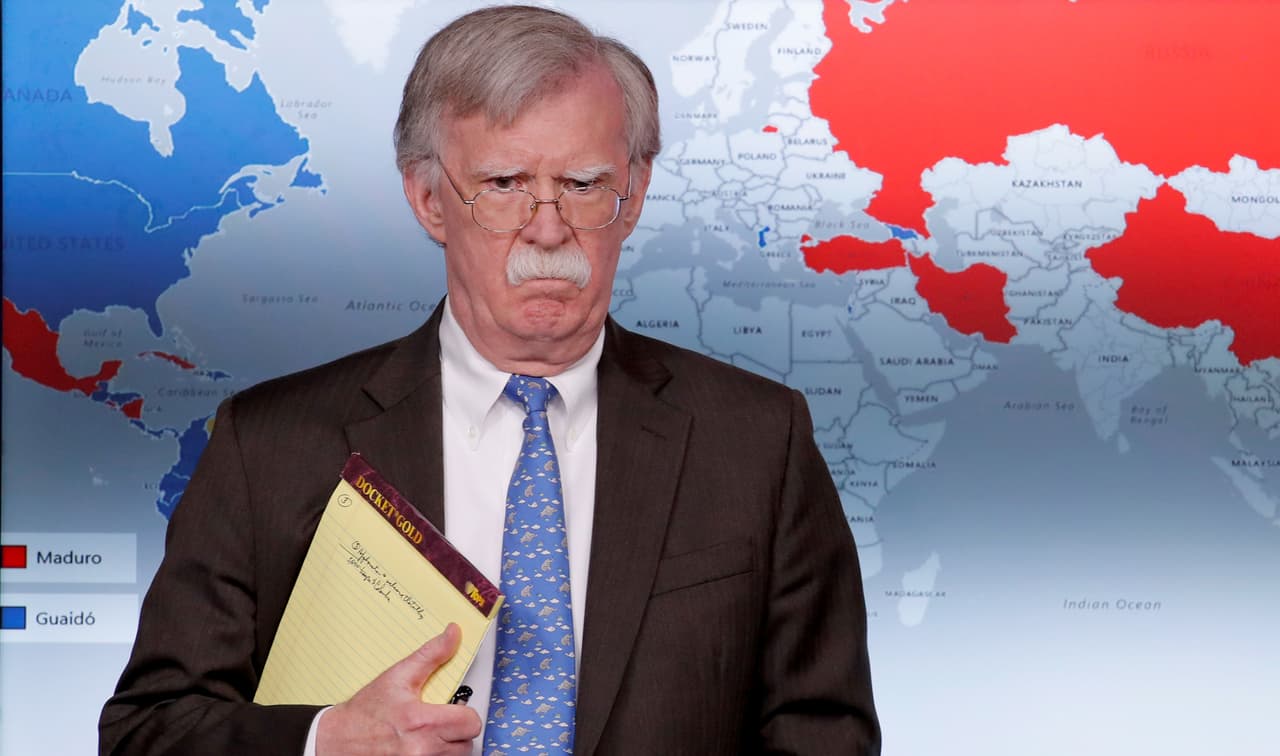
The Trump administration should be wary of fueling fake news predictions about an imminent American invasion which unrealistically raises expectations about Maduro's removal.


At some point we will have to accept the fact that the border between Mexico and the United States is nothing more than an invention.

The United States has had a major role in the evolving drama of the fight for democracy in Venezuela and Nicaragua. And so far, it’s been surprisingly coordinated, a veritable model of multilateralism.

Has the Maduro regime reached breaking point? It remains hard to say, but tomorrow is another - more hopeful - day for the restoration of democracy in the South American nation.
It’s impossible to get into Trump’s head but what comes out of his mouth are racist remarks. But, saddest of all are the millions who tolerate his views, cheer him on and emulate his behavior.


The time is well past due for the U.S. government to conduct a thorough review of leaders and their senior colleagues before they leave office to determine if they merit visas.
In short, a merit-based immigration system, like that in place in Canada and Australia, assigns applicants points based on their status in each of several categories, typically emphasizing an immigrant’s language fluency, educational attainment, age and whether employment has been secured prior to arrival. As a result, the system tends to select young immigrants ready to perform skilled work.
The benefits of a merit-based immigration system derive from welcoming a steady stream of the best and brightest from around the world, something the U.S. has done for most of its history through the H-1B visa and other programs.
It should be noted that recent immigration has already been tilted toward those with skills, so such a system wouldn’t necessarily provide companies with more able workers.
In fact, the primary effect of the introduction of a merit-based system would be to severely restrict low-skilled immigration, hurting companies in the agricultural or manufacturing sectors that are more reliant on such workers. One of the most consistent findings within the immigration literature is that companies are quick to replace low-skill workers with capital by replacing them with machines when conditions change. The wages of a few remaining workers would rise but most would likely lose out.
At the same time, costs such as dining out, landscaping, housework and elderly care would become more expensive as low-skill immigrant service providers become more scarce.
While a merit-based system would impose some coherence on U.S. immigration policy, which today is quite piecemeal and inefficient, it would severely restrict low-skill immigration. This is unlikely to increase Americans’ economic prospects, and in fact would probably reduce them.
Greg Wright, Assistant Professor of Economics, University of California, Merced
This article was originally published on The Conversation. Read the original article.
Relacionados: