Over the years I have noticed that when Latins attempt to explain confusing situations in their home countries to foreigners, they often refer to it as “Macondo,” the thinly veiled Atlantic Coast of Colombia, where magical realism’s greatest exponent, Gabriel Garcia Marquez, located much of his phantasmagorical fiction.
God does a 180 In Nicaragua…or is it a 360?
The Nicaraguan church is once again assuming an important political role in Nicaragua after a decade of relative somnambulism.
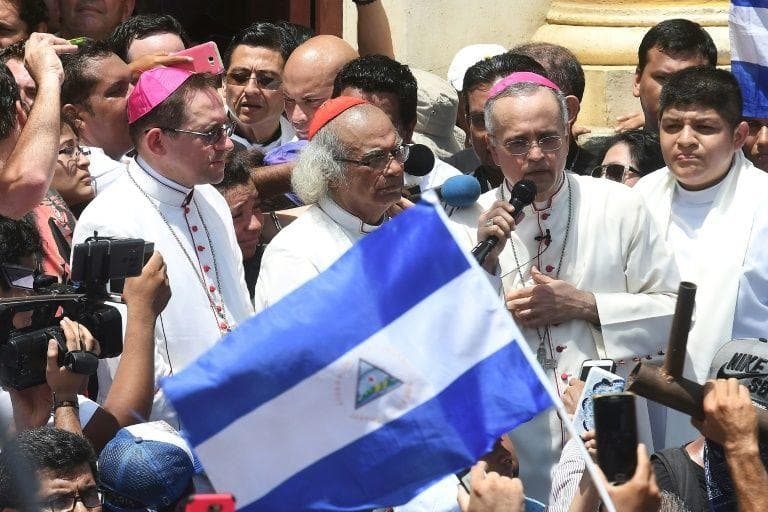
A group of bishops headed by Cardinal Leopoldo Brenes (C) and Silvio Báez (with microphone) arrived in the Nicaraguan city of Masaya to show their support for the locals, who say they are targets of Ortega's forces.
Imagen Marvin Recinos/AFP
In this, Nicaragua and its Catholic Church are no exception.
A cursory review of the Catholic Church in Latin America’s second poorest nation results in a complex, Macondo-like panorama of shifting loyalties, and a fraught relationship with Daniel Ortega during his two periods of Sandinista rule. This relationship almost begs the question: just whose side is the Church on in Nicaragua?
Well, it complicated.
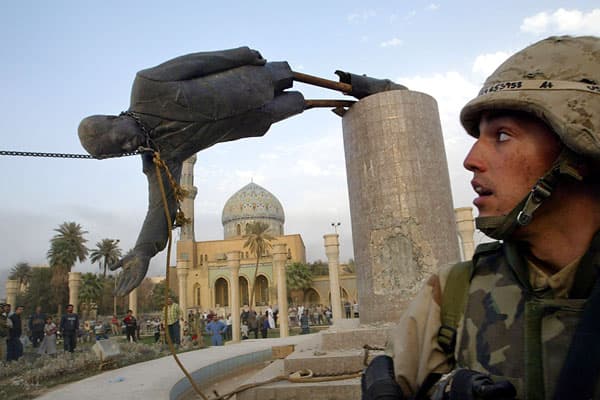
Despite a near universal desire for an end to Venezuela’s manmade disaster, sending in U.S forces to take out the Maduro regime would be counter-productive. It should be categorically rejected by interim president Juan Guaidó, not to mention the Trump administration.
The firing of undocumented workers at Trump's golf clubs just shows how the practice of employing immigrants without legal work papers is much more common than we might imagine. Such is life in the United States.
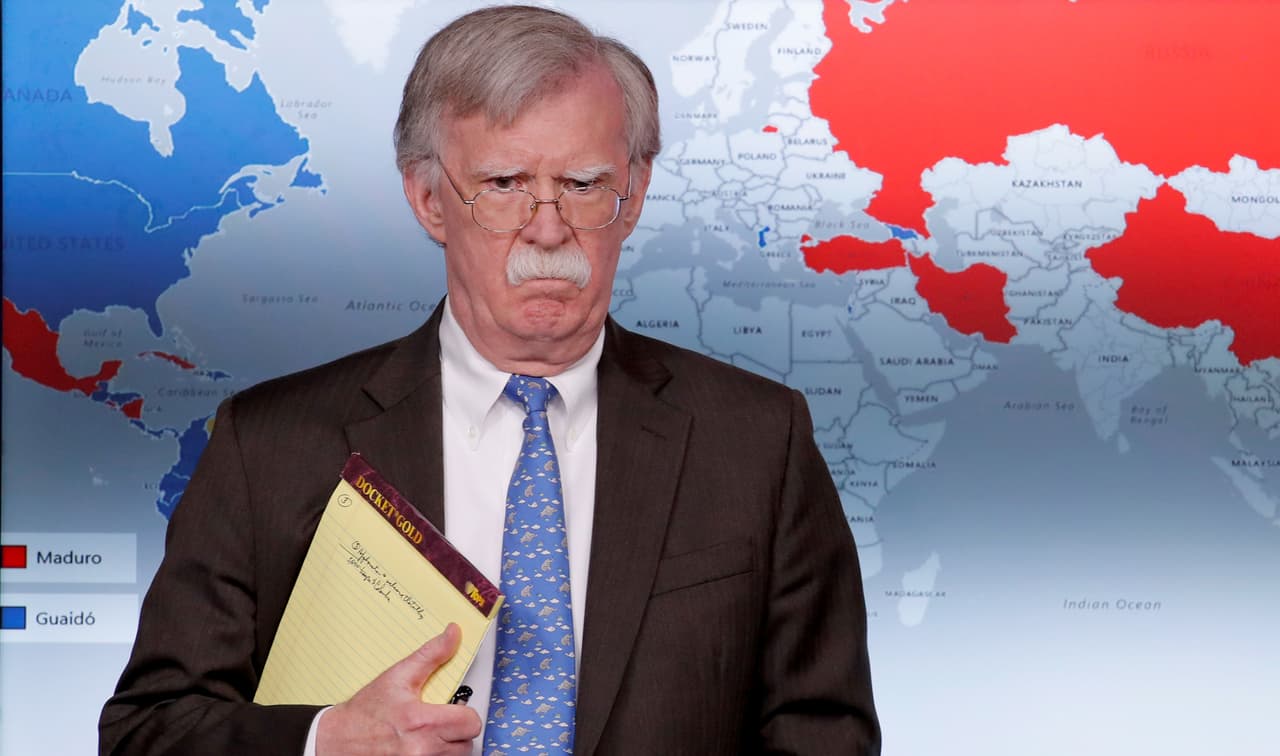
The Trump administration should be wary of fueling fake news predictions about an imminent American invasion which unrealistically raises expectations about Maduro's removal.
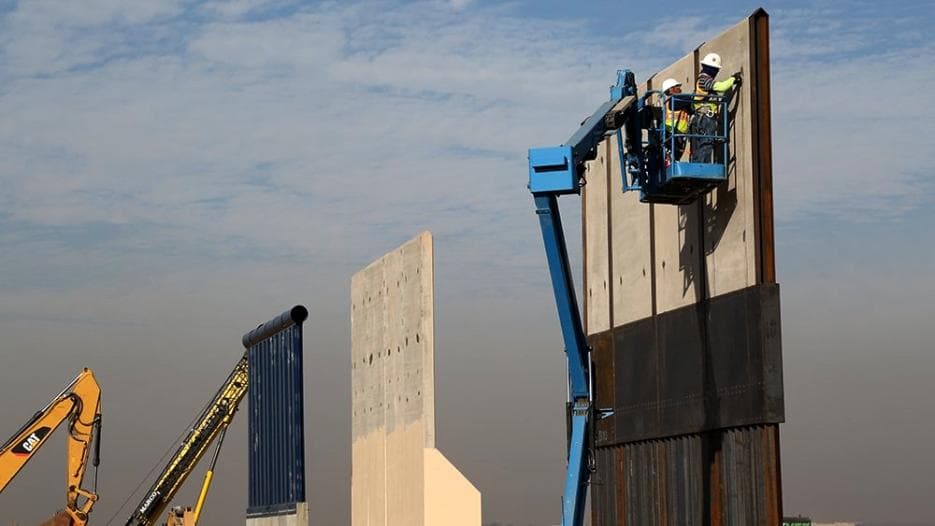
At some point we will have to accept the fact that the border between Mexico and the United States is nothing more than an invention.

The United States has had a major role in the evolving drama of the fight for democracy in Venezuela and Nicaragua. And so far, it’s been surprisingly coordinated, a veritable model of multilateralism.
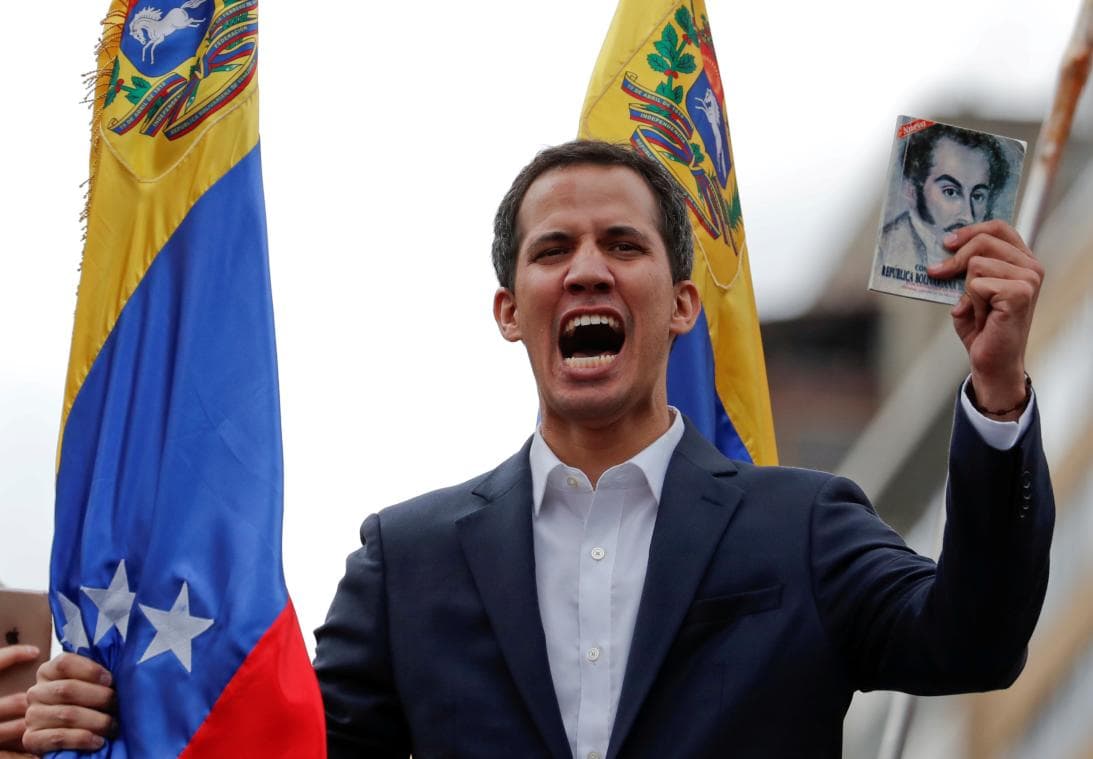
Has the Maduro regime reached breaking point? It remains hard to say, but tomorrow is another - more hopeful - day for the restoration of democracy in the South American nation.
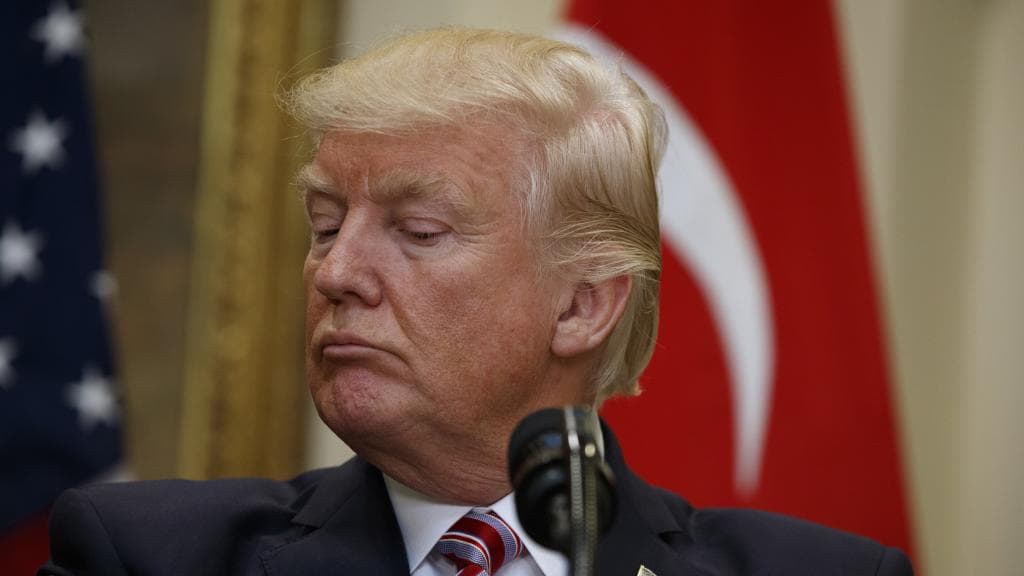
It’s impossible to get into Trump’s head but what comes out of his mouth are racist remarks. But, saddest of all are the millions who tolerate his views, cheer him on and emulate his behavior.
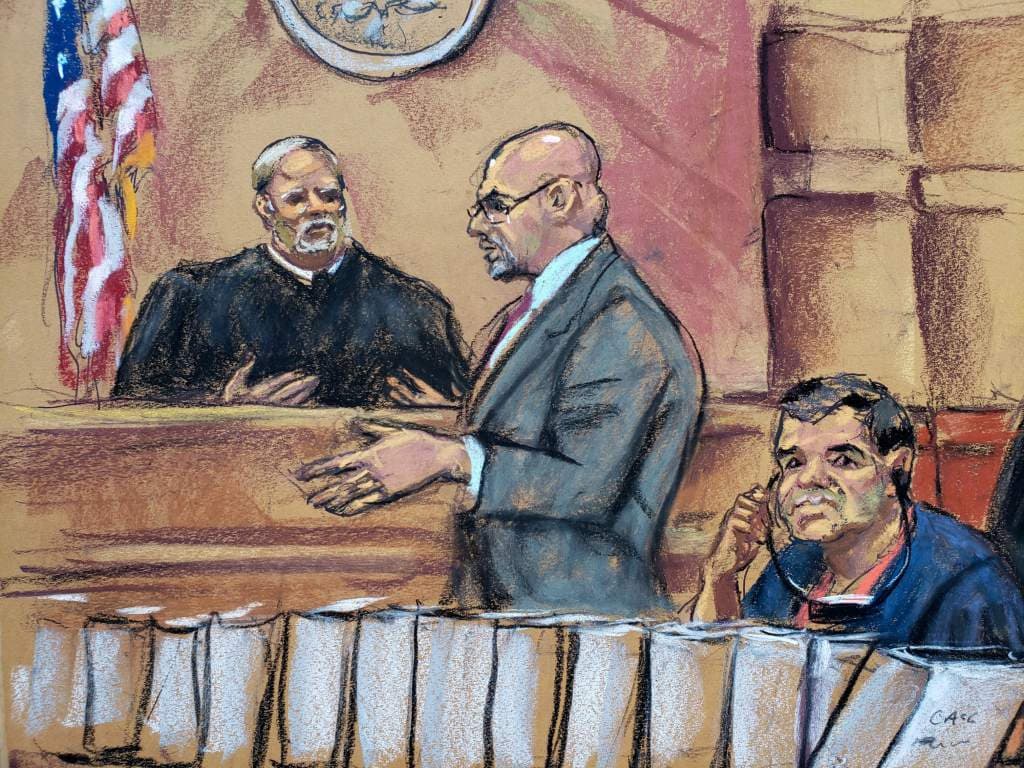
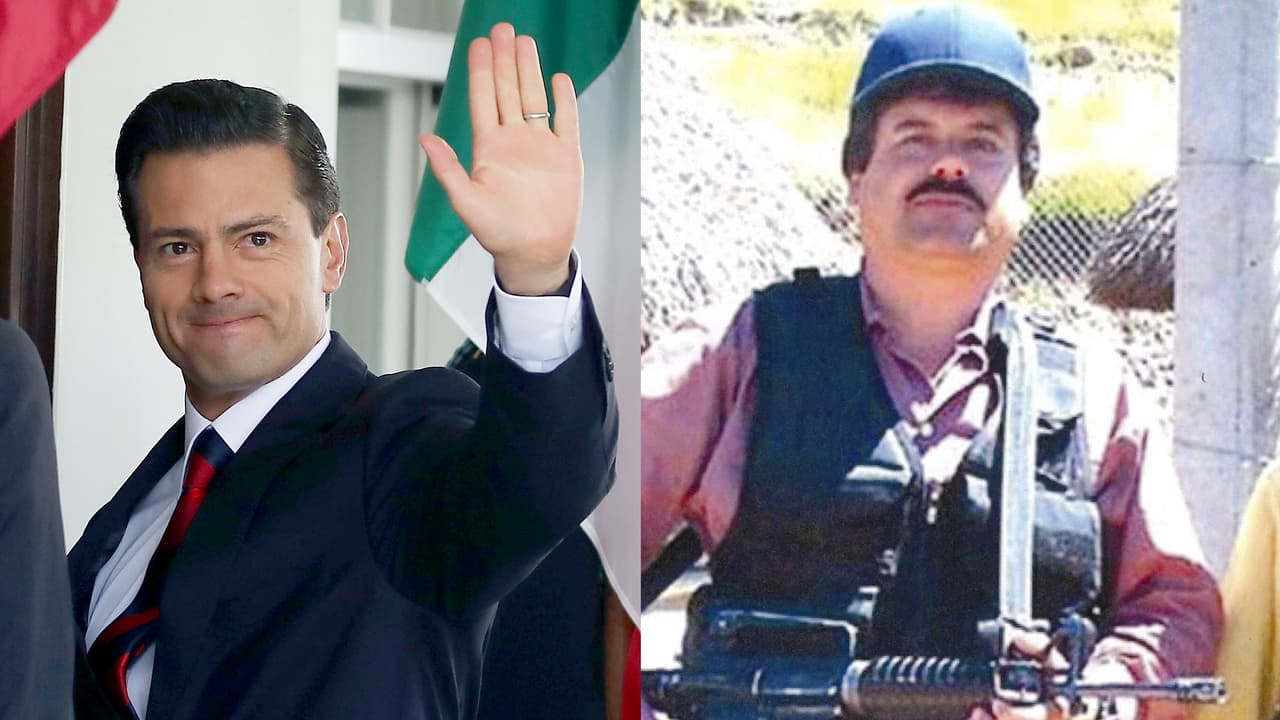
The time is well past due for the U.S. government to conduct a thorough review of leaders and their senior colleagues before they leave office to determine if they merit visas.
Like most post-war and Cold War caudillos of the last century, the dictatorial Somoza family had strong links to the traditional Catholic Church and wielded that imprimatur as part of its power base. But as liberation theology developed, mostly in the ranks of Jesuits serving across Central America, it became a vehicle for condemning strongman rule in the region due to its failure to create just and equitable societies.
Nicaragua’s poet-priest, Ernesto Cardenal, famously defrocked by Pope John Paul II in 1983 for serving in Daniel Ortega’s Sandinista cabinet as Minister of Culture, is but one example of the country’s clergy playing a protagonist role in its revolutionary trajectory. As well, there is Fr. Miguel D’Escoto, a Maryknoll priest and liberation theologist who lost his clerical collar for serving as Daniel Ortega’s first Foreign Minister. Both ultimately moved away from the Sandinista cause as it became more focused on retaining political power versus dedicating itself to the poor.
Perhaps a more famous case is that of Cardinal Miguel Obando y Bravo, a staunch opponent of Somoza’s dictatorial rule who was so closely aligned with the first Sandinista revolution in 1979 that he was referred to as “Comandante Miguel.”
But he, too, eventually soured on Ortega’s human rights abuses and growing authoritarianism.
As Ortega expelled foreign priests and confiscated church lands while consolidating power in the 1980s, by mid-decade Obando y Bravo was decrying the “godless communism” of the Nicaraguan Sandinistas and openly supporting the US-backed Contras. To complete this see-saw evolution of church leadership in Nicaragua, by 2006 Bishop Obando y Bravo had become a docile and cooperative supporter of the now self-professed Christian-in-Chief, Daniel Ortega, when he returned to power in the 2007 elections.
Ortega has since modified the constitution to hold onto the reins of power for over a decade a second time. He and his Sopranos-like “family affair” government have gutted Nicaragua’s democratic institutions, coopting virtually all sectors with generous patronage and subsidies from his ideological and tactical mentors in Cuba and Venezuela.
But with the Caracas’ PetroCaribe largesse gone, the grotesque excesses of Ortega friends and family corruption exposed, and a still desperately poor population experiencing the cold turkey of shrinking government hand-outs, it appears that the Nicaraguan church is once again assuming an important political role in Nicaragua after a decade of relative somnambulism.
In the past three months, social and traditional media have covered the student-led protests against the Ortega government’s intolerable encroachment on civil liberties and human rights. With approximately 300 dead in the streets and no sign of any lessening of repression by the government, we have also witnessed extraordinary bravery and true solidarity with the people by various church figures.
The Jesuit rector of the Central American University, Fr. Jesus Alberto Idiaquez, gave shelter to over 5000 students and citizens who fled police and masked paramilitary attackers when proposed social security cuts touched off peaceful civic protests. Managua’s Auxiliary Bishop Silvio Jose Baez has become an effective opponent of the Ortega regime, adroitly exploiting twitter and social media to decry the government-sponsored violence. He himself has been beaten and slashed with a knife by Ortega’s hooded hoodlums.
Most recently, an intrepid Washington Post reporter, Josh Partlow, shone a light on the courageous actions of Fathers Raul Zamora and Erick Cole, parish priests of the Church of Divine Mercy – and ironic name if there ever was one – as they sheltered over 200 unarmed students and ordinary Nicaraguans during a 15-hour siege by police in which two students were killed. Ultimately senior Church authorities succeeded in reaching a negotiated end to the stand-off.
As the Organization of American States and the U.S. Congress take up resolutions and draft legislation designed to pressure Ortega’s most illiberal government to return to a semblance of democratic rule, it is becoming clear that once again, Nicaragua’s Church and her clergy will have a central role. Let us hope that the Church’s commitment to Nicaragua’s longsuffering poor and disenfranchised remains strong and continues to find echo through the hemisphere.
This Macondo deserves nothing less.
Relacionados: