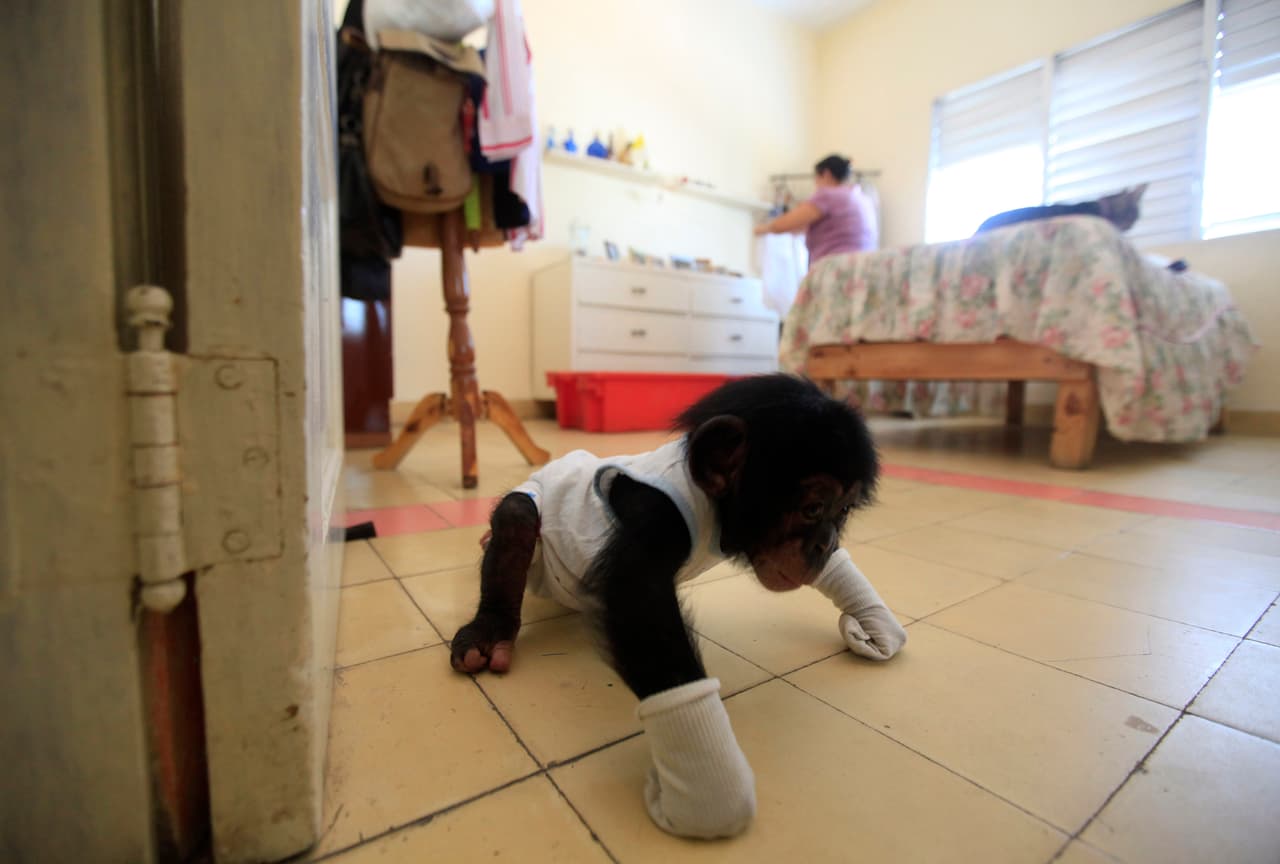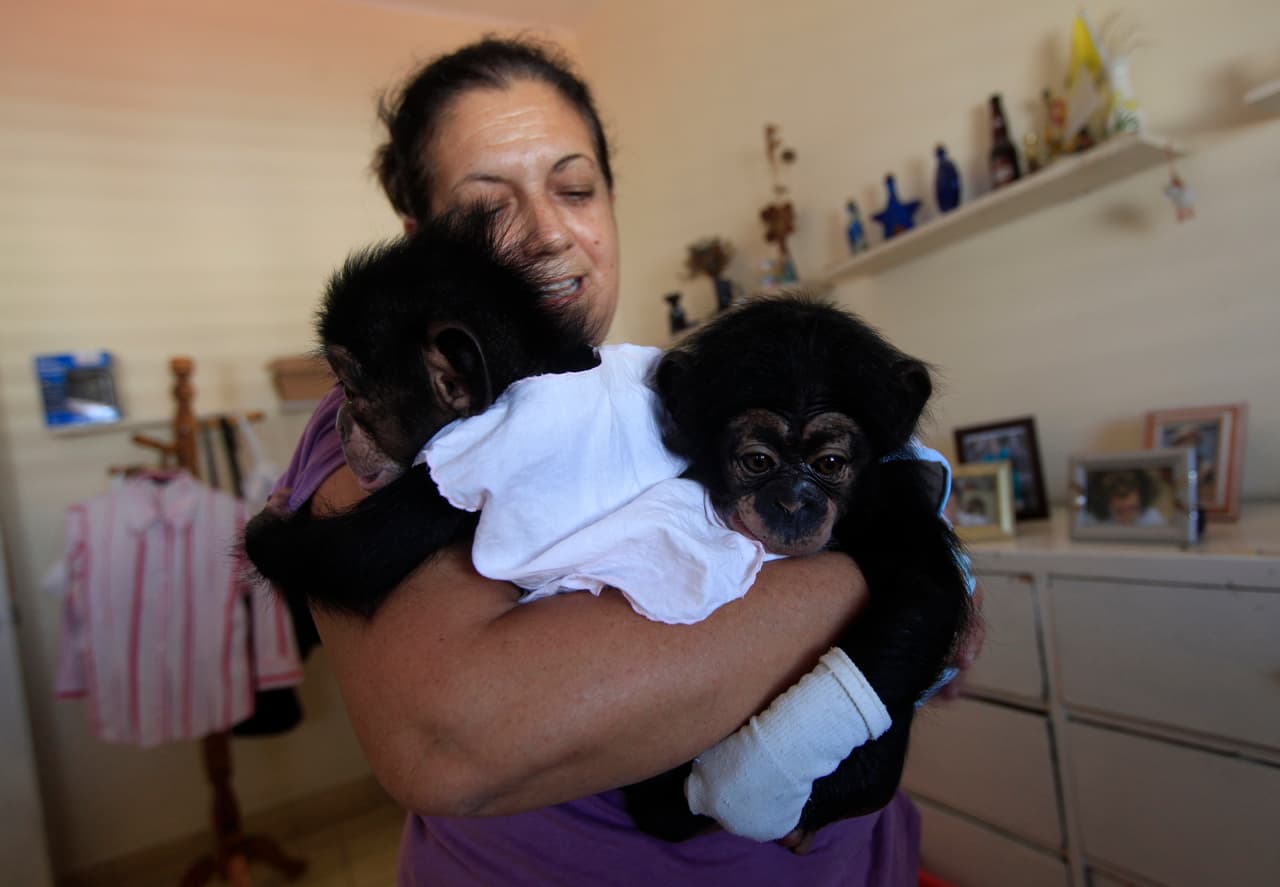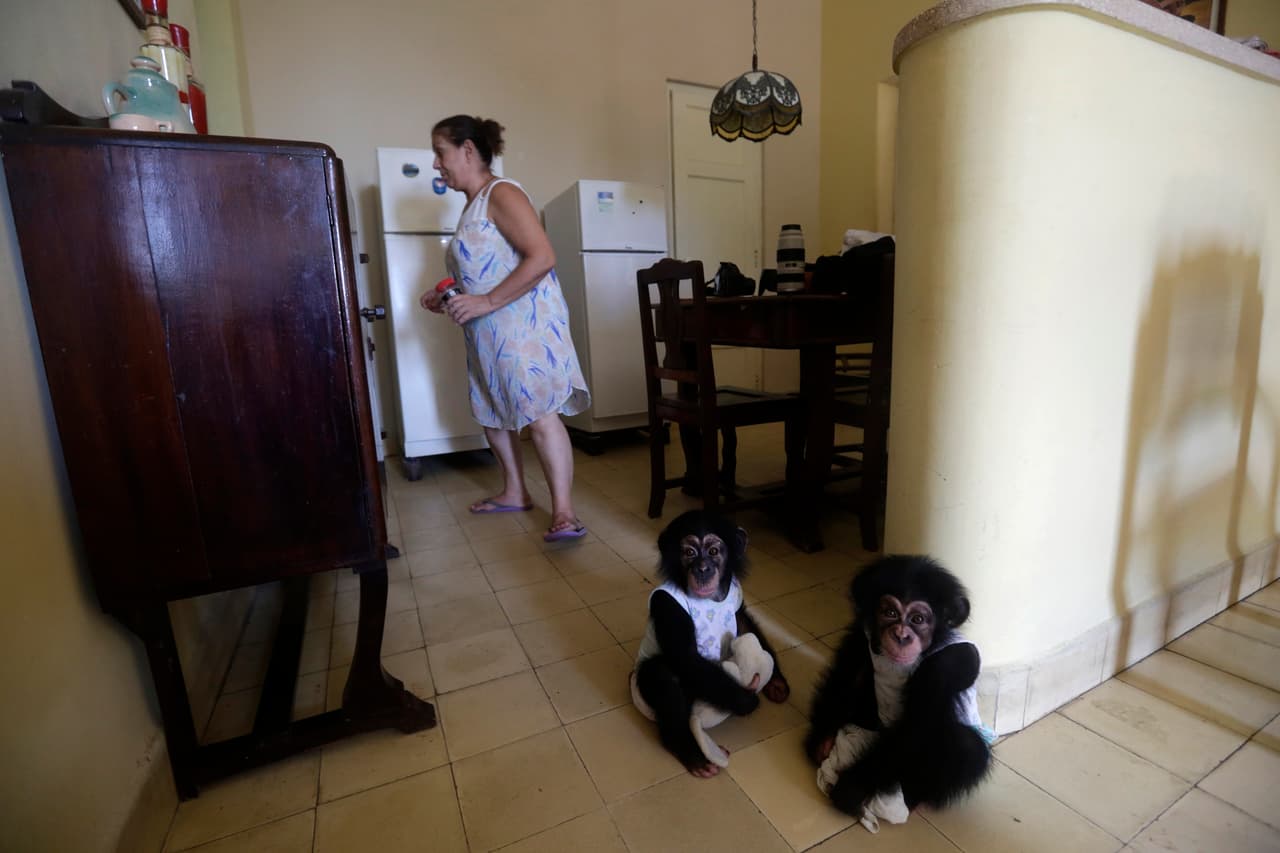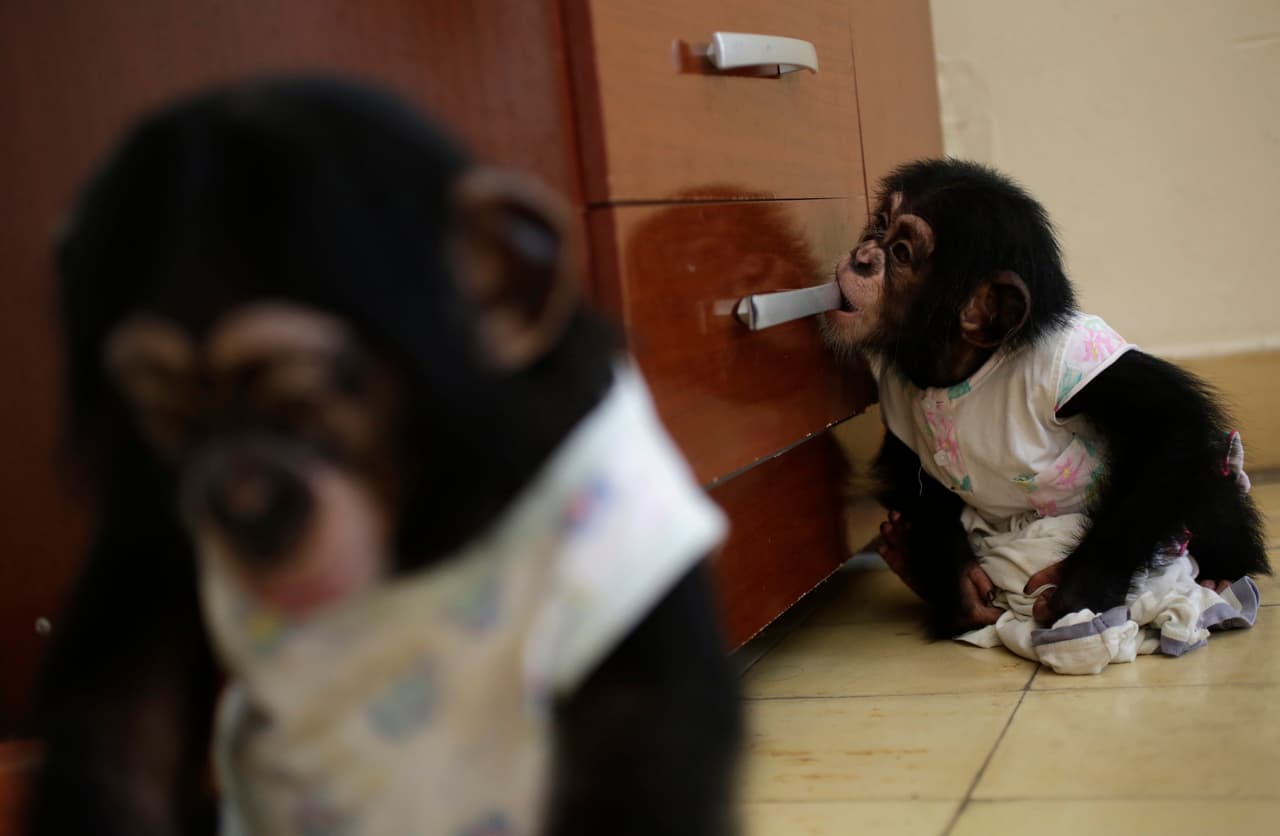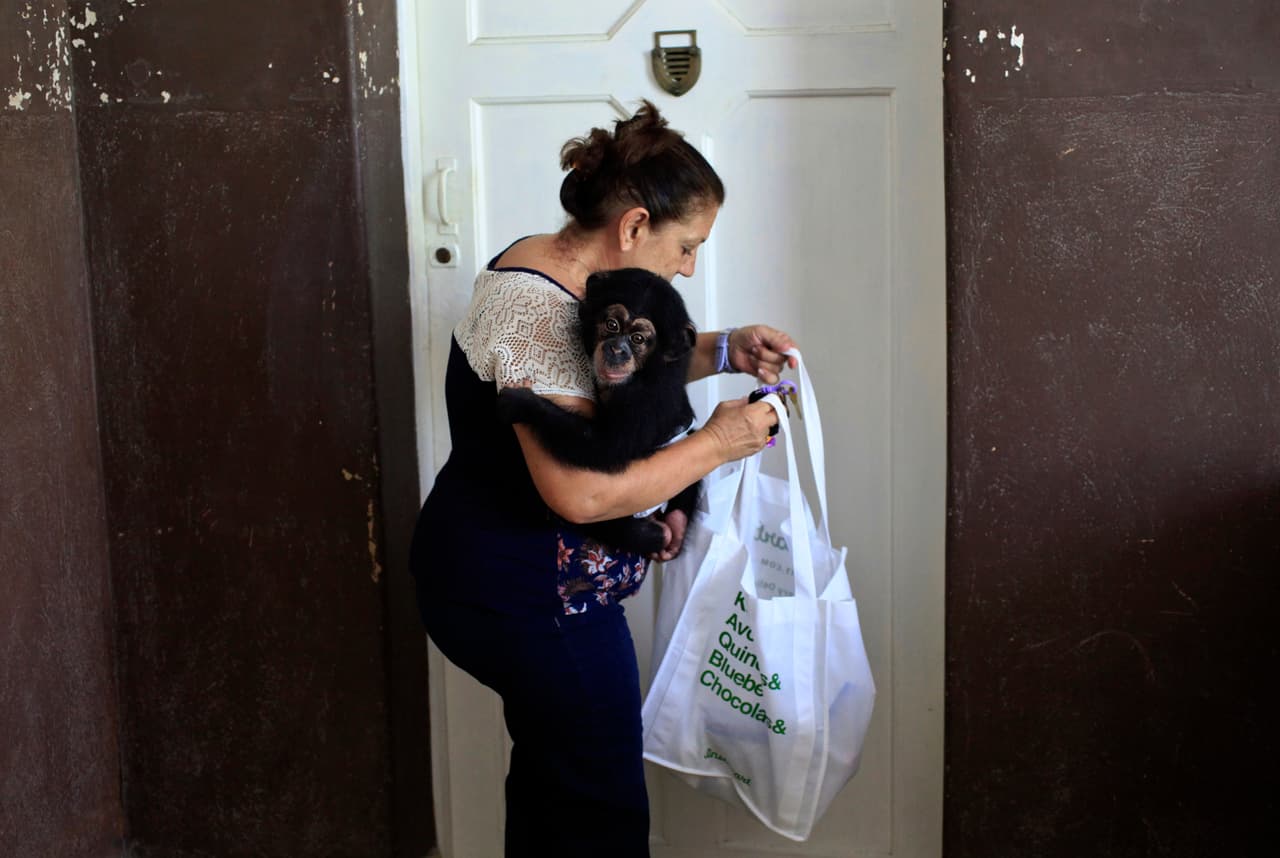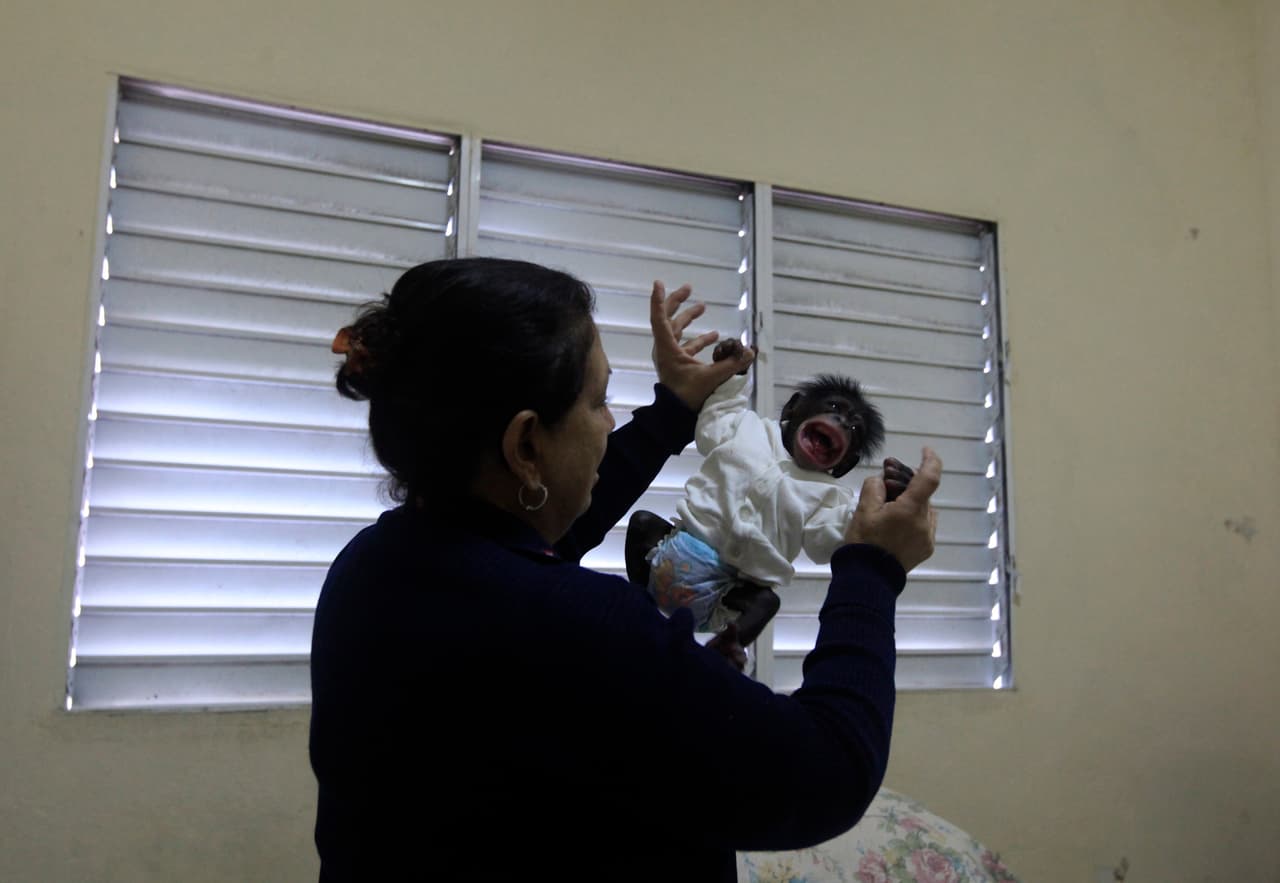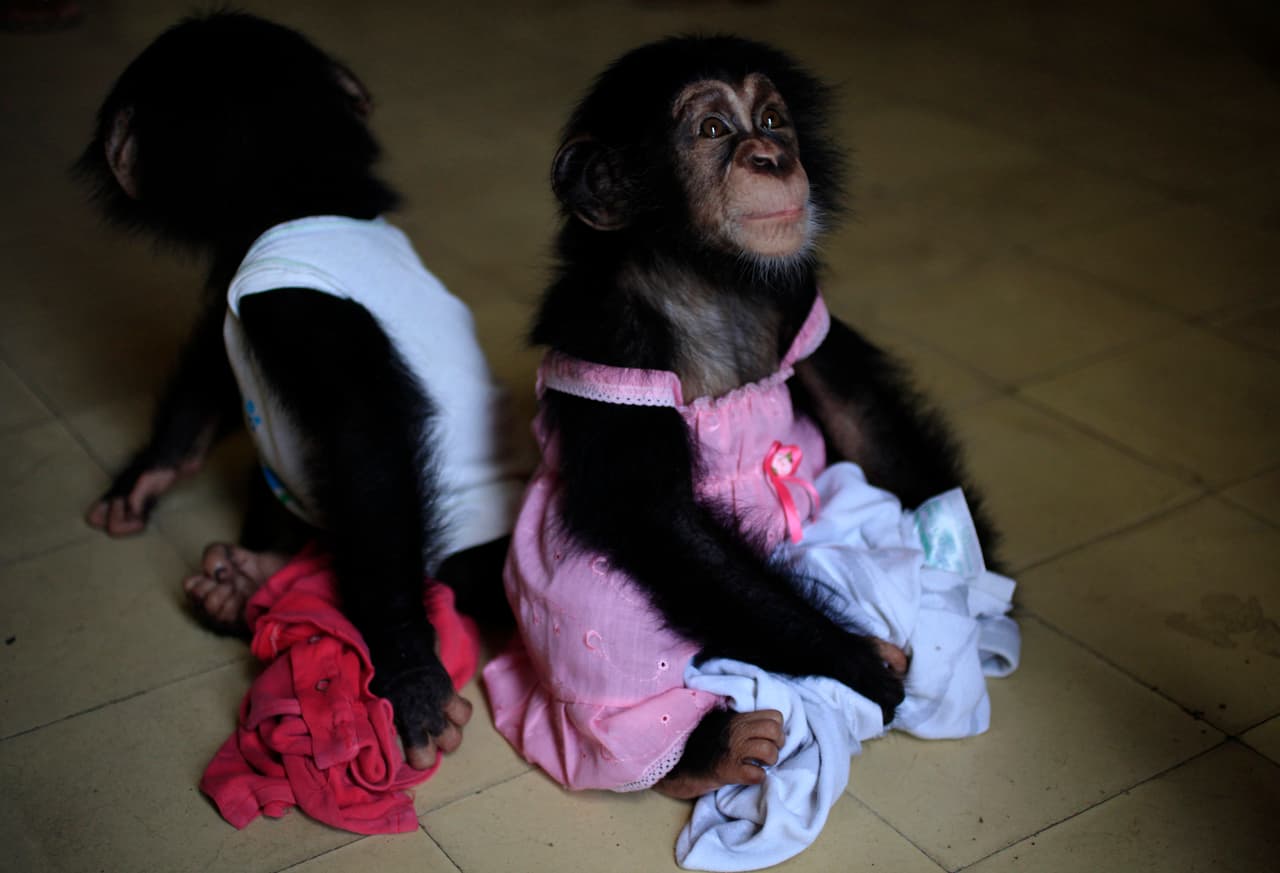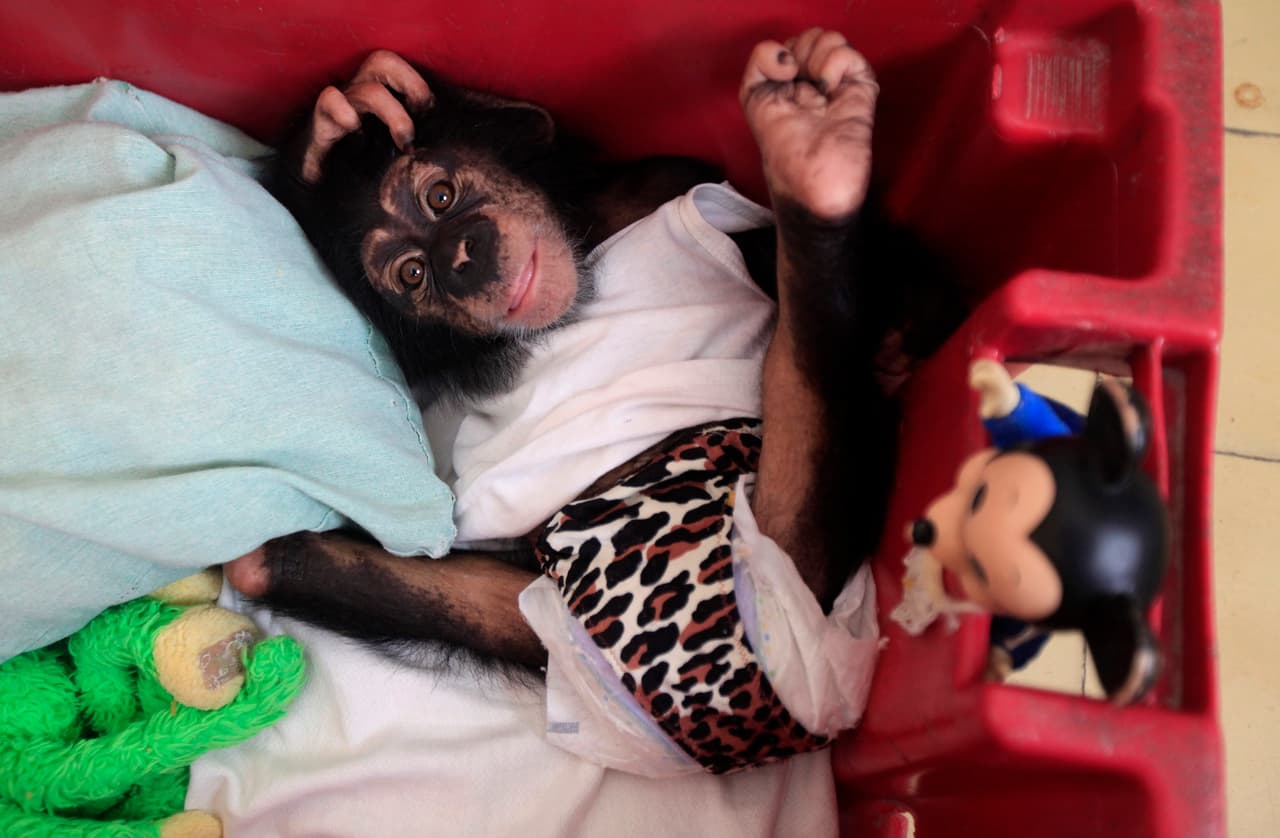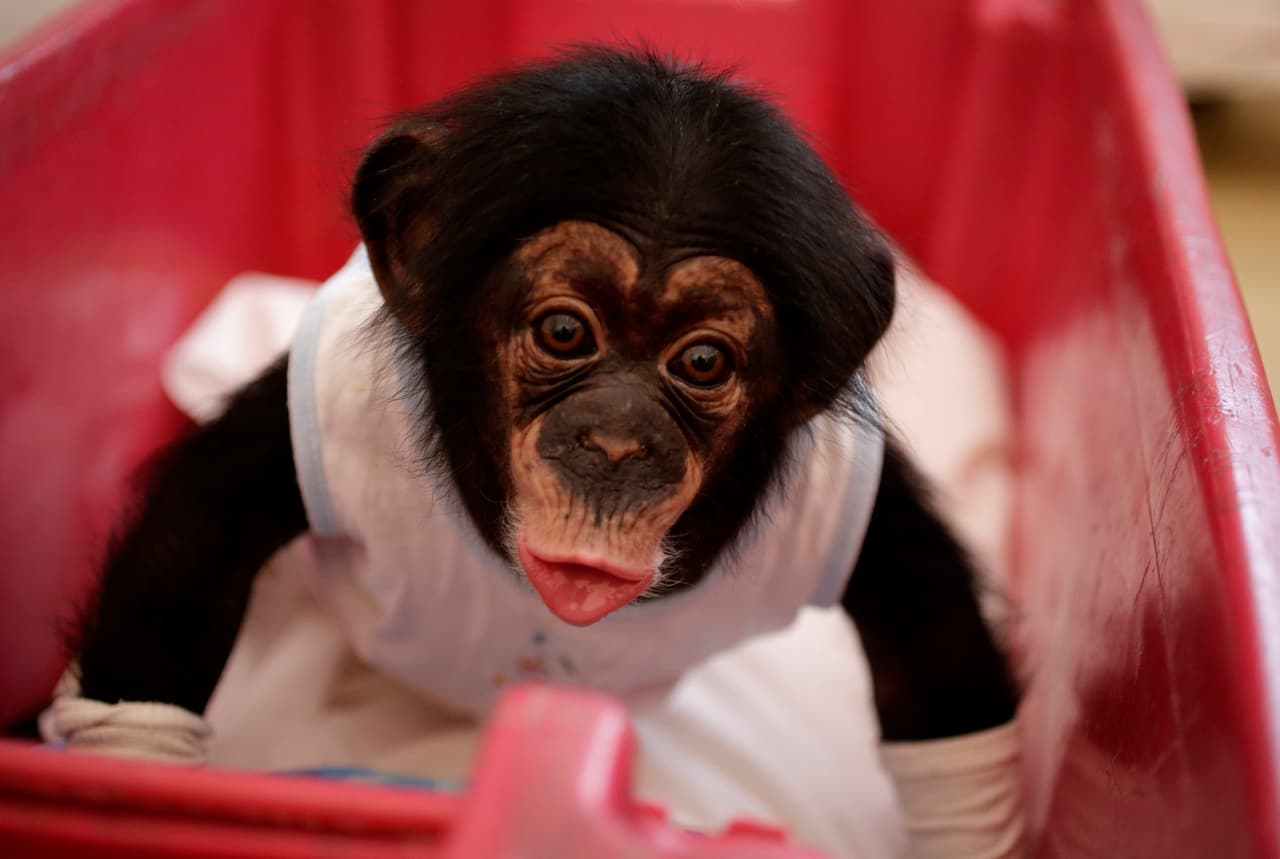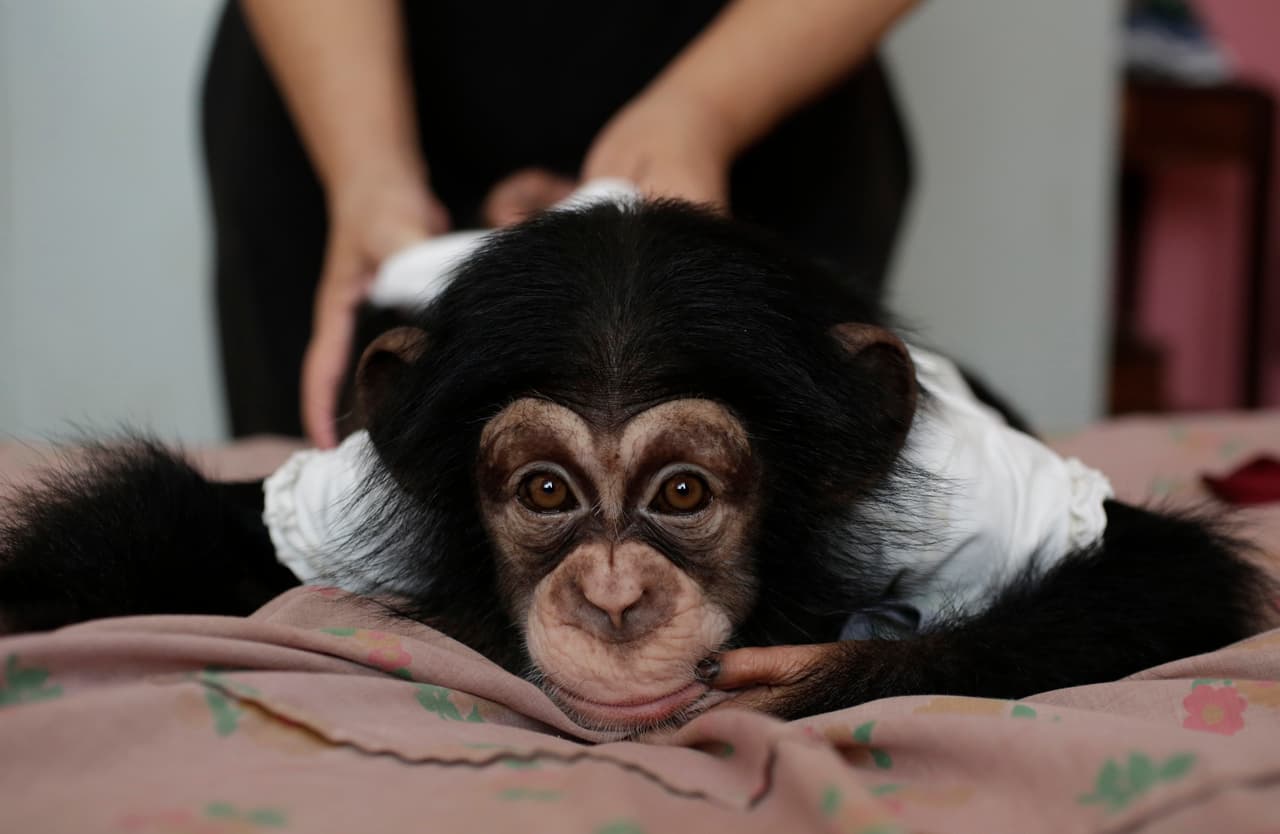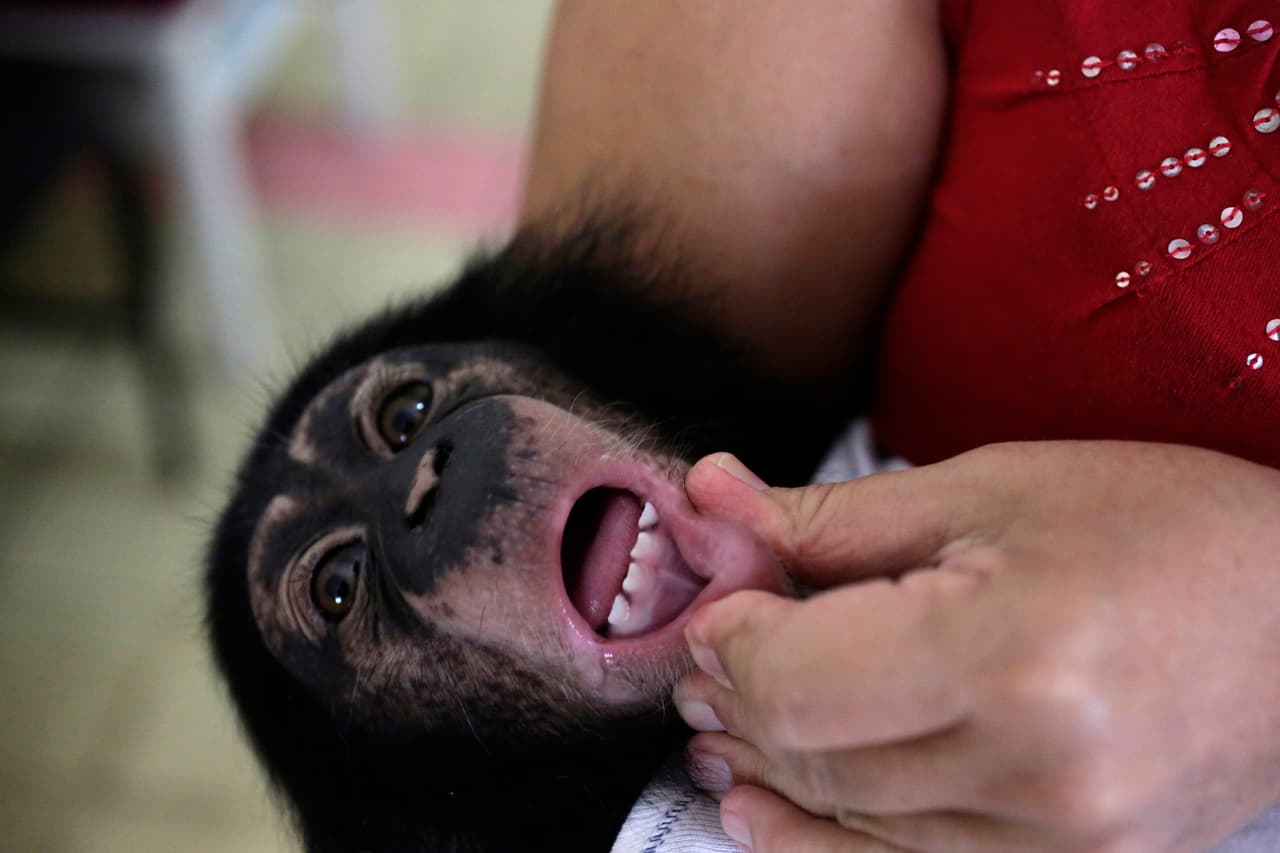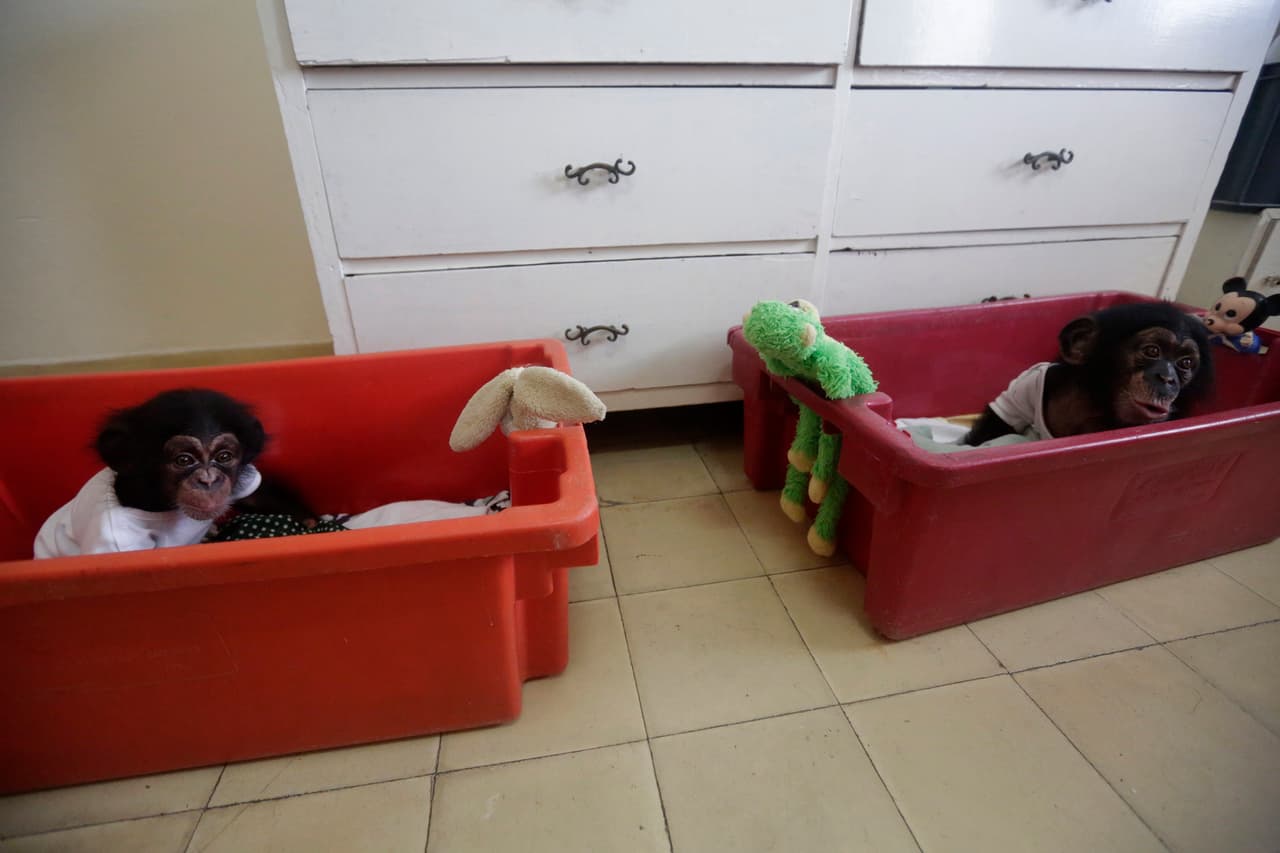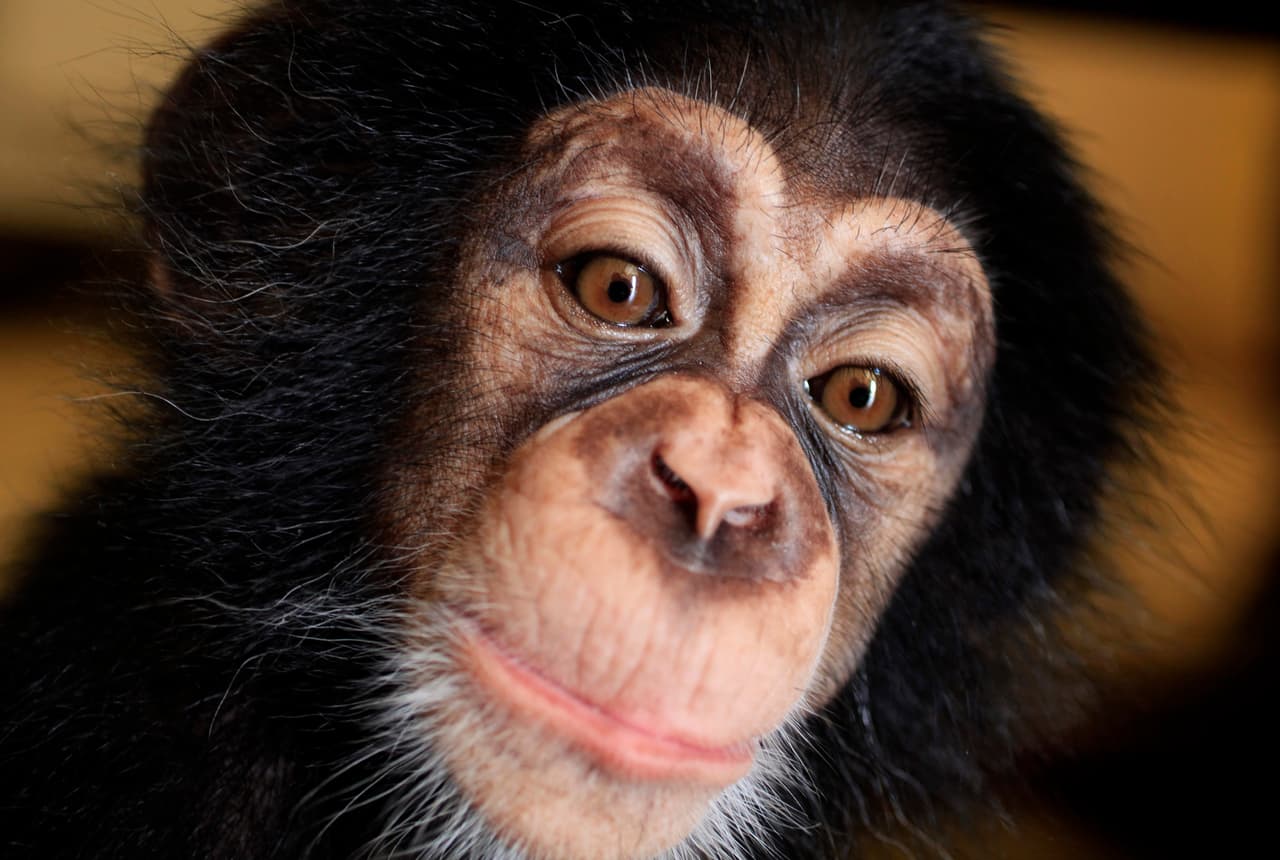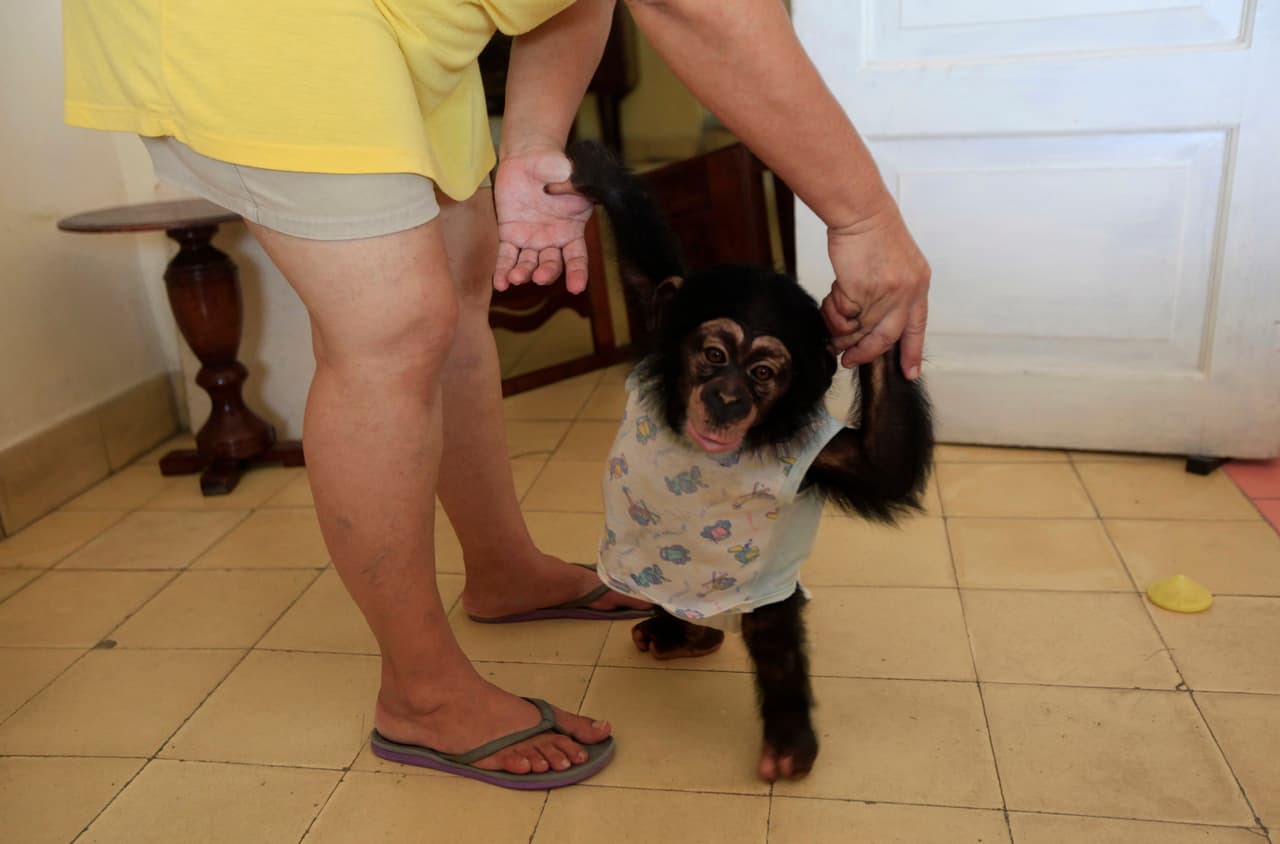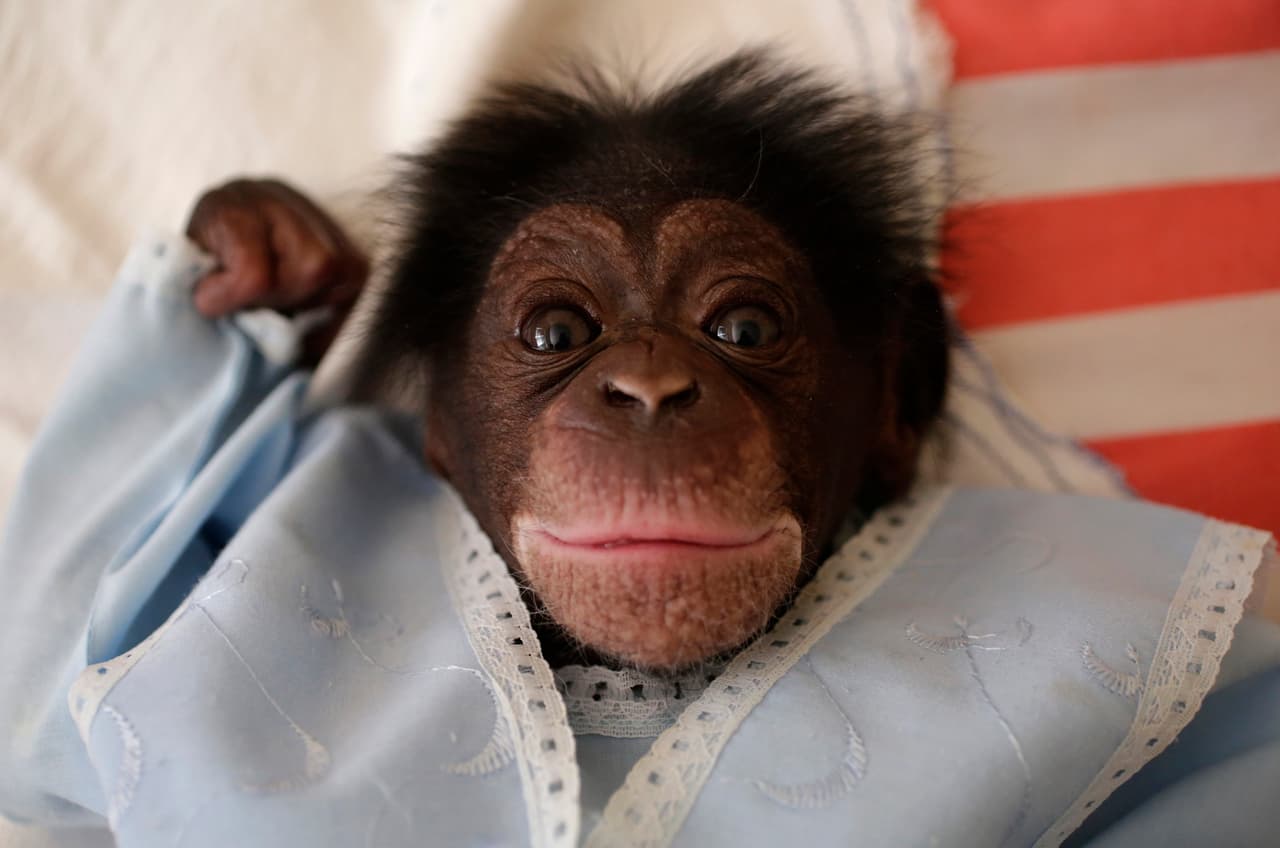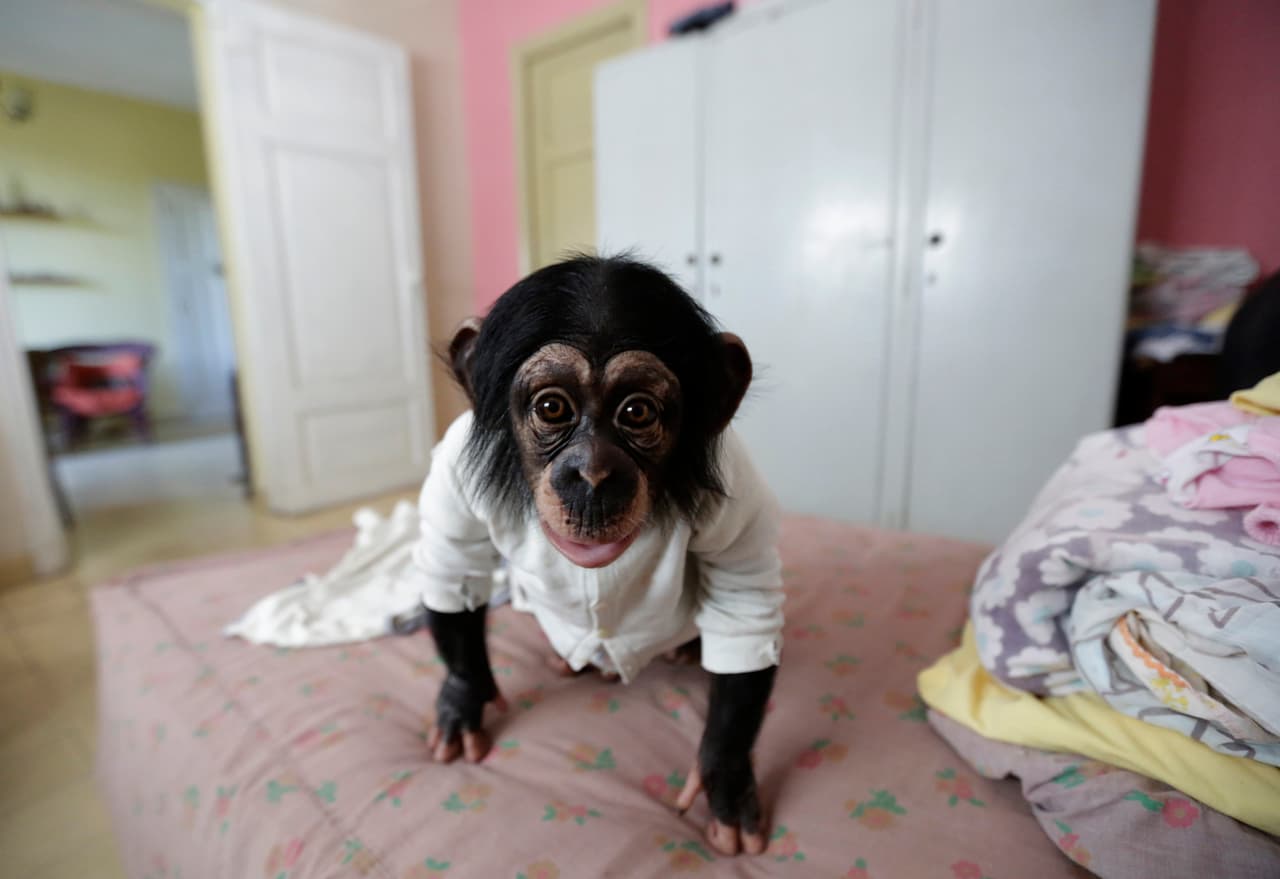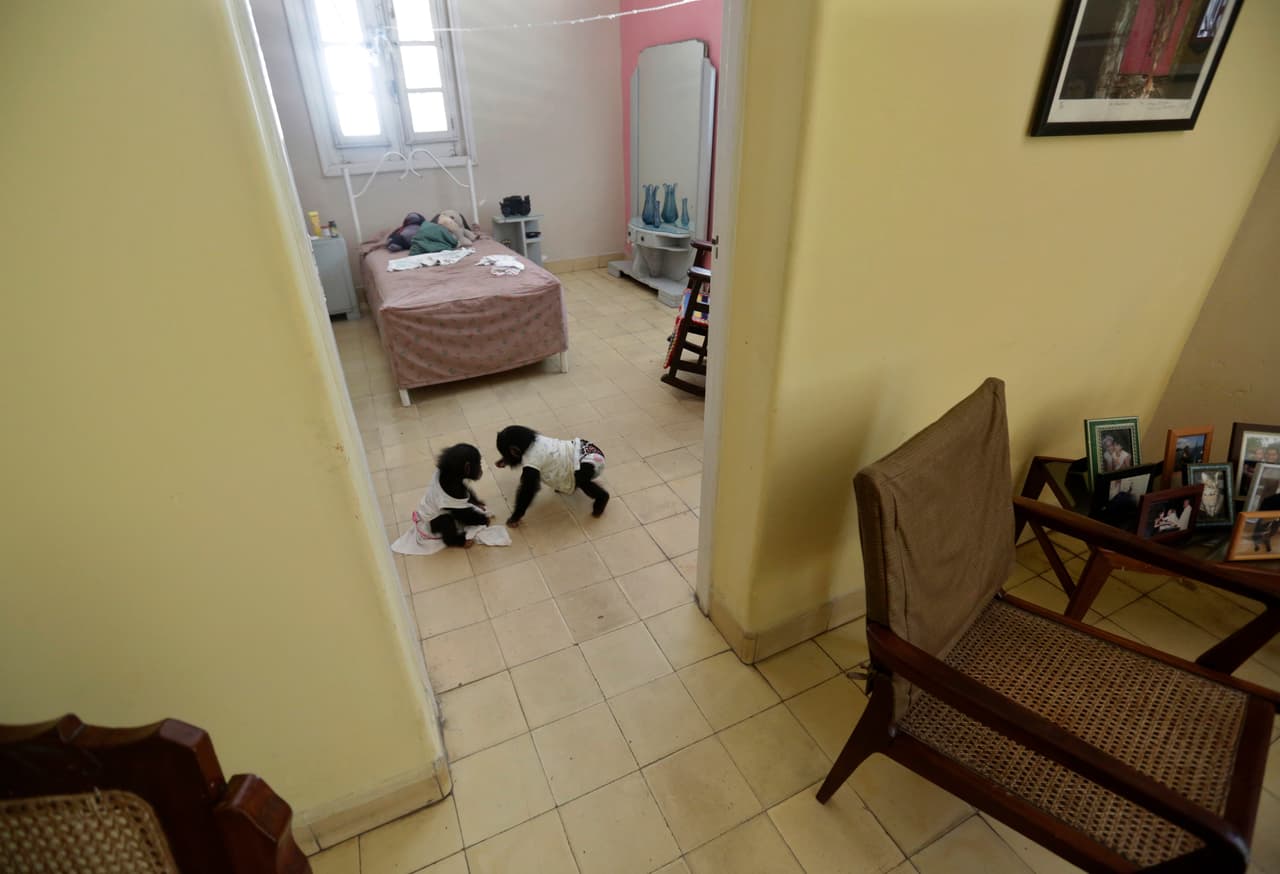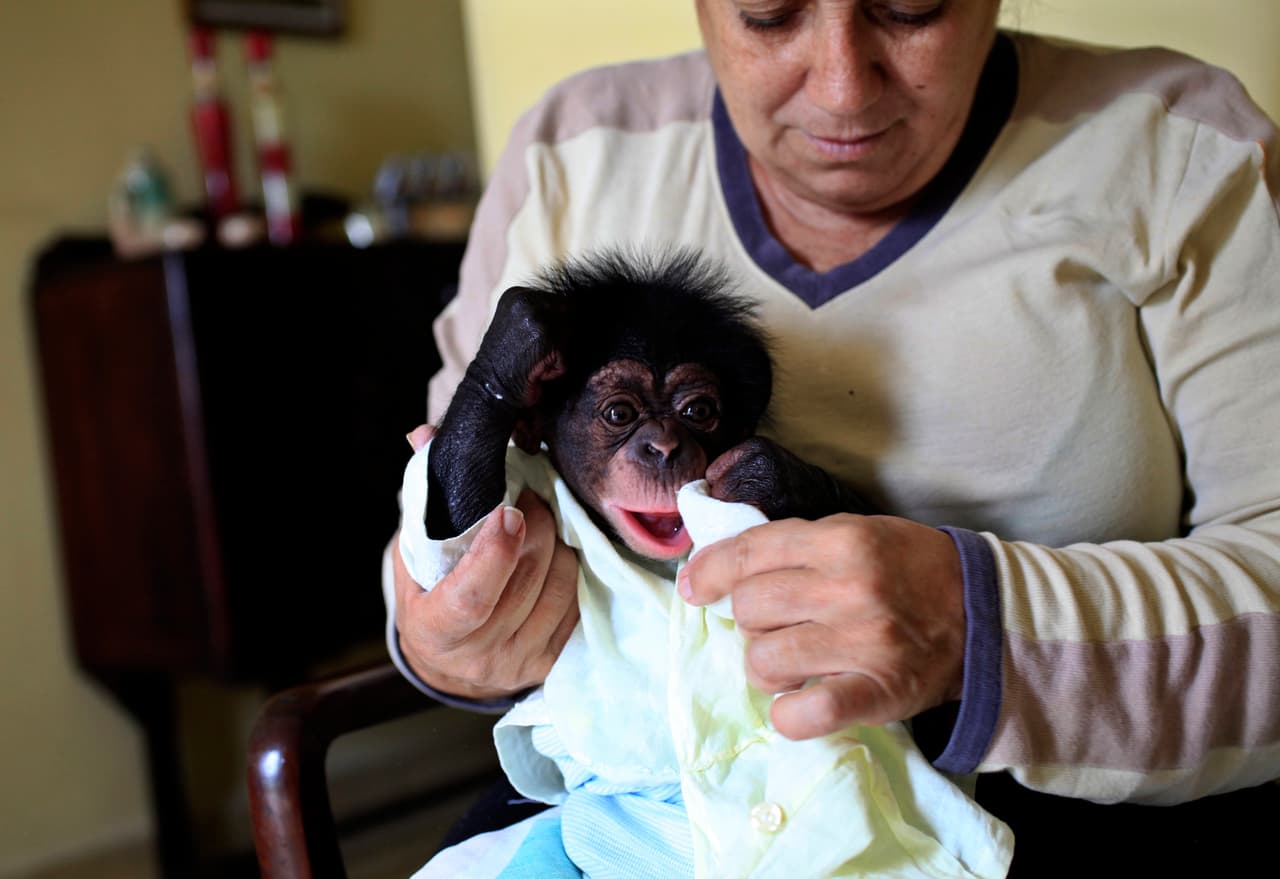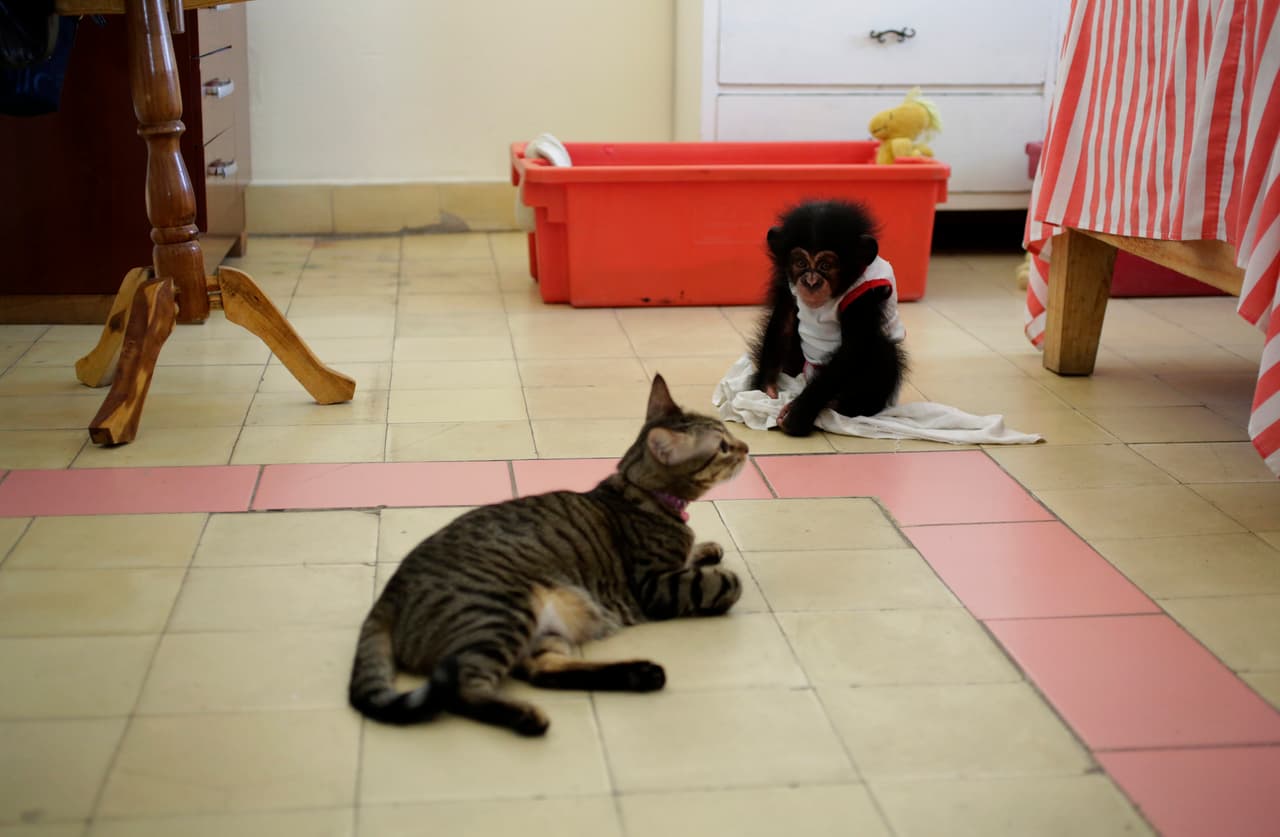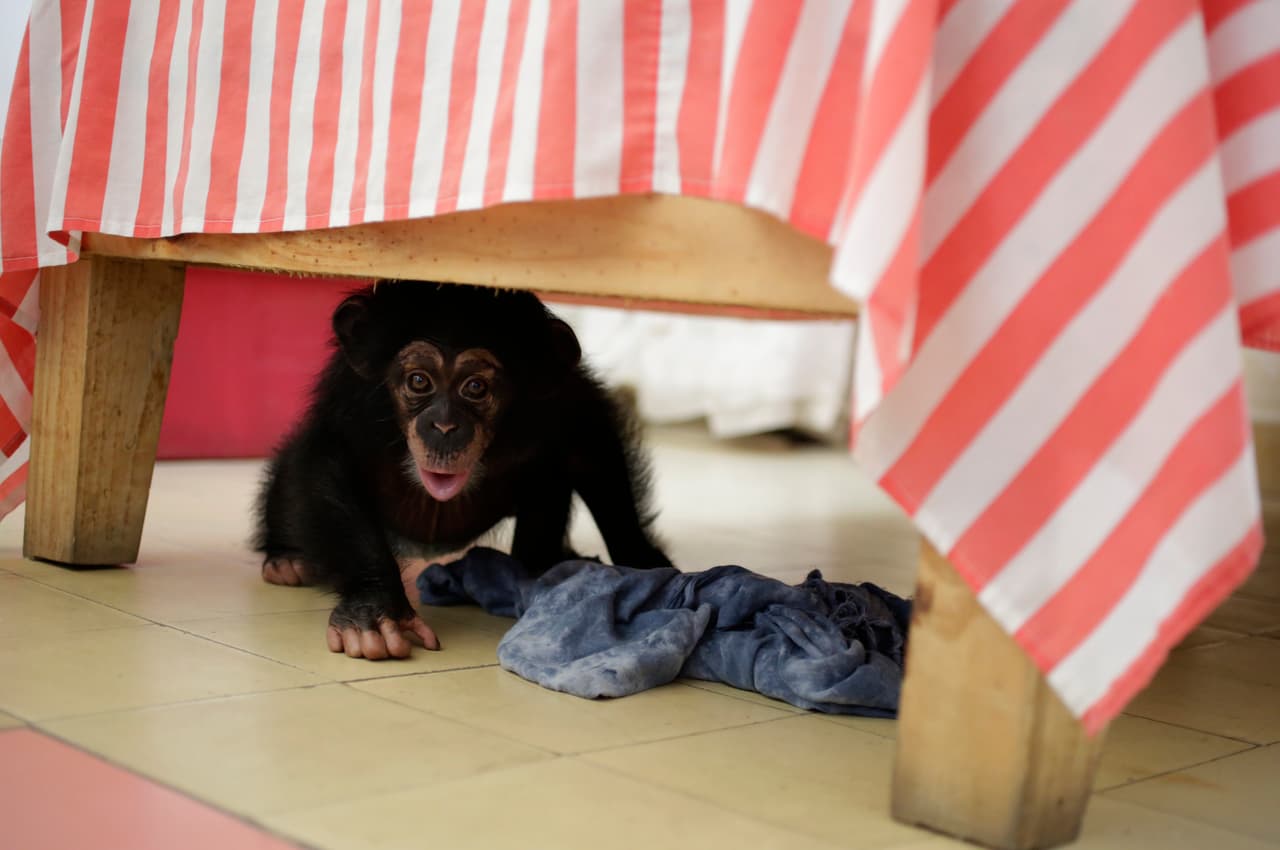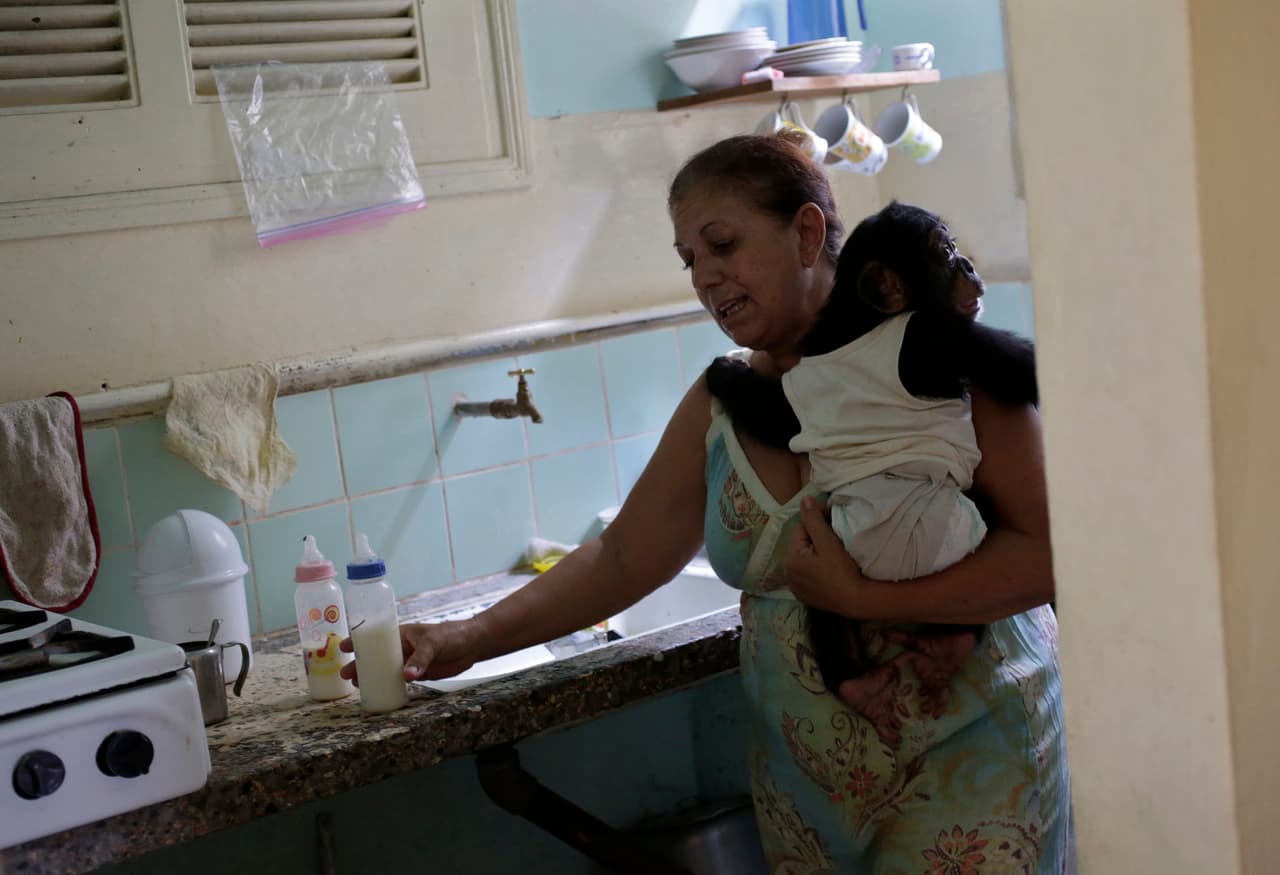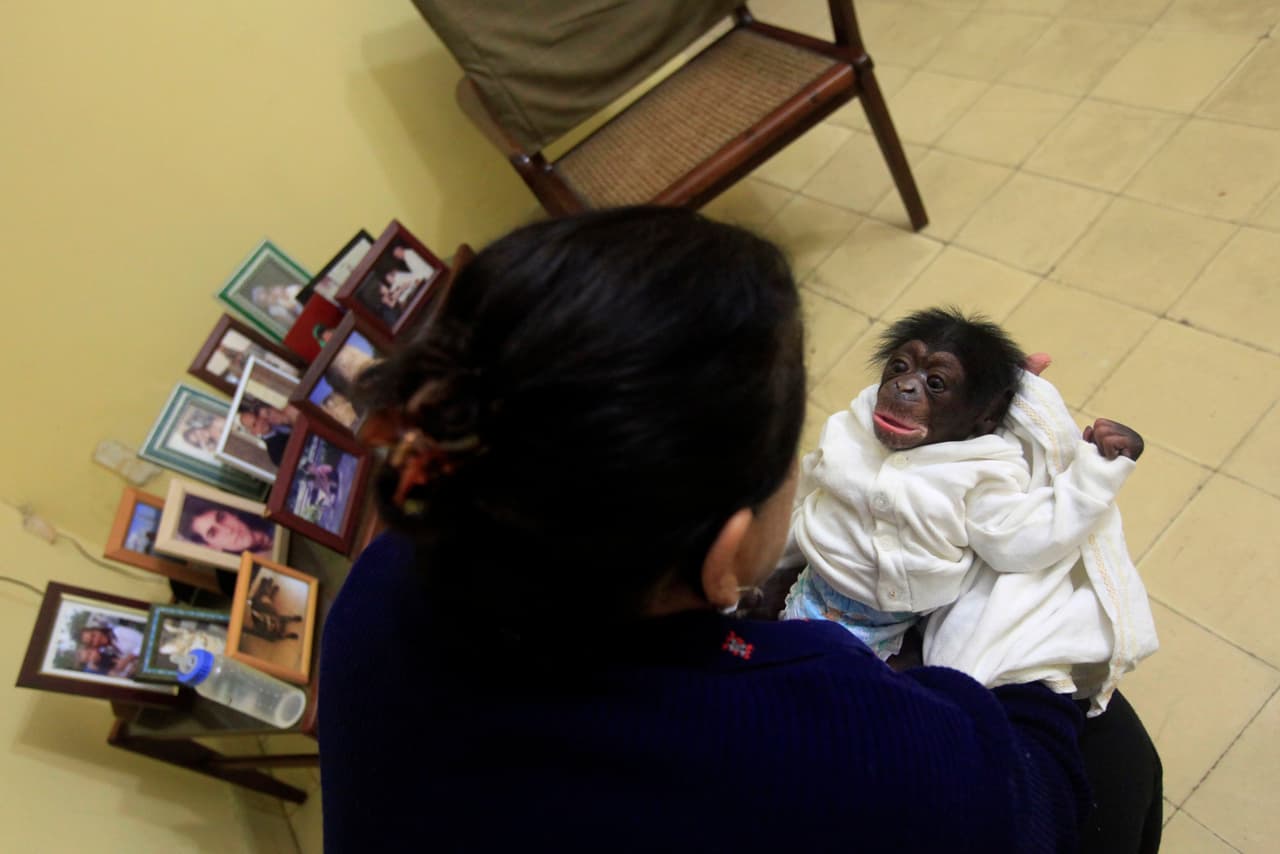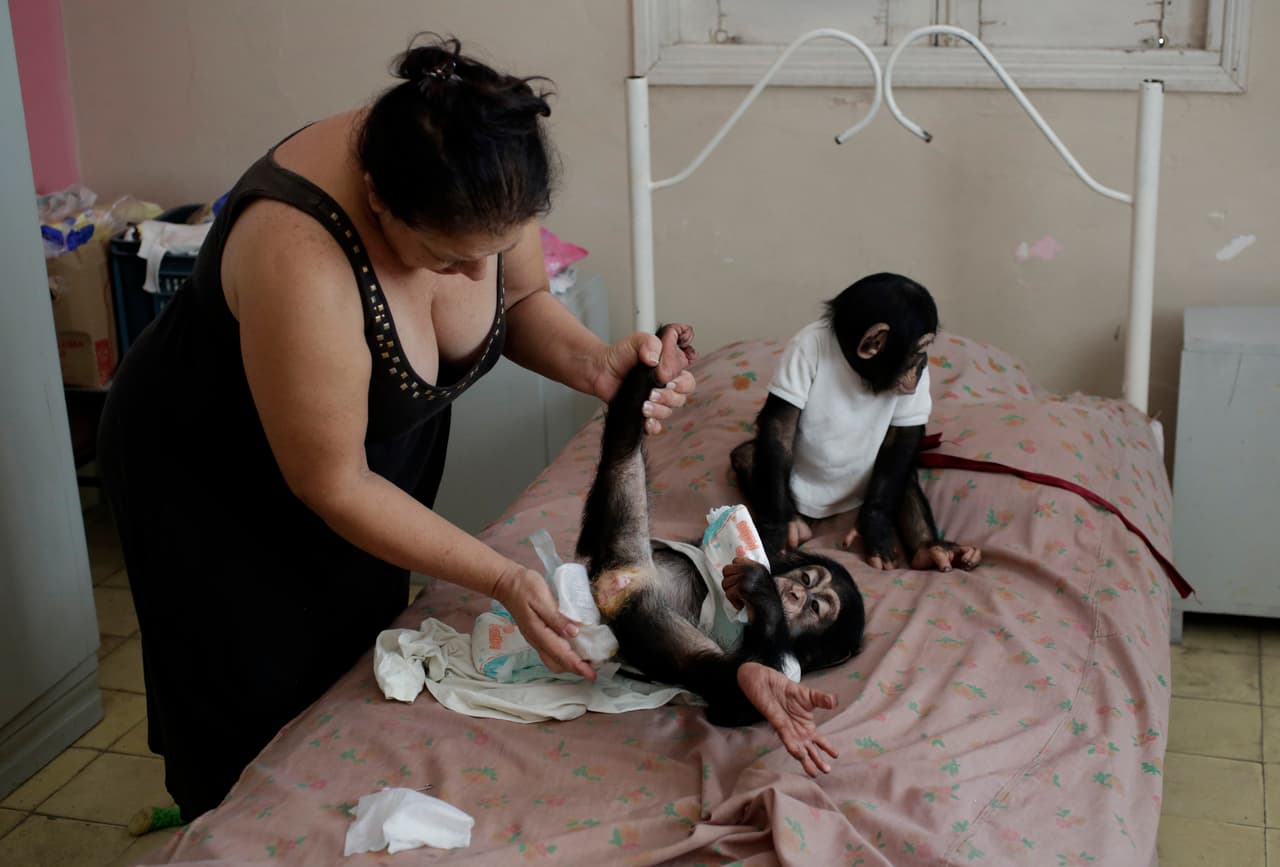
A 62-year-old Havana zoo biologist, Marta Llanes Torres, has spent the last year raising two baby chimpanzees in her fifth floor Havana apartment - as if they were her own children.
Raising chimps in Cuba, a handful for a 62-year-old
Havana biologist Marta Llanes has spent the last year raising two baby chimps in her Havana apartment. Llanes says she'll miss them when they return to Havana zoo, and worries about their future. Hand raised chimps have difficulty socializing with their own kind.
Video Video: Raising chimps in Cuba, a handful for a 62-year-old
But the monkey business is coming to an end.
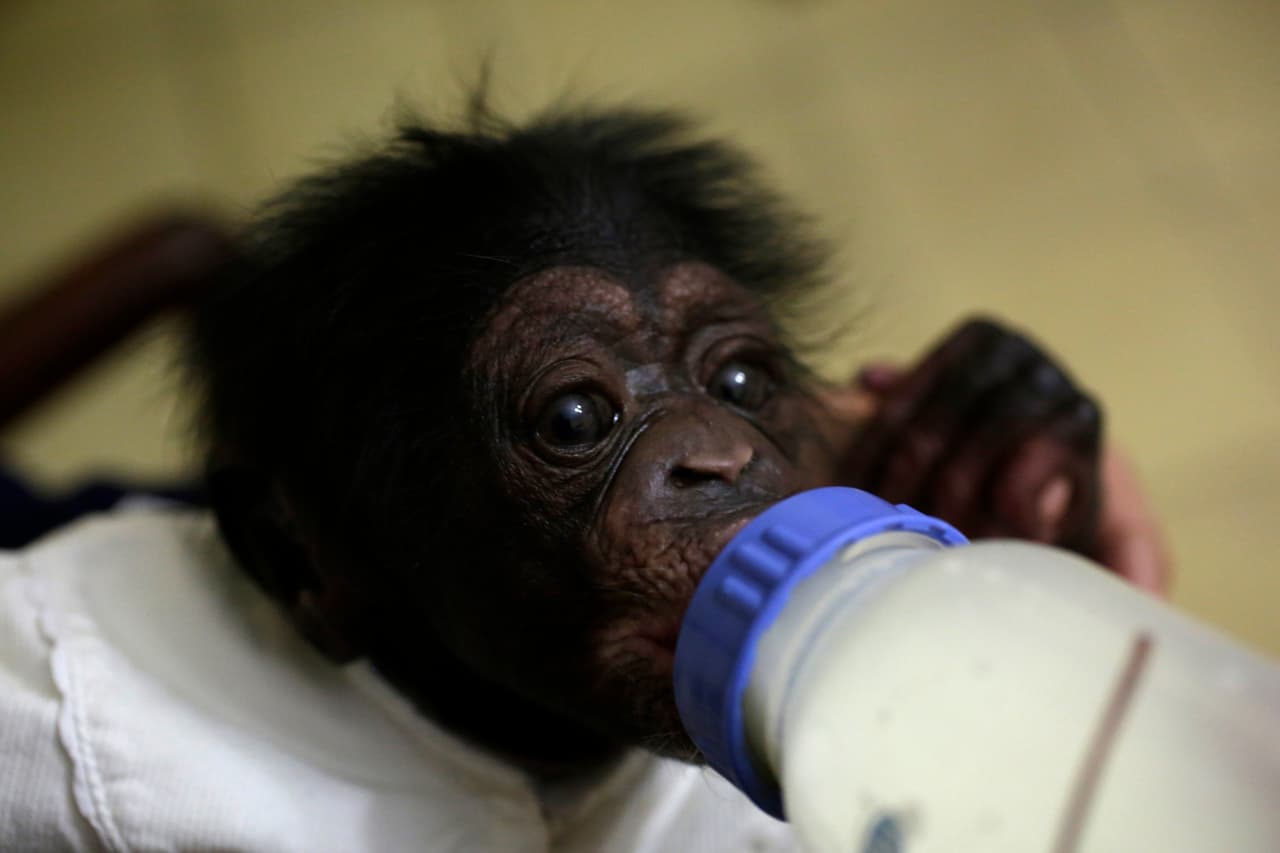
Now a year old, the chimps - half brother and sister, Anumá and Ada - have become too much of a handful for their caregiver. Adorable as they may be, Llanes plans to return them soon to the Havana zoo.
The chimps were taken in by Llanes because their mothers would not breastfeed them, a not uncommon occurrence in captivity.
It's a full time job, and Llanes is something of an expert. Anumá and Ada are the 35th and 36th chimps she has cared for.
Llanes allowed photographer Enrique de la Osa to chart the chimps' progress over the course of the last 12 months during regular visits to her house.
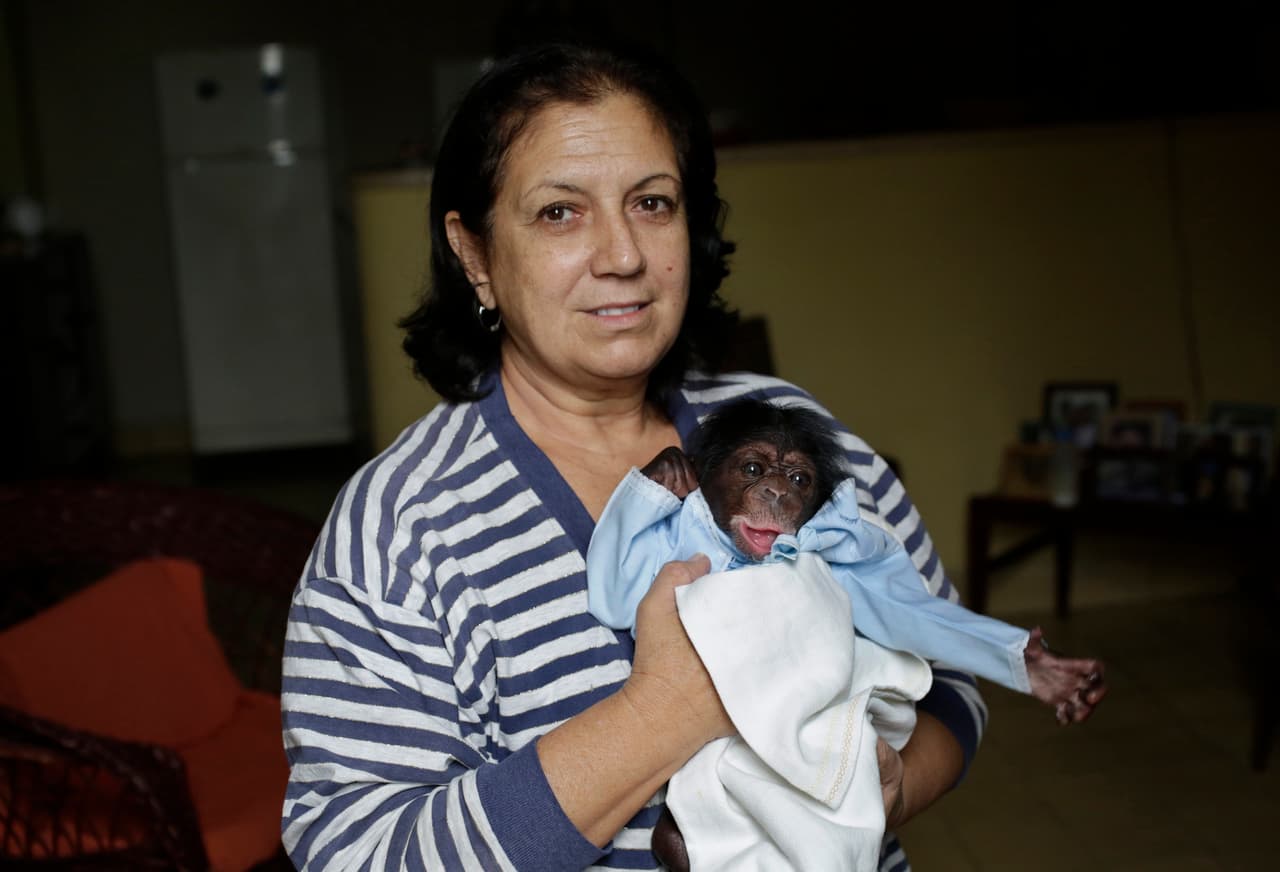
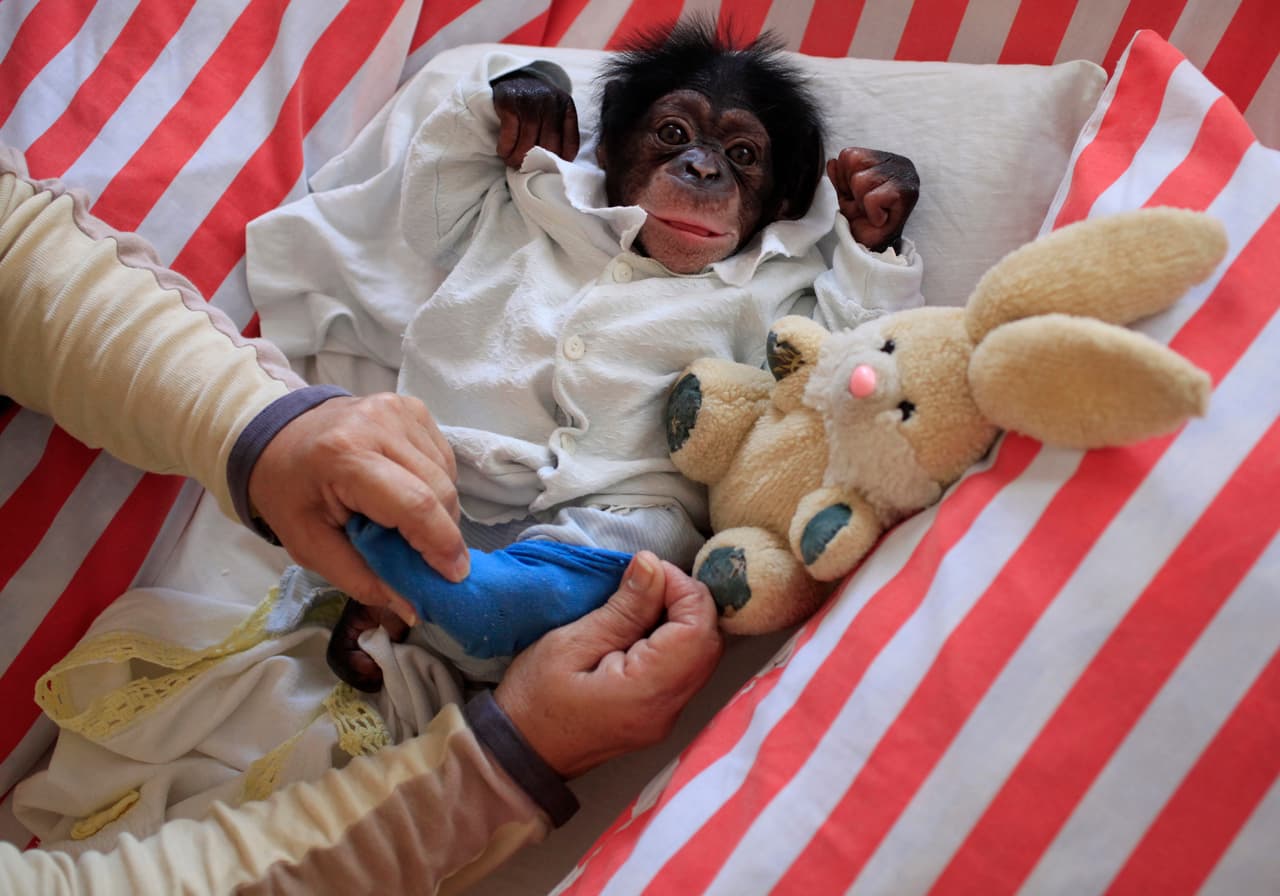
A young male chimp, Anumá, at five days old, with Cuban biologist, Marta Llanes, in her Havana apartment. Llanes has raising Anumá and her younger half-sister Ada since birth after their mother wasn't able to breast feed them. Photo taken Jan 13 2016.
Imagen Enrique de la Osa
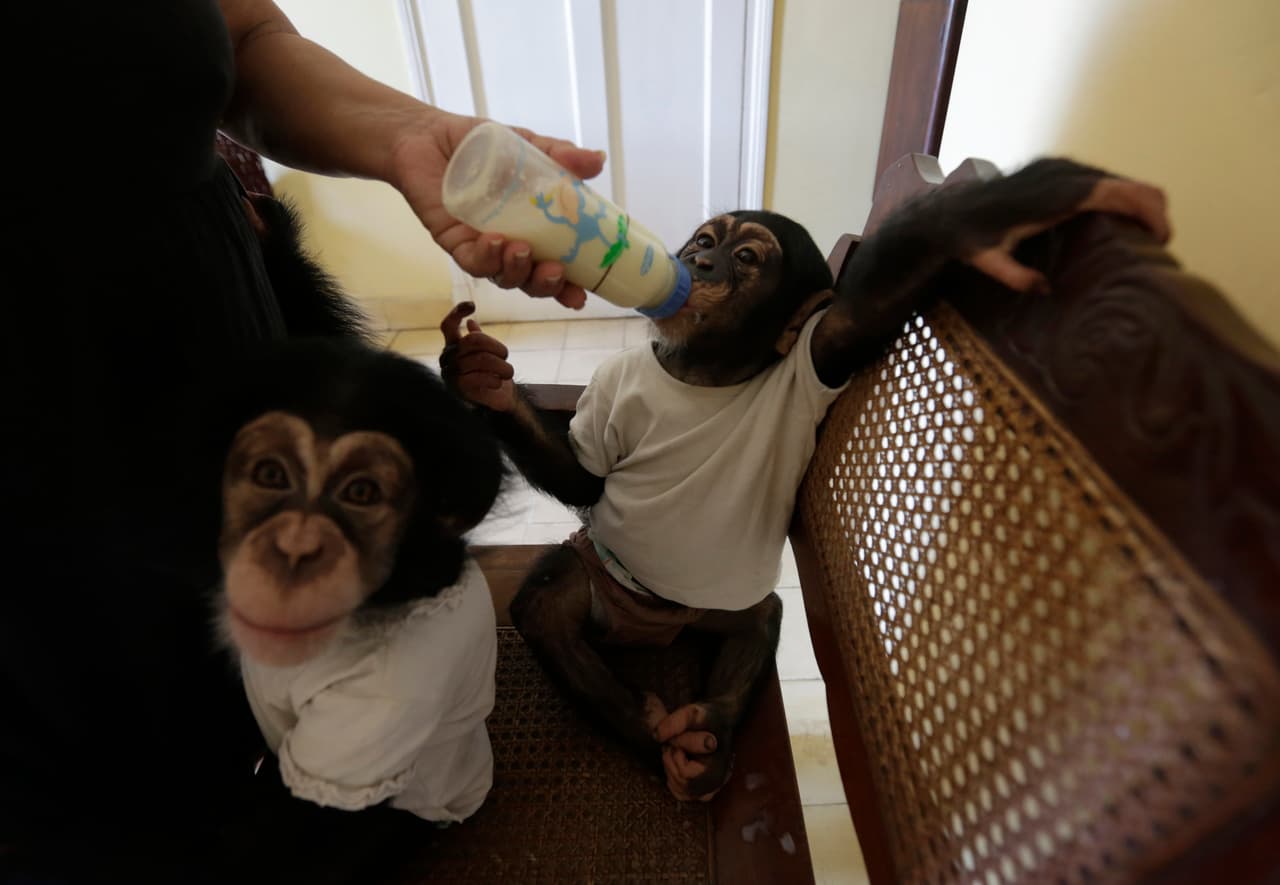
Unlike cats and dogs and other house pets, Anumá and Ada depend on Llanes for everything and can't be left on their own. She changes diapers, prepares all their meals and organizes bedtime.
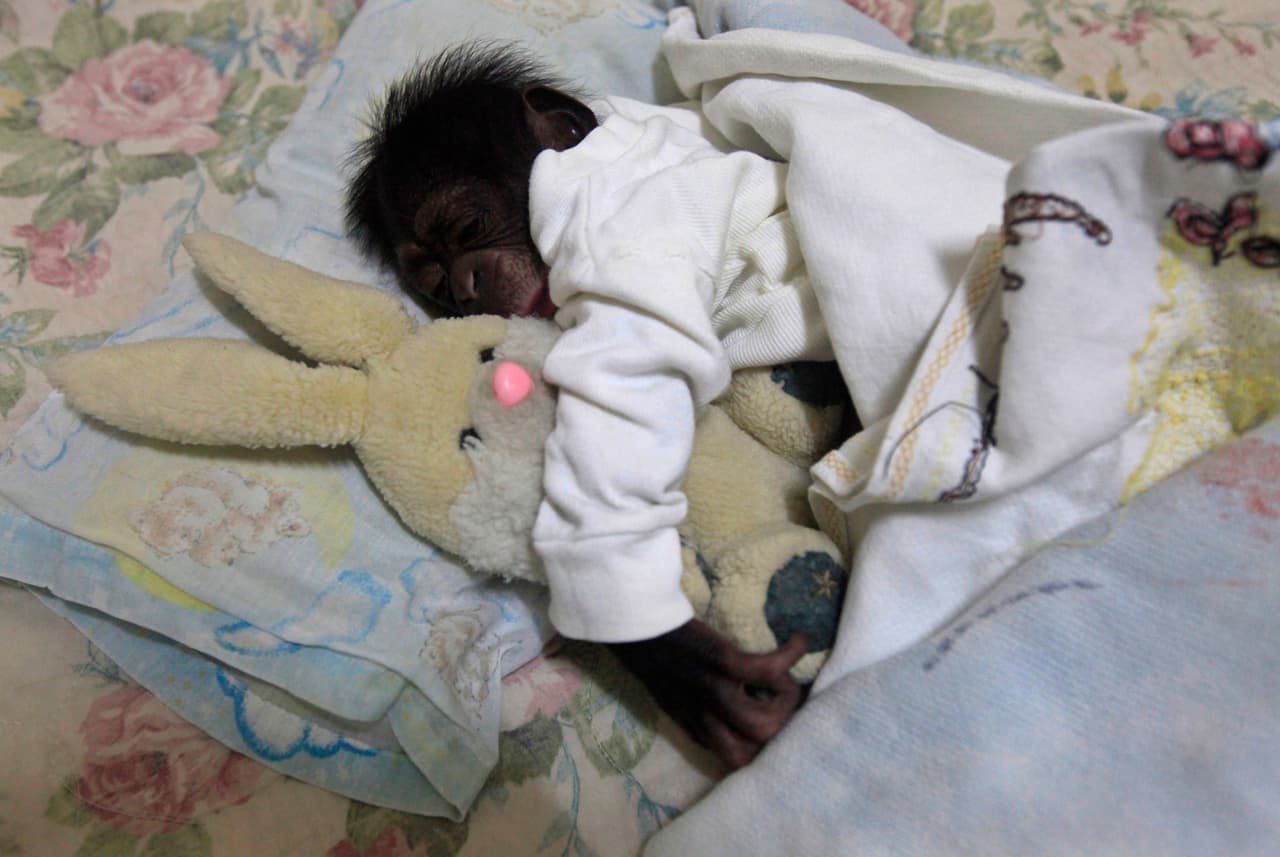
The chimps sleep with Llanes in her bed, but Ada, the more restless of the two, needs only five hours a night and is usually awake by 5a.m.
"She's very pretty but she's very naughty," said Llanes, in a recent mid-afternoon phone interview. "Right now she is hitting Anumá, who is trying to sleep. She wants him to play with her."
By age one chimps are already physically strong and can grow aggressive.
"It is relatively easy to hand raise an infant chimp, very similar to raising an infant human child," said Zoo Miami communications director, Ron Magill. "However, once that chimp starts to mature and develop its natural strength (four times that of a human being), it becomes unmanageable and in fact dangerous," he added.
Lot of affection
On one recent day Llanes, exhausted, collapsed on her own bed for a rest but was soon joined by the chimps who playfully jumped up and down on her face and chest.
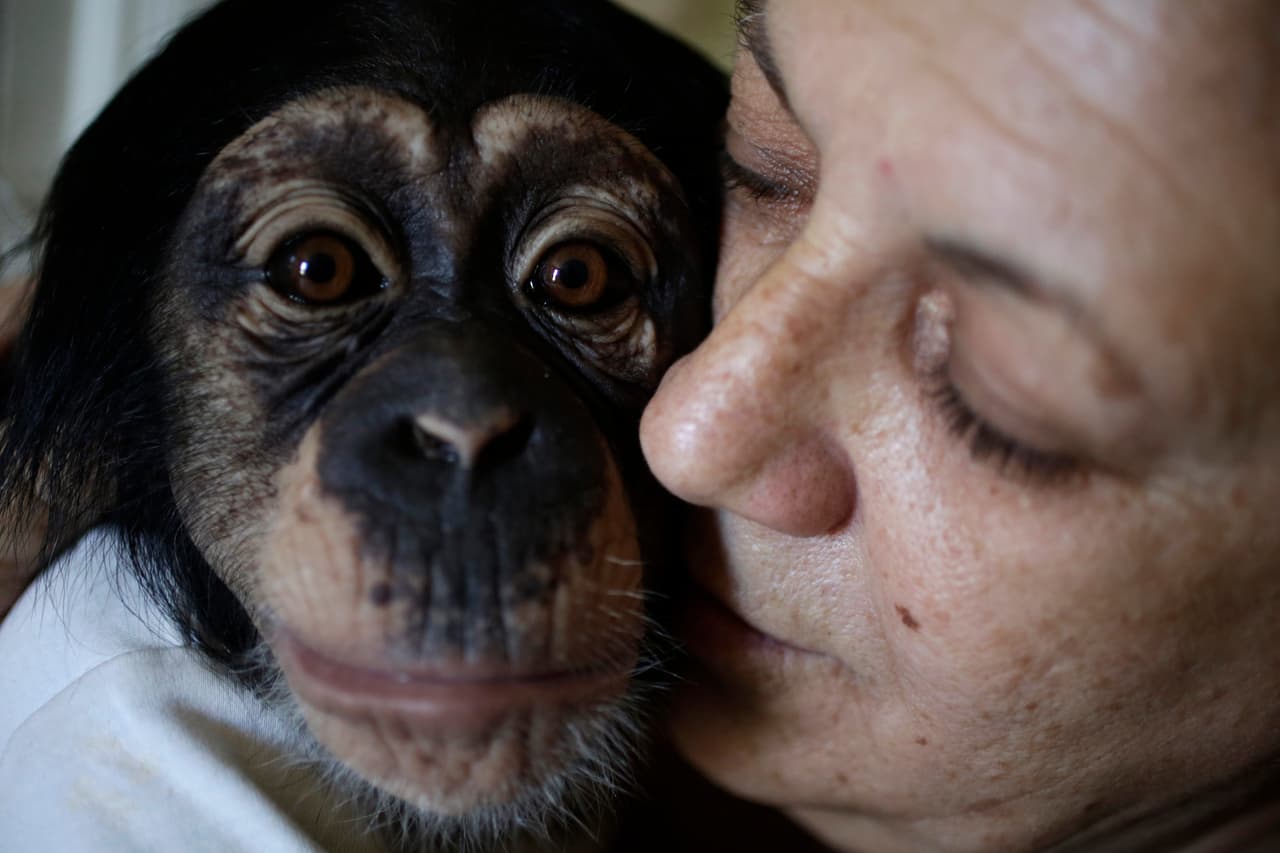
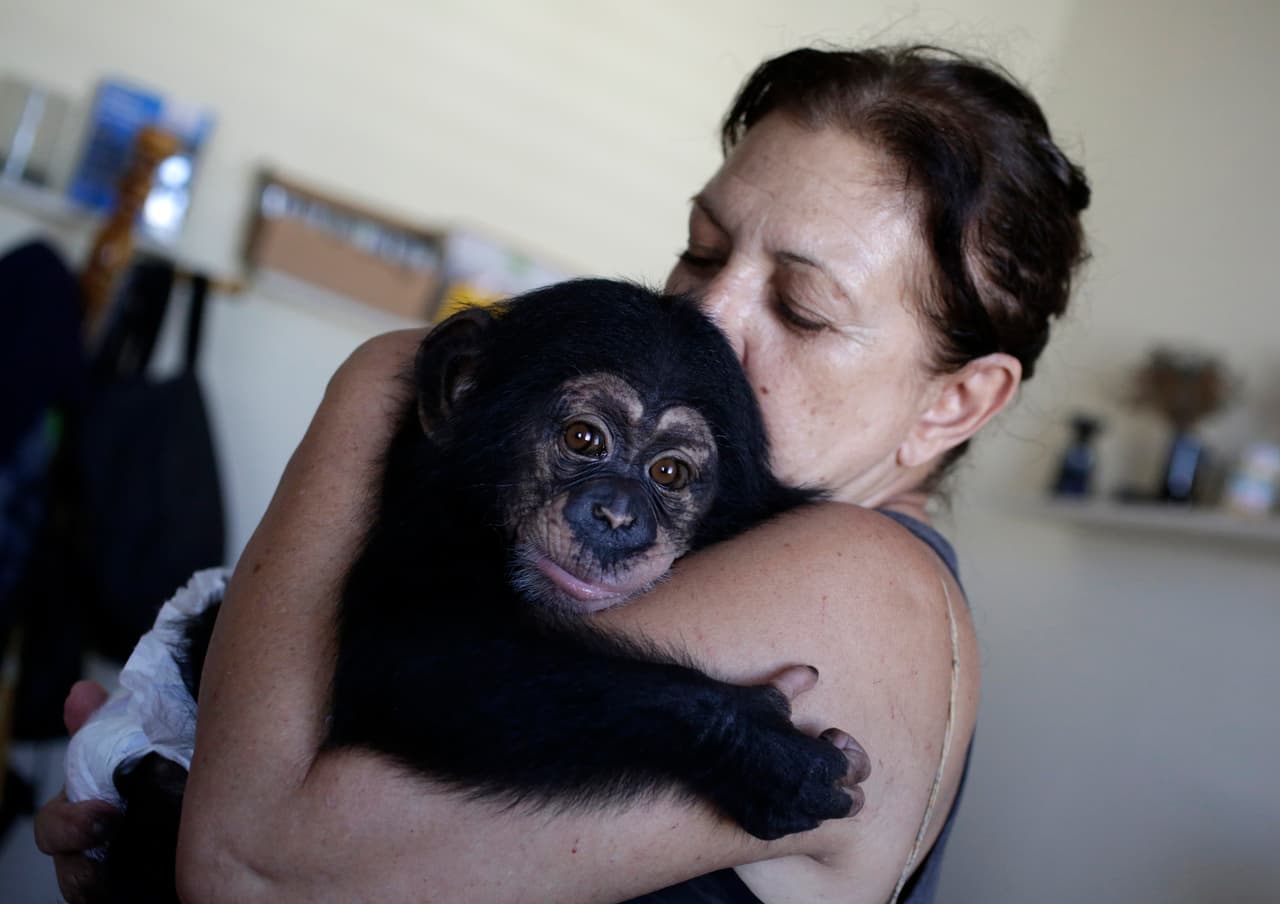
She says she'll miss them. "It is very comforting having them around because they attack you, they know you, they recognize you," she said. "They know their meal times and they show a lot of affection, although they often use that to get their way," she added as Ada sat quietly on her knee.


It's easier to take care of the chimps at home and teach them the basics of taking care of themselves, she says, because they need round-the-clock attention. The zoo provides her with milk and fruit, but she handles the rest, including all the washing and cleaning.
Their favorite food: bananas and plantains, as well as papaya, guayaba, and a soup of squash and mixed tubers (malanga and boniato).
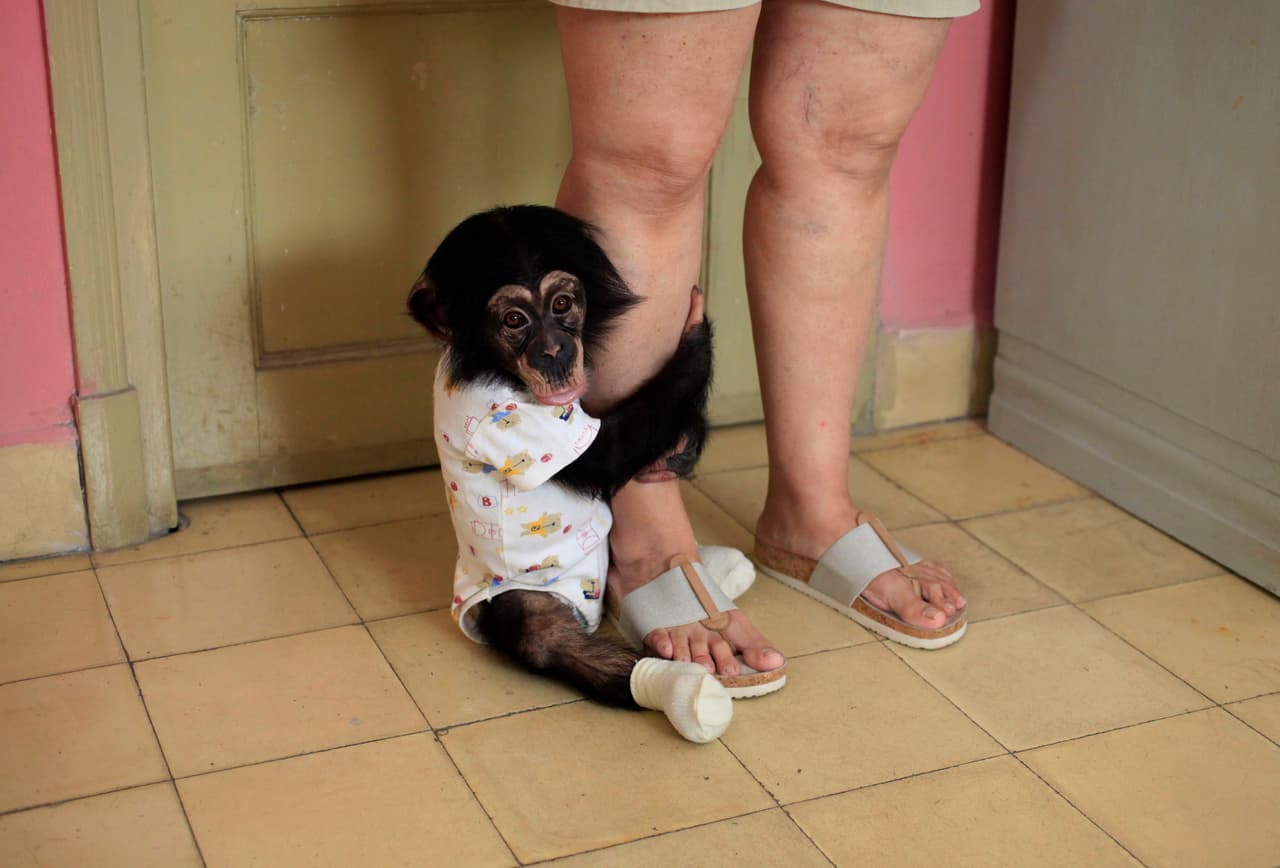
Llanes, who lives alone, doesn't take them out of the house with her for fear they might get sick. They are so timid they cling to her and screech when anything alarms them. Nor do they trust a helper who comes once a week on Wednesdays so Llanes can go out, do shopping and run errands.
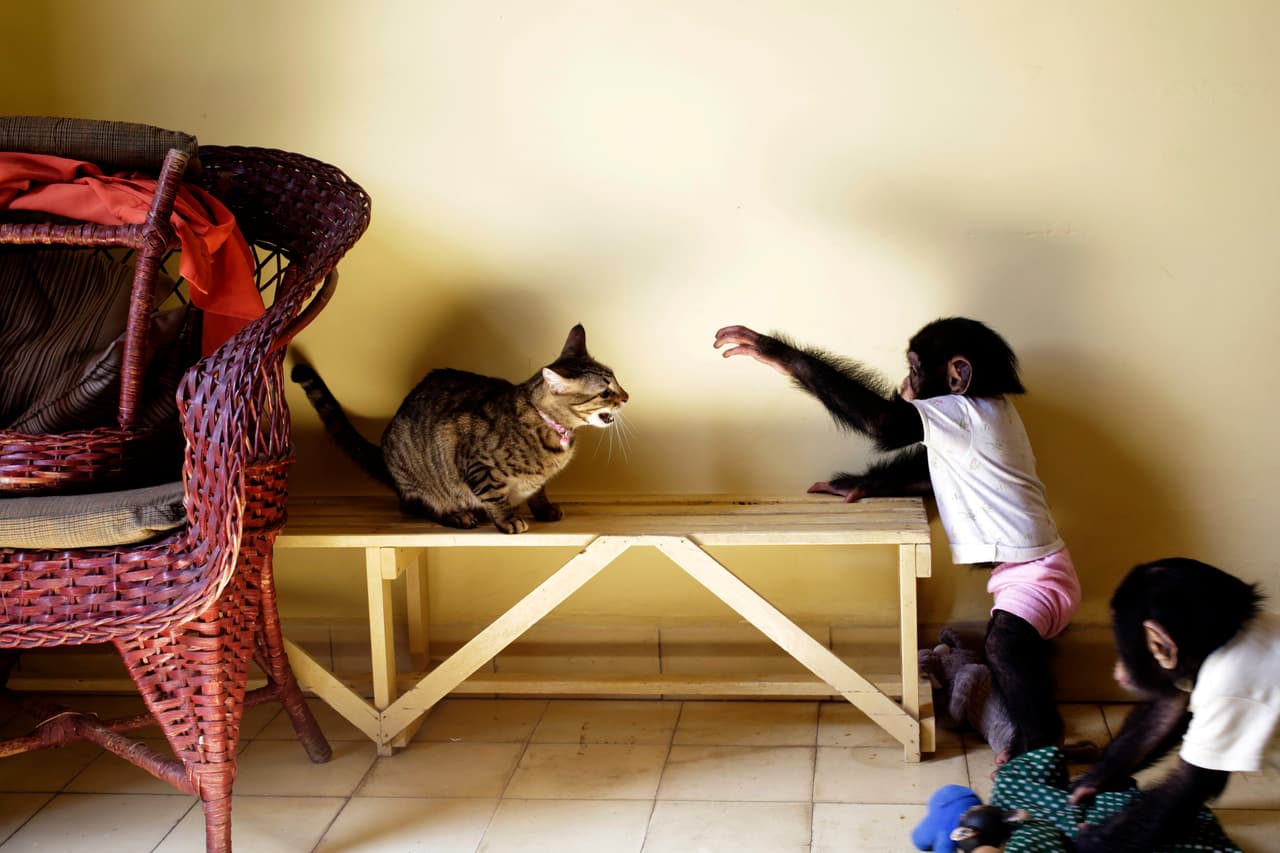
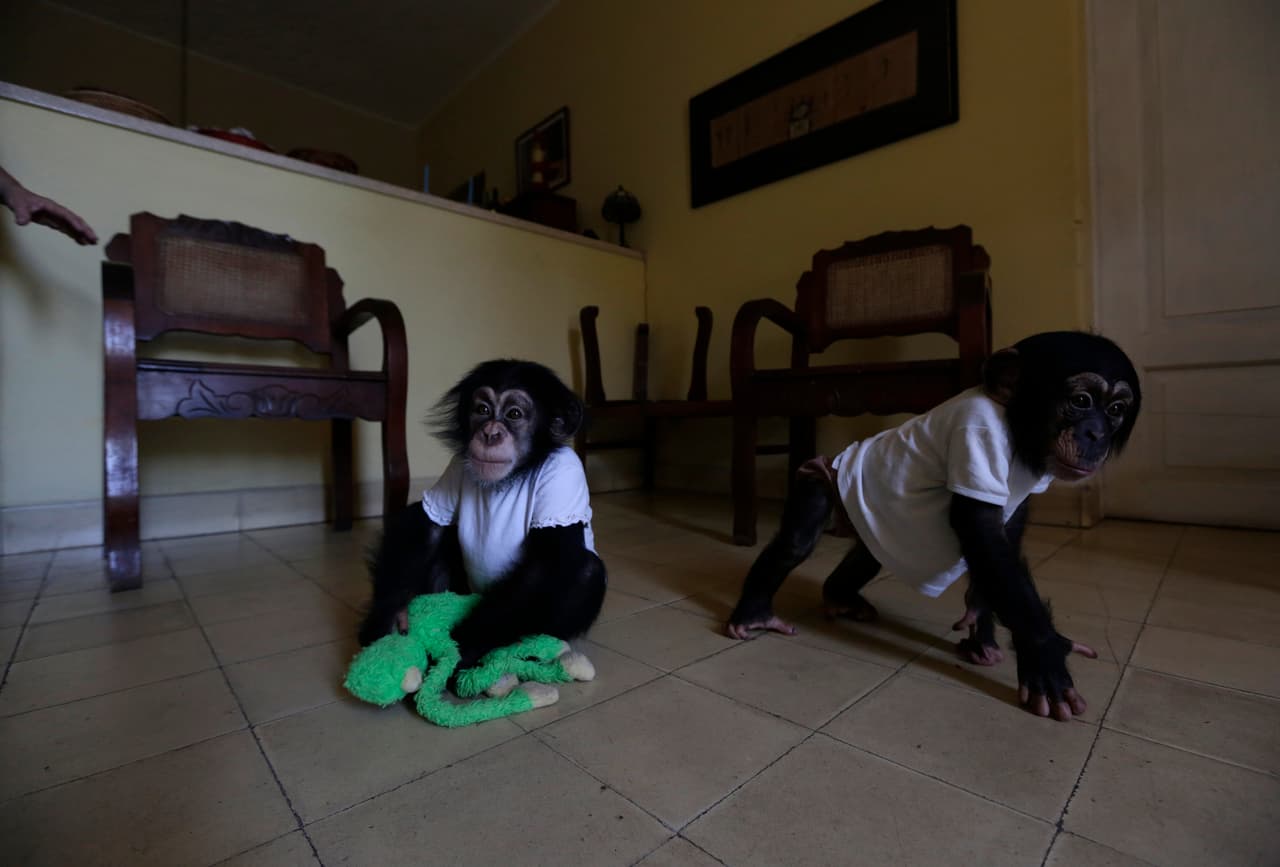
The chimps like to climb - on anything - so Llanes keeps all doors and cupboards locked to avoid accidents.
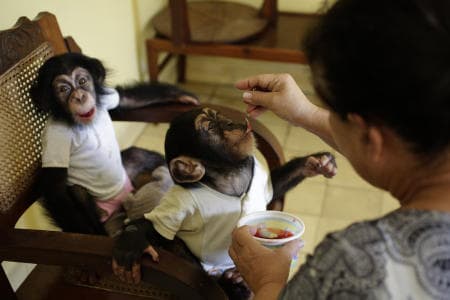
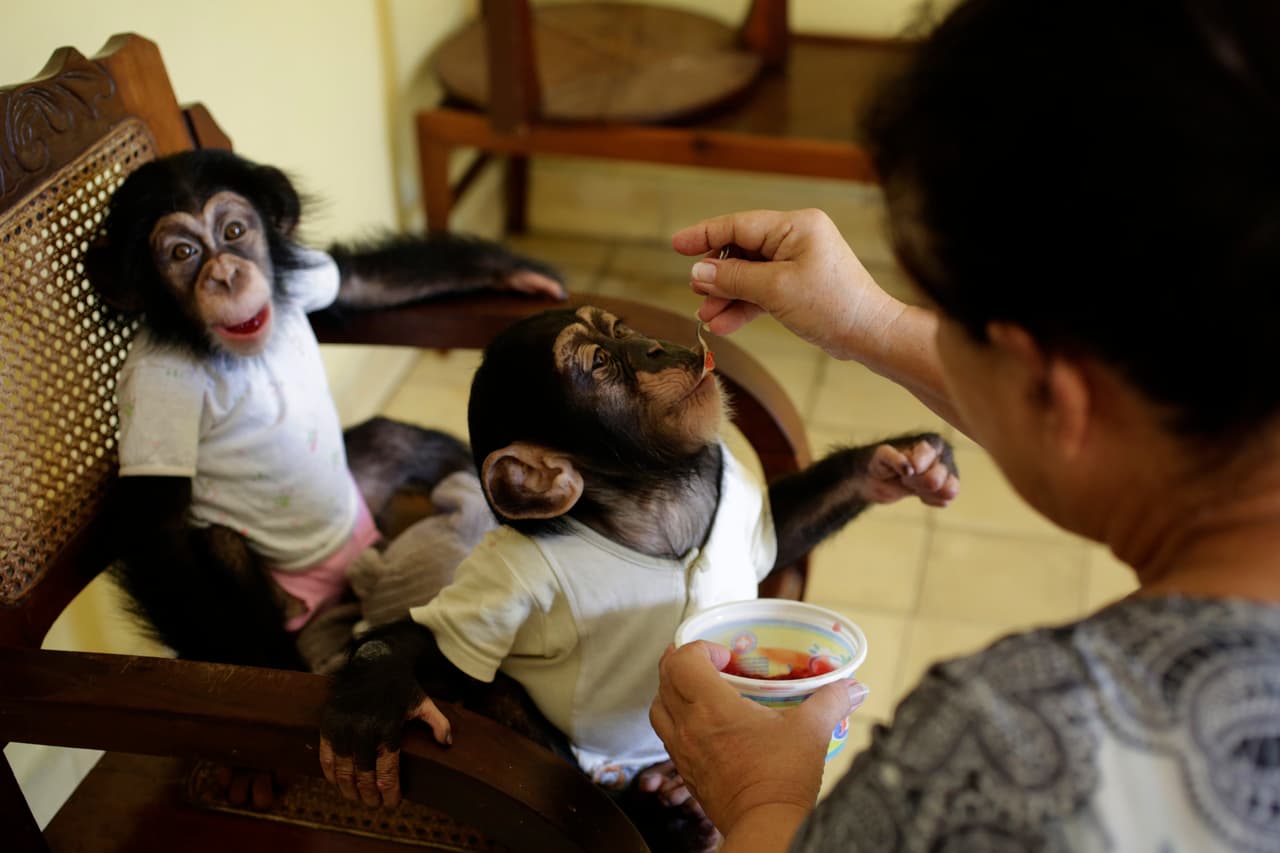
Cuban biologist Marta Llanes, 62, feeds jelly to one- year-old Anumá and as his half-sister Ada waits her turn. Llanes has raised the sibling chimps in her 5th floor Havana apartment since birth. February 27, 2017.
Imagen Enrique de la Osa
"Monkey Farm"
Cuba has a long history of raising chimps. In the 1930s a wealthy philanthropist, Rosalía Abreu Arencibia, won global recognition for pioneering work in the study of chimps in captivity. Abreu studied in the United States and she was famous for holding poetry readings and concerts at her home Las Delicias, a gothic-style castle in Havana, also known as the "Monkey Farm."
The grounds of her estate in the center of Havana were home to exotic birds, a small elephant, and a caged tiger, as well as the largest reserve of captive monkeys in the world.
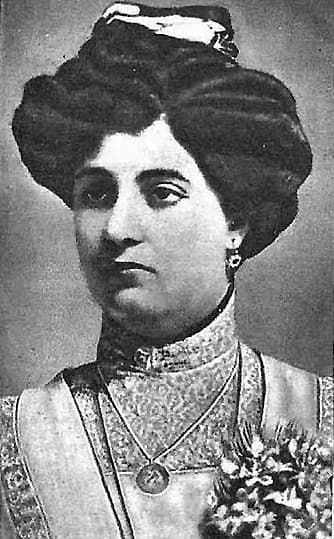
In the 1930s a wealthy philanthropist, Rosalía Abreu Arencibia, won global recognition for pioneering work in the study of chimps in captivity. A friend of President Theodore Roosevelt, Abreu studied in the United States and she was famous for holding poetry readings and concerts at her home Quinta Las Delicias, a gothic-style castle in Havana, also known as the "Monkey Farm."
She studied the monkeys and made observations about their intelligence, and is reputed to have bred the first chimpanzee in captivity, named Anumá, who was born in April 1915.
Anumá was famously friendly and gentle and became Abreu's favorite. However, he died after being shot during an incident when he bit his caretaker. In 2015 Cuban state TV made a celebrated documentary about Anumá and Abreu, titled, "The Tale of the Apes."
The colony was split up after her death. The mansion is now a Communist party youth camp.
Maternal instincts
Llanes got her first experience handling chimps in 1980 when her mother-in-law helped raise a baby whose mother had a difficult birth.
She took in her first chimp in 1983, a young female who's mother wasn't lactating properly. Llanes looked after her for two weeks but had to pass her on to another caretaker because she was expecting her own daughter.
"From that moment I realized that I wanted to do this for the rest of my life," she said.
Raising chimps prepared her when she gave birth to her own daughter, she says. "By then I had changed so many diapers and bottle fed so many babies I knew I would be a good mother," she laughs.
Her daughter, Kaly, grew up playing with chimps. "For her they weren't 'my mother's chimps.' She called them 'my little brothers and sisters,'" said Llanes.
The steady flow of baby chimps in and out of her home is usually the result of mothers who have difficult births, don't lactate properly, or simply don't perform their maternal duties well enough.
The reason is partly genetic and partly that some chimps are better mothers than others, she says.
"We have come to realize that when there is too much in-breeding there are problems, with birth weights and mothering issues," said Llanes. There are currently 13 chimps at the zoo, but most are the offspring of one highly productive 50-year-old male, named Philips, who has fathered 60 children. The other chimps were either sold abroad to Mexico and Italy, sent to other zoos in Cuba, or died young.
Llanes hopes that Anumá and Ada are adopted by another zoo because by the time they reach reproductive age - about nine - they will be living with too many brothers and sisters. "That's obviously not healthy," she said.
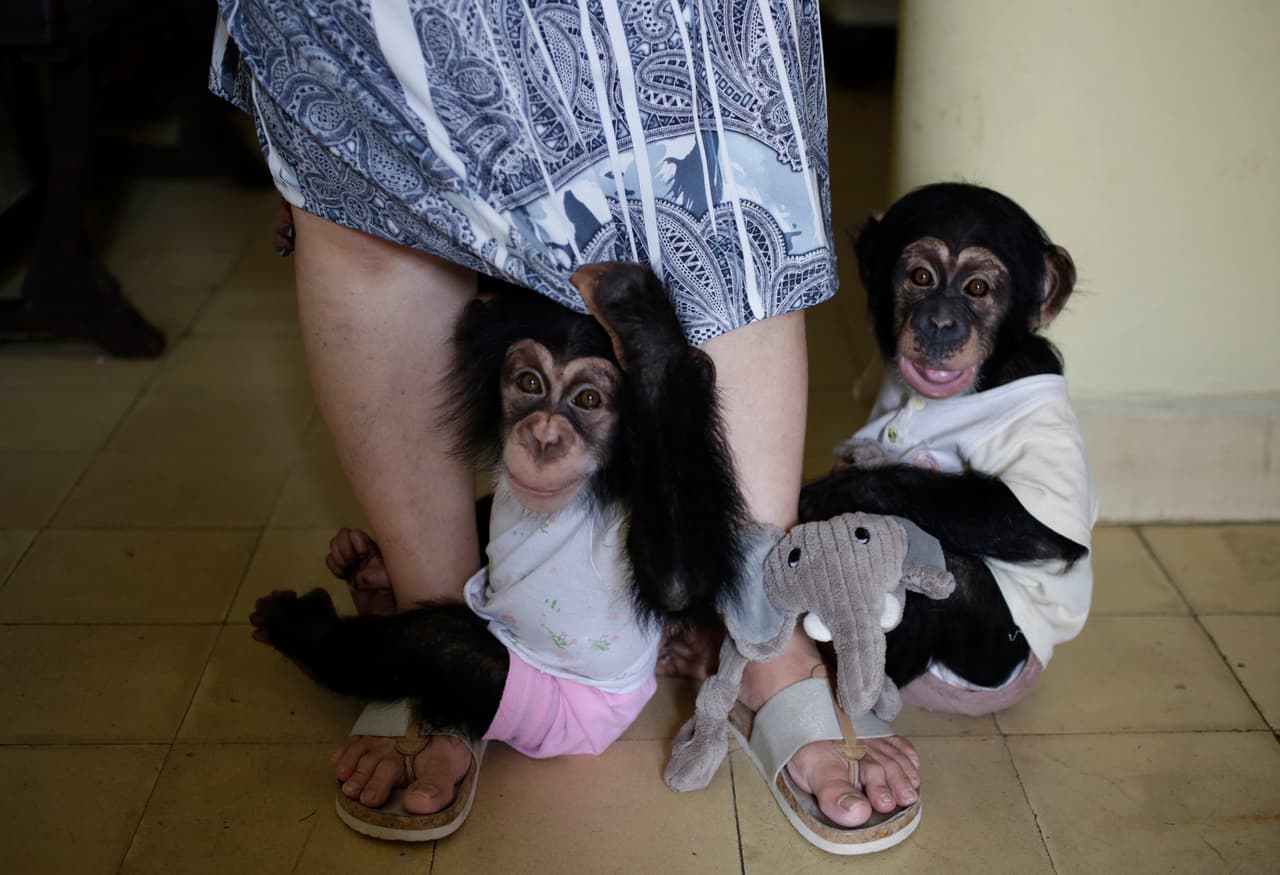
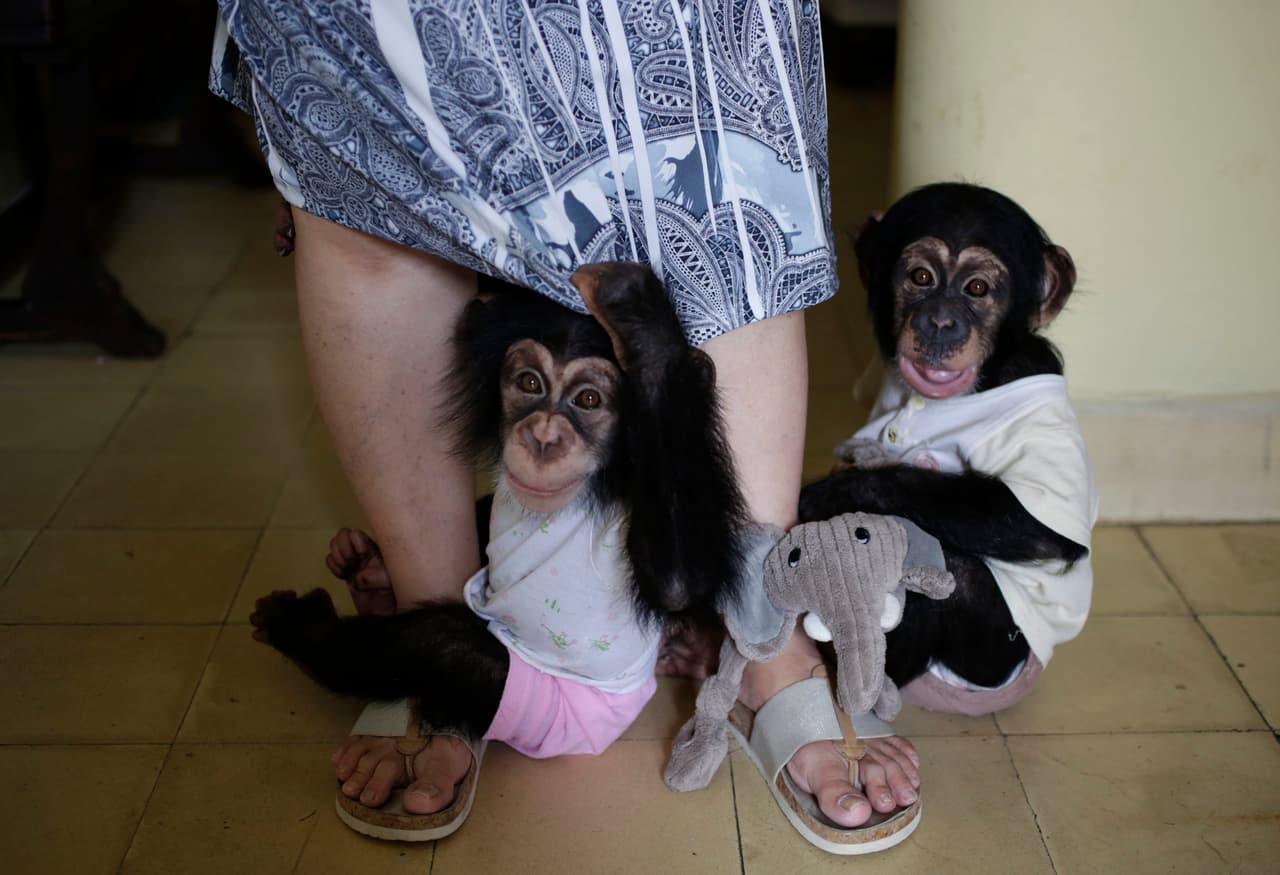
Ada, (left) aged eleven months and one year-old Anumá at the feet of Cuban biologist Marta Llanes, 62. Feb 27 2017.
Imagen Enrique de la Osa
Social misfits
"Generally speaking, chimps are very good parents," said Magill, at the Miami zoo.
Accredited zoos will hand raise a chimp if the mother has rejected it or the mother has some medical issue that prevents her from properly raising the baby herself, he said.
However, hand raising chimps "creates a vicious circle because being a good mother is a learned behavior that is taught by the mother and then passed down from generation to generation," he added. "Being raised by a human, chimps more often than not become social misfits with other chimpanzees ... This is especially true when it comes to motherhood as these chimps never had the opportunity to learn how to be a good mother from other chimps," he said.
He recommended birth control to prevent pregnancies that can lead to these types of situations.
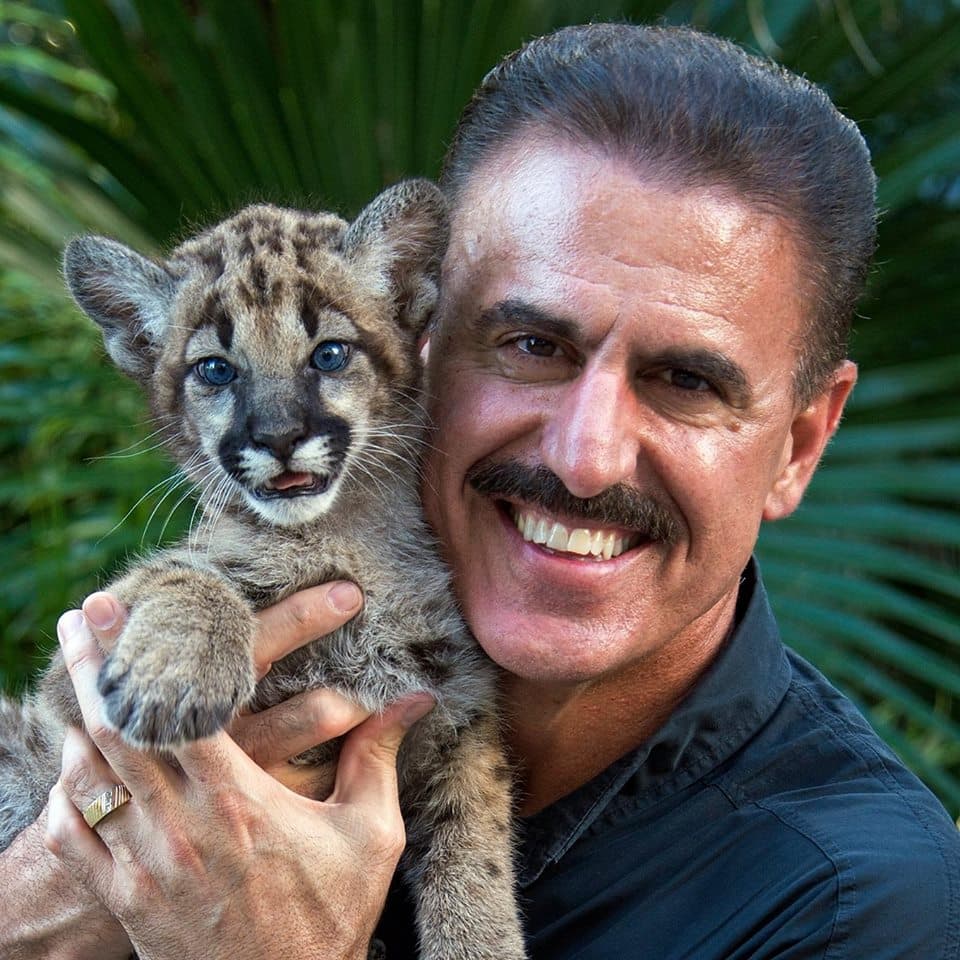
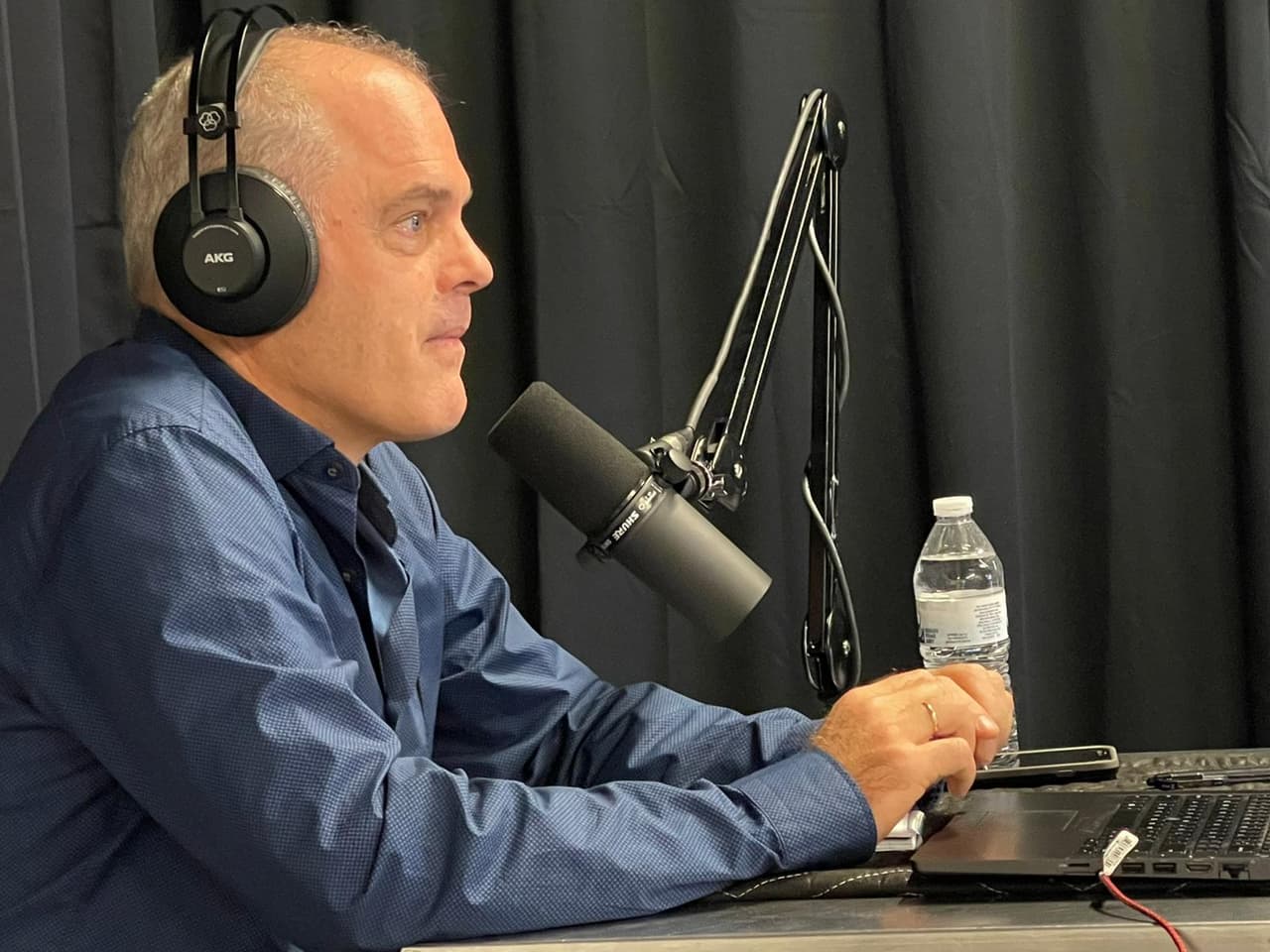
Ron Magill, Zoo Miami
Imagen Ron Magill/Zoo Miami
The Havana zoo is making improvements to the chimp area so that in future the facilities will exist to take care of unhealthy mothers and babies on the premises in an artificial breeding area, Llanes said.
But she'll always be available if necessary.
"If they need me I will continue being a mother to them until I die," she said.
Relacionados: