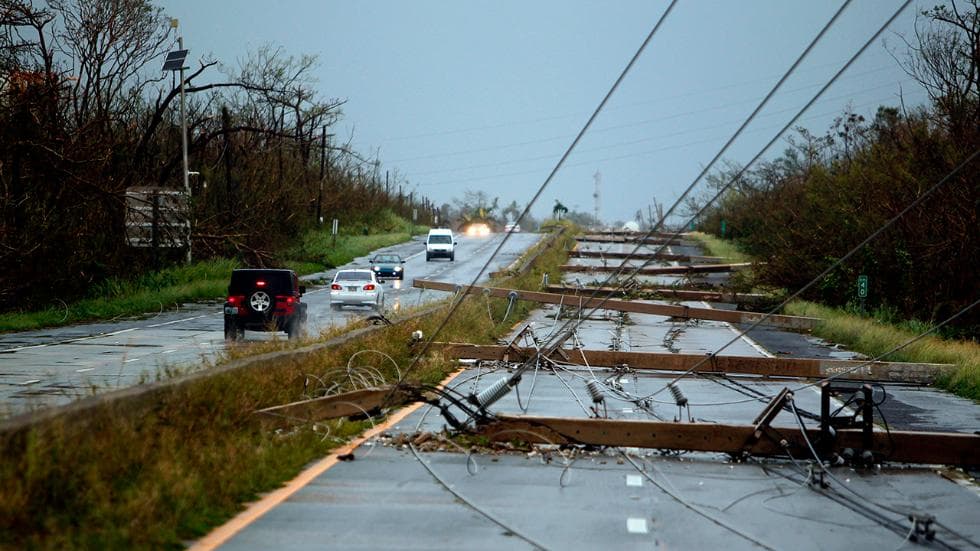
As many Puerto Ricans see it, the island is bracing for yet another disaster: a visit from president Donald Trump. But while presidential visits to the island have never been this stormy, they have always been devastating in what they reveal about Puerto Rico as a territory that "belongs to, but is not part of" the United States.
The Last Emperor
Given his attitude and larger context of U.S. control, many are viewing Trump’s visit as that of an emperor surveying his overseas subjects rather than the president of a democratic republic bringing relief or hope to fellow citizens.

President Donald J. Trump, joined by Vice President Mike Pence, meets with members his Cabinet, Tuesday, Sept. 26, 2017, in the Situation Room at the White House in Washington, D.C., for a briefing on the latest update on Hurricane Maria relief and recovery efforts for the island.
Imagen White House/Joyce N. Boghosian
Since the invasion of the island by U.S. troops in 1898, Puerto Rico has received only nine presidential visits, with most taking place before 1962. Although none was technically considered “official" by the Department of State, at least four were understood as “quasi” due to their purpose or level of engagement: Theodore Roosevelt (1906), Herbert Hoover (1931), Franklin D. Roosevelt (1934), and John Kennedy (1961). Three presidents, however, hardly left their rooms in a luxury hotel or military base. Thirty-six did not bother at all.
Regardless, presidential visits are almost always about the president’s agenda, and not the territory’s needs. The elder Roosevelt stopped in Puerto Rico as part of a tour to the troubled Panama Canal construction site. Locally, he sought to calm growing political discontent by expressing support for American citizenship and tout all the progress the US had brought to “Porto Rico.”
If arguably more in tune to the island’s economic challenges, FDR’s New Deal pitch was less about equity than quieting labor unrest and calls for independence. And the Kennedy stop was similar to Teddy’s: he was on his way to Colombia and Venezuela to promote the Alliance for Progress, a policy that sold Puerto Rico as a model for U.S.-backed capitalist development in Latin America, and against the socialist path exemplified by Cuba.
The last visit, by Barack Obama in 2011, stands out as one of the most narrowly self-interested. Obama spent a scant five hours in San Juan to raise money for his 2012 campaign from a poor community who could not vote for him, and pose for photos so Latinos in swing states like Florida would. In 2009, Obama had the audacity to promise that he would “enable the question of Puerto Rico's status to be resolved.” But he never did—or even tried to.
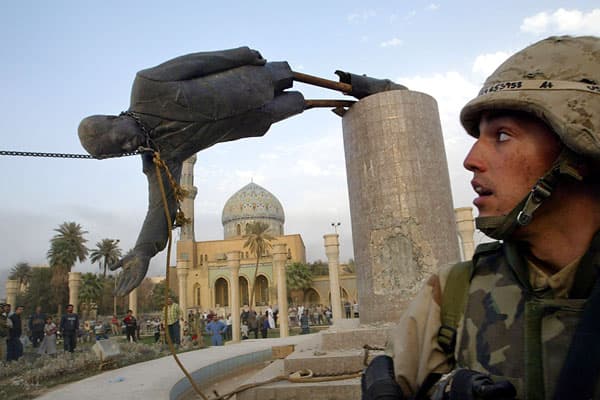
Despite a near universal desire for an end to Venezuela’s manmade disaster, sending in U.S forces to take out the Maduro regime would be counter-productive. It should be categorically rejected by interim president Juan Guaidó, not to mention the Trump administration.
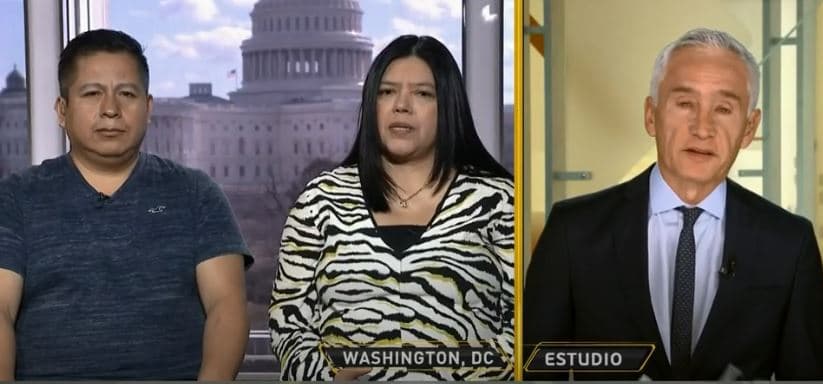
The firing of undocumented workers at Trump's golf clubs just shows how the practice of employing immigrants without legal work papers is much more common than we might imagine. Such is life in the United States.
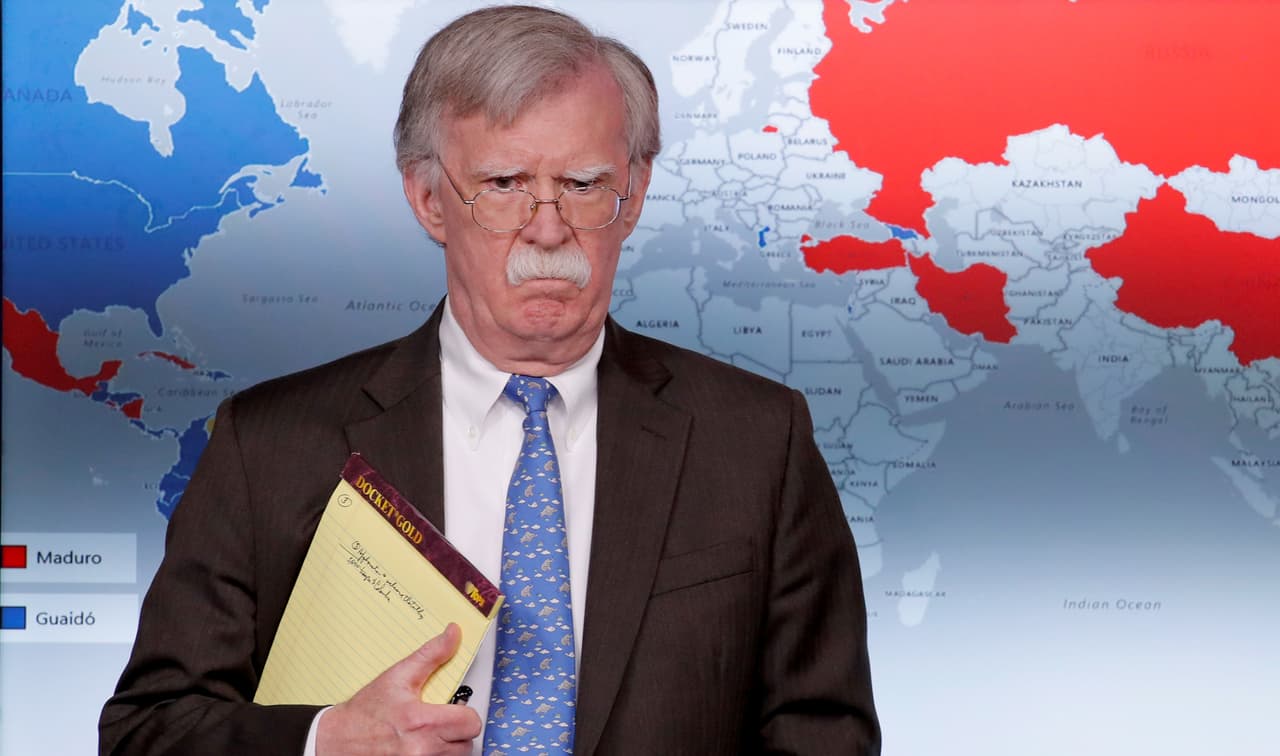
The Trump administration should be wary of fueling fake news predictions about an imminent American invasion which unrealistically raises expectations about Maduro's removal.
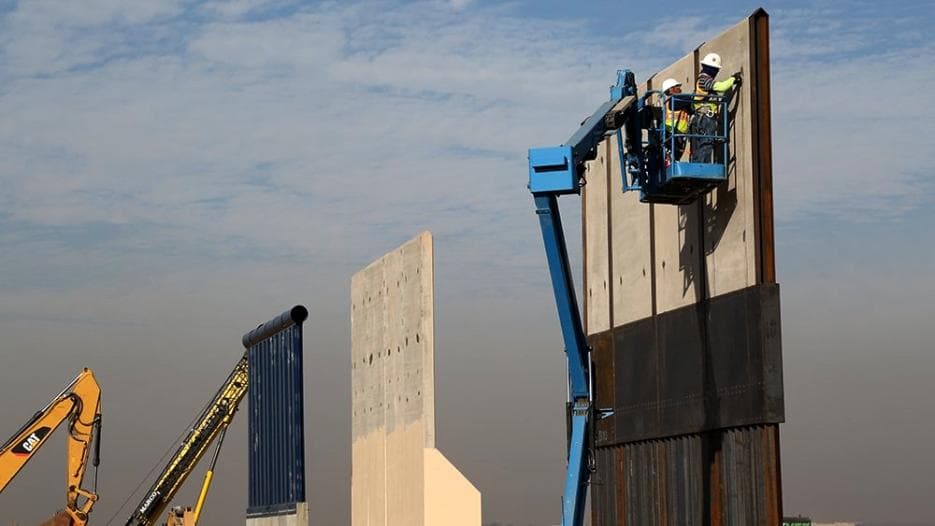
At some point we will have to accept the fact that the border between Mexico and the United States is nothing more than an invention.

The United States has had a major role in the evolving drama of the fight for democracy in Venezuela and Nicaragua. And so far, it’s been surprisingly coordinated, a veritable model of multilateralism.
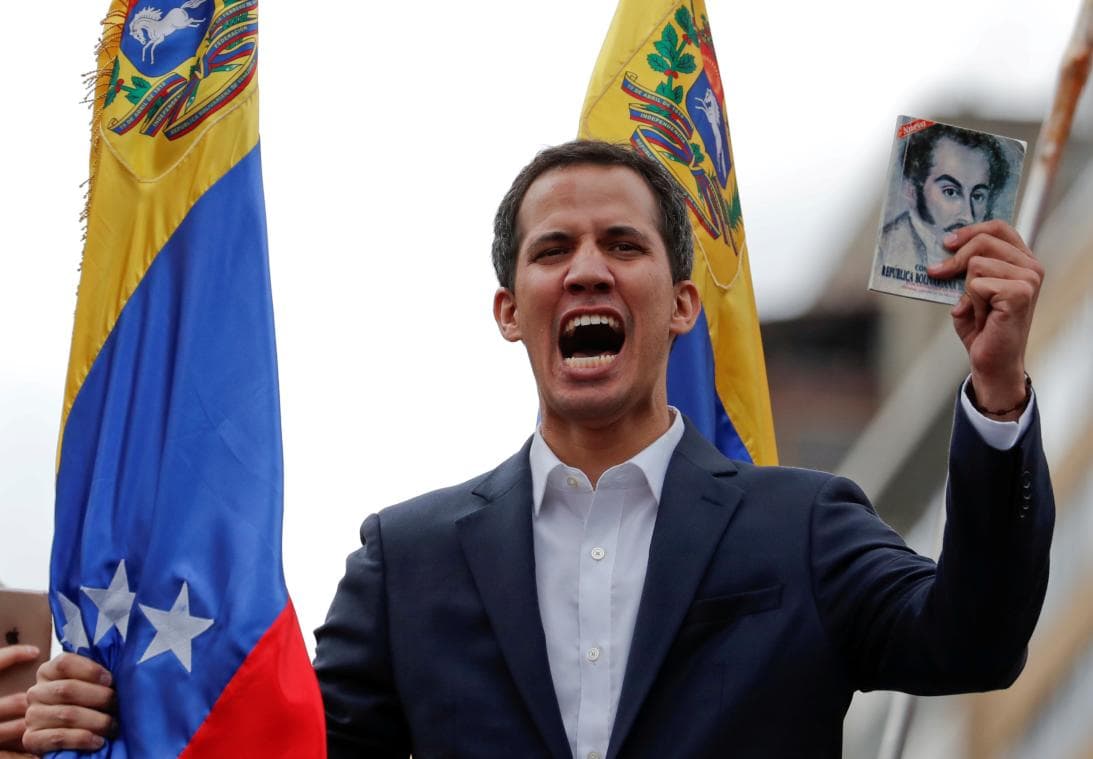
Has the Maduro regime reached breaking point? It remains hard to say, but tomorrow is another - more hopeful - day for the restoration of democracy in the South American nation.
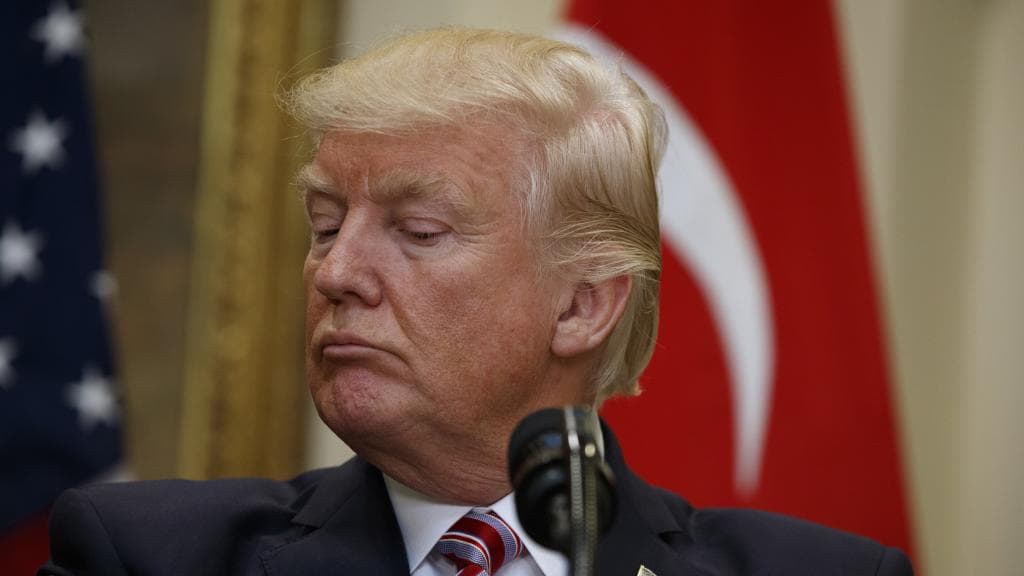
It’s impossible to get into Trump’s head but what comes out of his mouth are racist remarks. But, saddest of all are the millions who tolerate his views, cheer him on and emulate his behavior.
The time is well past due for the U.S. government to conduct a thorough review of leaders and their senior colleagues before they leave office to determine if they merit visas.
Trump’s current visit then has much in common with that of prior presidents: it’s about how great America or the president are and the actual audience is elsewhere. As Hoover, another president that belatedly visited the island after a deadly hurricane in part to highlight U.S. generosity, Trump wants to show that his administration is “doing a really good job” and will get an “A-plus.” This is the case even if it has been clearly established that compared to its response in hurricane-impacted, politically crucial states like Texas and Florida, federal action in Puerto Rico has been deliberately slow, inadequate, and negligent.
But Trump’s visit is simultaneously unusual. In contrast to former presidents, he is in a public row over the federal government’s response to the crisis with one of his potential hosts, Mayor of San Juan Carmen Yulín Cruz, whom he has implied is “nasty” and “ingrate.” Trump has also overtly disparaged Puerto Ricans more generally.
Against evidence that many are experiencing indescribable hardship and that it is the people of Puerto Rico more than the federal government who immediately took the lead to bring life back to their communities, Trump has stated: “They want everything to be done for them.”
Another key difference is that everyone—including the mayor—is talking back. In the past, presidents were generally polite and Puerto Rican politicians deferential with few platforms to directly address a wide U.S. audience. Regardless of what one may think of Cruz, by holding Trump accountable, she has become iconic, quoted and referenced in all mainstream news outlets in the country, from The New York Times to Saturday Night Live.
While recent studies suggest that media coverage on hurricane Maria has been significantly less than Harvey, Irma or Katrina, the quantity and quality of news and commentary on Puerto Rico is unprecedented.
Trump is likewise walking into an exceptional situation at multiple levels. Not only is Puerto Rico physically a different country than it was before Sept 20 when Maria hit. The island is also in a different political place, closer to the early days of American occupation than even two yeas ago: In addition to the fact that a Washington-appointed seven-person board has oversight over all local elected officials, the U.S. military is now patrolling the streets.
Given his attitude and larger context of US control, many are viewing Trump’s visit as that of an emperor surveying his overseas subjects rather than the president of a democratic republic bringing relief or hope to fellow citizens.
Ultimately, Trump’s visit dramatizes that US colonialism in Puerto Rico must end. Certainly, the island would be better off with a caring president who was interested in saving lives.
But, in a fatal way, Trump is exactly the right president for this moment. With his stereotypical “ugly American” contempt for Puerto Rican suffering, exemplified by actions such as playing golf in New Jersey while people die in island hospitals for lack of fuel, Trump—unlike more “presidential” presidents—shows the truth of the territorial story: That islands rich in creativity, beauty, and dreams exist primarily to feed Wall Street, Walmart, the Merchant Marine, the U.S. military, and the American ego. The people who live there do not, and have never, mattered—except as cheap labor, captive consumers, and cannon fodder.
Which is why Puerto Ricans can do without a reluctant visit by a president that they can’t vote for and gratuitously attacks them. Instead, what the island needs is immediate life-saving resources, a comprehensive reconstruction package, equity in all federal programs, debt relief, and, at last, the abolition of the entire colonial apparatus.
119 years is more than enough. This should be the last American emperor to visit Puerto Rico.
Notas Relacionadas

Find updated information about your town in this Puerto Rico search engine
Univision News
1 min
Relacionados: