Volatility has been a constant in Honduran politics. Rampant corruption, instability and trials in the Southern District Court of New York linking President Juan Orlando Hernandez and other political leaders to drug trafficking schemes have elevated the stakes to an all-time high.
Without democracy, there is no chance for Honduran prosperity
Despite a series of New York drug trials that have implicated its political leaders, Hondurans should not expect justice to come from abroad. But, the current situation requires pressure from the international community to promote democracy.
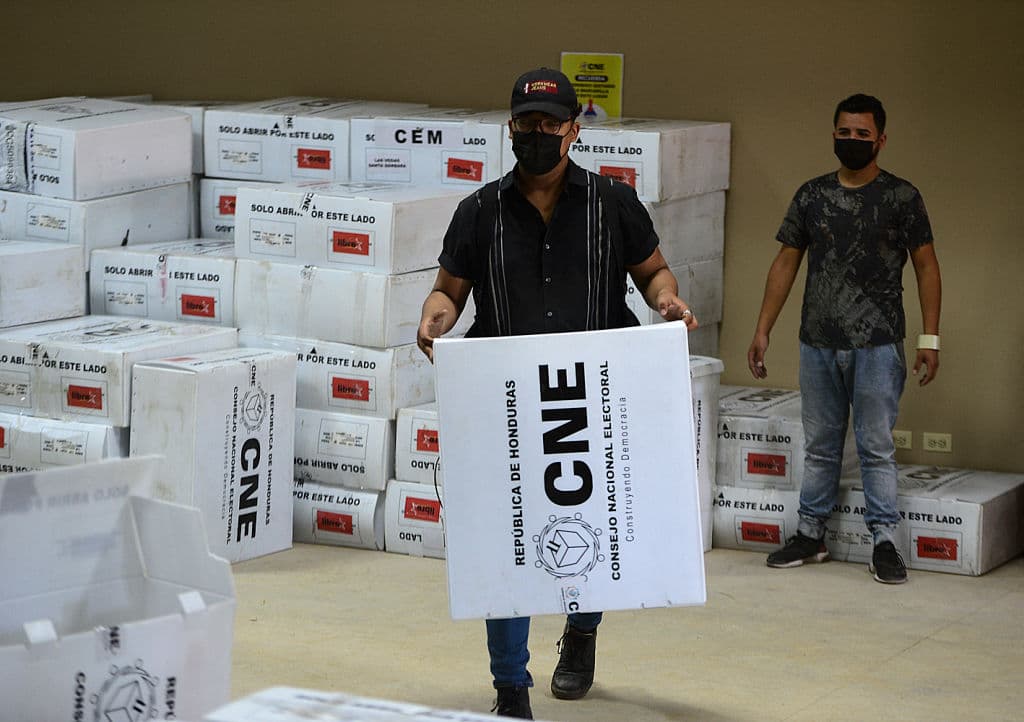
An employee of the National Electoral Council carries electoral boxes in Tegucigalpa, on March 17, 2021. - The primary elections were held on Sunday, March 7.
Imagen Orlando Sierra/AFP via Getty Images
It appears that the Biden administration realizes that Honduras poses the most pressing challenge in the Northern Triangle in order to halt the massive influx of migrant caravans. The question remains: will they tackle the heart of the issue?
Without democracy, there is no chance for Honduran prosperity.
Across the globe, this might be an obvious statement. Historically, societies that have prospered have generally found a consensus on basic political principles, such as an independent judiciary, upholding rule of law, and free and fair elections. In Honduras, the past electoral processes have demonstrated that this vital consensus has not been achieved - inhibiting all attempts for the country to make strides towards sustainable economic development and social stability. For decades, the Honduran polity has deteriorated into a pseudo-democratic state. Today, it is free-falling into its own institutional collapse.
The country has suffered a steep decline in institutional capabilities and state capacity, recently portrayed in the mismanagement of the Covid-19 pandemic and inoperancy in the aftermath of devastating hurricanes Eta and Iota.
These deficiencies cannot be strengthened without first establishing a more legitimate authority and at the same time replacing incomepetent decision makers. Regrettably, Honduras finds itself at an impasse: the primary mechanism to ensure this--free and fair elections - has only regressed through the years.
As my mom worked and parented, all in one breath, she instilled in us the values that I carry with me today: “por la familia, todo.” Lee este contenido en español.
"What a sad reflection that the Republican Party has moved from Abraham Lincoln, who said immigration was a ‘source of national wealth and strength’ and Ronald Reagan, who called for his ‘city on the hill’ to be ‘open to anyone with the will and the heart to get here,’ to Donald Trump, who says immigrants are ‘poisoning the blood of our country".
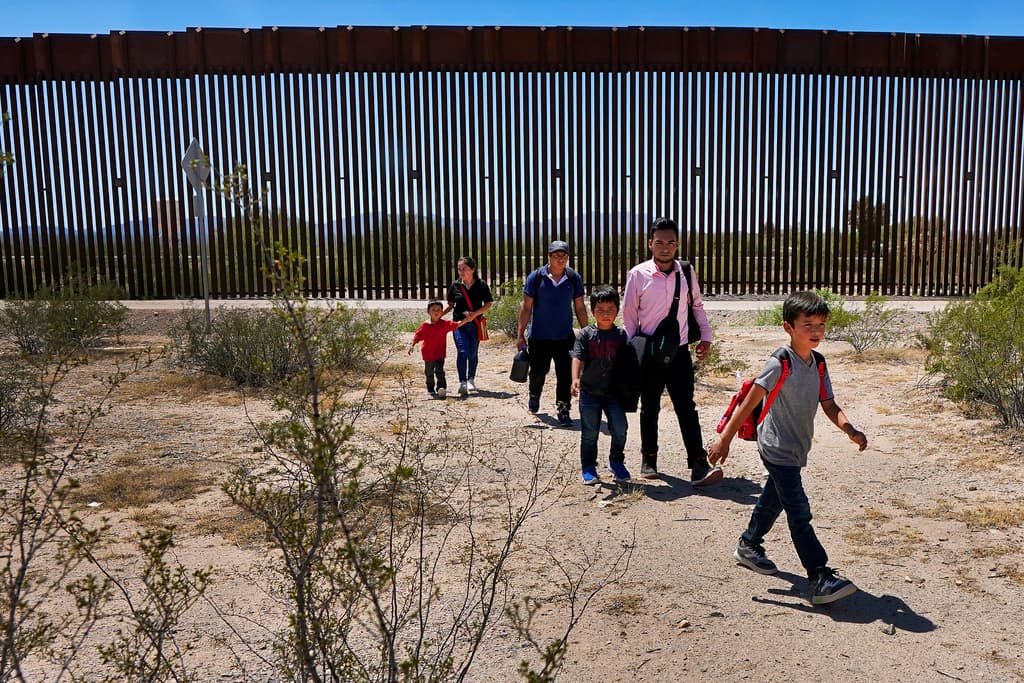
"Our current immigration laws include so many hurdles that can keep families in limbo, and even being married to a U.S. citizen isn’t always enough to allow someone to get a green card".

"For those of us whose livelihoods depend on it, President Biden’s actions to protect and preserve DACA show a striking contrast with those of Trump and MAGA Republicans. Trump has a record of trying to end DACA and will try again if he wins another term".
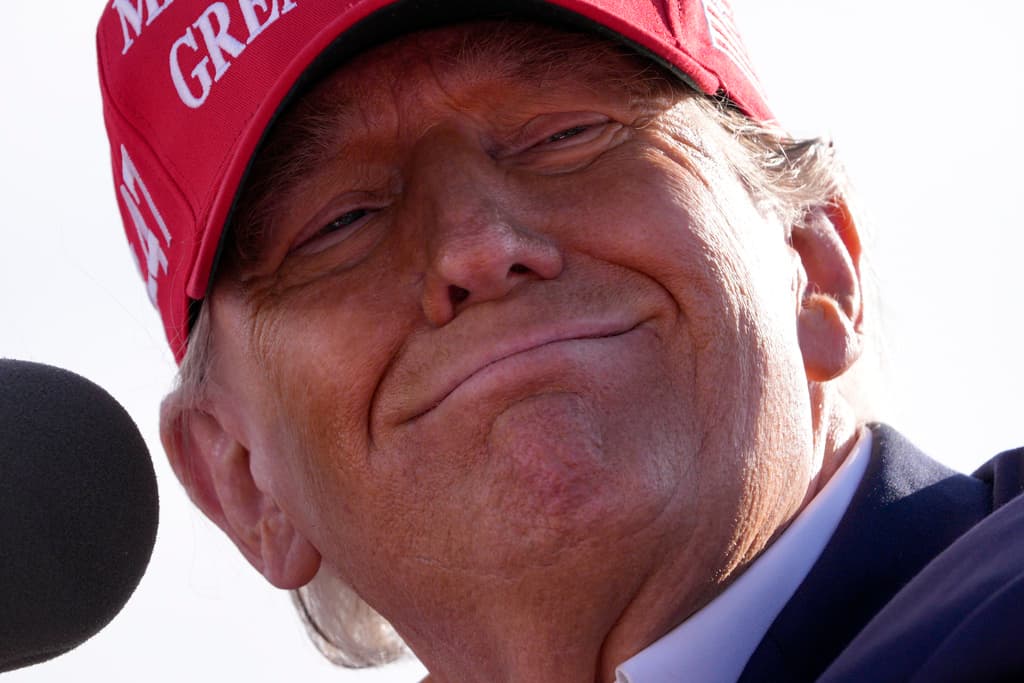
"While immigrants by now are accustomed to being the tip of the spear in the GOP’s arsenal of attacks, let's be clear-eyed that the threat now is beyond harming immigrant communities or calling attention to the border. This is about using this issue as a tool to further Trump’s political ambitions, even if that means suppressing the right to vote, undermining our election results, or stoking more political violence".
"This month comes at a special moment in our nation’s history. For the first time, we have more Latinos serving in Congress than ever before. In the Senate, the Democratic Majority has confirmed a historic number of Latino judicial nominees and recently confirmed the first Latina to serve on the Federal Reserve in the Board’s 109-year history".
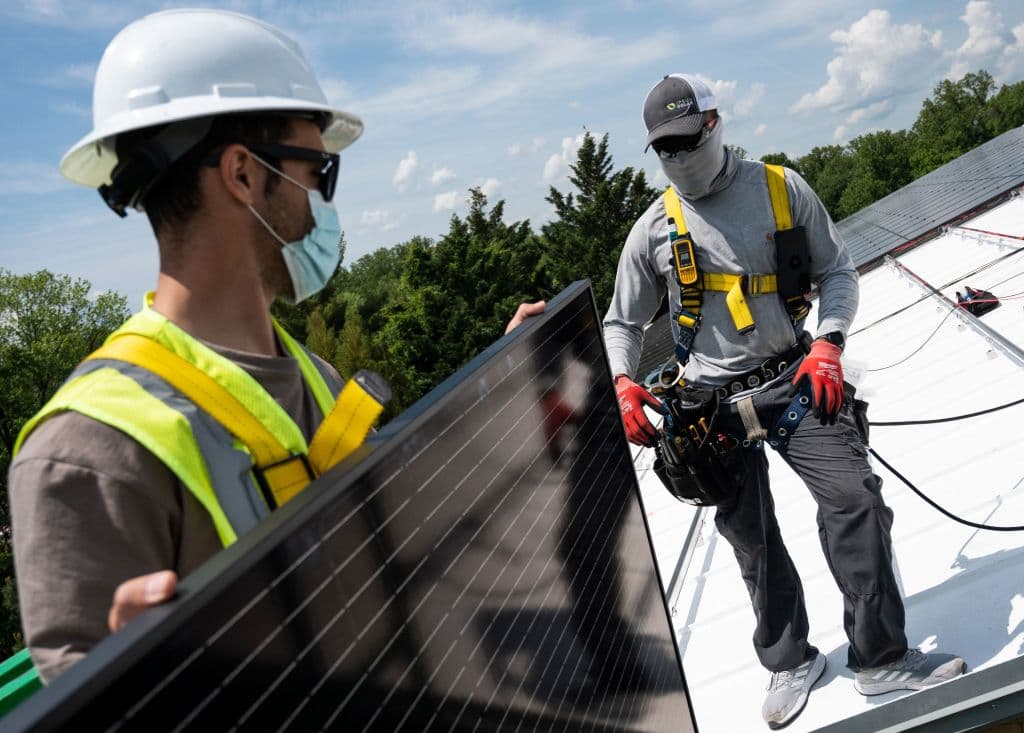
"This is the clean energy boom unleashed by President Biden: good-paying jobs in a fast-growing industry and lower bills for working families — all while addressing the climate crisis affecting our lives".
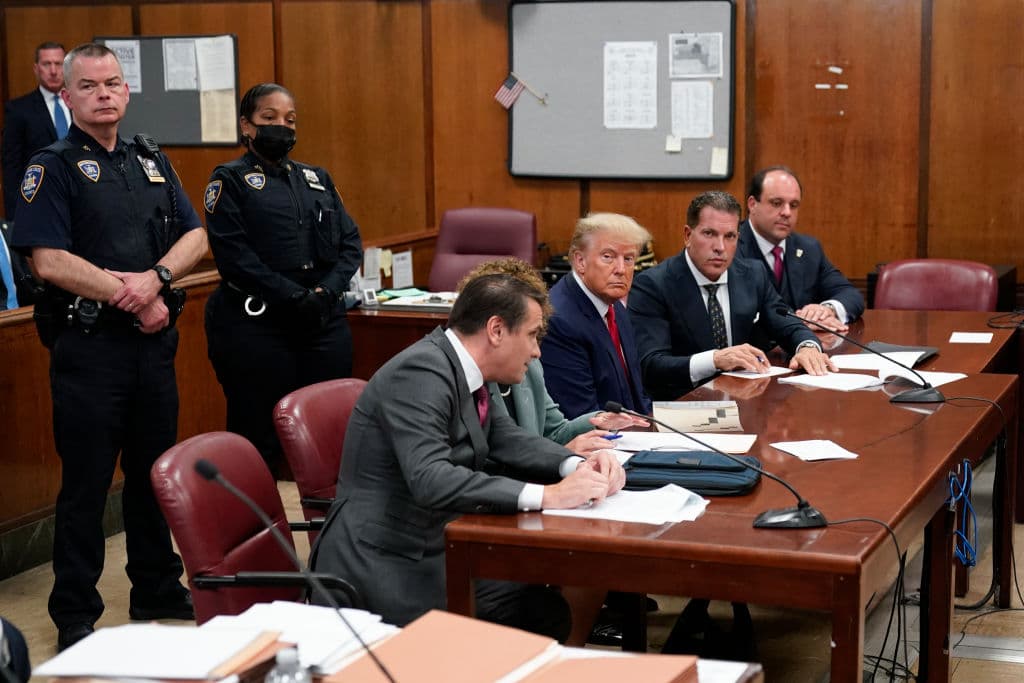
Putting presidents, former presidents and coup plotters on trial is an honorable and necessary practice to maintain a healthy democracy. Failure to put on trial presidents or former presidents who broke the law or committed crimes has had devastating consequences in Latin America.
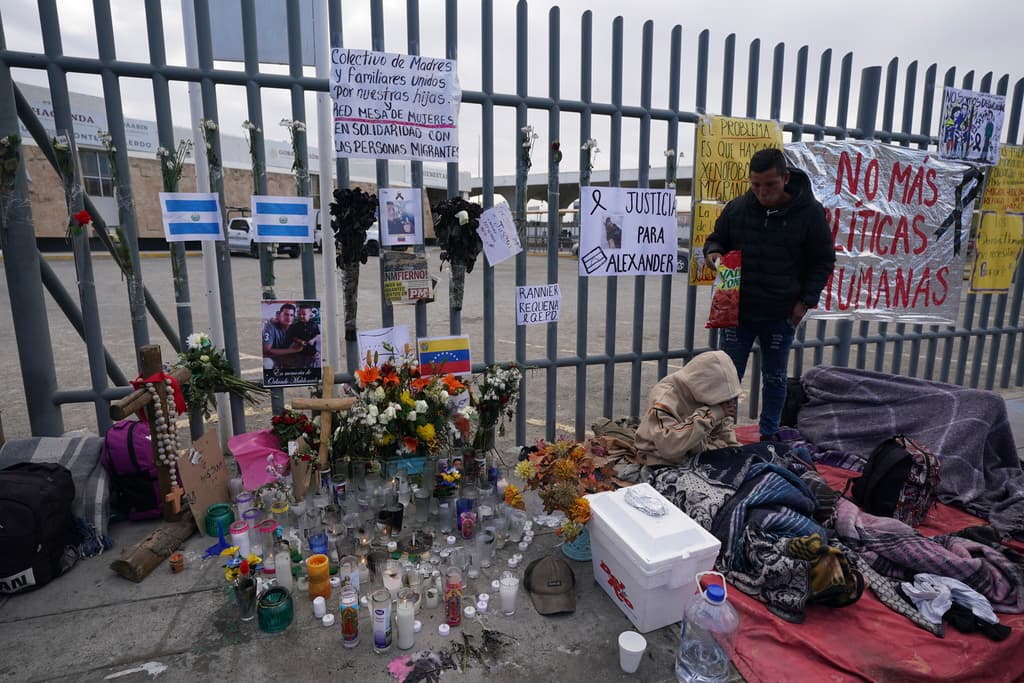
Mexico's migrant policy bears responsibility for the deaths of 39 migrants in the fire at a detention center in Ciudad Juarez. They were in the custody of the Mexican government, in a federal facility.
Just four years after the highly-contested legitimacy of the 2017 elections, Honduras’ democracy has suffered yet another setback.
On March 14, millions headed to the polls to vote in an obsolete and deficient electoral framework. Just weeks prior, counselors who represent party interests within the National Electoral Council, engaged in last minute disputes on vital issues, such as credentials for those who would be scrutinizing votes and even the very mechanisms by which votes would be counted.
More than 400,000 voter inconsistencies were reported in the latest census that have still not been resolved. A last minute decree was approved to include voters in registered lists days before the election, but according to a former president of the Supreme Electoral Tribunal (TSE), this increased the possibility of voter fraud.
On top of this, just days before the primaries, the National Registry (RNP) began delivering the new National Identification Document (DNI) required for first time voters, fueling the uncertainty about their ability to participate in the election. Finally, electoral organisms were incapable of procuring the TREP, a transmission system that guarantees quick delivery of results.
There was no doubt the preparation process leading to the elections foreshadowed the chaos that ensued.
The National Electoral Council remained silent for three days after the election before announcing preliminary results through a bulletin. After this, they provided a bulletin update every 24 hours and more than a week after the election, they launched a live site showing results by department.
Prior to this, neither observers nor the media were allowed inside the Council's facilities. Their deafening silence contributed to pre-emptive victory claims and fraud allegations by candidates at all levels, mounting uncertainty amongst those who headed to the polls. To date, candidates from all parties claimed that over 14,000 closing reports from voting stations (a concerning 18%) presented inconsistencies. Legal claims were submitted to the council for review inconsistencies but are still pending a resolution.
While Honduras’ electoral system has shown deficiencies since 2013. Both the OAS and the European Union vocalized their deep concern regarding the system after the 2017 post-electoral fraud allegations that favored the National Party. The persistent delay of crucial reforms indicates that there is a deliberate attempt to weaken political institutions.
One cannot help but question: are current decision-makers thriving amidst ambiguous institutions and maneuvering in darkness at the cost of the nation’s democracy?
More than 100 of the 128 congressmen are trying for reelection. Many of them have been accused in corruption schemes and voted to shield their impunity. Under the same electoral and reformless institutions, most incumbents are almost guaranteed reelection.
Since the current system prevents Hondurans from democratically holding their decision-makers accountable for their incompetence and graft, the country anxiously awaits results from trials in the Southern District of New York, a new bill issued by Democratic Senators promoting sanctions, and pleas to the Biden administration to increase pressure to deliver justice.
It is imperative that Honduras addresses its profound socio-political issues this year. The country must relinquish the expectation that justice will come from abroad. But as the current situation stands, it requires the partnership and pressure from the international community. If they endeavor to become partners in solving the instability that engulfs Honduras, they must come to the realization that promoting democracy is the best humanitarian aid package they can offer.
Following the crisis and uncertainty that has ensued the primaries, electoral reforms in Honduras are not a matter of improvement, but rather of survival. A November electoral crisis could aggravate the democratic backsliding to a point of no return, enticing thousands of Hondurans to embark in the inhumane journey to the North, not in search of an American dream, but to escape a Honduran nightmare.
Relacionados: