
MIAMI — Every weeknight, I sit down next to my co-anchor Ilia Calderón to host the Spanish-language news program “Noticiero Univision.”
A Hard Conversation For The Latino Community
Racism is deeply rooted in America’s social system, putting Afro-Latinos at a constant disadvantage.

Los nuevos presentadores del noticiero nacional.
Imagen David Maris
Although our many viewers have come to know Ms. Calderón’s face, not many know how much she has had to overcome to sit in that chair. Her story, like that of many Latinos with African ancestry in the United States, is one of tremendous personal achievement, as well as astonishing perseverance in the face of deep-seated racism.
Ms. Calderón was born in the Chocó region of Colombia, a place she describes as “our little Black paradise.” When Ilia was 10, she left home to study in a Catholic school in Medellín, where one of the white students was so disgusted by the color of Ilia’s skin — and so proud of her own fair complexion — that she told Ilia, “You’re Black? Not even my horse is black!” That first encounter with racism in Latin America left a mark on Ilia — one she never forgot.
When she moved to Miami in 2001 to pursue a career in journalism, things weren’t much different. “I had to endure racism in Colombia,” she told me recently, “and it turns out that here I have to face the same thing. It’s how they look at you, how they behave when you are around. …It’s like you have to go through that experience twice: For being Hispanic and also for being Black.”
According to a 2014 survey by the Pew Research Center, 24 percent of the roughly 54 million Hispanics living in the United States at the time self-identified as Afro-Latino, Afro-Caribbean or as another, more specific Afro-Latino identity, such as Afro-Colombian. At the same time, 34 percent identified as “mestizo, mulatto or some other mixed race.”

As my mom worked and parented, all in one breath, she instilled in us the values that I carry with me today: “por la familia, todo.” Lee este contenido en español.

"What a sad reflection that the Republican Party has moved from Abraham Lincoln, who said immigration was a ‘source of national wealth and strength’ and Ronald Reagan, who called for his ‘city on the hill’ to be ‘open to anyone with the will and the heart to get here,’ to Donald Trump, who says immigrants are ‘poisoning the blood of our country".

"Our current immigration laws include so many hurdles that can keep families in limbo, and even being married to a U.S. citizen isn’t always enough to allow someone to get a green card".

"For those of us whose livelihoods depend on it, President Biden’s actions to protect and preserve DACA show a striking contrast with those of Trump and MAGA Republicans. Trump has a record of trying to end DACA and will try again if he wins another term".

"While immigrants by now are accustomed to being the tip of the spear in the GOP’s arsenal of attacks, let's be clear-eyed that the threat now is beyond harming immigrant communities or calling attention to the border. This is about using this issue as a tool to further Trump’s political ambitions, even if that means suppressing the right to vote, undermining our election results, or stoking more political violence".
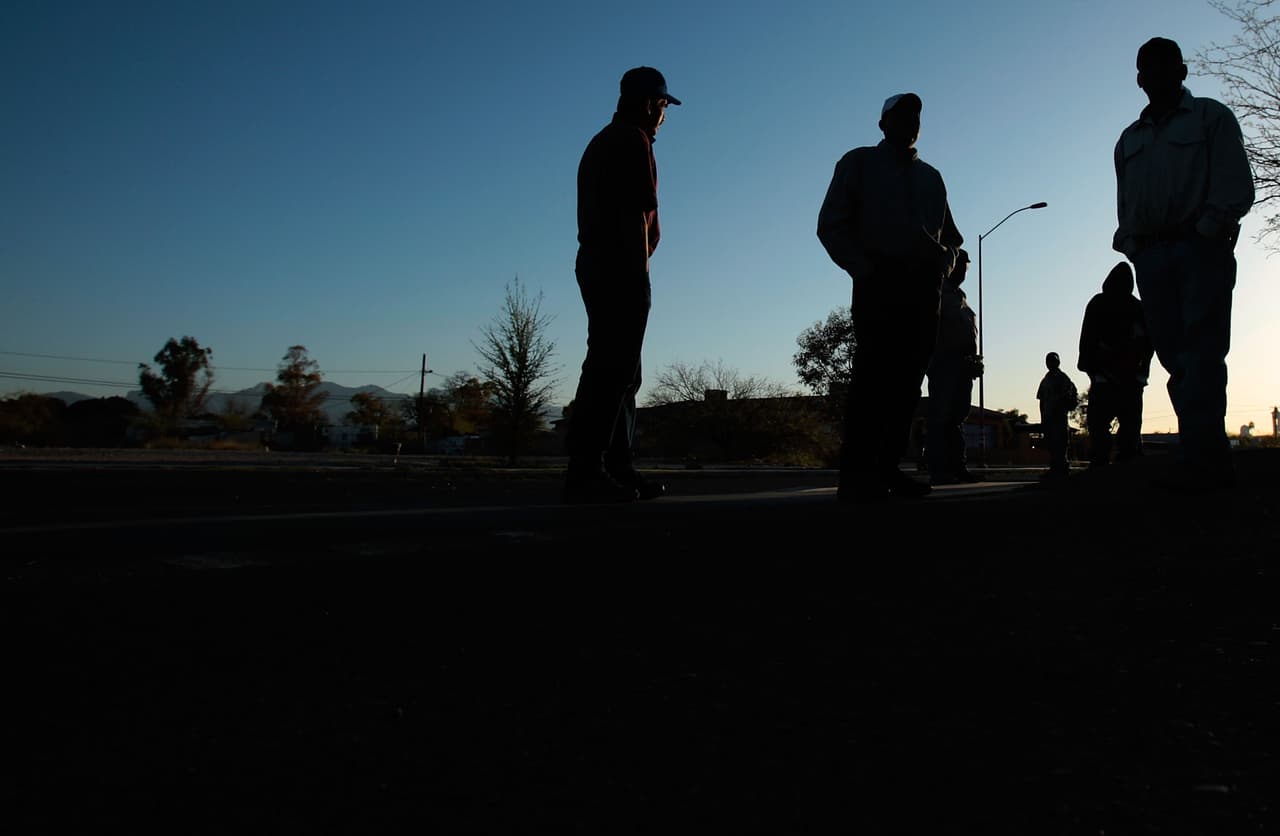
"This month comes at a special moment in our nation’s history. For the first time, we have more Latinos serving in Congress than ever before. In the Senate, the Democratic Majority has confirmed a historic number of Latino judicial nominees and recently confirmed the first Latina to serve on the Federal Reserve in the Board’s 109-year history".
"This is the clean energy boom unleashed by President Biden: good-paying jobs in a fast-growing industry and lower bills for working families — all while addressing the climate crisis affecting our lives".

Putting presidents, former presidents and coup plotters on trial is an honorable and necessary practice to maintain a healthy democracy. Failure to put on trial presidents or former presidents who broke the law or committed crimes has had devastating consequences in Latin America.
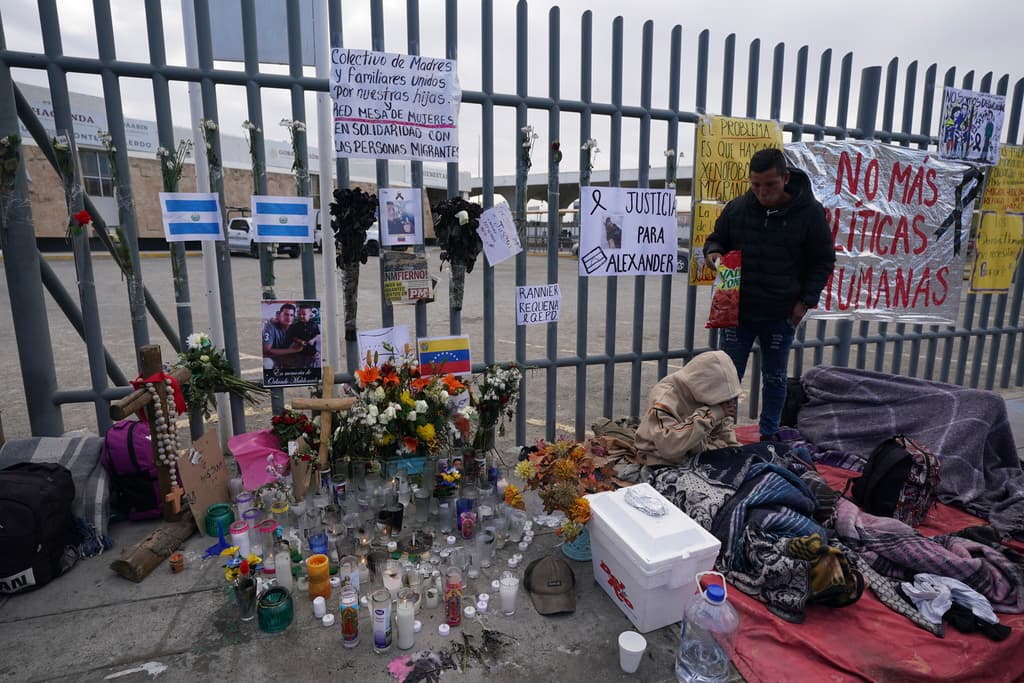
Mexico's migrant policy bears responsibility for the deaths of 39 migrants in the fire at a detention center in Ciudad Juarez. They were in the custody of the Mexican government, in a federal facility.

These Latino Americans have to endure far more than derogatory comments and other verbal abuse. Racism is deeply rooted in America’s social system, putting Afro-Latinos at a constant disadvantage. Compared with other Latinos, Afro-Latinos are less likely to have some level of college education. They’re also more likely to have smaller family incomes: In the same 2014 Pew survey, roughly six in 10 Afro-Latino families reported incomes below $30,000. As uncomfortable as it may be, we Latinos must have a serious conversation about these issues.
Today, Ms. Calderón is watched by millions on TV and is about to publish a memoir, “My Time to Speak.” She is determined to use her voice to push for change. “It’s important that they watch me; being on TV screens means that people can see themselves in me,” she told me. Ms. Calderón said racism exists in Latin America and follows Afro-Latinos when they emigrate to the United States. “We hear all these racist phrases in our countries, in our homes — calling someone “Negrita,” “frizzy hair” or showing preference for the lighter-skinned child — so this comes with us,” she said.
Janvieve Williams Comrie, a Panamanian human rights activist who lives in the United States, agrees. “Those behaviors that were commonplace in our countries have been replicated here,” she told me when I interviewed her for a recent podcast. “I’ve heard people talking in Spanish who were saying belittling things about Afro-descendants.”
When I asked her if she felt discriminated against in the United States, she was unequivocal: “Definitely. I’m an Afro-descendant, a Black woman.”
The arrival of Africans in the Americas was marked by blood and abuse. Although precise figures are difficult to determine, estimates suggest that over 10 million enslaved Africans arrived in the New World during the Spanish conquest and colonization of Latin America. According to the historian Omer Freixa, the first documented arrival in Latin America took place in 1518; the last one arrived in Cuba in 1873. The enslaved Africans were traded mainly at the region’s ports, including Buenos Aires, Veracruz, Cartagena and Havana, and most of them worked in the rice, tobacco, sugar, cotton, coffee or mining industries.
Today, one in four Latin Americans self-identify as having African ancestry, according to a recent World Bank report (approximately 645 million people live in Latin America and the Caribbean). But, as the report explains, Afro-descendants are “underrepresented in decision-making positions, both in the private and the public sector,” and they “are 2.5 times more likely to live in chronic poverty than whites or mestizos.”
Despite the many achievements of Afro-Latinos since their arrival in the United States, they have yet to enjoy the benefits of full racial equality. The post-racial society — in which the color of our skin no longer matters — remains a myth.
The recent killing in Minneapolis of George Floyd, an African-American man, after a white police officer knelt on his neck for more than eight minutes, has sparked an urgent debate on the mistreatment of Afro-descendants. In order to find solutions to the systemic problems highlighted by Mr. Floyd’s killing we must have uncomfortable conversations; we must confront the existence of racism within the Latino community and within our own homes.
“We have a lot of racism within our communities, and a lot of it is self-hate,” Aida Rodriguez, an Afro-Latina writer and comedian, told me in an interview. “What we need to start doing is having this conversation with our parents and our grandparents, and understanding that where we come from is far more glorious than they told us.”
Is it possible to fight racism with humor? I asked Ms. Rodriguez, who often discusses racism on her Netflix, HBO and Showtime shows. “I think it’s possible, I think it’s important and I think it’s necessary. One thing about Latinos is that we embrace a lot of our conflicts with humor. Marginalized people have always had to do that. … I combat racism with intelligence, with hardened humor. Not weakness.”
As for Ms. Calderón, she wants to use her voice “to tell people ‘No more,’ to say that this cannot happen.” Her message is clear: no more deaths like Mr. Floyd’s; no more discrimination against Afro-Latinos. But her optimism in the fight against racism can only take her so far. Sometimes, one lifetime just isn’t enough. “I think it will be up to my daughter,” Ms. Calderón told me. (Her daughter, Anna, is 7.) “I don’t think it will happen in my time.”
Many structural changes need to be made in our society before the equality and justice that Ms. Calderón seeks can be achieved. As we fight for those changes, we Latinos have a lot to learn from the African-American struggle for civil rights. As Martin Luther King Jr. told the labor leader Cesar Chavez in a 1966 telegram: “Our separate struggles are really one — a struggle for freedom, for dignity and for humanity.”
Relacionados: