
by David Adams
Empty Cuban rafter boat washes up on Florida beach
Cubans seeking to flee the island are taking to rustic, homemade boats in increasing numbers since the U.S. and Cuba agreed to normalize relations 18 months ago
KEY BISCAYNE, Fl - A Cuban rafter boat made from styrofoam and blue tarp and equipped with a rusty old tractor motor washed up on Key Biscayne beach near Miami on Sunday.
But there was no sign of the occupants.
Key Biscayne police told Univision that no Cuban migrants had been spotted after the raft landed. That was likely because the raft was intercepted at sea sometime during the last month, according to a spokesman for the U.S. Coast Guard in Miami.
The raft bore a spray painted marking: "OK 5/16" that the Coast Guard uses to identify rafts found at sea with the month and year it was found. They are normally sunk with machine-gun fire, unless made with styrofoam which floats, according to the Coast Guard. "If we shoot up styrofoam it just creates a bigger problem as it splits into pieces and does not sink," the spokesman explained.
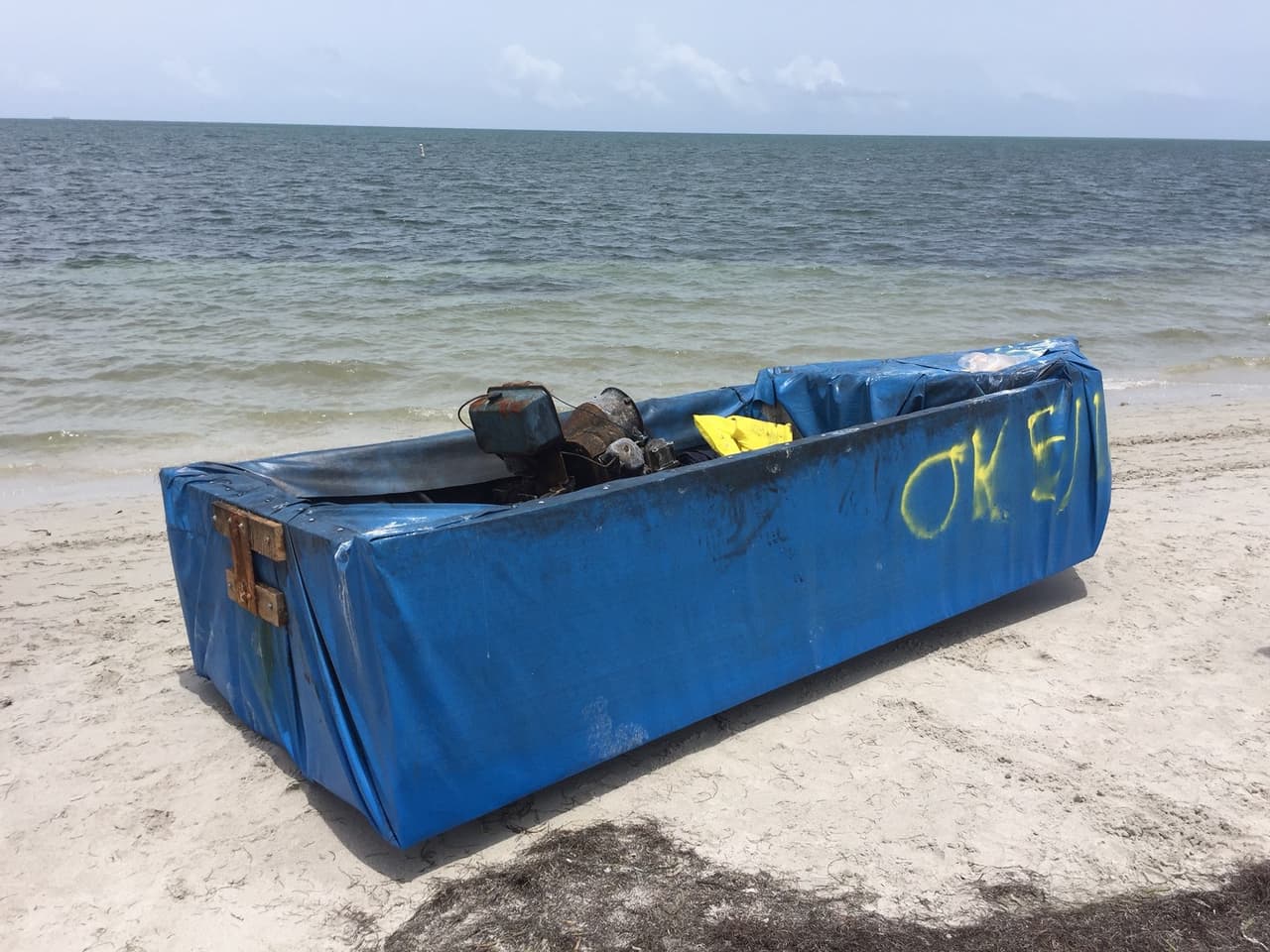
A Cuban rafter boat made from styrofoam and blue tarp and equipped with a rusty old tractor motor washed up on a Florida beach June 5, 2016


Under the so-called "wet foot, dry foot" immigration policy, Cuban migrants who make it onto U.S. soil are allowed to remain while those intercepted at sea are sent back.
Cubans seeking to flee the Communist-run island have taken to boats to reach the United States in increasing numbers in the last 18 months. The journey across the treacherous Florida Straits is about 90 miles from Cuba's north coast to Key West, or 230 miles to Miami.
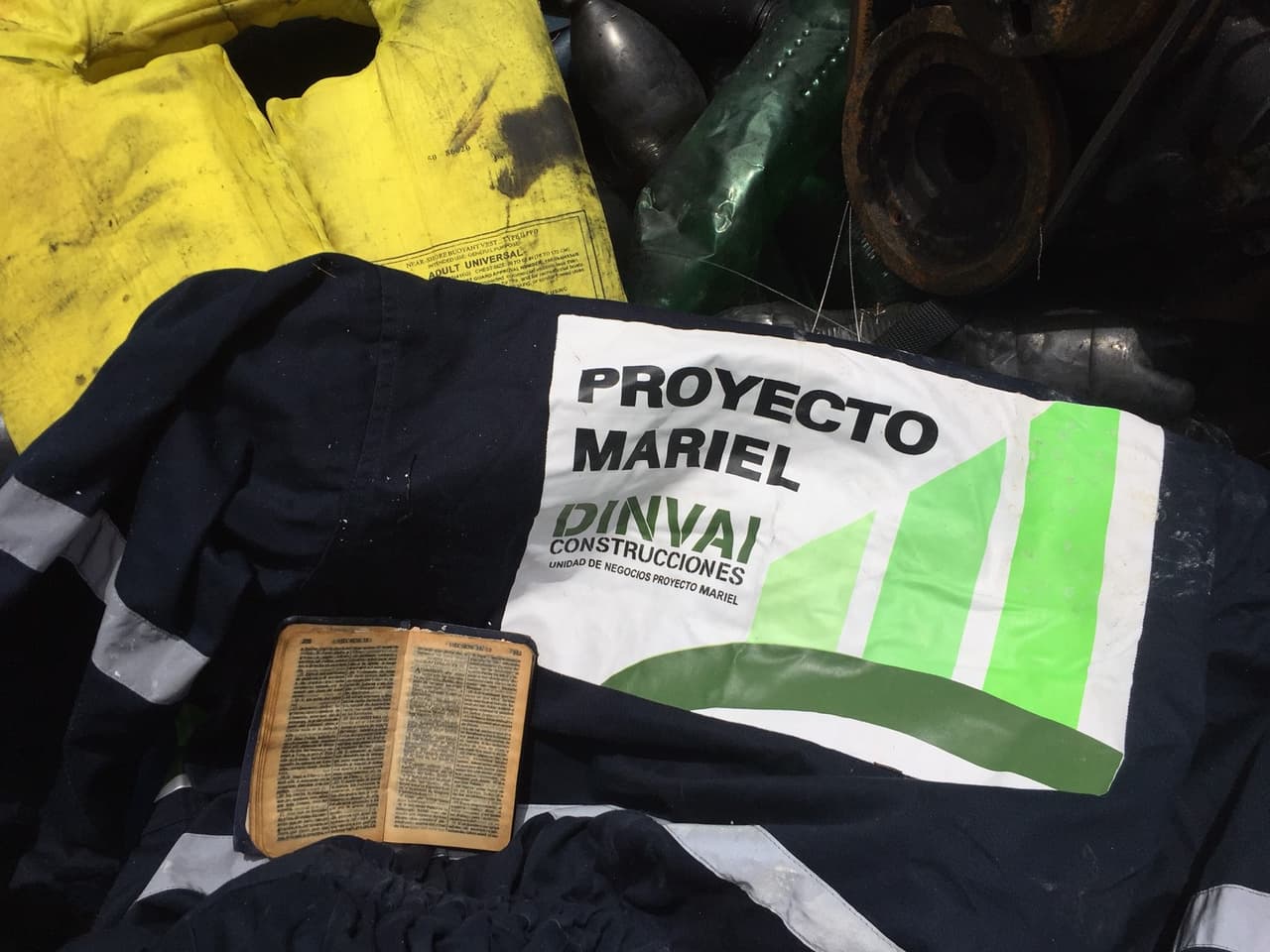
Among the contents found on an abandoned Cuban raft; a bible and the blue overalls of a worker at the Mariel port, a recently completed project on the outskirts of Havana.
In May alone, 673 Cubans took to sea, up 155 percent compared to May 2015, the Miami Herald reported. Since Oct. 1, at least 4,176 Cubans have attempted to illegally migrate to the U.S. via sea craft compared to 4,473 in all of 2015. Thousands more Cuban immigrants arrive in the U.S. each year across the border with Mexico, many of whom also leave the island in homemade boats bound for Central America, via the Cayman Islands.
On board the abandoned raft discovered on Sunday were plastic bottles of engine oil and water, as well as plastic bags of uneaten crackers.
Also, there was a sodden, pocket-sized bible and the blue overalls of a worker at the Mariel port, a recently completed project on the outskirts of Havana.
"So many feelings involved in this little boat. I wonder what these people expect from their lives when they decide to take this trip," Gonzalo Alvarez-Quinones, 21, wrote on his Facebook page after taking photos of the raft.
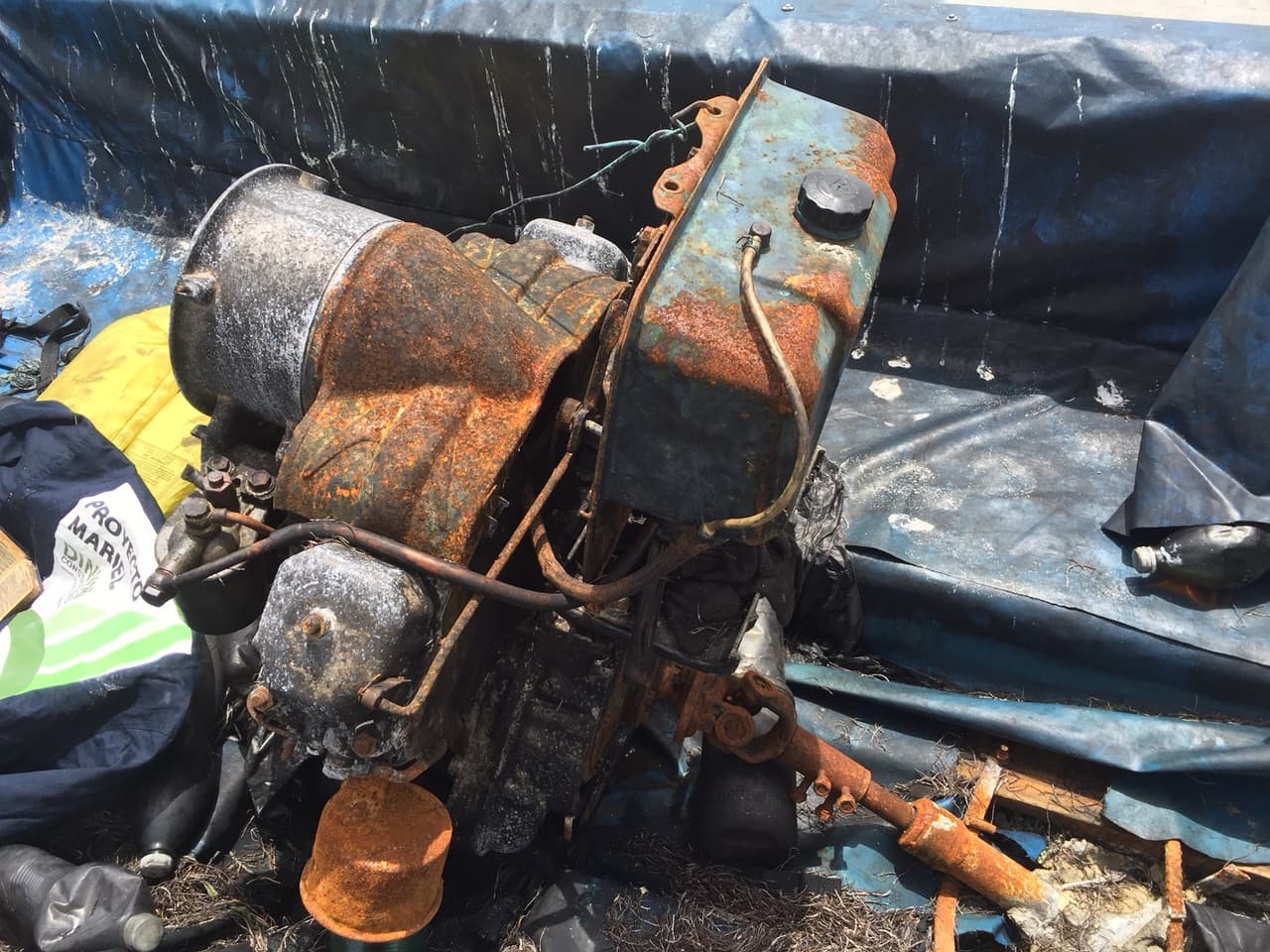
The rusty tractor engine was adapted to power this homemade Cuban raft. The driveshaft is attached to a propeller under the boat, sealed with poured concrete
Typical of the rustic, homemade rafts that are a common sight in the waters between the United States and Cuba, it was ingeniously constructed, mostly with large sections of styrofoam held together with a wood frame and completely enveloped in blue tarp screwed in place.
A condom wrapper was also found in the bottom of the boat.
Relacionados: