
At 20 weeks pregnant, Dagmary Fernandez is doing whatever she can to avoid getting Zika. To prevent mosquito bites, she cleans up puddles of standing water from the patio of her house in Canóvanas, a rural area north of Puerto Rico’s capital San Juan.
Puerto Rico pushes condom use in Zika battle
In Puerto Rico, health officials working to stem the spread of Zika are educating about the importance of safe sex.

Imagen Anna Clare Spelman
“I’m scared because a mosquito bite can cause microcephaly in my baby,” Fernandez, 39, says.
But her husband also has to take precautions. Unprotected sex is the second most common form of Zika transmission, a detail that went overlooked at the beginning of the outbreak in the Americas. The first case of sexually transmitted Zika in the continental United States was recorded in February. While it’s still difficult to determine how long the virus remains in bodily fluids -- vaginal fluids and semen -- and how many infections have been spread through sex, specialists in Puerto Rico agree that the risks associated with sexual transmission are high enough to warrant special precautions.
“We need to learn how to open a condom with our eyes closed,” says OB/GYN Carmen Zorrilla during a prenatal course at the Hospital Universitario in San Juan, which Fernandez and her husband attend each week to learn about preventing the virus. “Here everyone is over the fourteenth week, and people think, ‘OK, I’m not at risk anymore,'” Zorrilla tells the group. “This is not completely accurate.
There are still many unanswered questions about Zika. For example, doctors initially believed that the first trimester of pregnancy was the most dangerous time to contract the virus. But it’s still unclear how Zika can affect a fetus at any point during a pregnancy. And the virus has continued to expand. In early August, Puerto Rican authorities declared a health emergency on the island due to the continued increase in Zika cases. Since the first case was transmitted locally in December 2015, there have been 10,698 cases documented to date in Puerto Rico. Of these, 1,034 are pregnant women.
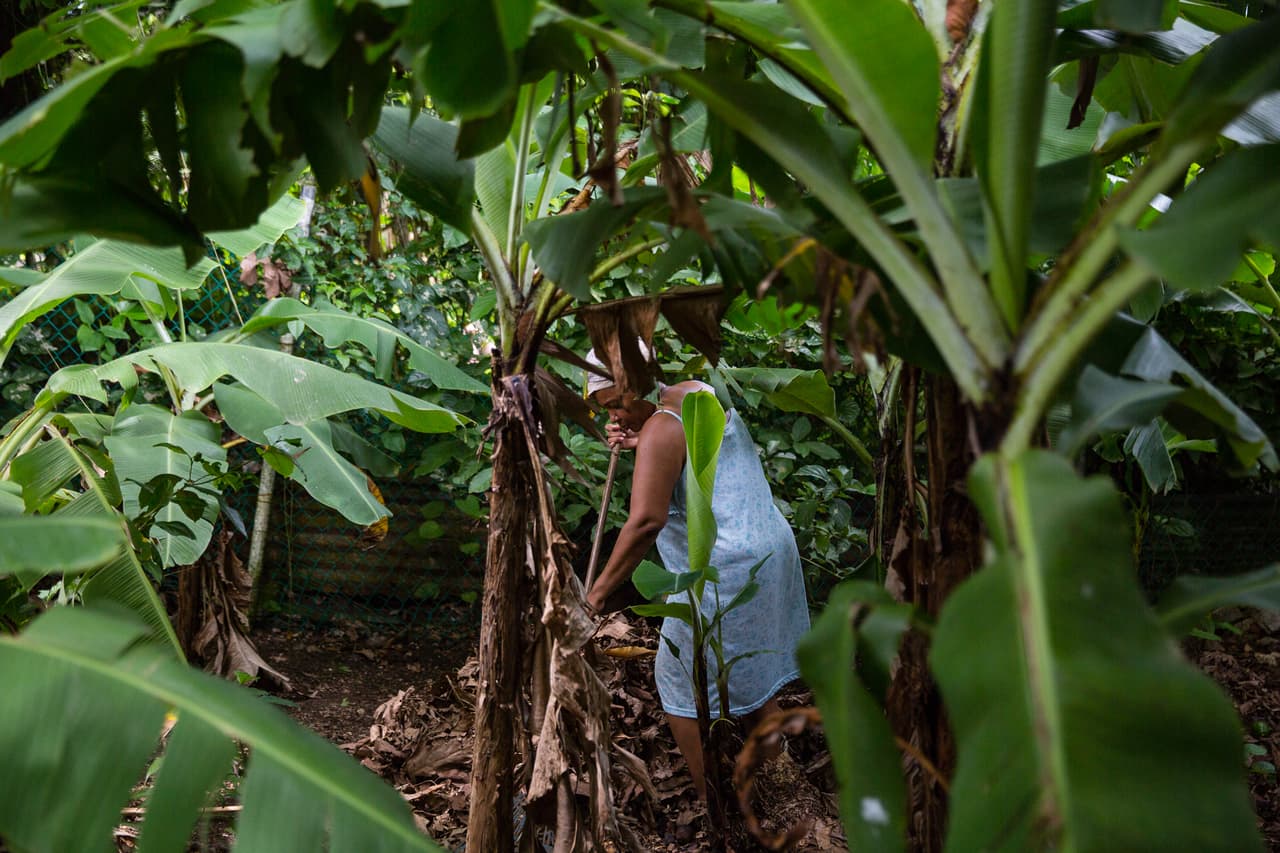
Fernández tiene 5 meses de embarazo y dice hacer todo lo posible para evitar contagiarse con zika.
Imagen Anna Clare Spelman
Puerto Ricans are familiar with taking steps to prevent mosquito-born diseases like dengue and chikungunya; the island saw outbreaks of both in 2014. But Zika is proving to be more complex. “ People don’t believe that it can be transmitted sexually because dengue is only transmitted by the mosquito,” says Judith Torres of the Centers for Disease Control and Prevention (CDC) in Puerto Rico.

At the Health and Human Services Office of Minority Health (OMH) we put people and communities at the center of our work. We collaborate with national and local partners to encourage people to take charge of their health by adopting healthy habits and lifestyles. We are especially excited to support Univision’s Healthy Habits campaign, which aims to raise awareness among Latinos to achieve a healthier lifestyle by taking small steps that will have big benefits in their future.



The stigma that surrounds depression or anxiety forces many to deal with those issues by themselves without seeking help. But there is nothing to be ashamed, explains the doctor Reena Pande.


Sexual transmission of the virus has mainly been passed from men to women. But in July, a New York City woman infected her male partner with Zika through sex, in the first case of female-to-male transmission. It’s still difficult to determine how long the virus remains in semen -- it’s believed to be at least 62 days -- and vaginal fluid, which is why authorities recommend pregnant women use a condom.
A lot of mistrust
Health officials working to stem the tide of sexually-transmitted Zika cases in Puerto Rico face a number of challenges. The only way to ensure the virus is not transmitted through sex is to abstain from intercourse, but that may be unrealistic. To avoid transmission of Zika, doctors recommend the use of condoms and barrier methods of contraception, such as a diaphragm. Hormonal contraceptives like the pill cannot prevent the spread of the virus.
Many Puerto Ricans are apprehensive about contraception. In the 1950s, Puerto Rican women were part of a large-scale human trial for the birth control pill. But the women, who were mostly from poor areas, had only been told they were taking a drug that prevented pregnancy, not that it was a clinical trial or that they could experience dangerous or uncomfortable side effects.
Forced sterilization was also common in the 1950s and 60s, with some estimating that one-third of Puerto Rican women were sterilized. Vanessa Ayala, a social worker at ProFamilias, a family planning clinic in San Juan, says the country’s history and people’s mistrust make the current situation challenging. “ We have a history of abuse,” Ayala says. “This could be why people are afraid of using protection” from authorities. Other mosquito control methods, like spraying with the pesticide Naled, have generated fear and mistrust on the island.
Like in much of Latin America, Puerto Rico also faces an enduring taboo about providing sexual education. “We have conservative groups that don’t believe in talking about sex or about giving out condoms because they associated that with promiscuity,” Torres says.
Hector Villanueva is the medical director at the Health ProMed clinic in Barrio Obrero, a poor community in San Juan that has been hit especially hard by Zika. He notes that most pregnancies in Puerto Rico are unplanned ( at least 65% in 2008). So education around contraceptives during the Zika epidemic is especially important, he says. “We also give women of reproductive age the opportunity to decide to postpone pregnancy,” says Dr. Villanueva.
In Barrio Obrero, the Health ProMed clinic is working to create community-based programming around Zika prevention, with an emphasis on family planning options. In addition to education on the sexual transmission of Zika, doctors and clinics are collaborating with the CDC Foundation, an independent non-profit that works to connect the CDC with other funding sources, to provide free contraceptive options to women in Puerto Rico through the Zika Contraceptive Access Network (Z-CAN).
Could Zika improve women’s reproductive health?
Zorrilla says Puerto Rico needs community involvement, political will and improved infrastructure to effectively combat Zika. “We need all of that to be able to provide the best care within this epidemic,” she says.
But she says she knows that will be difficult. Puerto Rico is in the midst of an economic crisis, which has cut off funds to the health system and caused some doctors to consider leaving the island to practice medicine.
Despite the challenges, Zorrilla says the Zika epidemic has the potential to help the island improve women’s health services in the long-term, as well as prenatal care and access to long-acting contraception.
“I’m emphasizing family planning,” she says. “ This is not a women’s issue. This is an issue that belongs to everybody.”

Dagmary Fernández atiende una vez a la semana a las sesiones prenatales que se ofrecen en el Hospital Universitario, en San Juan, Puerto Rico.
Imagen Anna Clare Spelman
Over the past few months, the CDC and Puerto Rican Department of Health have been doing outreach on the streets and at events. Recently, five officials from the CDC and DoH stood outside the doors of San Juan’s largest concert venue, the Coliseum, before a Maroon 5 concert, which drew a mostly young crowd. As concert-goers snapped selfies and pulled out their tickets, preparing to enter, Judith Torres, a smiling, bubbly woman, didn’t hesitate to talk to them about sex.
“Condoms! Prevention for Zika! Come on, take it!” she shouted.
At one point, she approached a couple to offer information about safe sex. As they listened, embarrassed and giggling, Torres explained how Zika is spread through sex. When she finished, they took the condoms, and walked away. Torres looked on, hoping they’d use them.